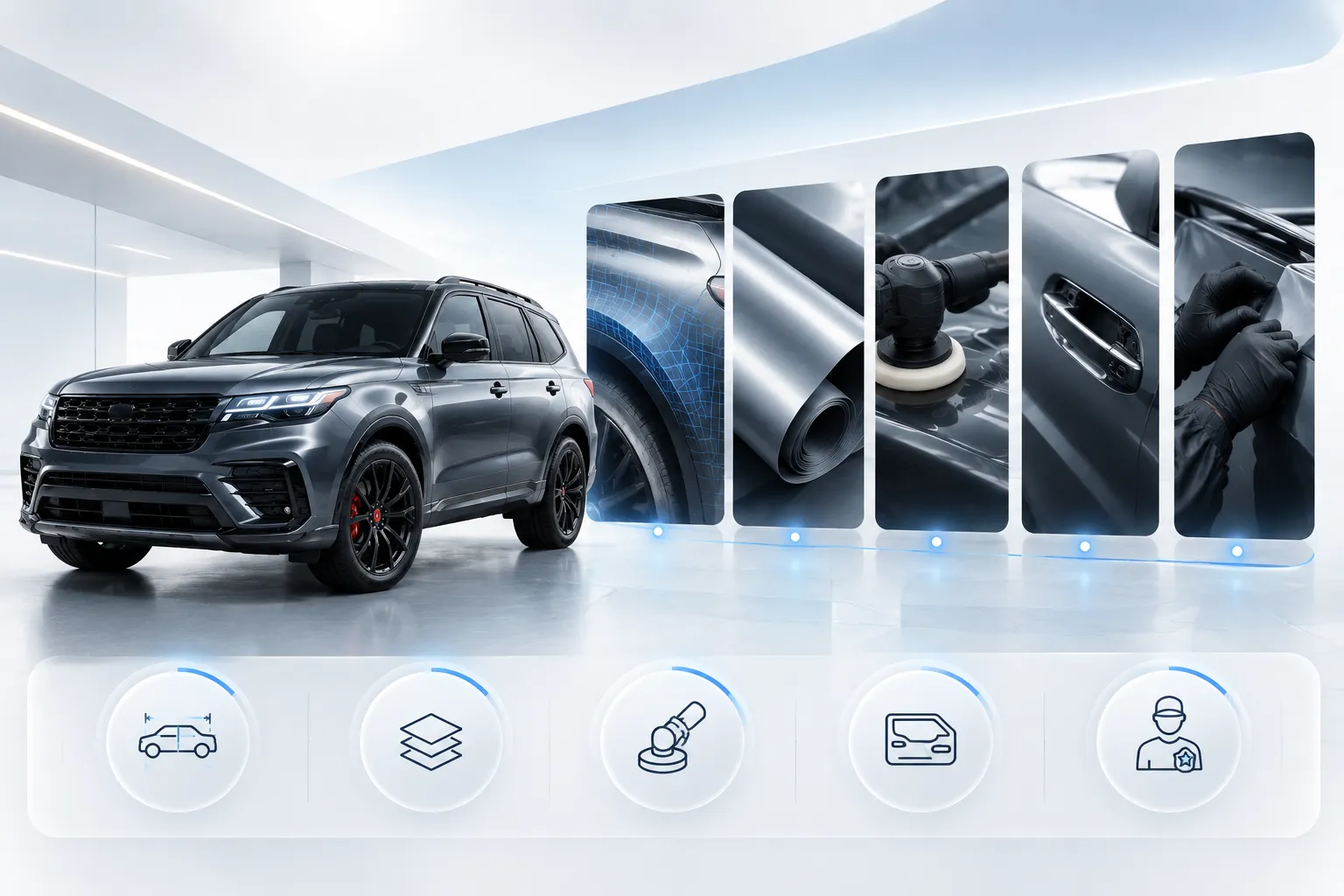

Getting a professional wrap on a Honda Civic usually runs between $2,000 and $3,500 for a full exterior transformation.
If you request a Honda Civic wrap quote from three different installers, you will likely see estimates that vary by hundreds of dollars. That price gap comes down to how much labor goes into surface prep, how deeply technicians disassemble exterior body components, and the structural grade of the vinyl film being installed.

What You Actually Get for the Money
When a shop gives you a $2,800 estimate for car wrap installation cost, you aren't paying $2,800 for spools of vinyl film alone. Raw material for a compact sedan accounts for roughly $600 to $900 of the invoice.
The vast majority of a Honda Civic vinyl wrap cost goes toward meticulous labor:
- Surface Decontamination & Clay Treatment: Washing away embedded road tar, grease, and iron fallout. Any micro-debris left on the clear coat creates a permanent raised bump under the film.
- Component Teardown: Removing headlights, tail lights, door handles, side mirrors, and grilles so material wraps seamlessly behind panels rather than stopping at visible seam lines.
- Complex Bumper Alignment: Working film smoothly through the aggressive fog light recesses and sharp body lines of 10th and 11th Gen Civic bumpers without over-thinning the adhesive.
- Thermal Post-Heating: Heating high-tension edges with a heat gun to 180°F–200°F to reset the material's internal memory, preventing edges from shrinking and peeling under summer heat.
Why Two Civic Wrap Quotes Can Be So Different
If Shop A quotes you $1,500 and Shop B quotes $3,000 for a budget shops professional Honda Civic wrap, they are delivering entirely different levels of quality.
Low-bid shops cut costs in three critical areas that often lead to paint damage and early peeling:

- 1 Trimming Method (Blades vs. Thread Lines)
Budget shops trim film directly on your vehicle's bodywork using hand blades, which frequently score the underlying clear coat and lead to hidden rust over time. Top-tier installers use thread-based tape lines, slicing the film cleanly from underneath with zero metal-to-paint contact. - 2 Vinyl Engineering (Cast vs. Calendered)
Low quotes often rely on thick, calendered vinyl designed for flat signboards. It constantly tries to shrink back flat, causing lifting around curved bumper channels within 6 to 12 months. Reputable shops strictly use premium dual-cast vinyl (such as 3M 2080 or Avery SW900), which stays relaxed across tight curves. - 3 Edge Return Depth
An entry-level job cuts film right at the outer panel edge. When doors swing open or panel gaps shift in sunlight, factory paint flashes through. Skilled technicians tuck material 1/4 inch around the backside of every panel for complete visual coverage.
Which Civic Look Are You Trying to Create?
You don't always need a full-body transformation to make a dramatic visual change. Matching your aesthetic goal to the right scope keeps costs predictable:
- High-Contrast Two-Tone (Accent Style): Wrapping the roof, side mirrors, or lip spoiler in gloss black or carbon fiber ($250 – $700). Covers fading roof paint while adding a sleek, glass-roof illusion.
- Complete Exterior Transformation: A standard Civic color wrap in Nardo Gray, Satin Black, or Metallic Blue ($2,000 – $3,500). Changes the full vehicle color while protecting original factory paint from light UV scuffs.
- Show-Quality Custom Build: A custom Honda Civic wrap including full exterior coverage, inner door jambs, and printed graphics ($3,500 – $5,000+). Completely eliminates factory color contrast when doors open.
Full Wrap or Just the Parts You Want to Change?
Comparing coverage areas helps clarify where your budget goes:
| Coverage Area | Average Investment | What It Solves |
|---|---|---|
| Roof Only | $250 – $500 | Creates a blacked-out glass roof look; hides clear-coat damage. |
| Hood & Side Mirrors | $350 – $750 | Protects high-impact front zones while adding sporty contrast. |
| Full Exterior Body | $2,000 – $3,500 | Full color shift; shields original paint across all outer panels. |
| Full Exterior + Door Sills | $3,500 – $5,000 | Eliminates inner paint gaps when opening doors for a factory look. |
Does the Wrap Color Change the Price?
Specialty finishes alter both raw material costs and installation complexity:

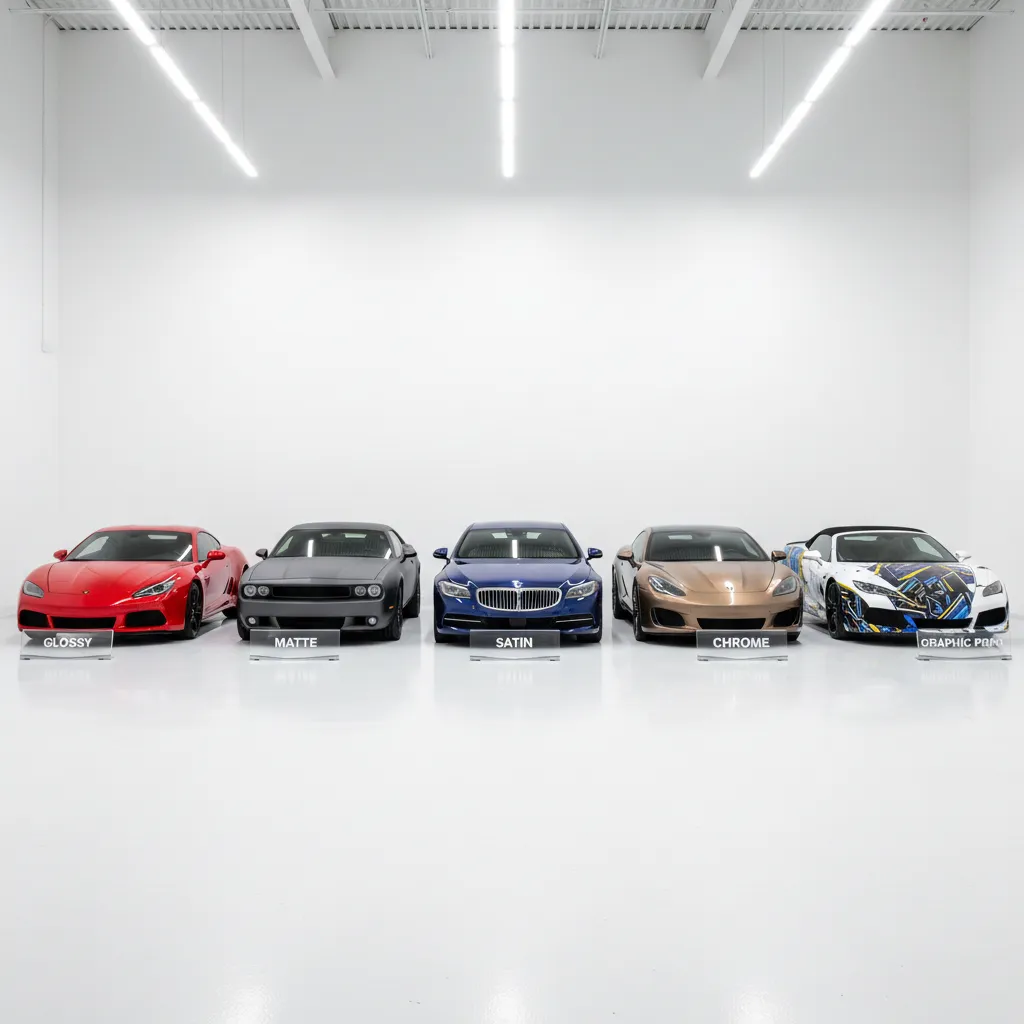
- Standard Gloss & Matte: Baseline pricing. The most cost-effective and forgiving films to stretch and align.
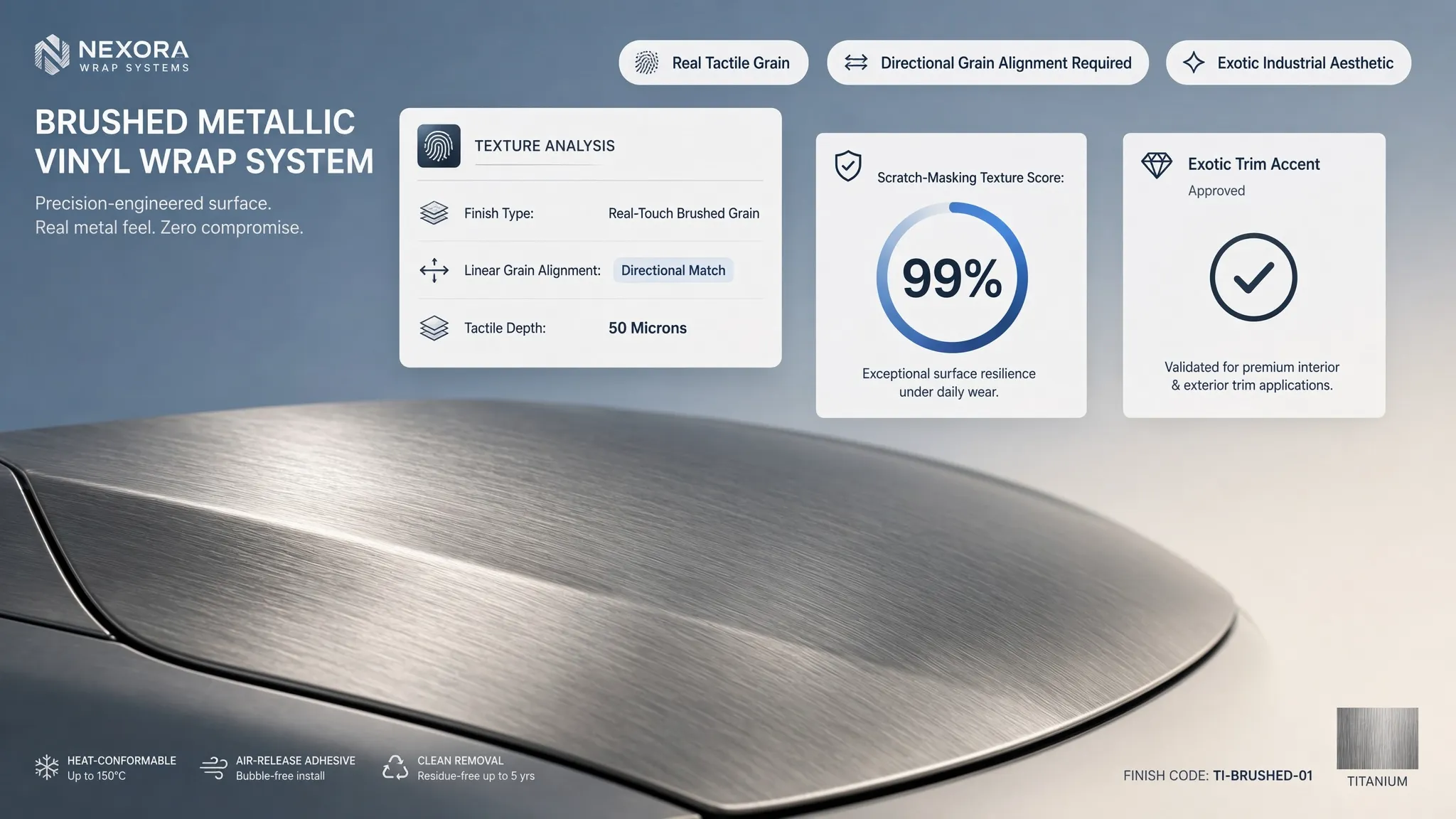
- Satin & Metallic (+10% – 15%): Satin finishes show shiny streaks if over-stretched. Metallic films contain directional flakes; if panels aren't laid in the same direction, adjacent doors will look mismatched under sunlight.
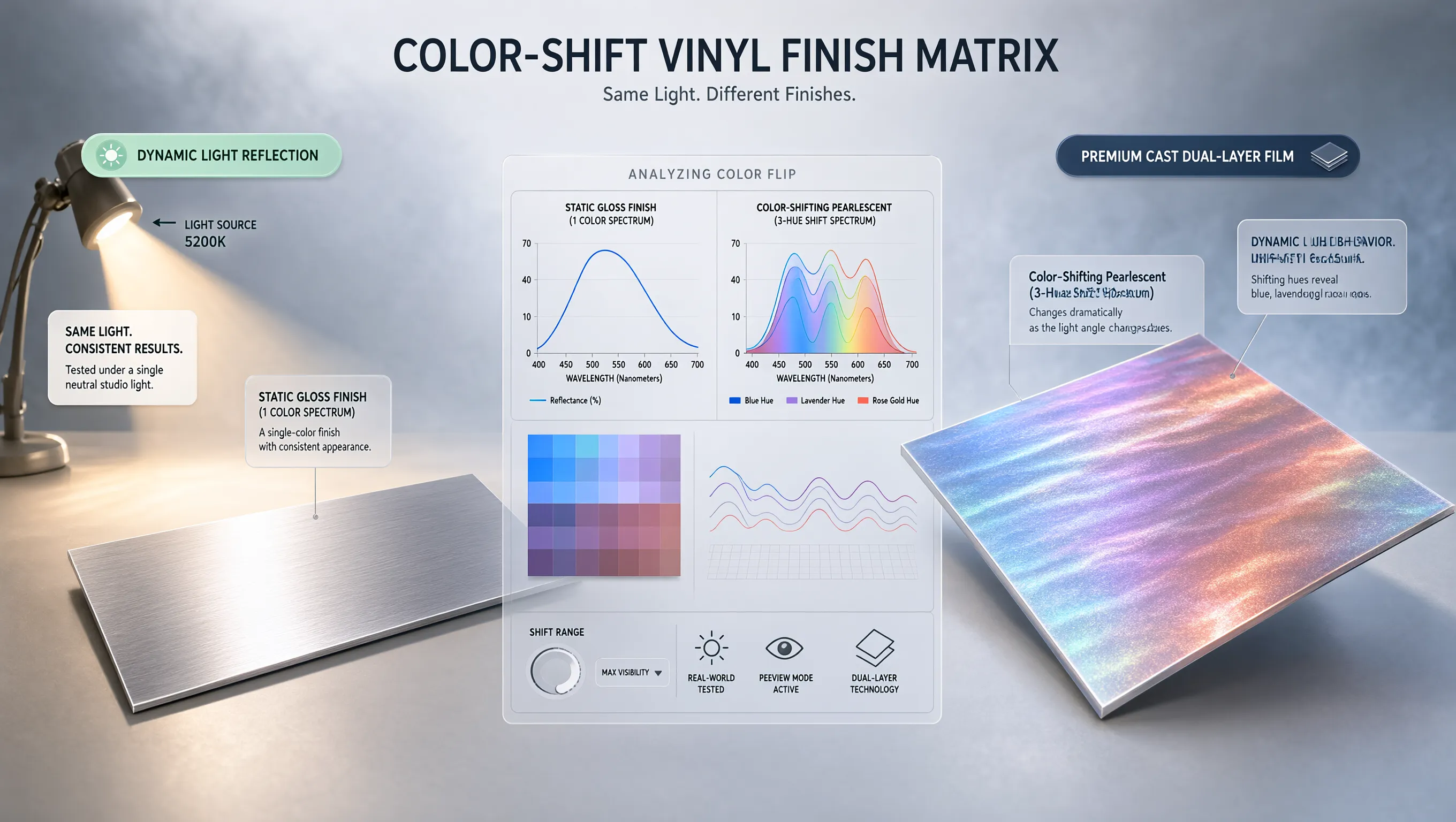
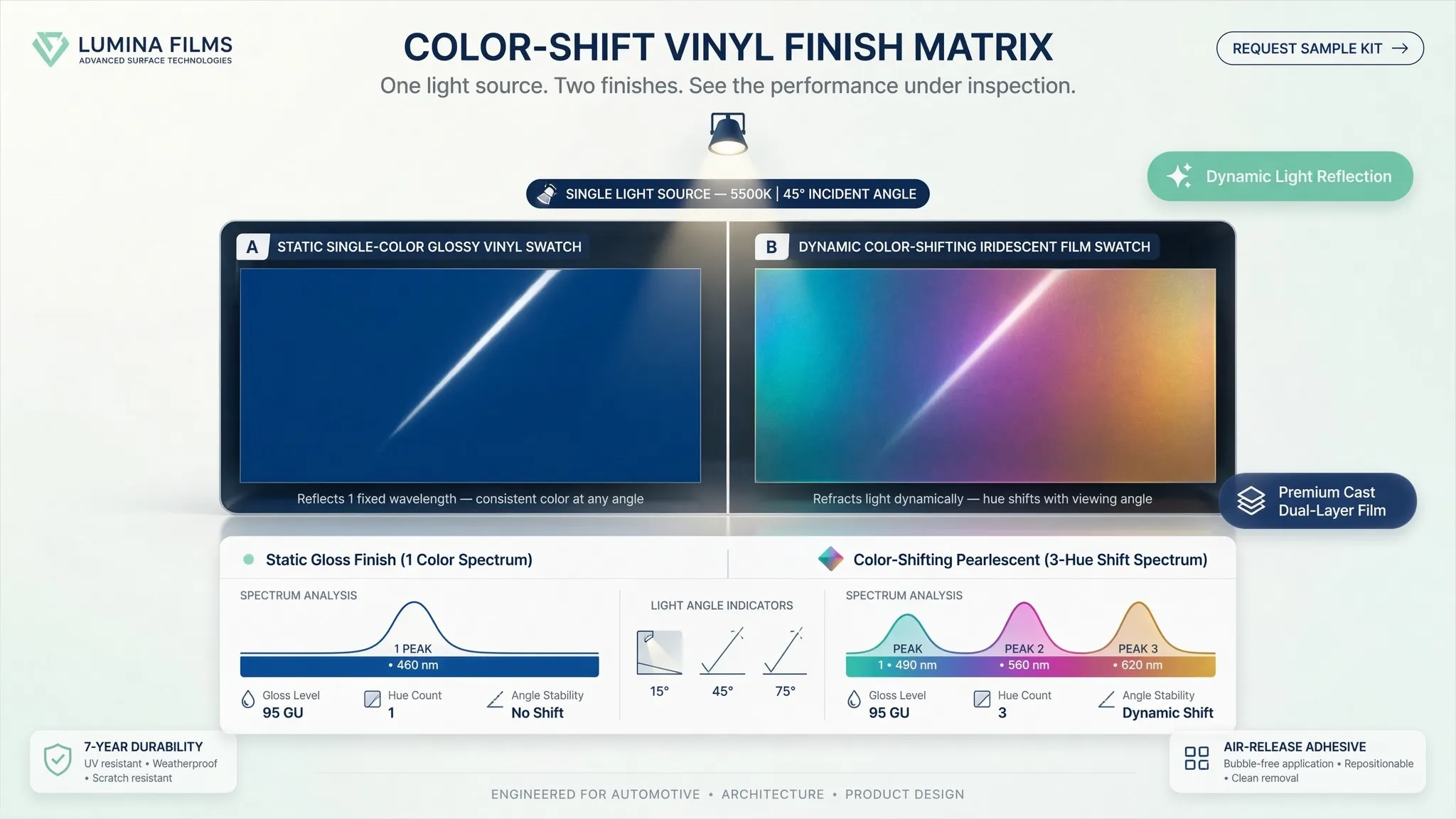
- Color-Shift / Chameleon (+20% – 40%): Multi-layered construction that resists stretching and requires strict heat monitoring to avoid distorting the shift effect.
- Mirror Chrome (+100%+): Unyielding material with minimal heat tolerance, requiring multi-piece seaming on curved bumpers.
What to Ask Before Paying a Wrap Shop
To protect your vehicle, verify these details with a Honda Civic wrap installer before placing a deposit:
- "Do you use thread-based tape lines or hand blades to trim vinyl on body panels?"
- "Which specific brand and series of cast vinyl will be used?"
- "Do you post-heat all stretched edges with a thermal heat reader?"
- "Which body parts (handles, lights, badges) will be removed during teardown?"
Visualize Your Design Before Placing an Order
Rather than guessing how a small material swatch translates onto your car, use an online color visualizer to test different finishes, gloss roofs, and accent designs on a model of your Civic. Testing combinations digitally lets you finalize your exact look with total confidence before booking your shop appointment.

Explore More Car Wrap Guides
Coverage
How Much of Your Car Should You Wrap?
Compare a complete color change with smaller wrap sections.
Appearance
Which Vinyl Finish Looks Best?
Take a closer look at matte, gloss, satin, and other popular finishes.
Alternative
Wrap or Repaint Your Car?
See how the two options compare when you're ready for a new look.
Color Ideas
Popular Color Change Wrap Styles
Explore color-change options before settling on your Model Y's new shade.
Paint
Will Vinyl Affect Your Factory Paint?
Understand what happens to the paint beneath a properly installed wrap.
Planning
Preview Your Wrap Before Paying
See how digital wrap mockups can help you test different ideas first.
FAQ about honda Civic
What should I expect to pay for a full Civic color change?
A complete exterior transformation for a Honda Civic typically ranges from $2,000 to $3,500. This covers full surface cleaning, body component teardown, and wrapping all outer panels in premium dual-cast vinyl.
Why are quotes for wrapping my Civic so far apart
The gap in a Honda Civic wrap price comes down to shop standards. Lower quotes usually skip panel disassembly, cut film directly on factory paint with blades, and use cheap calendered sign vinyl that shrinks over time. Higher quotes pay for trained technicians, thread-based tape trimming, and top-tier cast vinyl.
What am I actually paying for in a wrap installation bill
When looking at the cost to wrap a Honda Civic, raw vinyl film only makes up $600 to $900 of the total bill. You are paying primarily for labor-intensive steps: chemical surface decontamination, clay bar treatment, removing door handles and lights, deep bumper channel alignment, and thermal post-heating.
Can I wrap just the roof or hood to keep costs down?
Yes. Choosing a Honda Civic partial wrap ($250 to $800) lets you transform high-visibility areas—like adding a gloss black roof or carbon fiber hood—without paying for a full-body teardown. It gives your car a high-contrast style while protecting vulnerable clear coat from UV fading.
How much extra will custom graphics or printed designs add?
A Honda Civic custom wrap cost usually lands between $3,500 and $5,000+. This includes custom graphic design work, high-resolution printing, laminating, and wrapping inside door jambs so your original paint doesn't show when the doors open.
Will wrapping my Civic ruin the original factory paint beneath it?
No. Protecting factory paint is one of the biggest hidden value drivers of your Honda Civic vinyl wrap cost. Dual-cast vinyl acts as a protective skin against light stone chips and minor scratches. As long as your original paint is intact, the film removes cleanly without pulling paint.
Does choosing matte, satin, or chrome cost more than standard gloss?
Yes. While standard gloss sets the baseline for a Honda Civic full wrap cost, satin or metallic finishes add 10%–15% due to directional flake alignment. Color-shift chameleon films add 20%–40%, and mirror chrome can double the total cost because it is rigid and extremely difficult to stretch around curved bumpers.
How long will my wrapped Civic look good before it needs to come off
A professionally installed Honda Civic full wrap lasts 3 to 5 years. Taking basic care of the car—like hand-washing and parking in shaded areas—prevents early fading and keeps the finish looking sharp for years.
Can a wrap cover up existing paint chips, scratches, or rust?
A professional Honda Civic wrap cannot hide deep surface flaws. Vinyl conforms closely to the bodywork, meaning chips, scratches, and dents will still show up as indentations underneath. Rust or peeling clear coat must be sanded down and primed before wrapping.
What happens if I choose a budget shop that uses calendered sign vinyl instead of cast vinyl?
It sets off a fast downhill chain reaction. Calendered vinyl is thick and made for flat signs. Once forced over your Civic’s curved bumpers, it constantly tries to pull back flat. Within 6 months, the edges lift, dirt gathers beneath the adhesive, water gets trapped underneath, and the film eventually peels off in ugly strips.
It sets off a fast downhill chain reaction. Calendered vinyl is thick and made for flat signs. Once forced over your Civic’s curved bumpers, it constantly tries to pull back flat. Within 6 months, the edges lift, dirt gathers beneath the adhesive, water gets trapped underneath, and the film eventually peels off in ugly strips.
Why does using dual-cast vinyl prevent long-term failure?
Dual-cast vinyl is poured as a liquid during manufacturing, meaning it has zero built-in directional memory. It sits completely relaxed across aggressive bumper channels and body lines, ensuring it won't pull back or bubble when exposed to scorching summer heat.
Is there a real danger in letting an installer cut vinyl directly on my car with a blade?
Yes, and it causes invisible damage that shows up much later. Trimming film with a razor blade directly on bodywork almost always scores the underlying clear coat. Over time, moisture gets under those micro-cuts, rust forms unseen beneath the film, and by the time you peel the wrap off years later, your factory paint is ruined.
How does thread-based Knifeless Tape protect my vehicle's resale value?
Top-tier shops lay Knifeless Tape on your paint first, place the vinyl over it, and pull a micro-filament thread up through the film to slice it from underneath. This guarantees razor-sharp edges with zero metal-to-paint contact, protecting your underlying clear coat and keeping your car's resale value intact.
What goes wrong if a shop skips the hardware teardown stage?
If a shop doesn't remove headlights, door handles, and side mirrors, they have to trim the film flush along the outer panel edges. As soon as you open a door or view the car under direct sunlight, your original factory paint flashes through the gaps. Worse, exposed edges catch wind and pressure-washer spray, causing the film to lift.
Why is thermal post-heating a non-negotiable step in wrap durability?
Stretching vinyl around tight curves puts structural stress on the material. If an installer fails to thermal post-heating those stretched edges to 180°F–200°F with a heat gun, the film retains its mechanical memory. The first hot afternoon will cause those stressed areas to shrink, pull away from recesses, and blister.
How does improper surface prep lead to complete wrap adhesion failure?
Skipping chemical iron removal or clay bar scrubbing leaves microscopic road tar and fallout on your clear coat. Vinyl applied over contaminated paint develops tiny air pockets. Moisture collects in those pockets, degrading the adhesive from the inside out until whole sections of film bubble up.
Can I just wrap over clear coat that is already peeling or flaking?
No. Applying vinyl over peeling clear coat is a setup for disaster. The adhesive attaches to the loose paint layer rather than the car body. When the wrap shifts under thermal expansion, it pulls the loose clear coat right off, destroying the wrap and making paint repairs far more expensive.