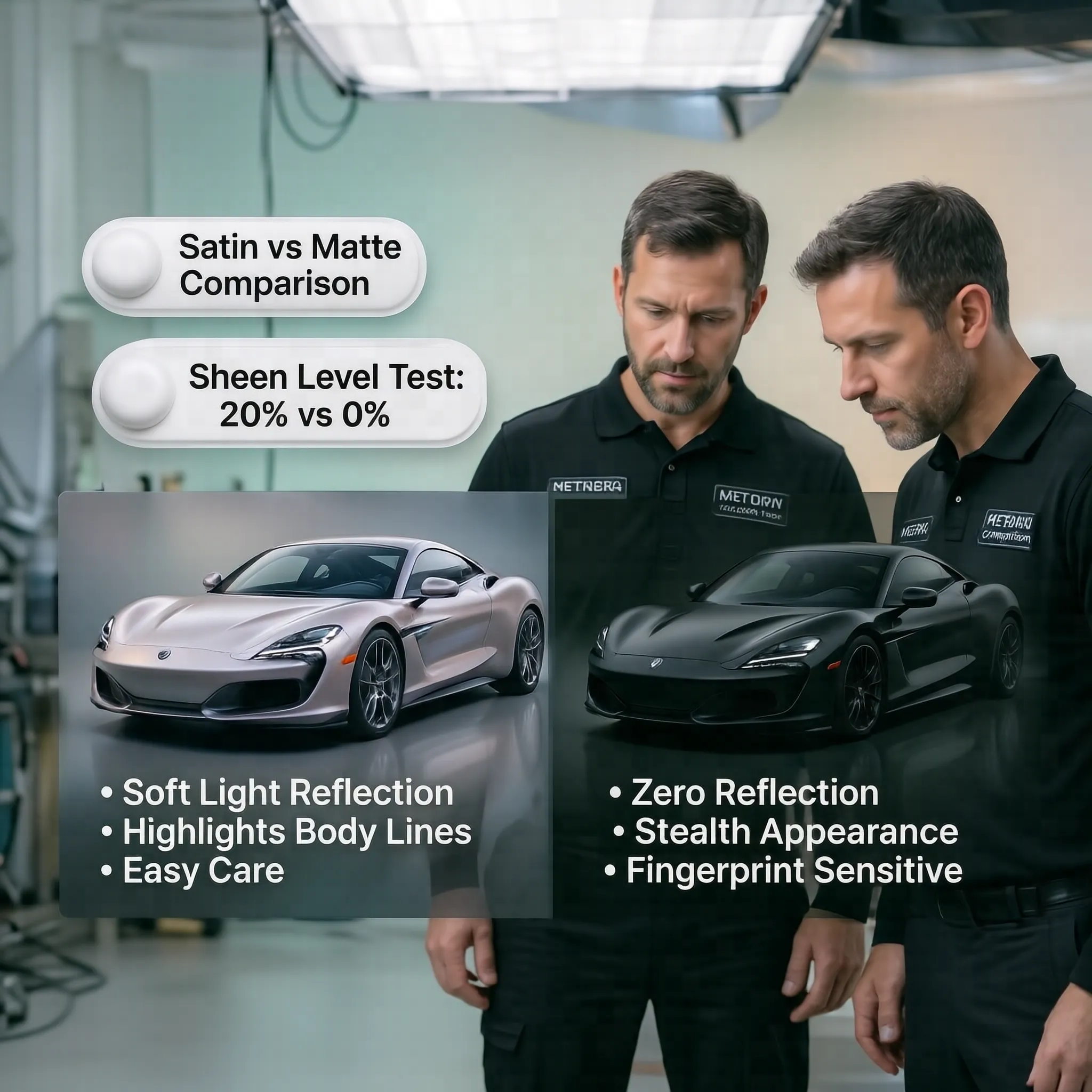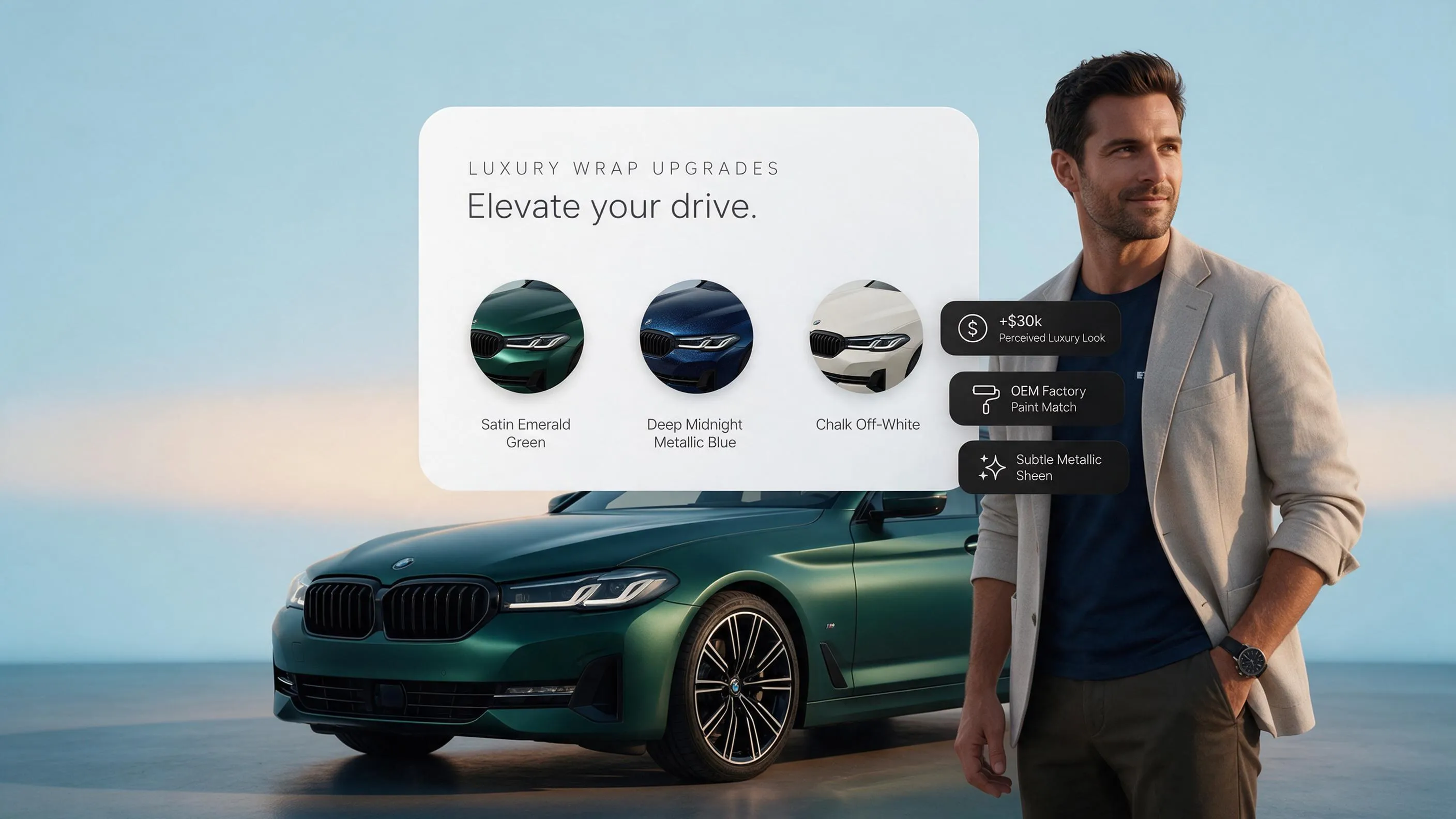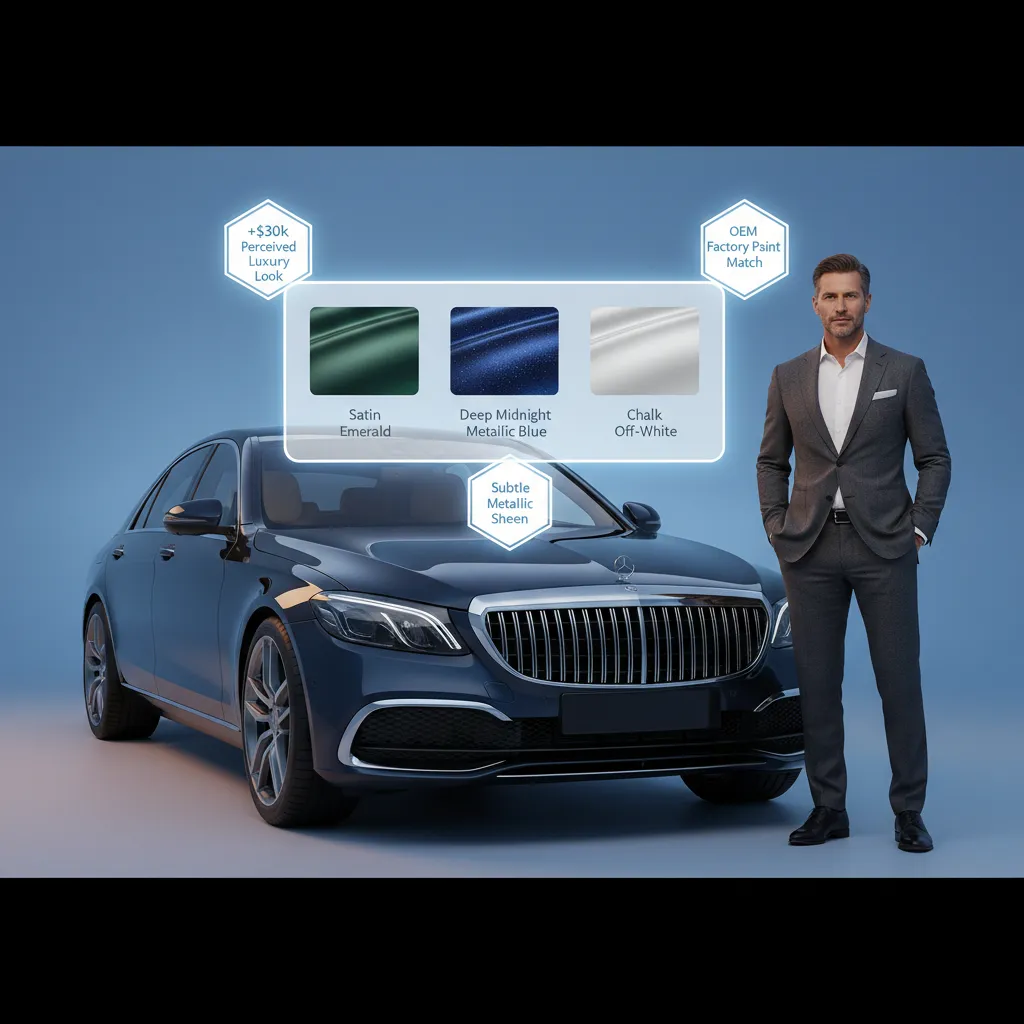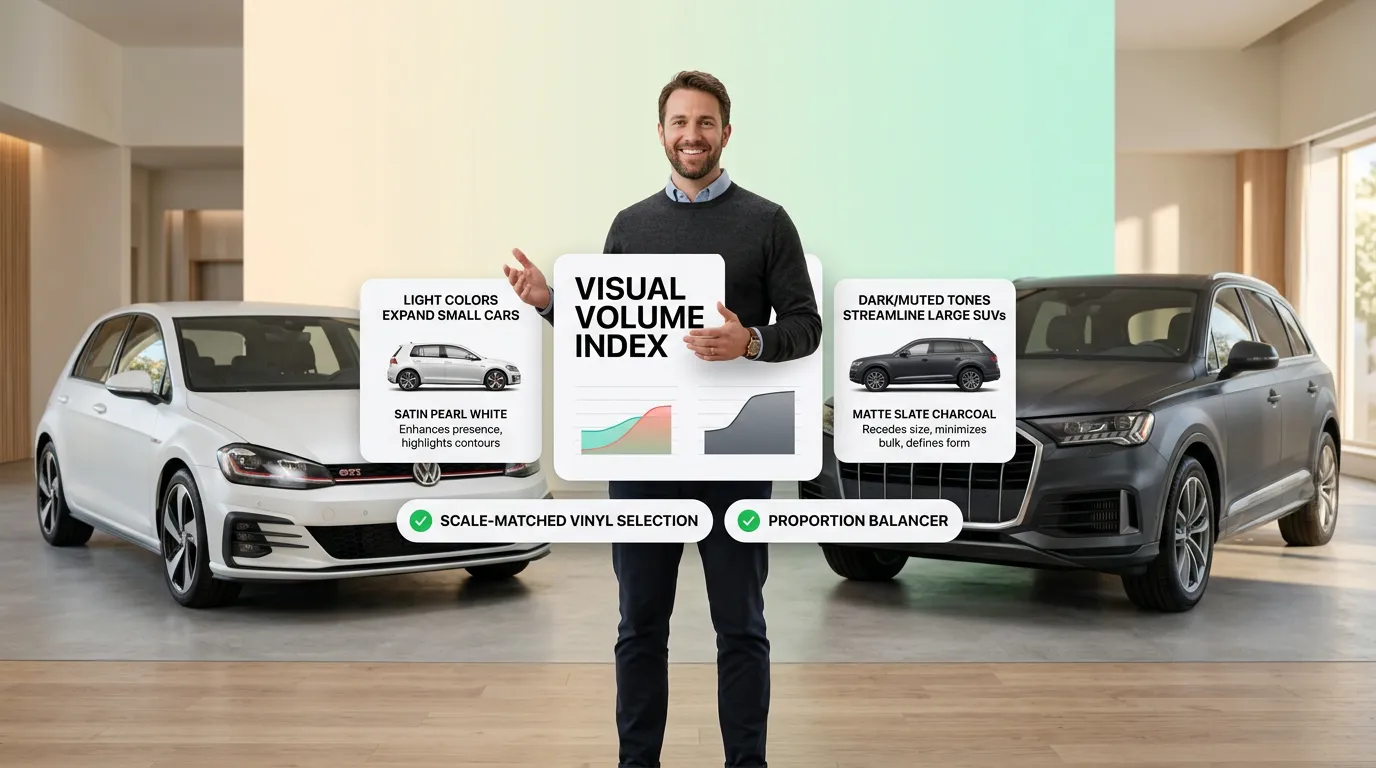
Fortunately, you don't have to guess. Before making your choice, you can deploy app like Car Wrap AI intelligence system. Simply upload a photo of your actual vehicle, discover unlimited variations, and compare layouts side-by-side to lock in your design strategy.


Professional Car Wrap Installation
What exactly happens when you walk into a high-end wrapping studio?
Here is the absolute truth: you are paying for an elite, controlled environment and decades of tactile muscle memory. Professional facilities operate like surgical cleanrooms. They lock their shop temperatures strictly between 20°C and 23°C because they know that if the air is too cold, the vinyl becomes brittle; if it is too hot, the adhesive activates too aggressively.
But wait, there's more.
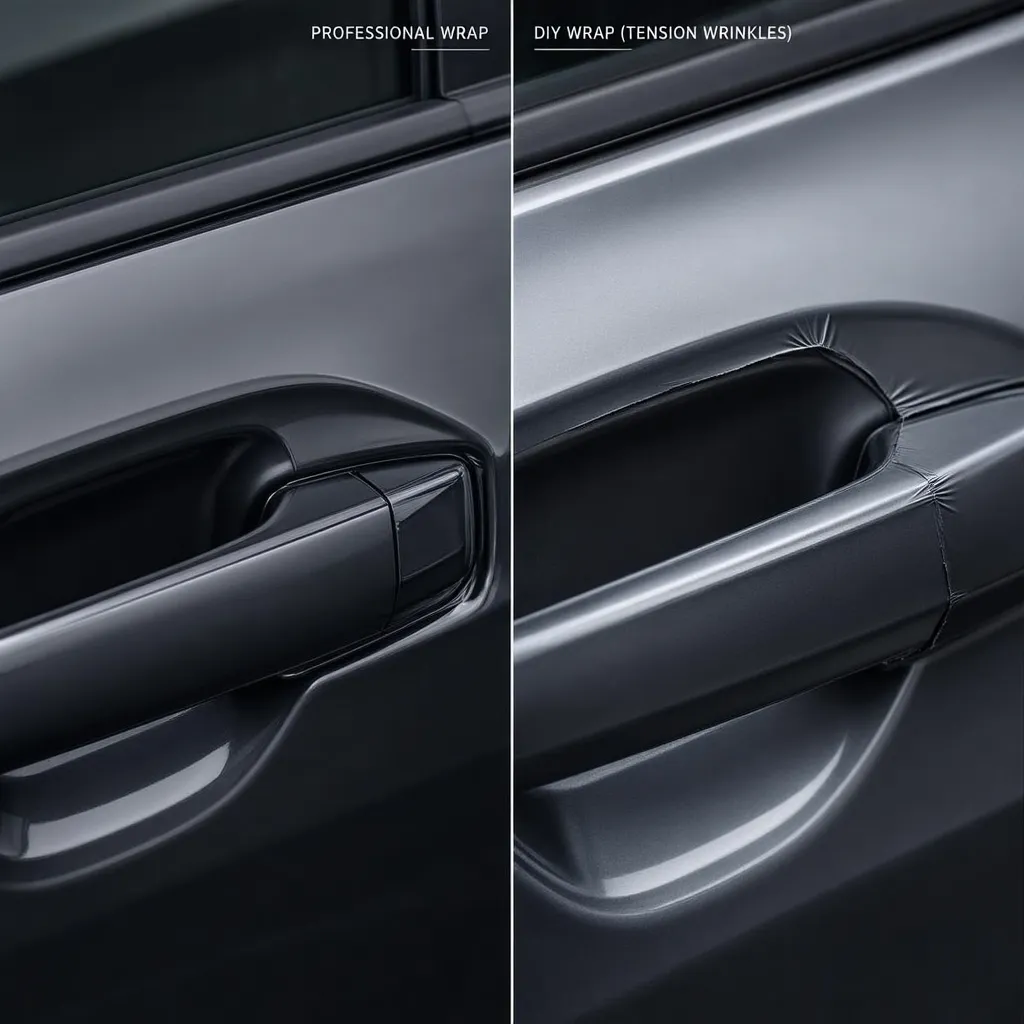
Professionals don't just lay film; they complete deep mechanical teardowns. They surgically remove door handles, side mirrors, headlights, taillights, and weatherstripping. This allows them to wrap the vinyl deep inside the structural panel gaps, hiding the factory paint completely.For a step-by-step breakdown of the entire process, explore our Ultimate Guide to Car Wrap Installation.
Finally, they execute a mandatory post-heating sequence with an infrared thermometer, raising all stretched edges to exactly 90°C to 95°C to permanently break the vinyl's memory and lock it into its new form.
Professional installers don't start with the vinyl—they start with the design. Before a single panel is wrapped, you can use AI car wrap tool to explore unlimited wrap concepts for your vehicle. Simply upload a photo of your car, try different colors, finishes, graphics, and styles, and instantly visualize how each design will look. Once you've found the perfect wrap, a professional installer can bring that exact vision to life with precision application and expert craftsmanship.
To see what's possible, create unlimited custom car wrap designs for any vehicle using AI and find the look you want before committing to installation. Explore Mercedes-AMG GT R Pro car wrap designs and generate your own custom wrap in seconds.

DIY vs. Professional Wrap Cost
Let's talk numbers.
The financial gap between these two paths is massive, and it represents the primary source of friction for most creators.
- The DIY Route: Your expenses are strictly limited to the raw materials. You are looking at the price of a premium roll of cast vinyl plus a basic bundle of car wrapping tools (squeegees, blades, knifeless tape, and a heat gun).
- The Professional Route: The price spikes significantly. Why? Because you are absorbing the cost of expert labor, cleanroom overhead, surface decontamination chemistry, and structural warranties.
Here is the best part: you can use our Car Wrap AI intelligence system to map out a precise visual layout first. By confirming your look digitally, you can calculate the exact yardage required for your vehicle, ensuring you don't over-order raw film and blow your DIY budget before you even start.
DIY vs. Professional Installation Time
Time is a currency you can never get back.
If you watch a 10-minute transformation montage online, remember that a massive amount of hidden labor was cut out.
[ Professional Crew: 2 - 4 Days ] 🕒 VS 🕒 [ Beginner DIY Solo: 30 - 50 Hours ]
A professional team of two or three master installers can systematically tear down, prep, wrap, post-heat, and reassemble a car in 2 to 4 days
But if you choose to wrap a car yourself as a beginner, clear your schedule. Expect to spend anywhere from 30 to 50 hour of focused, back-breaking labor. You will spend the first 15 hours simply scrubbing panel gaps and fighting with tight trim clips. It is a slow, metric process that requires absolute mental endurance.Before doing it yourself, make sure you fully understand what a car wrap is, how vinyl behaves, and the techniques needed to achieve a professional-looking finish.
DIY vs. Professional Wrap Quality
This is where the line is drawn in the sand.
The final aesthetic layout depends entirely on your mastery of material physics. When you execute a DIY build, your brain places immense value on the final result because you personally conquered the intense physical friction of the installation. You will feel an incredible surge of pride.
But look at it objectively.
An amateur DIY wrap frequently suffers from microscopic flaws: slight color whitening from overstretching, visible seams on complex curves, and tiny dust particles trapped under the clear coat. A master-level professional wrap looks completely indistinguishable from high-end factory paint. The corners are seamlessly tucked, the grain direction of the film matches across separate panels perfectly, and the surface is entirely mirror-smooth.Concerned that a wrap might damage your vehicle's finish? Read our complete guide on whether wrapping a car can ruin the paint and what factors actually affect paint condition before and after installation.


DIY vs. Professional Installation Challenges
What is the actual technical barrier keeping beginners from a perfect finish?
It all comes down to managing physical tension. When a flat sheet of cast vinyl meets a multi-dimensional sphere—like a flared wheel arch or an aggressive front bumper—the material accumulates massive stress.
The Technical Friction Chain: [ Flat Vinyl Sheet ] ──► [ Meets Spherical Bumper Contour ] ──► [ Stress Accumulation ] ──► [ Tension Fingering ]
Amateurs naturally try to force the vinyl into deep recesses by blasting it with a heat gun and pushing it down. This thins out the adhesive matrix, creating severe structural stress. Within a few weeks of exposure to outdoor heat, the film will snap back to its original flat memory, resulting in severe lifting and ugly bubbling.
Professionals bypass this entire challenge through a technique called feeding the curve—distributing the material stretch across large, flat areas before it ever encounters the contour, and utilizing strategic relief cuts to let excess film lay flat.
DIY vs. Professional Paint Protection
Both paths offer a solid defense for your vehicle asset, but execution details dictate the ultimate lifespan of that protection.
High-quality cast vinyl acts as an excellent sacrificial layer, sealing your factory OEM paint away from UV damage, minor road salt, and light stone chips.
However, if a DIY installer preps the car improperly—leaving microscopic moisture pockets or atmospheric grease inside a door edge—rust can secretly breed beneath the film. Furthermore, if an amateur uses a physical blade incorrectly along a body line instead of deploying knifeless tape, they can slice directly through the clear coat, permanently ruining the paint they were trying to protect. Professionals guarantee a zero-cut execution on your factory panels.
DIY vs. Professional Installation: Which Is Right for You?
To fulfill your ultimate vehicle customization goals while balancing budget, time, and quality expectations, compare both paths using the strategic matrix below.
| Evaluation Metric | The Dedicated DIY Installer | The High-End Studio Client |
|---|---|---|
| Primary Motivation | Saving capital while enjoying the hands-on build process. | Demanding a flawless, concours-level luxury finish. |
| Tool Infrastructure | Willing to purchase, learn, and master specialized wrapping tools. | Prefers zero personal operational friction and a turnkey experience. |
| Risk Tolerance | High; comfortable redoing panels and correcting installation mistakes. | Near zero; expects documented workmanship and durability guarantees. |
| Workspace Status | Home garage or workshop requiring extensive cleaning and dust control. | Climate-controlled, dust-free professional installation environment. |
| Time Investment | Several days to multiple weekends depending on experience. | Minimal personal time beyond design approval and vehicle drop-off. |
| Expected Finish Quality | Can be excellent, but depends heavily on skill and patience. | Consistent paint-like finish with professional edge wrapping. |
| Wrap Material Options | If you're wrapping your own vehicle, consider exploring premium vinyl options from TeckWrap. You can choose from matte, gloss, satin, chrome, carbon fiber, and color-shifting finishes to match your vision and budget. | Professional installers typically recommend and source premium wrap materials based on durability, finish quality, and application requirements. |
| Best For | Enthusiasts, hobbyists, and budget-conscious vehicle owners. | Luxury, exotic, high-value, and show-quality vehicles. |
Eliminate the Friction Before You Begin
Whether you choose the grueling honor of a DIY install or the absolute precision of a master shop, do not fly blind. Do not guess how a color or layout configuration will look on your car. Upload a photo of your actual vehicle into our Car Wrap AI intelligence system right now. Instantly discover unlimited visual variations, compare different finish options side-by-side, and lock in your definitive design blueprint before touching a single piece of physical material.
Frequently Asked Questions: Navigating the DIY vs. Professional Frontier
What happens if a professional shop scratches my factory paint during installation?
Elite, high-end restyling studios operate under zero-cut operational protocols.
They protect your asset by utilizing high-tensile filament knifeless tape to execute complex seam trims from beneath the film face, meaning an actual metal blade rarely touches your vehicle's clear coat.
Furthermore, unlike a home garage setup, a reputable professional shop carries comprehensive garage keepers insurance and backs their labor with written structural guarantees. If a mechanical teardown or an accidental blade slip causes a clear coat failure, the facility is entirely liable for restoring the asset to factory configuration.
Can I wrap my car outside if I don't have a clean home garage?
Do not attempt this.
Attempting a raw outdoor installation guarantees a compromised, bubbling disaster. The slightest outdoor breeze carries millions of invisible dust particles, pollen, and atmospheric debris straight onto your exposed adhesive layer.
Once a microscopic dust particle settles beneath the vinyl matrix, it creates an unfixable pinhole bubble that ruins the smooth, paint-like finish. If you lack a clean, enclosed workspace, saving up for a climate-controlled professional car wrap installation is your only viable path to fulfilling your ultimate job to be done
How do I know exactly how much vinyl roll yardage to buy for a DIY project?
Guessing your material footprint is a fast track to a financial creative wall.
If you order too little, you run short near a critical edge and ruin a 15-foot side panel layout. If you order too much, you bleed unneeded capital on excess cast film.
To solve this friction entirely, run your vehicle's specific model through our AI configuration platform before purchasing. The intelligence system runs structural calculations on your car's geometric blueprint, delivering an exact yardage requirement that accounts for the necessary 3-to-4-inch excess layout margin on every single panel.