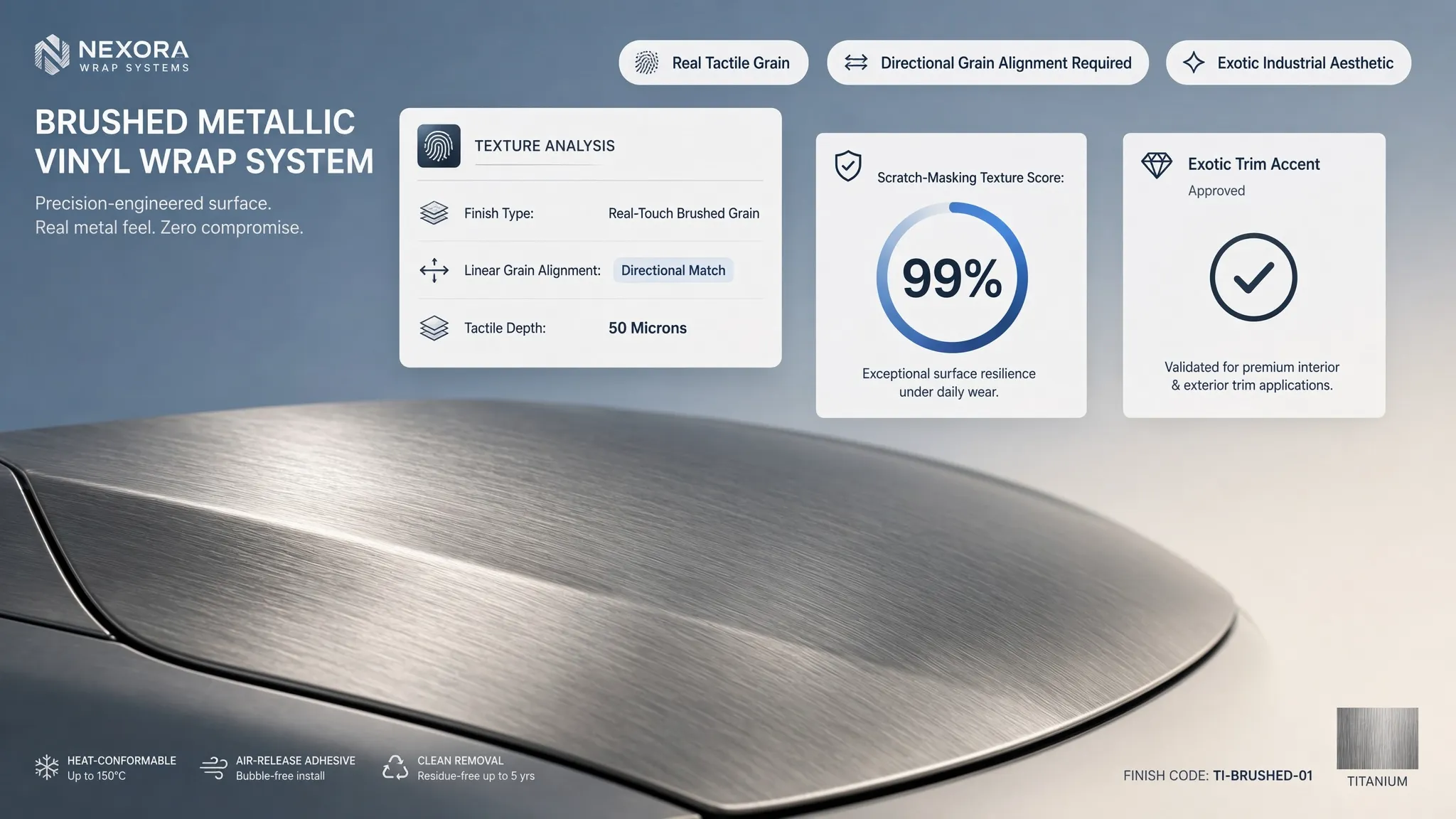

You’re walking across a sunlit parking lot when a high-performance sedan pulls into a space ahead of you.
As sunlight hits the front quarter panel, the surface ignites with a dense, shimmering burst of tiny metallic flakes. The body lines look sharp, deep, and sculpted—almost like liquid aluminum was poured directly over the sheet metal.
It isn't the flat, mirror-like glare of chrome, nor is it the muted, silky glow of a pearlescent finish. It looks like a high-end $8,000 factory metallic paint job.
That eye-catching optical pop is precisely why enthusiasts choose a metallic car wrap.
Modern cast vinyl technology allows manufacturers to embed microscopic metal flakes into high-grade PVC films. This creates a surface that captures ambient light, accentuates complex body curves, and delivers deep visual impact without forcing you to permanently sand down your vehicle’s original factory finish.
1. Why Does Metallic Vinyl Have That Shimmering, Paint-Like Finish?
To understand how a metallic vinyl wrap achieves its radiant visual depth, you have to look at how light interacts with embedded reflective particles.
Traditional solid color wraps rely on a single, uniform pigment layer. Sunlight strikes the vinyl and reflects straight back at the same intensity, offering a clean but flat appearance.
┌────────────────────────────────────────────────────────────────────────┐ │ SOLID GLOSS vs. METALLIC VINYL │ ├────────────────────────────────────────────────────────────────────────┤ │ [ Solid Gloss ] --> Light hits flat pigment --> Direct 2D reflection │ │ [ Metallic Film ] --> Light refracts through multi-flake layers │ │ creates intense shimmer & 3D body contouring │ └────────────────────────────────────────────────────────────────────────┘
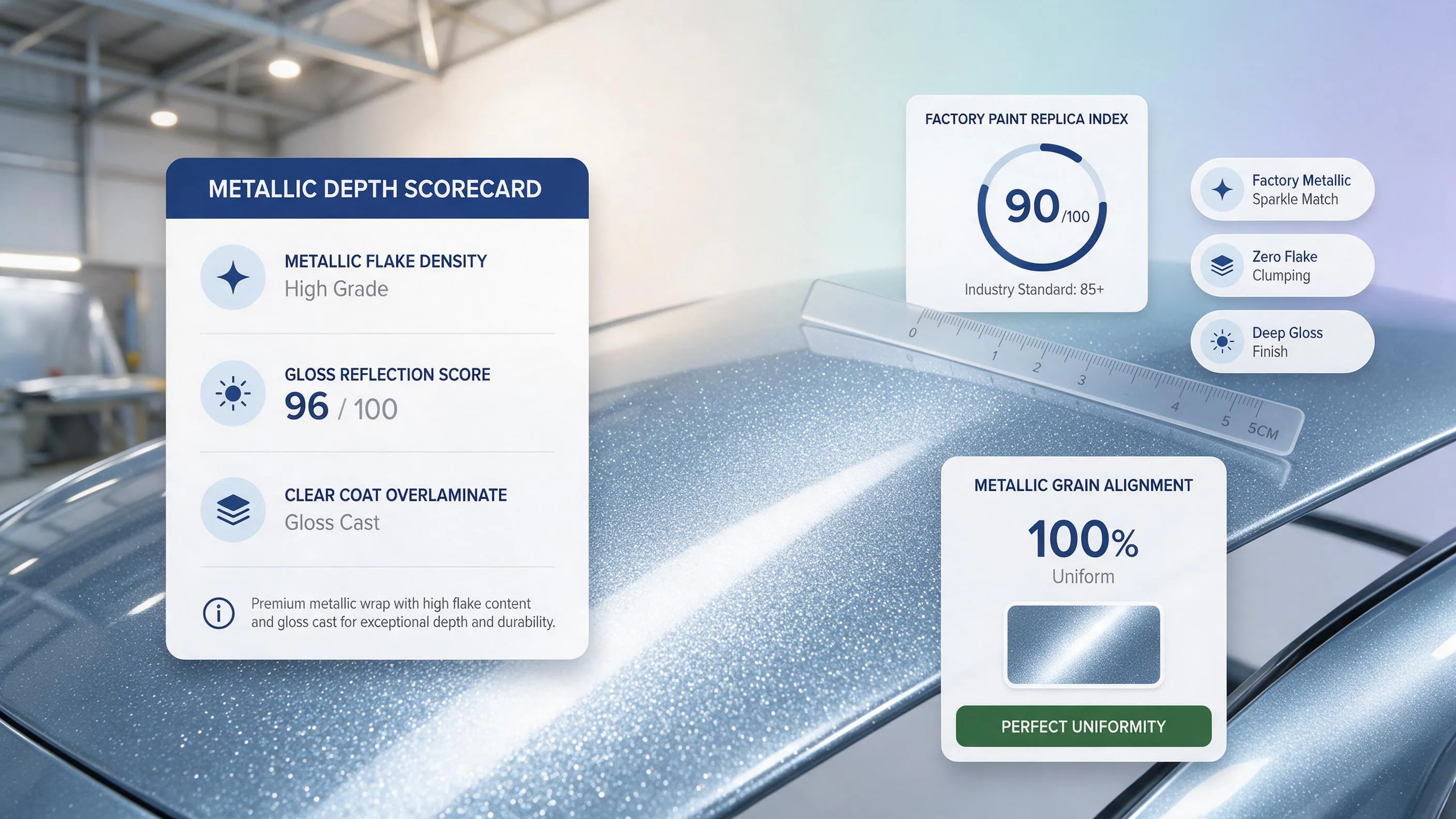
A metallic car wrap finish is built using multi-layer cast film technology. Suspended between the base color and the clear topcoat are thousands of microscopic aluminum or silicate flakes.
When direct light strikes the panel:
The clear protective layer allows sunlight to penetrate deep into the film.
Light bounces off thousands of angled micro-flakes at varying depths.
These multi-angle reflections create a dynamic shimmer that accentuates every curve, crease, and body line as you walk past the vehicle.
This complex light dispersion is what gives metallic automotive vinyl its rich, factory-paint optical depth.
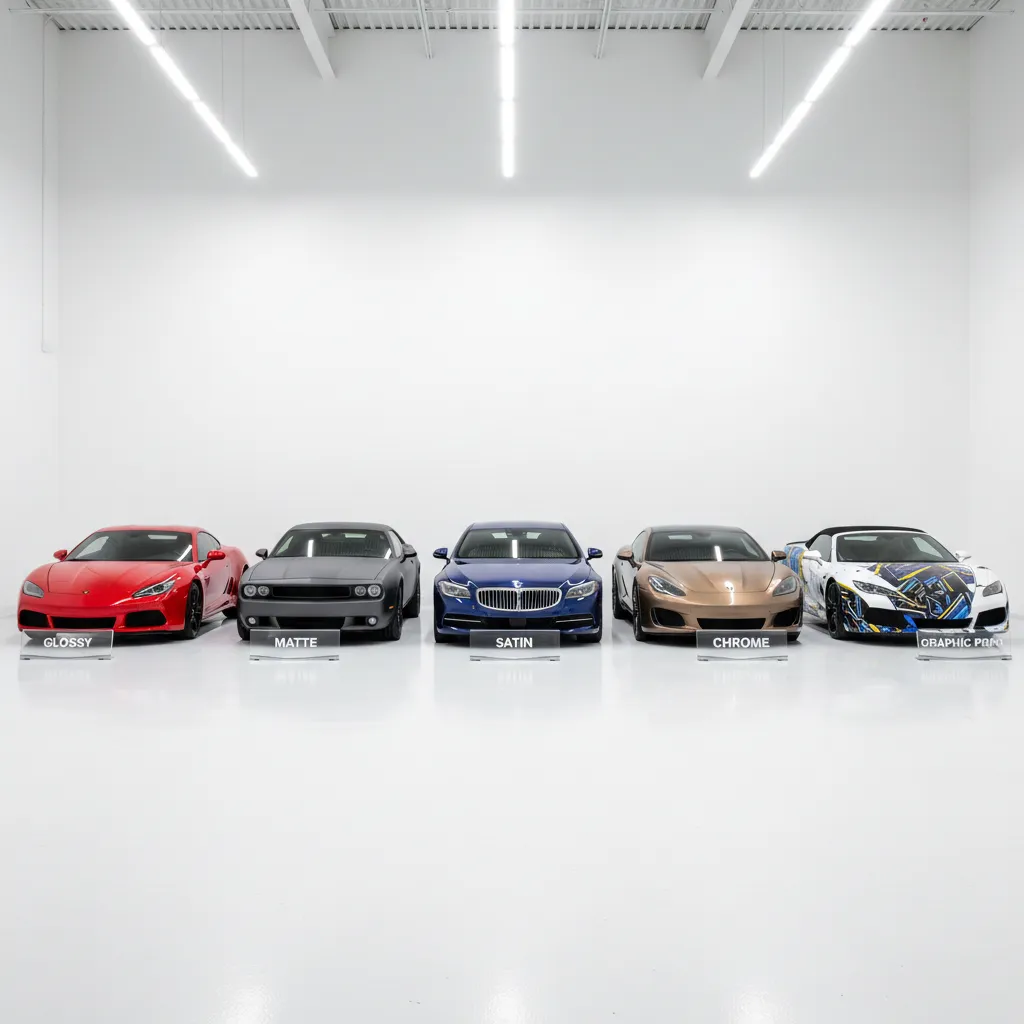
2. Metallic vs. Gloss vs. Chrome Wrap: What's the Difference?
When exploring different finish categories, it’s easy to confuse metallic vinyl with standard high-gloss or full-mirror chrome. However, each finish serves a distinctly different aesthetic purpose.
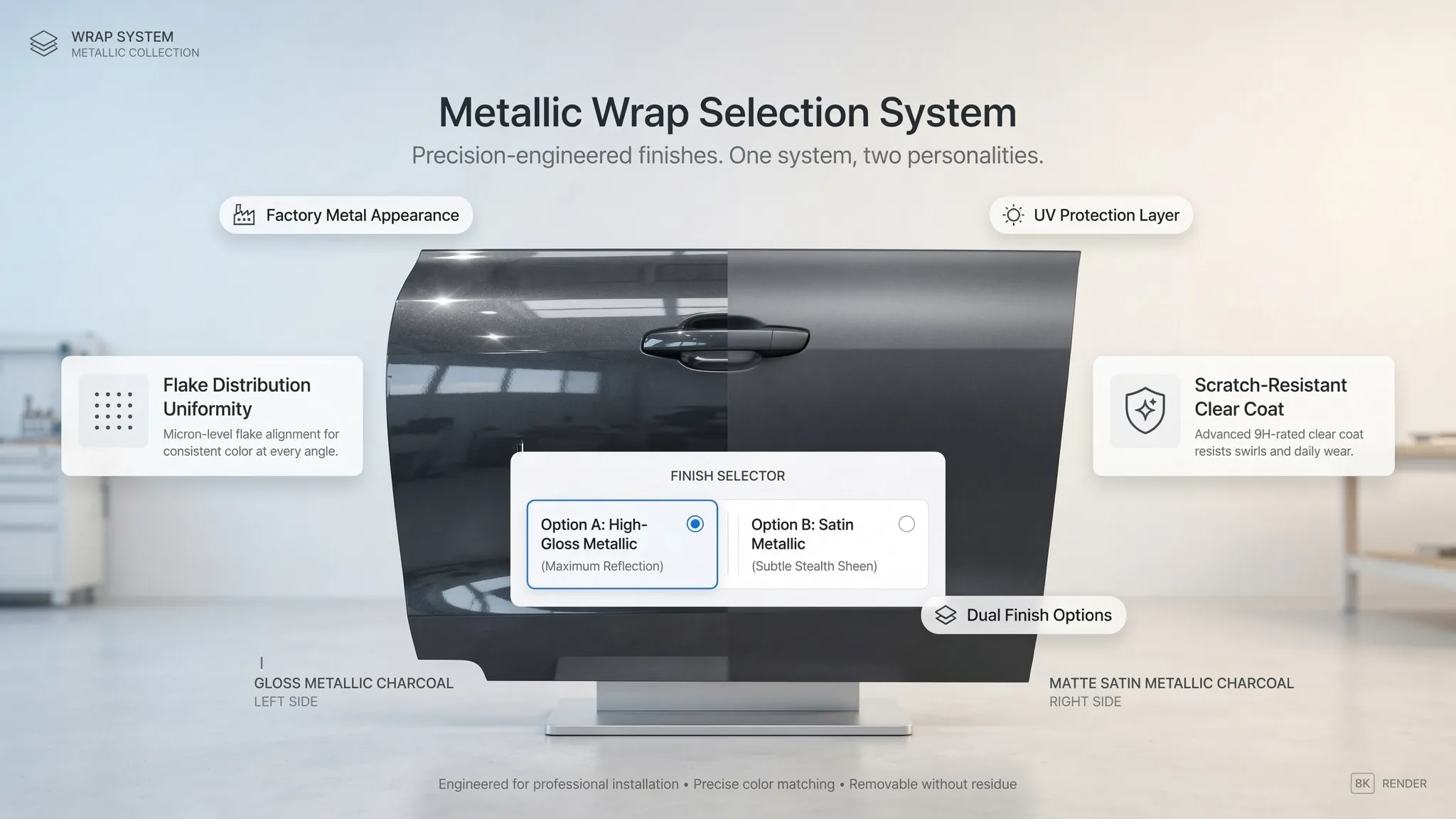
FINISH COMPARISON MATRIX [ Solid Gloss ] --> Smooth, mirror-like sheen without reflective flake [ Metallic ] --> Rich depth; embedded micro-flakes sparkle in light [ Mirror Chrome] -> Extreme, 100% mirror reflection; highly flashy
Solid Gloss Finish
Solid gloss vinyl produces a clean, polished sheen similar to standard non-metallic paint. It reflects overhead light uniformly but lacks internal sparkle or dimensional variation when the lighting changes.
Metallic Finish
A metallic finish car wrap balances richness and sophistication. It carries an internal flake density that sparkles under direct sunlight while maintaining a smooth, elegant appearance in overcast conditions.
Mirror Chrome Finish
Chrome vinyl utilizes an aluminum-vaporized film layer to create a total mirror reflection. While dramatic, full chrome finishes are notoriously difficult to install, significantly more expensive, and often draw unwanted scrutiny in regions with strict road reflection laws.
3. What Colors Are Available in Metallic Car Wraps?
Chemical manufacturing advancements from industry leaders like 3M Commercial Solutions and Avery Dennison Graphics have expanded the color spectrum far beyond traditional silver and gray.
┌────────────────────────────────────────────────────────────────────────┐ │ POPULAR METALLIC COLOR PALETTES │ ├────────────────────────────────────────────────────────────────────────┤ │ • Metallic Blue --> Deep sapphire base with vibrant cyan flakes │ │ • Metallic Black --> Obsidian base with silver & graphite sparkle │ │ • Metallic Red --> Crimson base with warm ruby & gold shimmer │ │ • Metallic Silver--> Classic liquid-metal look with maximum reflection │ └────────────────────────────────────────────────────────────────────────┘
When choosing metallic wrap colors, consider how different base tones react to light:
Dark Metallic Shades (Black, Charcoal, Midnight Green): Darker pigments absorb background light, causing the embedded metallic flakes to pop with intense, starry contrast under direct sun.
Vibrant Metallic Shades (Blue, Red, Purple): Bright base colors reflect light enthusiastically, making muscular fender flares and sculpted hoods look liquid-smooth.
Classic Metallic Silver & Gold: Highly reflective lighter shades accentuate aggressive body creases while hiding minor surface dust between washes.
4. How Does a Metallic Car Wrap Look in Sunlight, Shade, and at Night?
One of the most rewarding aspects of owning a metallic vehicle wrap is watching its appearance adapt to changing environmental light throughout the day.
LIGHTING RESPONSE BEHAVIOR [ Direct Sunlight ] --> Maximum flake activation; intense shimmer & highlights [ Overcast / Shade ] --> Smooth, rich base tone with subtle deep luster [ Night / Streetlights] --> Point-source LED flare along sharp body contours
Direct Sunlight
Under high-noon sun, the embedded flakes fully activate. The panel surface glints with microscopic sparkle, highlighting every vent, scoop, and body crease with high-contrast brightness.
Overcast Shade
Without point-source solar glare, the sharp sparkle steps down into a smooth, saturated luster. The car takes on a heavy, substantial appearance that looks remarkably close to custom hand-sprayed lacquer.
Nighttime Under Streetlights
At night, overhead street lamps, LED headlights, and city lights bounce off the metallic layer at sharp angles. The film catches point-source reflections, making your vehicle's hip lines and wheel arches pop as you cruise through urban streets.
5. Which Cars Look Best With a Metallic Wrap?
Vehicle geometry plays an enormous role in how effectively a metallic film performs. Because metallic flake relies on multi-angle light refraction, body styles with dramatic contour changes display the material best.
┌────────────────────────────────────────────────────────────────────────┐ │ VEHICLE BODY STYLE COMPATIBILITY │ ├────────────────────────────────────────────────────────────────────────┤ │ [ Sports Cars & Coupes ] --> Aggressive hips & deep vents maximize flake│ │ [ Modern SUVs & Trucks ] --> Broad side panels showcase deep luster │ │ [ Vintage Classics ] --> Smooth curved fenders highlight metallic glow│ └────────────────────────────────────────────────────────────────────────┘
Sports Cars & Supercars: Sharp character lines, aggressive front bumpers, and flared wheel arches catch light simultaneously, creating high visual contrast between highlighted ridges and shadowed recesses.
Luxury Sedans & SUVs: Massive, uninterrupted door panels and sweeping hood lines provide a expansive canvas for smooth, unbroken metallic gradients.
6. Does Metallic Vinyl Make a Car Look More Premium?
A high-grade premium metallic car wrap elevates your vehicle's aesthetic by giving it the visual weight and reflective depth typically reserved for high-tier factory paint options.
However, achieving an upscale look depends heavily on two critical factors:
Film Quality: Premium cast films utilize uniform flake distribution. Cheap calendered materials suffer from clumpy flake patterns that look cloudy or cheap.
Installation Craftsmanship: Proper surface prep and controlled stretching ensure the metallic grain remains consistent across every panel.
When executed properly with top-tier materials, a metallic wrap looks every bit as sophisticated as a multi-stage factory metallic finish.
7. Metallic Vinyl Wrap vs. Metallic Car Paint: Which Is Better?
If you are debating between wrapping your vehicle or taking it to a bodyshop for a full metallic repaint, evaluating the trade-offs in cost, reversibility, and protection is essential.
┌────────────────────────────────────────────────────────────────────────┐ │ WRAP vs. PAINT COMPARISON │ ├────────────────────────────────────────────────────────────────────────┤ │ [ Metallic Paint Job ] --> $5,000–$10,000+; permanent; long shop downtime│ │ [ Metallic Vinyl Wrap ]--> $3,000–$4,500; 100% reversible; preserves OEM│ └────────────────────────────────────────────────────────────────────────┘
Reversibility and Resale Protection
A custom metallic paint job requires sanding down your original factory clear coat, permanently altering the vehicle. A vinyl wrap is 100% removable, preserving your original OEM paint beneath while shielding it from UV degradation, light swirl marks, and road debris.
Downtime and Turnaround
A quality full-body repaint can leave your vehicle stuck in a bodyshop for 2 to 4 weeks. A professional wrap installation takes just 3 to 5 business days, getting you back on the road much faster.
8. How Much Does a Metallic Car Wrap Cost?
Because manufacturing multi-layer cast films with embedded metallic flake requires specialized equipment, raw roll costs run slightly higher than standard solid colors.
In today's market, a professional full-body installation typically ranges between $3,000 and $4,800, depending on key variables:
PRICE DETERMINING FACTORS [ Vehicle Scale ] --> Small two-door coupes use ~50ft; full SUVs use ~75ft+ [ Panel Geometry ] --> Complex front bumpers require intricate hand feeding [ Hardware Teardown ] --> Removing handles, lights & trim adds labor but hides edges [ Material Class ] --> Premium cast metallic film carries higher roll costs
Beware of ultra-cheap shops offering full-body wraps for under $1,800. Lowball pricing almost always indicates cheap calendered sign vinyl that bakes into your clear coat, coupled with rushed labor that skips paint decontamination and trim disassembly.
To see what goes into a fair pricing estimate, explore our breakdown on evaluating professional car wrap installation quotes.
9. Is Metallic Vinyl Harder to Install Than a Standard Wrap?
Yes. Installing metallic vinyl requires significantly more technical discipline than applying standard solid gloss film.
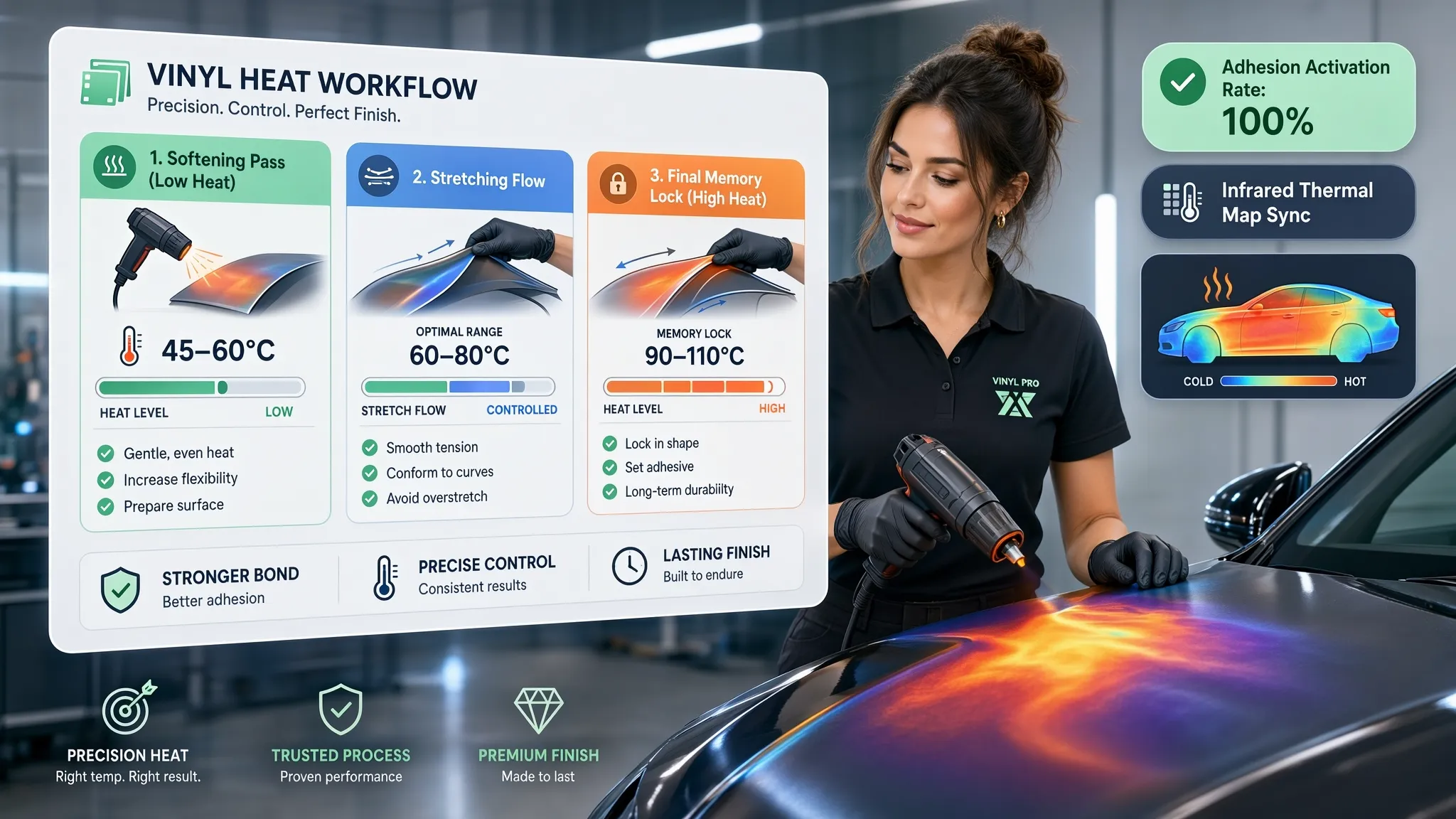
Because metallic films contain physical, directional particles suspended inside the PVC matrix, installers must manage panel orientation and thermal limits with extreme precision.
┌────────────────────────────────────────────────────────────────────────┐ │ INSTALLATION CRITICAL DIRECTIVES │ ├────────────────────────────────────────────────────────────────────────┘ │ 1. Grain Alignment: All sheets must be unrolled in the same direction │ │ 2. Heat Management: Over-heating thins PVC & causes metallic clouding │ │ 3. Tension Control: Over-stretching distorts uniform flake spacing │ └────────────────────────────────────────────────────────────────────────┘
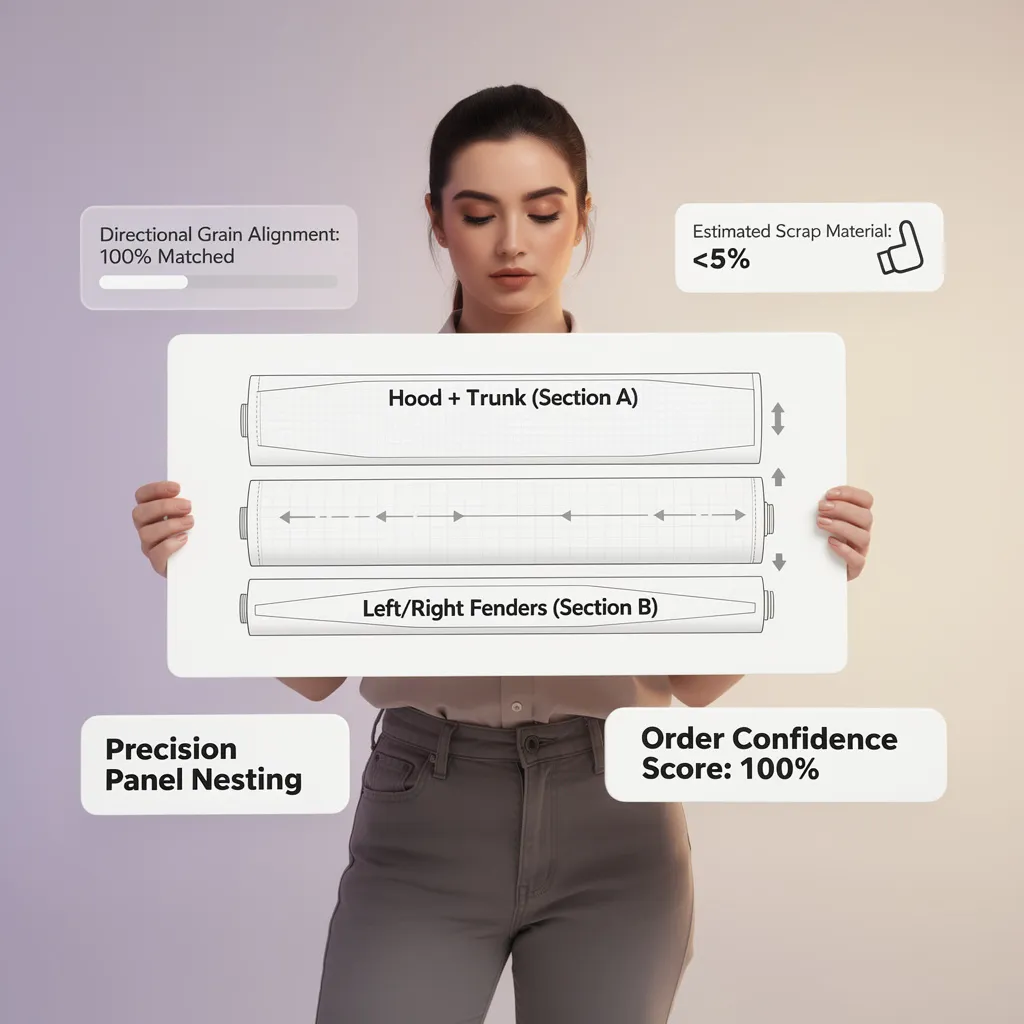
Directional Grain Alignment: Metallic vinyl has a strict directional grain from the factory. If an installer accidentally rotates a sheet 90 degrees to save material on a fender, that panel will reflect sunlight differently, appearing mis-matched compared to the adjacent door.
Over-Stretching Controls: Over-heating and forcefully stretching metallic film into deep bumper recesses pulls the embedded flakes apart. This causes severe pigment bleaching, leaving behind unsightly cloudy streaks.
To verify whether a local shop possesses the skill required for metallic application, review our guide on inspecting car wrap quality and installation standards.
10. How Do You Maintain a Metallic Car Wrap?
Preserving the brilliant shimmer of a metallic wrap requires straightforward, consistent care. Keeping the clear PVC topcoat free of road grime ensures sunlight can penetrate directly down to the embedded flakes.
MAINTENANCE BEST PRACTICES [ Safe Protocols ] --> Hand wash with pH-neutral shampoo & soft microfiber [ Surface Care ] --> Apply wrap-safe ceramic detailers for gloss & water bead [ Strict Prohibitions]--> Avoid automatic brush car washes & petroleum solvents
Stick to Hand Washing: Never run a wrapped car through an automated car wash with mechanical brushes. Those heavy bristles create micro-scratches on the clear topcoat, dulling its reflective clarity.
Clean Contaminants Quickly: Bird droppings, tree sap, and crushed bugs contain harsh acids. Wash them off within 24 to 48 hours using warm water and a soft microfiber towel to prevent permanent surface etching.
Apply Ceramic Toppers: Spraying a specialized wrap ceramic sealant over the film creates a hydrophobic barrier, causing rainwater to bead off effortlessly while shielding the vinyl against UV damage.
11. How to Choose a Metallic Car Wrap You'll Love Long-Term
Choosing a metallic shade based strictly on a compressed image on a smartphone screen can lead to surprises when the roll arrives.
Digital screens cannot accurately display how multi-angle flakes catch real sunlight.
┌────────────────────────────────────────────────────────────────────────┐ │ RECOMMENDED SELECTION PROCESS │ ├────────────────────────────────────────────────────────────────────────┤ │ Step 1: Request physical 12x12" film samples from your installer │ │ Step 2: Place the physical swatch directly against your car's hood │ │ Step 3: Evaluate the swatch in direct sun, cloudy shade & under LEDs │ └────────────────────────────────────────────────────────────────────────┘
Before committing to a full roll order, visit a local wrap shop and examine physical material swatches in person. Take the swatches outside into direct sunlight, step into the shade, and inspect them under shop lights. Seeing how the flake density reacts under real-world lighting guarantees you select a color you will appreciate every time you walk up to your car.
12. Preview Your Metallic Wrap Concept Digitally Before Booking
Want to see exactly how a high-gloss metallic finish transforms your ride before making a deposit or scheduling shop time?
Skip the guesswork and preview your aesthetic ideas in real time.
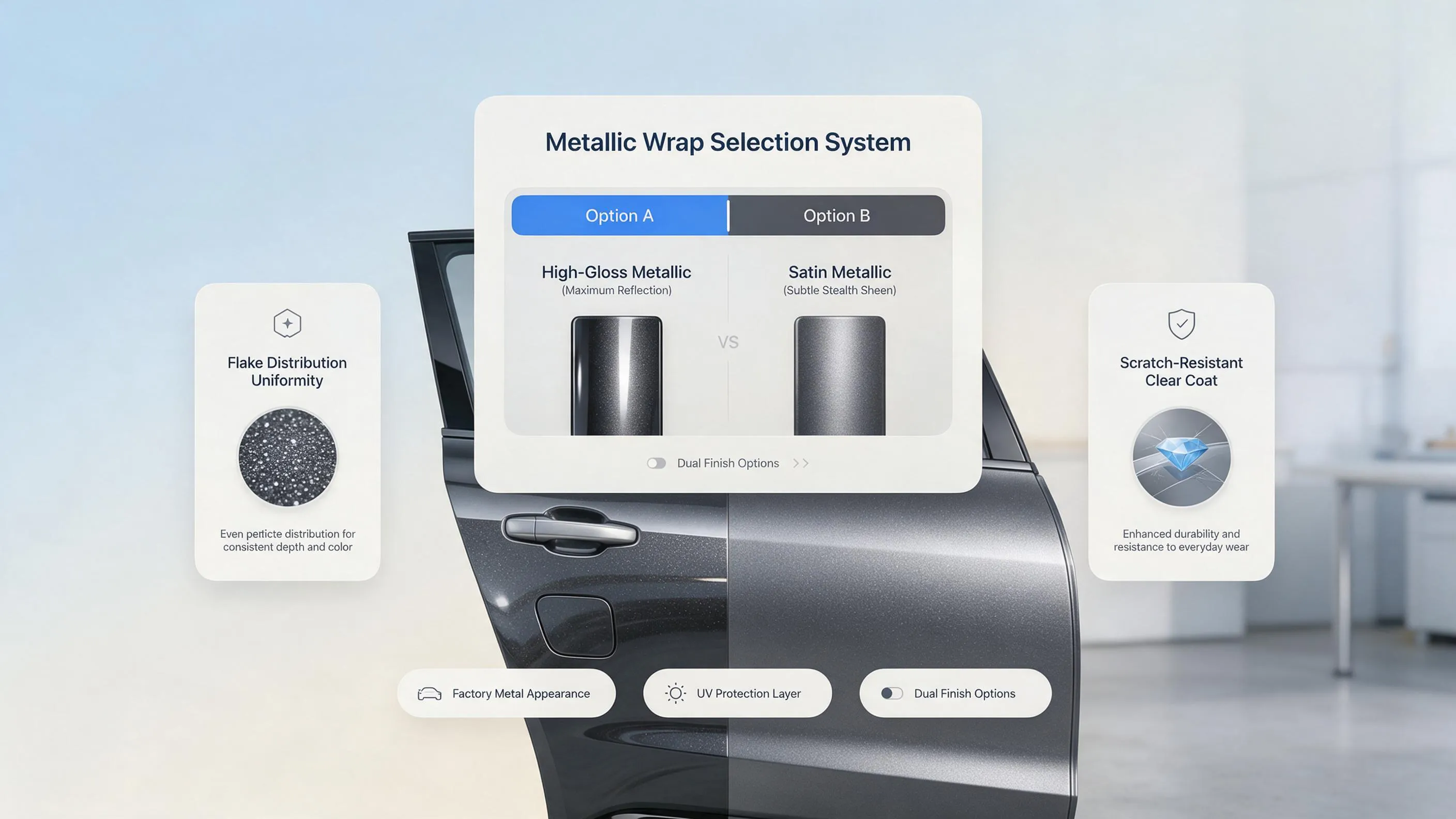
You can upload a photo of your vehicle or choose a matching body model, test dynamic metallic shades, compare gloss vs. satin flake sheens, and experiment with custom contrast roof schemes instantly.
Check out our AI vehicle wrap visualizer tool to preview your custom look live before booking your professional installation. FAQs About What Is a Metallic Car Wrap

FAQs About What Is a Metallic Car Wrap
1. Can a metallic wrap genuinely pass for high-end factory paint, or is the vinyl plastic look obvious?
Under natural light, premium cast metallic vinyl creates an optical depth that easily matches multi-stage metallic paint. The secret lies in tiny aluminum or silicate particles suspended inside the PVC matrix right beneath the clear topcoat. Cheap calendered wraps look like shiny colored plastic because their pigments sit flat on the surface, but high-end cast films refract light across multiple internal layers, creating genuine 3D flake depth.
2. What visual indicators set metallic wraps apart from standard gloss and mirror chrome finishes?
Focus on how light bounces off the panel. A standard gloss film reflects overhead light evenly without any internal shimmer or sparkle. Mirror chrome uses a vacuum-metallized aluminum layer to bounce back a crisp, 100% direct reflection like a bathroom mirror. A metallic finish sits right in the middle—delivering a rich, painted sheen filled with fine reflective particles that glint under direct sunlight without creating harsh mirror glare.
3. Why do wrap shops charge more for labor when installing metallic vinyl compared to solid colors?
Metallic films carry a physical, directional grain created by the layout of their embedded micro-flakes during manufacturing. Technicians cannot rotate a sheet 90 degrees to fit a door panel onto a leftover piece of film. Every section must unroll in the exact same orientation across the entire vehicle from hood to trunk lid. Managing this strict alignment requires careful panel layout planning and generates extra film waste, driving up material use and installation precision.
4. How drastically does the metallic sparkle change between bright noon sunlight and cloudy weather?
Direct point-source light triggers maximum flake reflection, making the bodylines and fender curves glint with high-contrast sparkle. When clouds roll in, the harsh glint softens into a smooth, liquid-like luster that makes the body panels look dense and heavy—similar to custom hand-sprayed lacquer. At night, city streetlights and LED headlights catch individual points of flake along your vehicle's hip lines as you drive past.
5. Do dark metallic wraps like black or midnight blue show flake differently than light silver or gold?
Darker base colors absorb ambient background light, which forces the suspended silver micro-flakes to pop with intense, starry contrast under direct sun. Lighter shades like metallic silver, champagne, or gold reflect light broadly across the entire panel face, creating a continuous liquid-metal sheen that happens to be exceptionally forgiving when it comes to hiding daily dust, water spots, and light road film between washes.
6. What realistic budget should I plan for a full metallic wrap installation?
Expect a professional full-body metallic installation to land between $3,000 and $4,800. The total price reflects higher raw roll costs for multi-layer cast metallic film, plus the labor hours needed for paint decontamination, surface prep, and hardware disassembly (removing door handles, mirrors, and light housings to tuck edges cleanly). Larger SUVs and trucks requiring more square footage sit at the upper end of that price spectrum.
7. What happens to the metallic flake effect if an installer stretches the vinyl too hard around a bumper?
Over-heating and forcefully pulling metallic vinyl into deep bumper channels or handle recesses pulls the embedded flakes apart. This destroys the uniform flake density, creating noticeable whitish, cloudy streaks known as pigment bleaching. Master installers avoid this by using inlay seams and feeding film naturally down into deep channels rather than bridging and forcing material across tight openings.
8. Where does a metallic vinyl wrap win out over booking a full metallic body repaint?
Cost, turnaround time, and reversibility make wrapping the clear winner for most owners. A complete metallic paint job costs $5,000 to $10,000+, takes weeks in a bodyshop, and permanently strips your factory clear coat. A metallic vinyl wrap costs significantly less, takes just 3 to 5 business days, is completely removable, and shields your original OEM paint underneath from UV fading, swirl marks, and light road debris.
9. If my wrapped passenger door gets scraped in a parking lot, how difficult is the repair?
Unlike custom metallic paint—which requires repainting and carefully blending adjacent panels to match an aged flake pattern—fixing a wrapped door is fast and contained. Your installer simply removes the damaged film from that single door panel and applies a fresh sheet of matching metallic vinyl from the same roll batch. The new section blends seamlessly without touching the fender or rear quarter.
10. Which cleaning routines keep the metallic flake reflection sharp and clear?
Hand washing with a pH-neutral car shampoo and plush microfiber mitts is the safest approach. Automated drive-thru car washes with spinning mechanical bristles scratch the clear PVC topcoat, creating micro-swirls that dull the light reaching the embedded flakes. Applying a specialized wrap ceramic detailer every few weeks creates a hydrophobic barrier that repels road grime and keeps sunlight penetrating cleanly down to the reflective particles.
11. How many years will a metallic wrap last before environmental exposure starts degrading it?
When installed by a certified professional using top-tier cast material (like 3M 2080 or Avery SW900), you can expect 3 to 5 years of vibrant service. Vertical panels like doors and fenders easily reach the upper end of that range. Horizontal surfaces like hoods and roofs absorb continuous direct UV rays and heat, making them age faster. Garaging your car or using a outdoor cover during peak summer months extends total film life significantly.
12. What steps prevent picking a metallic shade online that looks completely wrong on your car in person?
Smartphone screens and laptop monitors compress color profiles and compress light through RGB pixels, which cannot replicate how physical metallic flakes catch real sunlight across complex metal curves. Never order a full roll based on digital photos alone. Visit a local professional wrap shop, pick up physical 12x12" swatches, and inspect them outdoors directly against your car's hood in full sunlight, in open shade, and under shop LED lights.