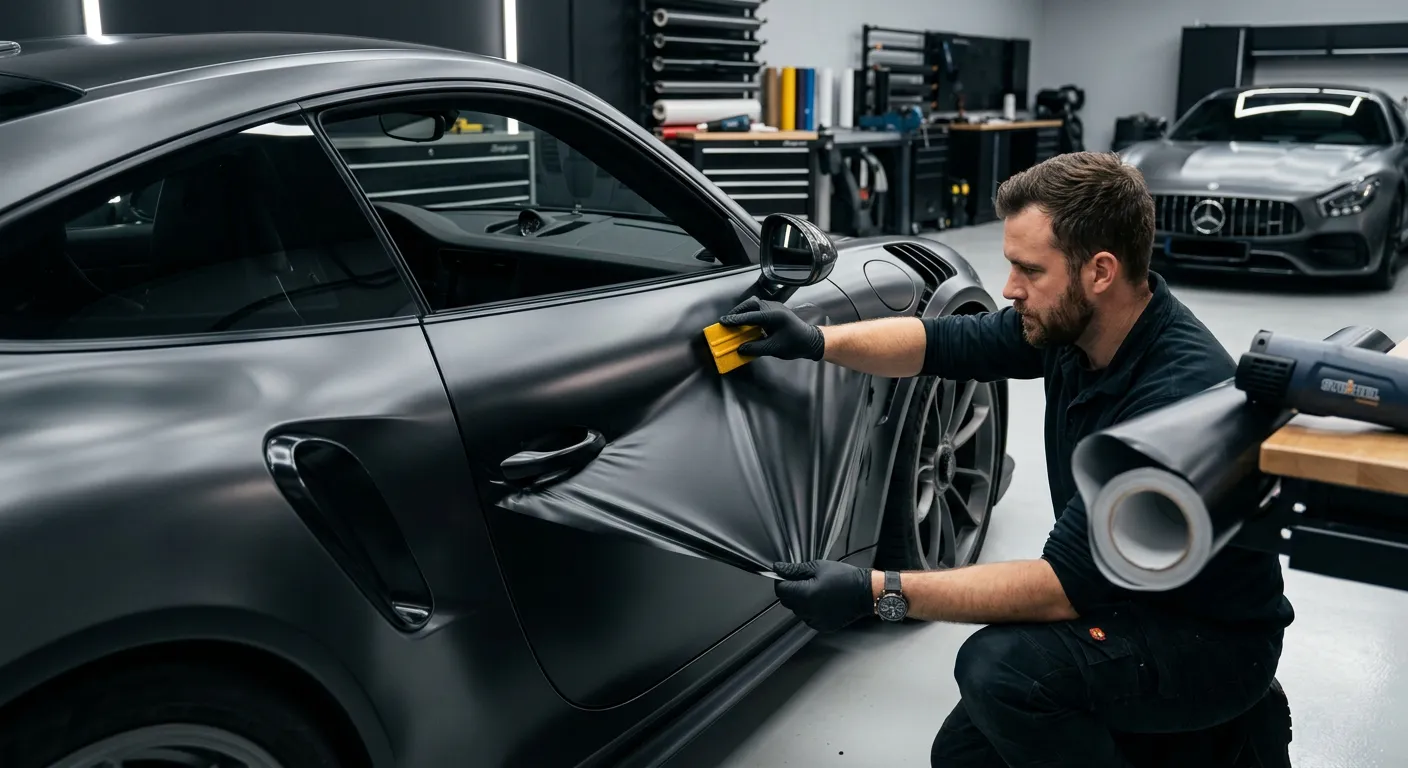

Yes, you can wrap a leased car—provided you remove the vinyl and restore the vehicle to its original condition before driving onto the dealership lot for lease return.
Here is the cold truth: leasing companies do not care how incredible your matte black or satin grey wrap looks. They care about one thing—getting their car back in stock condition without paint damage, adhesive residue, or body alterations. If you return a leased car with vinyl still attached, the inspector will charge you full dealer rate fees to strip the film and inspect the paint underneath.

A Vinyl Wrap Is Temporary, but Your Lease Agreement Still Matters
You might think, "It is completely removable, so why would the bank care?"
Here is why: while vinyl is non-permanent, your lease contract strictly forbids unapproved modifications that alter the vehicle's original state.
- Contract Ownership: The leasing company owns the title; you are paying to use their asset for a set period.
- The Reversibility Rule: Vinyl wraps protect you only because high-grade cast film peels away cleanly. If an installer uses low-grade adhesive or scores your clear coat while trimming panels, a "temporary" change creates permanent financial liability.
Look at Your Lease-End Inspection Rules Before Choosing a Wrap
Before buying rolls of film, pull out your lease agreement and check the turn-in guidelines.
Inspectors follow a rigid checklist during the pre-return inspection:
- Paint Integrity: Clear coats must be free from chemical staining, severe scuffs, or clear coat peeling.
- Body Panels: Metal panels cannot show cut lines, blade scoring, or pry marks along rubber window trim.
- Excess Wear Standards: Any aftermarket alteration that hides the factory paint prevents inspectors from verifying the body condition, leading to instant inspection holds.
Why the Original Paint Matters More on a Leased Car
Here is the secret most installer shops forget to tell you: vinyl wrap is only as good as the paint underneath it.
| [Factory OEM Paint] | ---> Strong Chemical Bond | ---> Vinyl Peels Off Cleanly |
| [Repainted/Damaged Area] | ---> Weak Clear Coat Bond | ---> Vinyl Pulls Paint Off Metal |
If your leased car has factory OEM paint in great shape, high-grade vinyl peels off smoothly. But if you try wrapping over a cheap bumper repaint or existing rock chips with peeling clear coat, removing the vinyl later will yank the paint right off the body—leaving you with a massive bill at lease return.

What Happens If You Want to Remove the Wrap Before Your Lease Ends?
Do not wait until the day before your lease ends to pull off the vinyl. Removal is a multi-step process that takes planning.
| [3 Months Before Return] | ---> Schedule Professional Removal |
| [2 Months Before Return] | ---> Inspect Factory Paint & Buff Out Adhesive |
| [1 Month Before Return] | ---> Run Official Lease-End Pre-Inspection |
Stripping vinyl requires heat guns, specialized adhesive removers, and patience. Giving yourself a 60-day buffer leaves plenty of time to fix micro-scratches or detail the original paint before the official inspector arrives.
Can a Wrap Actually Help Keep a Leased Car Looking Good?
Here is where wrapping a leased ride actually pays off: surface protection.
A thick layer of premium cast vinyl shields your factory clear coat against:
- Harsh sun oxidation and UV paint fading
- Bird droppings and sap etching
- Light surface swirl marks and light road grime
When you peel the film off after three years, the factory paint underneath looks like it just rolled off the assembly line floor.
The Most Important Choice May Be the Wrap Installer
Wrapping a car you own carries some risk. Wrapping a car you don't own amplifies that risk tenfold.
| What a Bad Installer Does | What a Pro Installer Does |
|---|---|
| Cuts vinyl directly on panels with razor blades | Uses Knifeless Tape to protect your clear coat |
| Forces vinyl into tight edges without disassembly | Removes handles and trim safely without breaking tabs |
| Uses cheap monomeric vinyl that bakes onto paint | Installs premium cast vinyl designed for clean removal |

Insist on seeing proof of insurance and ask directly if the installer uses Knifeless Tape technology on every panel seam.
Should You Choose a Full Wrap or Just Certain Panels?
You don't always need to cover every square inch of your vehicle to get a killer look.
| [Full Wrap] | ---> Complete Color Shift (Roof, Doors, Bumpers, Hood) |
| [Partial Wrap] | ---> High-Impact Accents (Gloss Black Roof, Mirror Covers, Hood) |
Partial Wraps (Recommended for Budgeting): Wrapping just the roof gloss black or adding accent stripes gives you a custom stance for a fraction of the cost—and takes less than an hour to peel off before lease turn-in.
Full Wraps: Ideal if you want a complete color transformation and are prepared for the full installation and removal budget cycle.
What Will a Leased Car Wrap Really Cost You?
Calculate the total lifecycle investment before pulling out your credit card:
| [Initial Installation] | ---> $2,500 – $4,500 |
| [Professional Removal] | ---> $500 – $1,000 |
| [Detail & Polish] | ---> $200 – $400 |
| ------------------------------------------------ | |
| TOTAL COMMITMENT | ---> $3,200 – $5,900 |

Factor in both installation and teardown costs up front so there are zero financial surprises when your lease term ends.
When Does Wrapping a Leased Car Make Sense—and When Doesn't It?
Wrapping Makes Sense If:
- You have at least 2 to 3 years left on your lease term.
- The vehicle features 100% factory OEM paint in pristine condition.
- You want to shield the factory finish from daily sun exposure.
Skip the Wrap If:
- Your lease ends in less than 12 months.
- The car has panel repaints or severe rock chips with flaking clear coat.
- You do not want to pay for professional removal before turning the keys back in.
Don't Pick a Wrap Color From a Swatch Alone
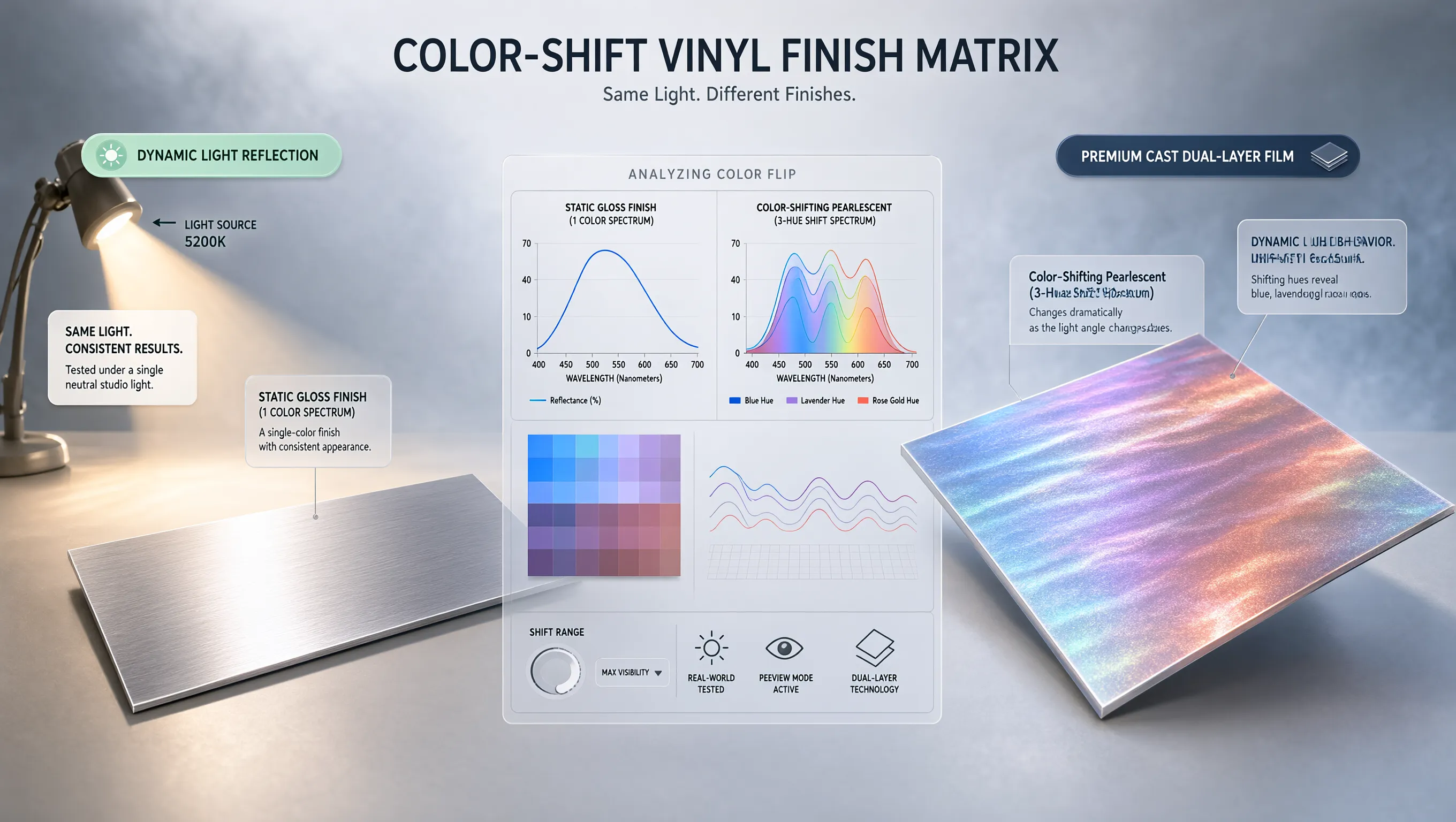
Staring at a tiny 2-inch vinyl swatch under fluorescent shop lights is the fastest way to get a result you hate.
Colors change dramatically when stretched over wide hood curves, sharp fender lines, and changing outdoor light. A shade of satin grey that looks sleek on a flat table can look completely flat and washed out on a curved sports coupe.
See Your Leased Car in a New Color Before You Wrap It
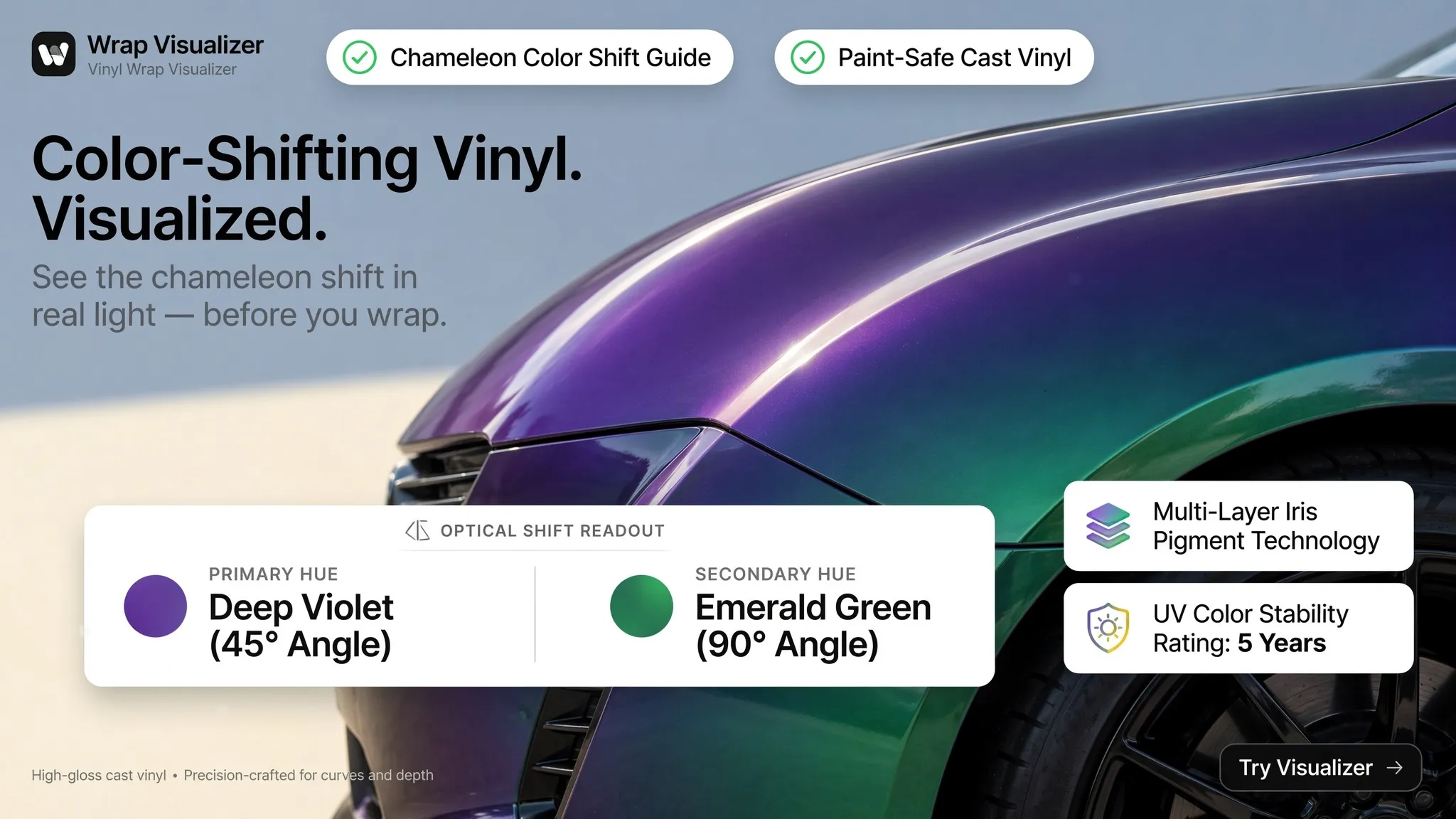
Want to see how your leased ride looks in Satin Dark Grey, Gloss Nardo, or Matte Black before spending thousands at a shop?
Using an AI car wrap visualizer lets you drop real-world vinyl finishes directly onto your vehicle's specific make, model, and year. You can test subtle accents against full color swaps, preview the finish from multiple angles, and take high-resolution renders straight to your installer for an exact quote.

Yes, you can wrap a leased car, but the golden rule is simple: you must remove the vinyl film and restore the vehicle to its stock appearance before turning it back in to the dealership.
Leasing companies care about getting their asset back in original condition. If you hand over a leased car with vinyl still attached, the dealership will charge you premium labor fees to strip the film and inspect the paint underneath.
FAQ: Wrapping a Leased Car
Can I legally wrap a leased car?
Yes. You are free to customize the appearance of a leased vehicle as long as the modification is 100% reversible. Because high-quality vinyl wrap peels off without permanently altering the body, it is allowed—provided you remove it before your lease-end inspection.
Do I need to notify my leasing company before installing a wrap?
No. Most lease contracts forbid permanent alterations (like aftermarket body kits or custom paint jobs), but removable vinyl wraps fall under temporary cosmetics. As long as you hand the keys back in original stock condition, you do not need prior written permission from the bank.
What happens if I return my leased car with the wrap still on?
The dealership will classify the wrap as unauthorized wear-and-tear or an unapproved modification. They will bill you for professional removal, glue cleanup, and a full paint inspection—often charging double or triple standard shop rates.
Will removing the wrap damage the factory paint underneath?
Not if your car has original factory OEM paint and you use premium cast vinyl. Factory paint bonds under high-temperature baking ovens, so the wrap peels off cleanly. However, if your leased vehicle had a cheap body shop repair or panel touch-up, removing the vinyl later could lift the clear coat.
How long before lease turn-in should I remove the wrap?
Schedule removal 30 to 60 days before your official lease inspection. Stripping vinyl takes time, and giving yourself a buffer lets you inspect the factory paint, clean off lingering adhesive residue, and detail the clear coat before the dealer inspector arrives.
Can a vinyl wrap help protect my leased car from excess wear fees?
Yes. A full vinyl wrap acts as a sacrificial barrier against UV rays, light surface scratches, bird droppings, and swirl marks. When stripped away, your factory clear coat underneath looks as fresh as the day you picked up the keys, helping you avoid paint damage charges at turn-in.
How do I make sure the installer doesn't cut my leased car's clear coat?
Hire a certified professional installer who uses Knifeless Tape technology. Knifeless tape uses a fine filament embedded in a flexible strip to slice through vinyl on the panel, eliminating the need to drag razor blades across your leased car's factory clear coat.
Can I wrap over existing rock chips or scratches on my leased car?
You can, but the vinyl will conform to the surface defect, making deep scratches or chips visible right through the film. Furthermore, if clear coat is already flaking around a chip, the wrap's adhesive will pull more paint off during removal, creating a repair bill at lease return.
Full wrap vs. partial wrap: Which makes more sense on a leased car?
Partial Wraps (Roof, Mirrors, Hood): Perfect for high-impact styling on a budget. They cost significantly less ($300–$800), take minimal install time, and pull off in under 30 minutes before turn-in.
Full Wraps: Ideal if you want a complete color shift and plan to keep the lease for 2 to 3 full years to maximize the value.
What is the total lifecycle cost of wrapping a leased vehicle?
Factor in both installation and teardown up front:
- Professional Installation: $2,500 – $4,500
- Professional Removal: $500 – $1,000
- Final Paint Polish & Detail: $200 – $400
- Total Investment: $3,200 – $5,900
What should I do about my auto insurance policy if I wrap a leased car?
Standard insurance policies only pay to repair OEM paint after an accident. If you want your $3,000 wrap covered in a fender bender, add a "Custom Parts and Equipment" (CPE) endorsement to your auto policy and keep your installation invoice as proof of value.
How can I see how a new wrap finish will look on my leased car before buying?
Staring at a tiny 2-inch material swatch makes it tough to picture the final result on wide hood curves or sharp body lines.
Using an AI car wrap visualizer allows you to upload photos of your vehicle's make, model, and trim to preview high-resolution gloss, satin, matte, or metallic finishes under realistic lighting before spending money at a wrap shop.