
You push through the morning crowd at an indoor arena, camera in hand, navigating through rows of highly modified builds.
Most vehicles blend into a collective haze of shiny clear coats and familiar metallic paints. But then, tucked under the overhead spotlights on the main concourse, a widebody coupe stops you dead in your tracks.
As you step closer, the light doesn't just bounce off the panels—it glides across the hips in a liquid, multi-tier color transition. From twenty feet away, it looks like deep midnight violet. From five feet out, the character lines glow with an intense champagne gold, while the shadowed recesses drop into a rich, velvety indigo.
People aren't just walking past it; they are circling it, crouching down to check the door hems, and pulling out their phones to shoot video from three different angles.
That visual power is the hallmark of the best wrap finish for a show car.
In a crowded show hall where judges and enthusiasts evaluate hundreds of builds side-by-side, achieving trophy-winning recognition isn't about picking a nice color off a swatch chart. It’s about selecting an advanced film architecture that captures event lighting, accentuates complex panel geometry, and executes flawless edge installation up close.
1. Under Show Lights, Your Wrap Can Look Like a Completely Different Color
Here’s a critical lesson many builders learn the hard way: a vinyl film that looks breathtaking in an outdoor driveway can turn flat and lifeless under venue lighting.
┌────────────────────────────────────────────────────────────────────────┐ │ LIGHTING ENVIRONMENT DYNAMICS │ ├────────────────────────────────────────────────────────────────────────┤ │ [ Outdoor Sunlight ] --> High-intensity single point | Natural UV flare│ │ [ Indoor Arena LEDs ] --> Multi-angle spotlights | High specular glare│ │ [ Overcast Outdoor ] --> Soft, diffused light | Base color dominant│ └────────────────────────────────────────────────────────────────────────┘
Convention centers and indoor arenas utilize intense overhead halogen or LED arrays overhead.
When picking best show car wrap colors, you need to evaluate how your film reacts to multiple point-source lights simultaneously:
Solid High-Gloss Films: Reflect ceiling fixtures as sharp, white glare spots that can overpower the actual pigment underneath.
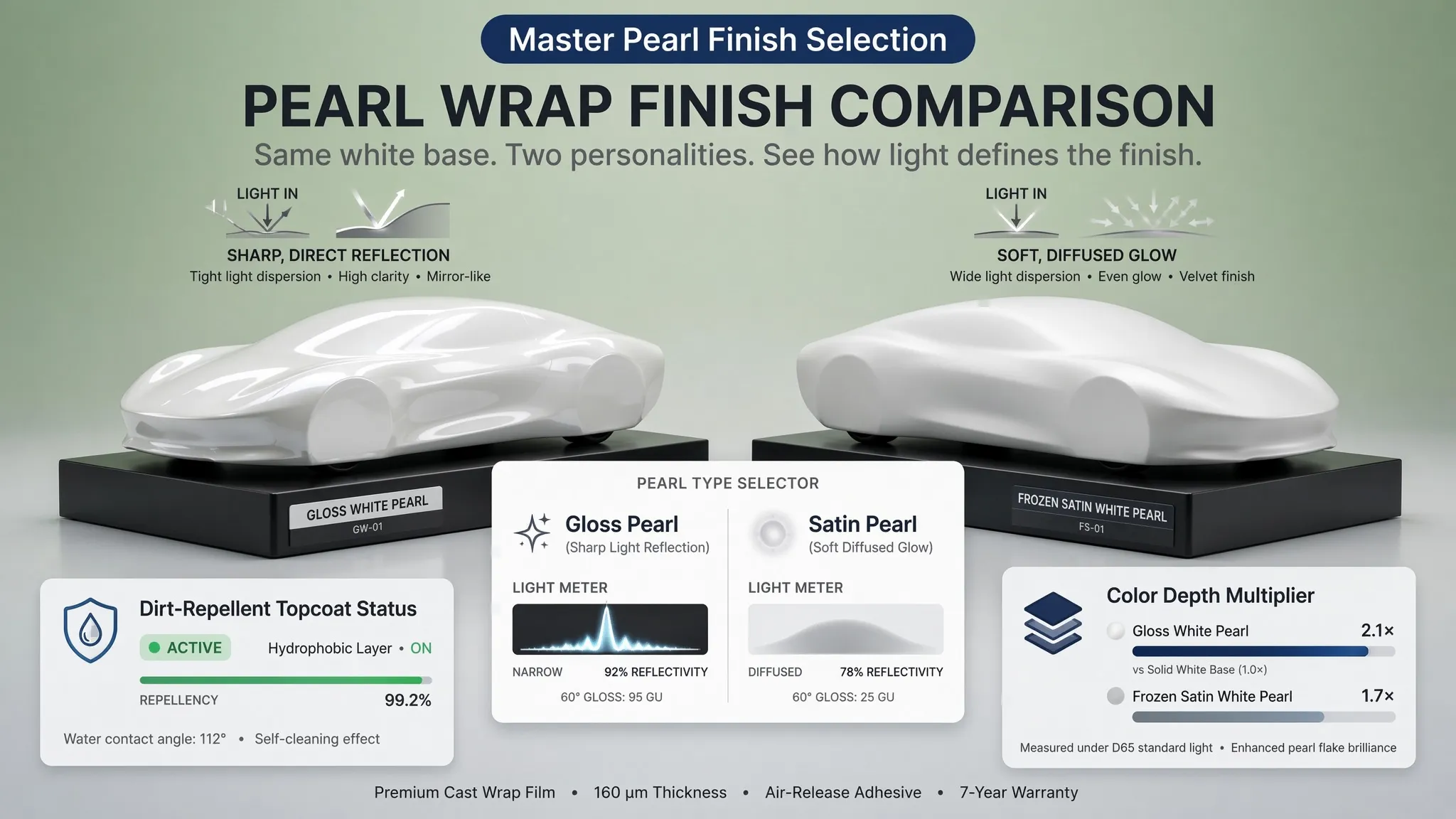
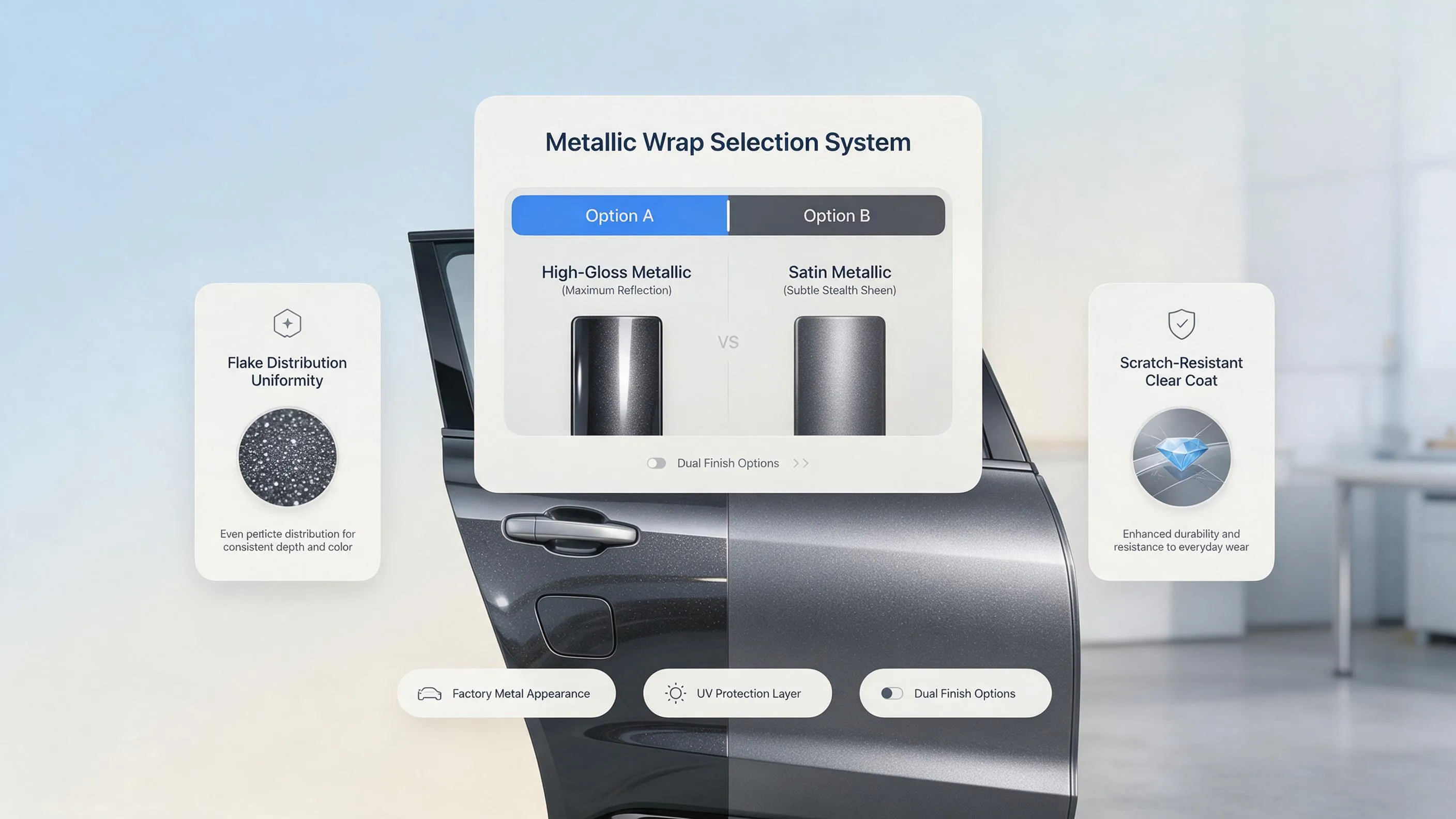
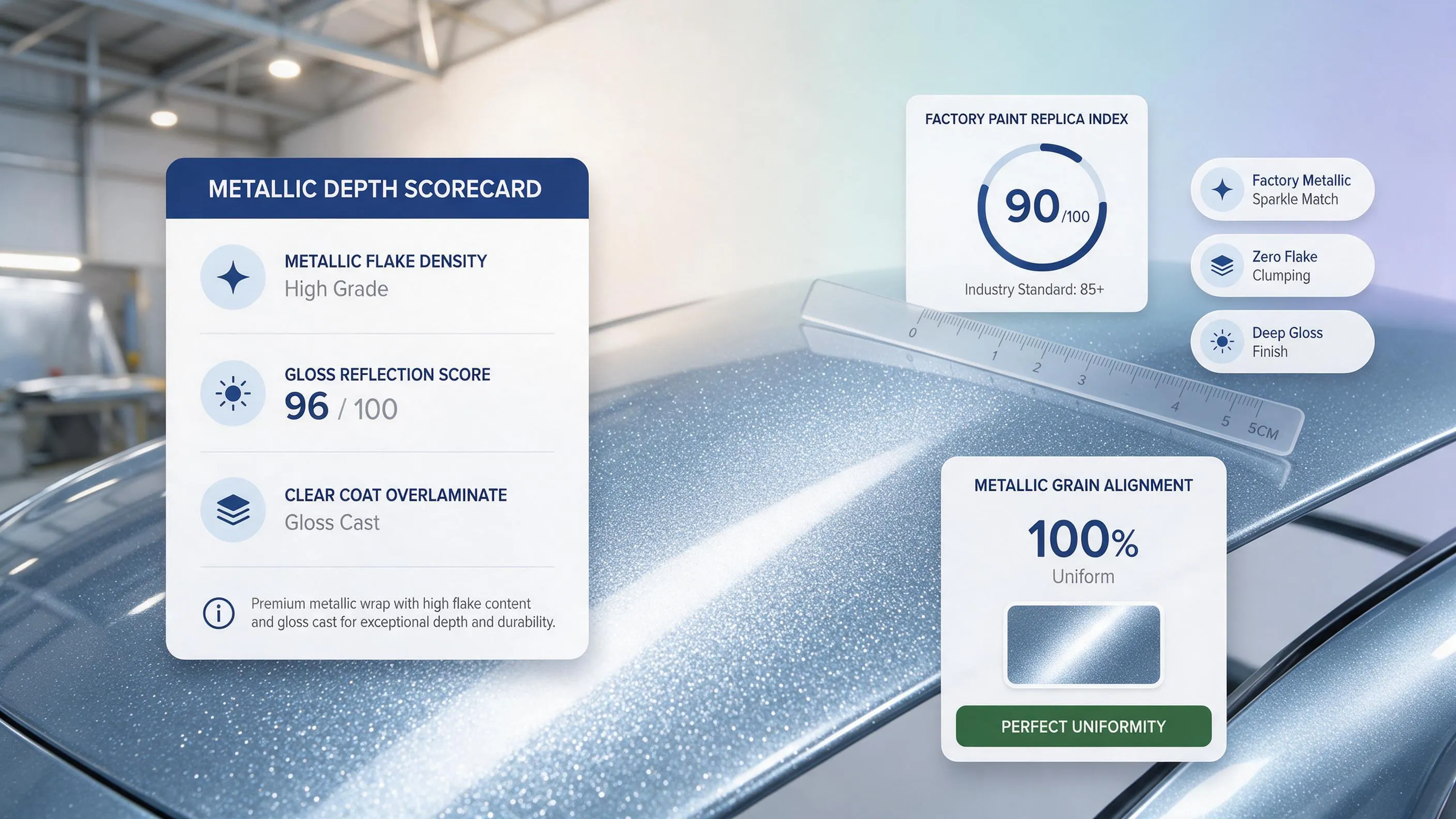
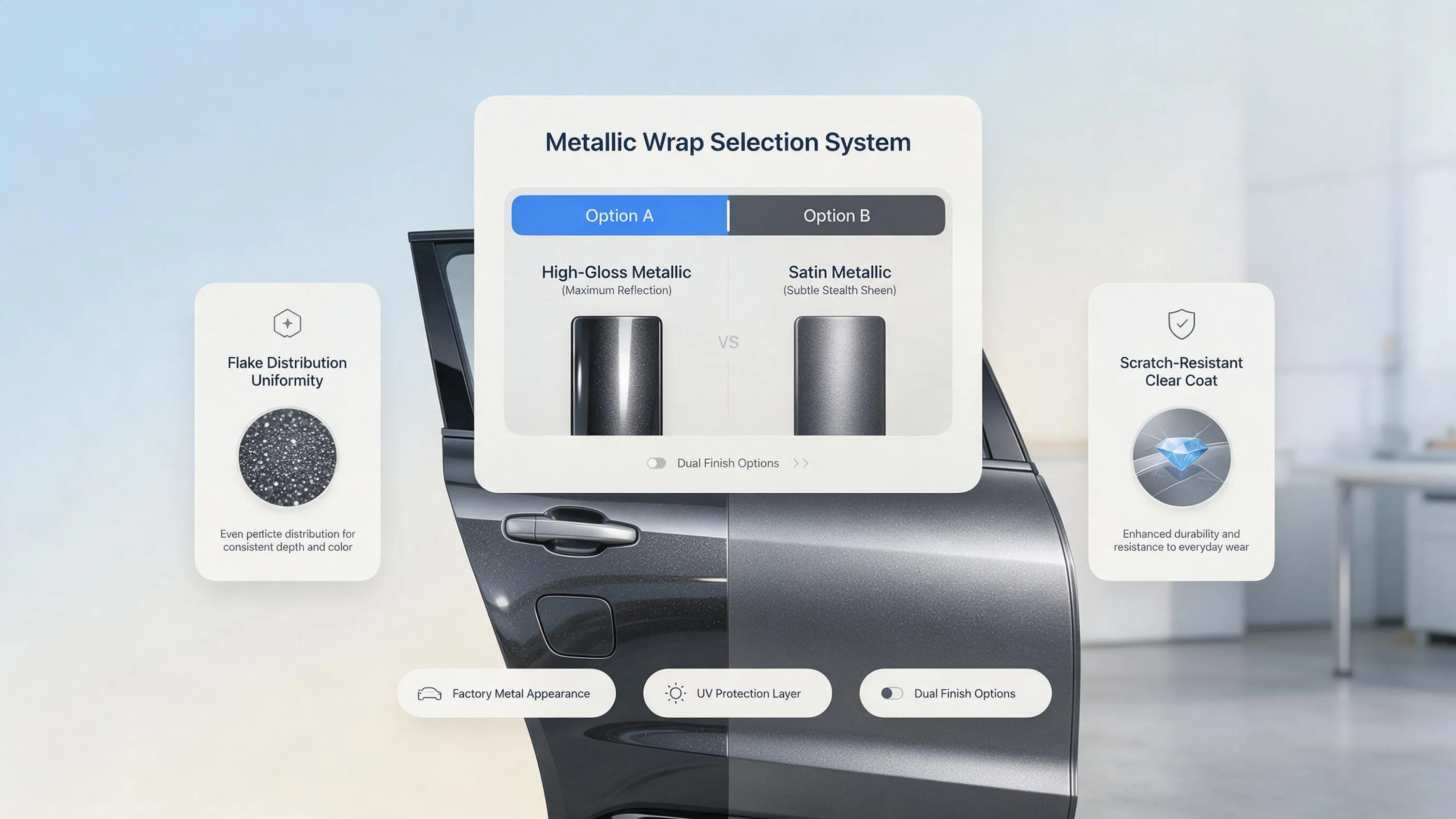
Metallic & Pearl Films: Utilize internal mica and aluminum flakes to capture multi-angle lighting, turning harsh glare into a rich, three-dimensional glow.
Satin & Frosted Finishes: Diffuse intense overhead lights across panel shoulders, creating continuous liquid gradients without blinding specular glare.
2. Gloss, Satin, or Matte: Which One Gives Your Build the Right Character?
Choosing between core automotive vinyl wrap finishes sets the visual tone for your entire build strategy.
SHOW CAR FINISH ARCHITECTURE [ Gloss ] ---> High depth; mimics multi-stage show paint; maximum reflections [ Satin ] ---> High-tech frosted sheen; smooth light diffusion; highlights curves [ Matte ] ---> Stealth track aesthetic; zero glare; requires surgical cleanliness
Gloss Wraps
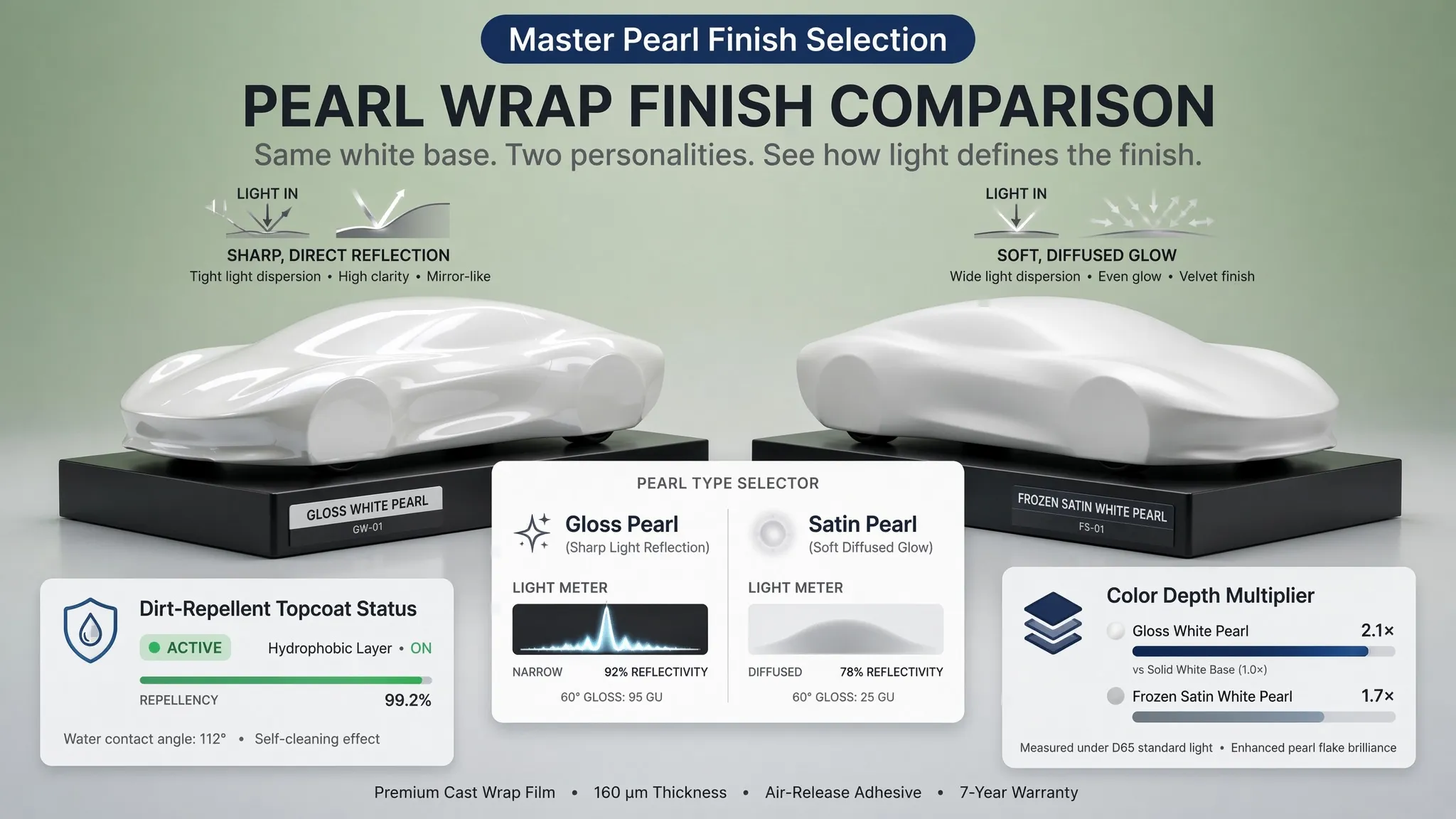
A premium gloss vs satin vs matte car wrap evaluation starts with optical clarity. High-end gloss cast films feature heavy clear caps that mimic multi-stage custom paint. Gloss finishes excel on classic restorations and luxury sedans where a deep, wet-looking reflection is expected.
Satin Wraps
Satin finishes diffuse point-source light into a smooth, frosted sheen across panel hips. Satin is a favorite for widebody builds and sculpted sports coupes because it highlights aggressive fender flares without washing out body details in harsh glare.
Matte Wraps
Matte films absorb incoming light completely, casting a stealthy, mechanical presence. However, on an indoor show floor, flat matte can flatten complex bodylines unless paired with high-contrast accent trim or custom graphics.
3. Want the Finish Everyone Remembers? Look Beyond Solid Colors
If your goal is to win Best in Show or dominate social media coverage, standard solid color changes rarely cut through the noise anymore.
┌────────────────────────────────────────────────────────────────────────┐ │ SPECIALTY SHOW FINISH CATEGORIES │ ├────────────────────────────────────────────────────────────────────────┤ │ • Pearl Wraps --> Soft, liquid secondary flip along body curves │ │ • Metallic Films --> High-density micro-flake pop under point lights │ │ • Color-Shift / Flip--> Dynamic multi-hue shifts across viewing angles │ │ • Forged Carbon --> Marbleized composite pattern for accent panels │ └────────────────────────────────────────────────────────────────────────┘
Elevating a build requires exploring specialized optical layers:
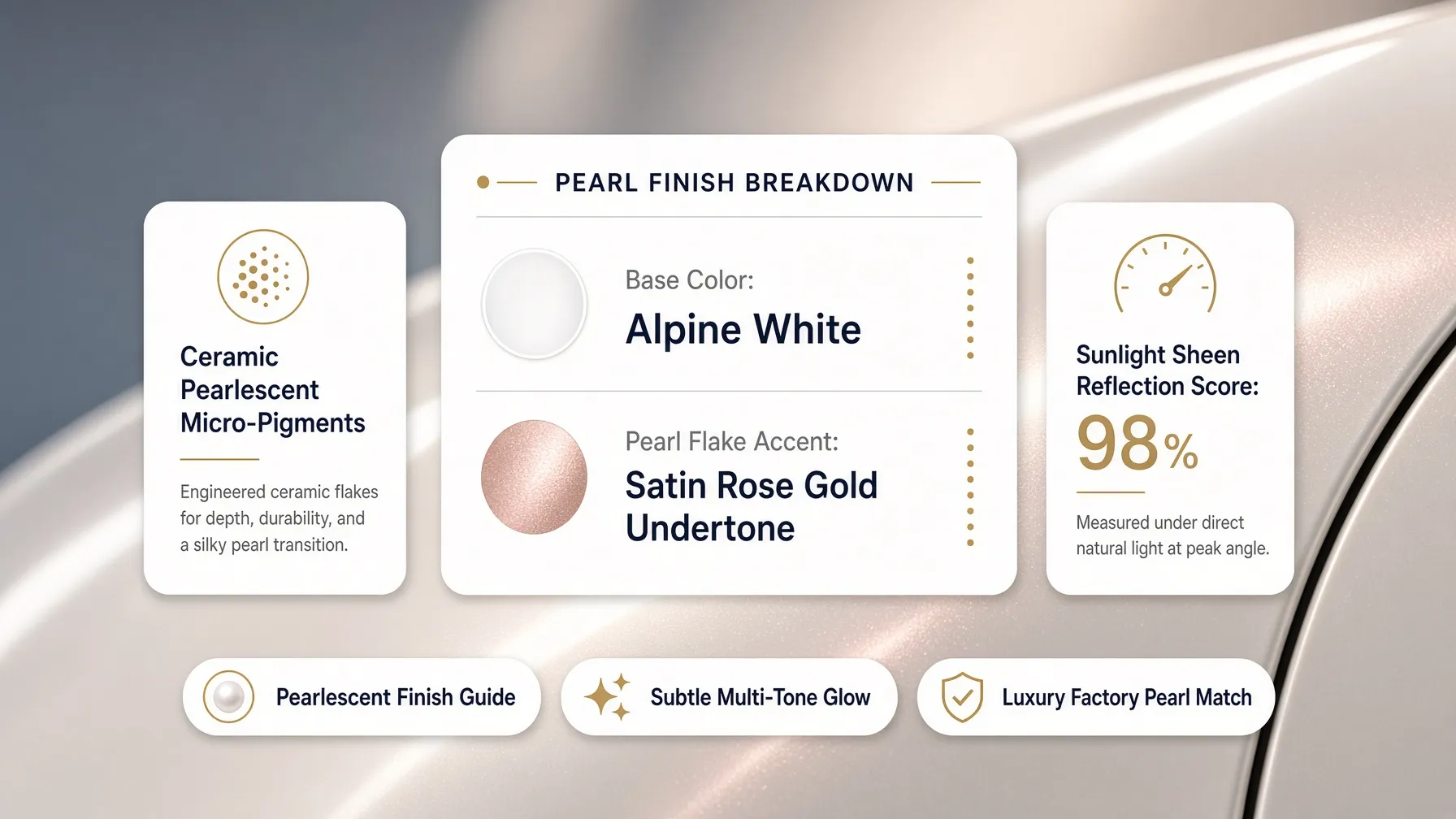
Pearl Car Wrap: Embeds semi-translucent mica particles beneath a clear cap. A pearl finish maintains a clean base tone while throwing off warm gold, rose, or icy cyan highlights as people walk past.
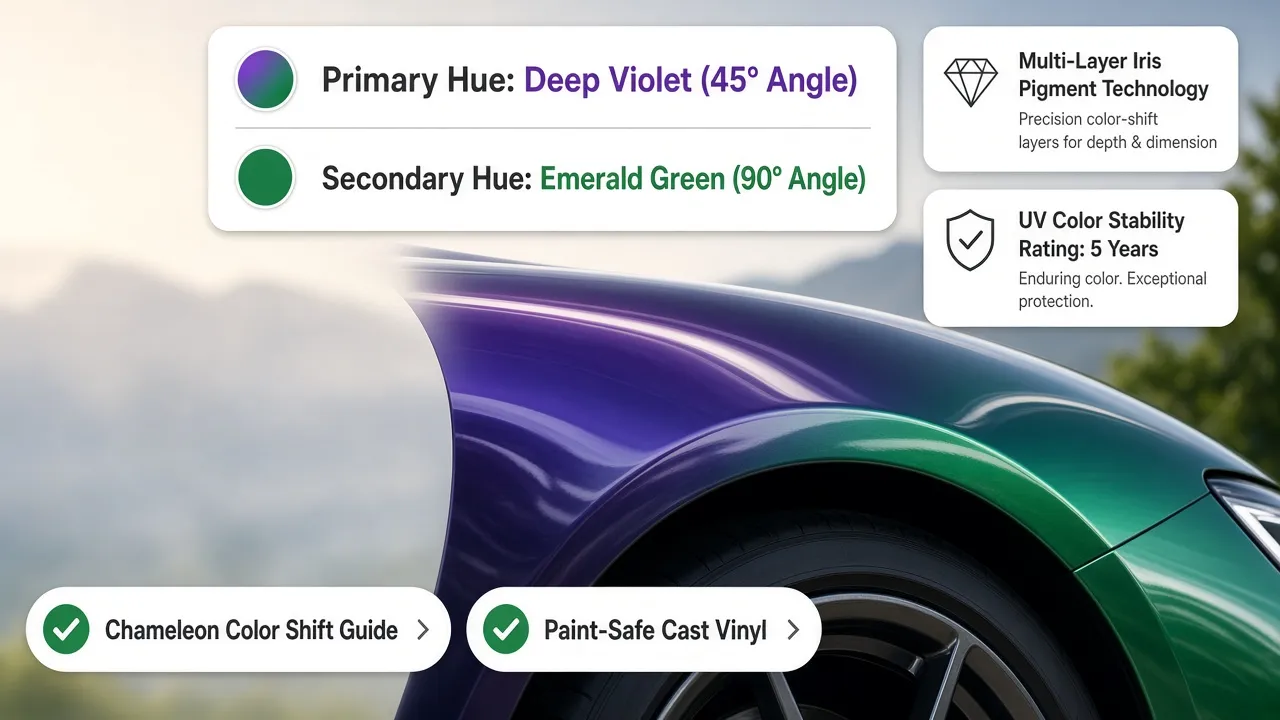
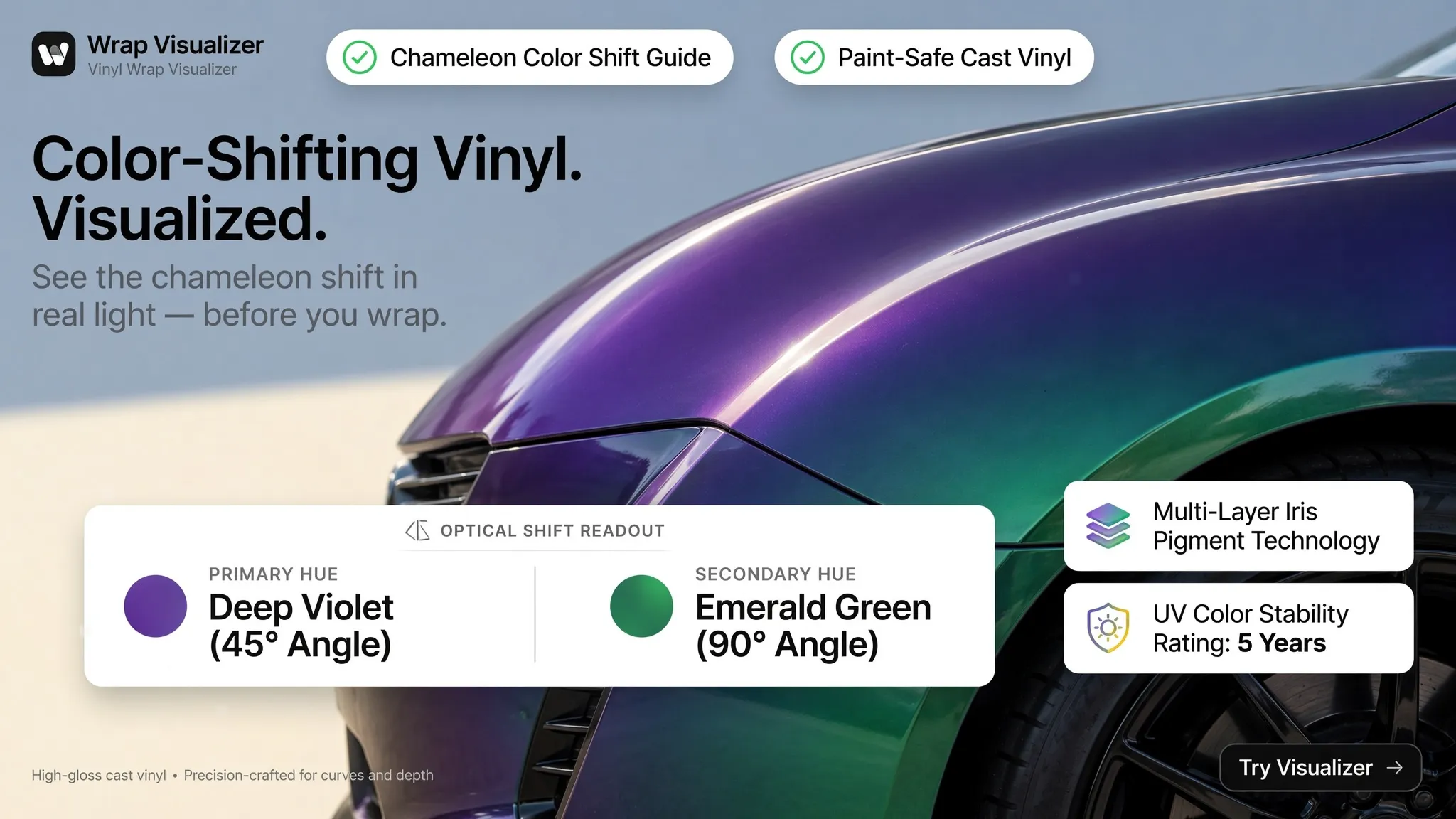
Color-Shifting Car Wrap: Employs optical interference flakes that refract light into distinct spectral colors. A single fender can display purple, blue, and magenta simultaneously depending on where judges stand.
Iridescent Car Wrap: Delivers a delicate rainbow sheen over lighter base shades, providing an intriguing, pastel-like aesthetic that stands out under bright LEDs.
4. Why Some Wrapped Cars Look Expensive—and Others Look Like Vinyl
What separates a premium car wrap finish from a build that looks like cheap film laid over paint?
It comes down to surface preparation, optical depth, and film chemistry.
VISUAL VALUE INDICATORS [ High-End Impression ] --> Glass-smooth optical surface; clean hemmed edges [ Cheap Impression ] --> Orange peel texture; visible knife score lines; lifting seams
High-end custom show car wraps rely on ultra-smooth cast films that eliminate "orange peel" texture.
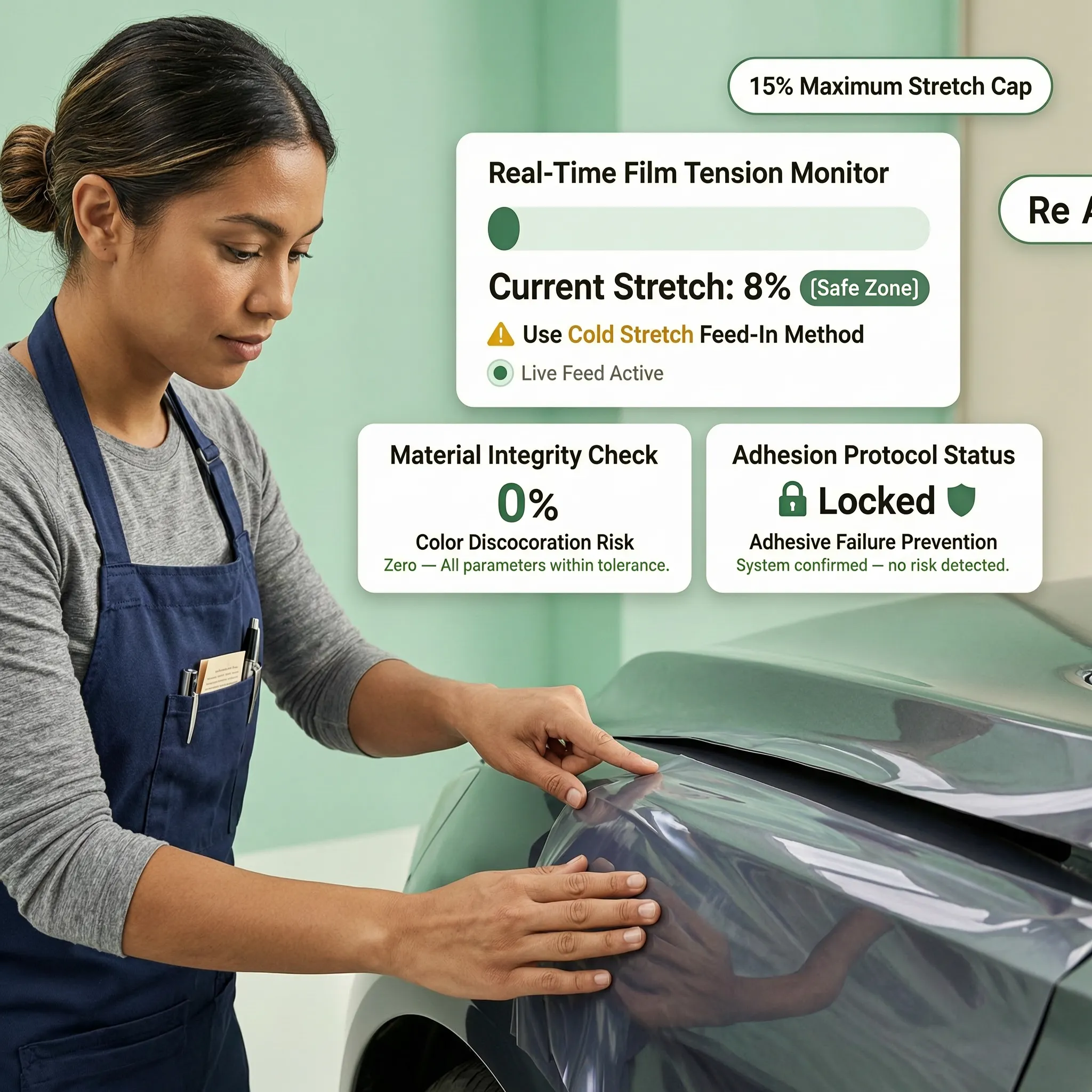
Furthermore, show judges look past the surface: they inspect panel gaps, door jamb transitions, and bumper corners. If the vinyl shows stress discoloration, lifting edges, or sloppy razor cuts along light housings, the entire vehicle loses points regardless of how rare the color is.
5. Your Car's Body Lines Can Make or Break a Color-Shifting Wrap
A chameleon car wrap or color-flip film requires specific vehicle geometry to achieve its full potential.
Because color-shifting films rely on varying light refraction angles to display multiple hues simultaneously, flat, boxy vehicles often struggle to trigger the shift across a single panel face.
┌────────────────────────────────────────────────────────────────────────┐ │ VEHICLE GEOMETRY SUITABILITY │ ├────────────────────────────────────────────────────────────────────────┐ │ [ Widebody & Sports Coupes ] --> Aggressive hips trigger multi-color shifts│ │ [ Curved Classic Rods ] --> Sweeping fenders create liquid gradients │ │ [ Boxy Vans / Square Trucks] --> Flat doors show static, single-hue tones │ └────────────────────────────────────────────────────────────────────────┘
Sculpted Coupes & Supercars: Sharp character lines, vented hoods, and flared arches catch light from multiple directions, showcasing two or three distinct color transitions on a single fender.
Widebody Kits: Flared quarter panels create steep angle drops, forcing the film to shift from its primary base tone to its secondary highlight hue right along the flare line.
6. Chrome, Mirror, or Chameleon: How Far Do You Want to Push the Look?
When maximum visual impact is required, specialty films like a chrome car wrap or mirror chrome vinyl wrap guarantee total attention.
SPECIALTY IMPACT COMPARISON [ Mirror Chrome ] ----> 100% direct reflection; intense glare; high installation difficulty [ Color-Shift Flip ] -> Dynamic multi-tone transition; smooth, organic flow [ Satin Metallic ] ---> Low-glare, industrial luxury; sophisticated presence
However, extreme finishes carry trade-offs.
Mirror chrome films use a vacuum-metallized aluminum layer that is significantly thicker and less forgiving during application. Over-stretching chrome destroys its reflective surface, turning mirror panels into cloudy, distorted haze.
If you choose a full chrome transformation, partnering with a shop experienced in high-grade specialty vinyl wrap finishes is non-negotiable.
7. A Perfect Hood Can Draw the Eye. A Poorly Finished Edge Can Ruin the Effect.
At a competitive car show, enthusiasts don't just admire a build from behind the safety ropes—they lean in to inspect the craftsmanship up close.
┌────────────────────────────────────────────────────────────────────────┐ │ SHOW-QUALITY INSPECTION POINTS │ ├────────────────────────────────────────────────────────────────────────┤ │ 1. Door & Hood Hems: Vinyl wrapped 1/4" around edges into inner jambs │ │ 2. Complex Recesses: Zero color bleaching inside bumper intakes │ │ 3. Corner Folds: Seamless, flat corner tucks without bunching fingers │ └────────────────────────────────────────────────────────────────────────┘
A professional show car wrap installation is defined by its hidden details:
Tucked Hems: The vinyl must wrap cleanly around the back of every metal edge, ensuring zero original factory paint shows when doors, hoods, or trunks are popped.
Knifeless Tape Trimming: Edges around headlights, tail lights, and window trim must be laser-straight, achieved using filament line trimming rather than utility blades that risk scoring clear coat.
To learn how to inspect edge finishing and panel execution like a show judge, check out our guide on checking car wrap quality and installation standards.
8. Should Every Panel Match—or Would a Contrasting Finish Work Better?
Creating a memorable show build doesn't mean every panel has to wear the exact same color.
Integrating a two-tone car wrap scheme or strategic accent panels creates visual hierarchy and highlights custom bodywork.
STRATEGIC CONTRAST ACCENTS [ Carbon Fiber Hood Wrap ] --> Delivers aggressive, motorsport-inspired contrast [ Gloss Black Roof Wrap ] --> Creates a continuous panoramic glass roof illusion [ Satin Metal Accents ] --> Highlights rear diffusers, side skirts & mirror caps
Combining a primary color-shift body wrap with a carbon fiber hood wrap or a gloss black roof breaks up the silhouette, giving your build an intentional, factory-plus appearance that stands out in photography.
9. The Photos Look Amazing. Does the Finish Have the Same Impact in Person?
With camera phones using HDR processing and aggressive auto-enhancement, digital photos can sometimes misrepresent how a wrap looks under real human eyes.
┌────────────────────────────────────────────────────────────────────────┐ │ PHOTO vs. IN-PERSON REALITY │ ├────────────────────────────────────────────────────────────────────────┤ │ [ Smartphone Camera ] --> Compresses light; enhances contrast & saturation│ │ [ Human Eye ] --> Perceives true physical depth, texture & glare │ └────────────────────────────────────────────────────────────────────────┘
A finish that looks vibrant in a filtered social post might reveal cloudy stretching, uneven grain alignment, or hazy clear caps under natural light.
Evaluating physical 12x12" swatches under sunlight, open shade, and indoor LED lighting ensures the film you select delivers genuine visual impact in person—not just on a screen.
10. What Could Spoil the Finish Before Show Day?
You’ve invested weeks of preparation and thousands of dollars into your show build. Don't let preventable detailing oversights ruin your presentation on show morning.
PRE-SHOW PREPARATION CHECKLIST [ Do This ] --> Use wrap-safe ceramic detailers & plush microfiber towels [ Avoid This ] --> Traditional car waxes, petroleum solvents & dirty drying rags
Fingerprint Management: Matte and satin finishes pick up skin oils around door handles. Keep a bottle of wrap-safe, wax-free quick detailer and fresh microfiber towels in your trunk for last-minute wipe-downs.
Transport Protection: If trailering your vehicle to an indoor venue, protect low front splitters and rocker panels from road grime to prevent friction staining on fresh vinyl topcoats.
11. How to Decide on a Show Finish Before Committing to a Roll
Before ordering expensive specialty film or booking shop time, evaluating physical samples against your vehicle's lines guarantees total confidence.
┌────────────────────────────────────────────────────────────────────────┐ │ RECOMMENDED SELECTION STEPS │ ├────────────────────────────────────────────────────────────────────────┤ │ Step 1: Order physical material swatches (Pearl, Metallic & Shift) │ │ Step 2: Place swatches directly against your car's hood & fenders │ │ Step 3: Inspect the samples in direct sun, shade & under indoor LEDs │ └────────────────────────────────────────────────────────────────────────┘
Visit a local master installation facility and inspect physical sample swatches in person. Step outside into direct sunlight, test the swatches under indoor bay LEDs, and check how secondary flip tones catch your car's specific bodylines.
To evaluate installer qualifications, pricing quotes, and labor requirements for custom show builds, review our guide on comparing car wrap installation costs and quotes.
12. Preview Your Custom Show Concept Live Before Booking Shop Time
Want to see exactly how a gloss color-shift, satin pearl, or full chrome finish changes the lines of your build before placing a film deposit or scheduling shop time?
Visualizing your custom aesthetic beforehand removes all uncertainty and helps you build a trophy-winning concept.
You can upload a photo of your vehicle or select a matching body model, test dynamic specialty finishes, experiment with custom two-tone accent schemes, and preview your build live under different lighting conditions.
Check out our interactive AI car wrap visualizer tool to test custom finishes and preview your build live before booking your professional installation. FAQs About Best Wrap Finish for a Show Car

FAQs About Best Wrap Finish for a Show Car
1. "Which wrap finish gives a show car the absolute highest chance of catching judges' attention?"
If you want maximum optical depth under indoor arena lights, a pearl car wrap or a multi-layer color-shifting car wrap consistently delivers the highest visual impact. Unlike standard high-gloss solid colors that reflect overhead light as harsh, static glare, pearl and color-flip films continuously refract point-source light across body curves. As judges and enthusiasts walk past your build, the panels shift through distinct secondary highlight hues, creating a dynamic, 3D presence that static paint or flat vinyl cannot match.
2. "Why does a finish that looks breathtaking outdoors turn dull or washed out under indoor venue lights?"
Indoor car shows rely on high-intensity overhead LED or halogen arrays, which create localized glare spots across smooth surfaces. A solid gloss film reflects these light sources directly into the viewer's eyes, often blowing out the actual underlying pigment with white glare. Conversely, specialized metallic vinyl wrap finishes and satin pearl films incorporate internal micro-flakes or frosted clear topcoats that diffuse harsh overhead beams, turning harsh glare into a smooth, liquid glow that accentuates your vehicle's character lines.
3. "Is a full mirror chrome wrap worth the extra installation difficulty for a show build?"
A mirror chrome vinyl wrap guarantees total, unmissable attention on any display floor, but it carries a steep technical trade-off. Chrome films utilize a thick, vacuum-metallized aluminum layer that lacks the forgiving stretch of standard cast vinyl. Over-stretching chrome around complex bumper intakes or mirror caps destroys the reflective surface, resulting in cloudy, hazy patches. Achieving a trophy-winning result with chrome requires an elite installer who specializes in specialty vinyl wrap finishes and uses strategic inlay seams.
4. "How do gloss, satin, and matte finishes compare when showcasing sculpted body lines and widebody kits?"
Your choice of sheen dictates how your vehicle's physical geometry is perceived:Gloss Wraps: Deliver deep, mirror-like reflections that mirror multi-stage show paint. Ideal for classic restorations and luxury sedans with sweeping, continuous panels.Satin Wraps: Diffuse point-source reflections into a frosted, semi-matte sheen across fender shoulders. Satin is widely considered the best car wrap finish for show cars with widebody kits, as it highlights aggressive flare drops without washing out body lines under direct spotlights.Matte Wraps: Absorb light completely, projecting a stealthy, mechanical track look. However, flat matte can flatten subtle body contours under indoor lighting unless paired with high-contrast accent trim.
5. "What visual details distinguish a high-end show car wrap from a cheap-looking vinyl job?"
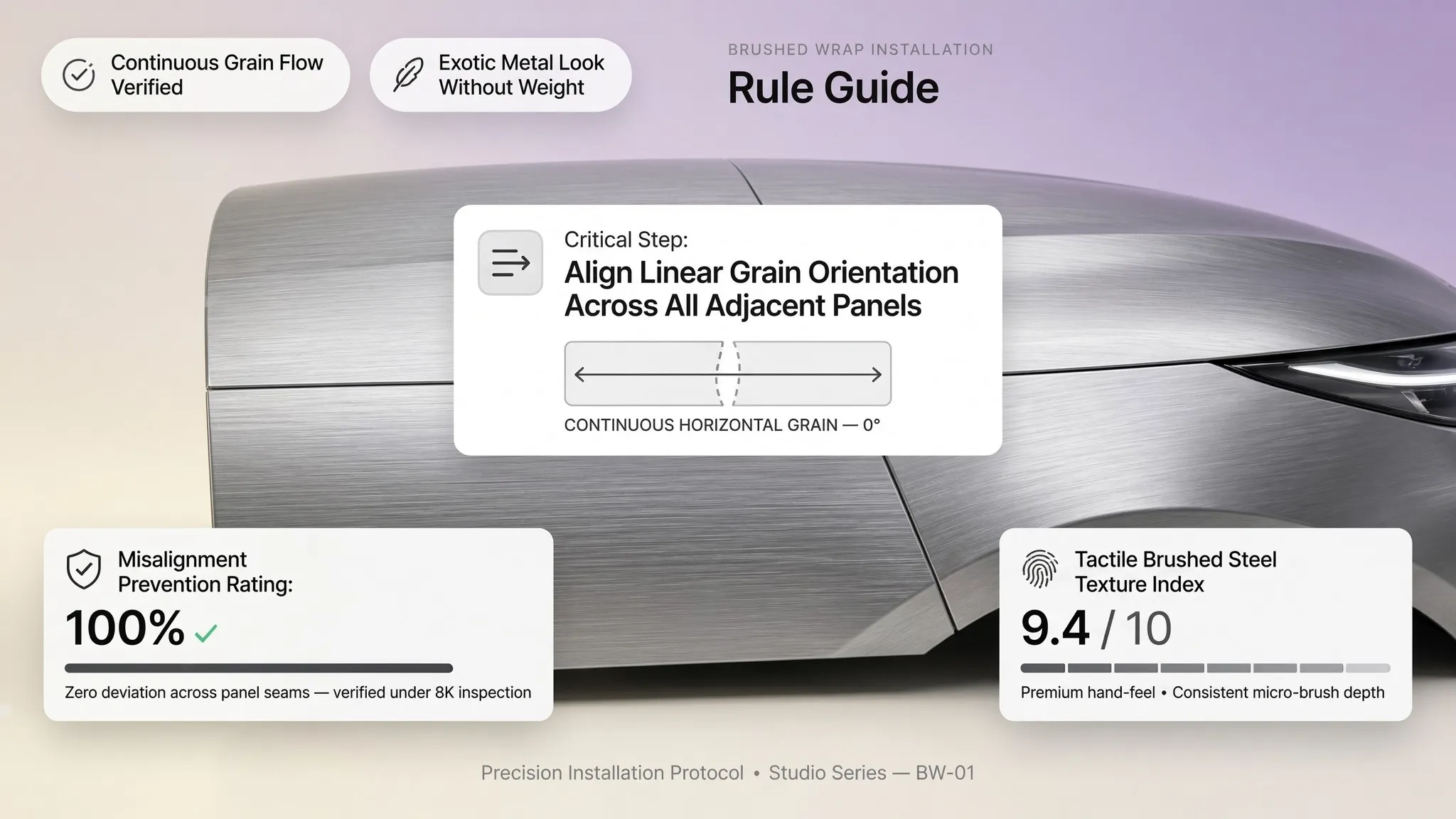
Show judges look far beyond basic color choice to evaluate overall visual execution:Zero Surface Orange Peel: Premium cast films feature ultra-smooth clear caps that mimic wet, hand-poured clear coat rather than dimpled plastic.Seamless Edge Finishing: The vinyl must wrap cleanly $1/4\text{''}$ around every metal edge into inner door jambs and hood hems so no factory paint shows when panels are opened.Flawless Grain & Pattern Alignment: Directional films like brushed metal, carbon fiber, and color flips must maintain consistent grain orientation across adjacent doors and fenders.
6. "Will a color-shifting chameleon wrap work well on a flat or boxy car?"
A color-shifting car wrap requires organic curves and dramatic angle drops to trigger its dynamic color flip. Sculpted sports coupes, widebody builds, and classic cars with rounded fenders catch light from multiple angles simultaneously, allowing a single panel to display two or three distinct shades. On flat, boxy vehicles with vertical doors, the film lacks the compound curvature needed to bend light, often appearing as a static, single-hue color until you walk far to the side.
7. "Should I wrap my entire show car in one specialty color, or is a two-tone scheme better?"
Creating a memorable show build often benefits from strategic visual contrast rather than uniform color coverage. Combining a primary color-shift or pearl body wrap with high-contrast accent panels—such as a carbon fiber hood wrap or a gloss black roof—breaks up the vehicle's silhouette. A custom two-tone car wrap scheme directs the viewer's eye to custom bodywork, carbon aero components, and stance adjustments, giving the build an intentional, factory-plus aesthetic.
8. "Why do professional installers charge significantly more for custom show car wrap installation?"
Achieving a show-grade finish requires double or triple the labor hours of a standard commercial wrap:Hardware Teardown: Technicians completely disassemble door handles, side mirrors, light housings, and bumper grilles to tuck edges deep behind body panels.Seamless Inlay Execution: Deep bumper channels and vented hoods require pre-cut inlay seams to prevent vinyl over-stretching and color bleaching.Painstaking Surface Prep: Panels undergo multi-stage clay bar decontamination and isopropyl wipes to eliminate microscopic dust nibs before film application.
9. "How do camera phones and venue lighting affect how a wrap color looks in photos versus in person?"
Smartphone camera sensors use automatic HDR processing and RGB pixel compression, which often exaggerates or mutes secondary color-flip tones. A chameleon or iridescent film that shifts smoothly in person might look overly saturated or streaky in digital photos. Inspecting physical 12x12" material swatches under both outdoor sunlight and indoor shop LEDs ensures you choose a finish that delivers genuine physical depth in person while still photographing cleanly for media coverage.