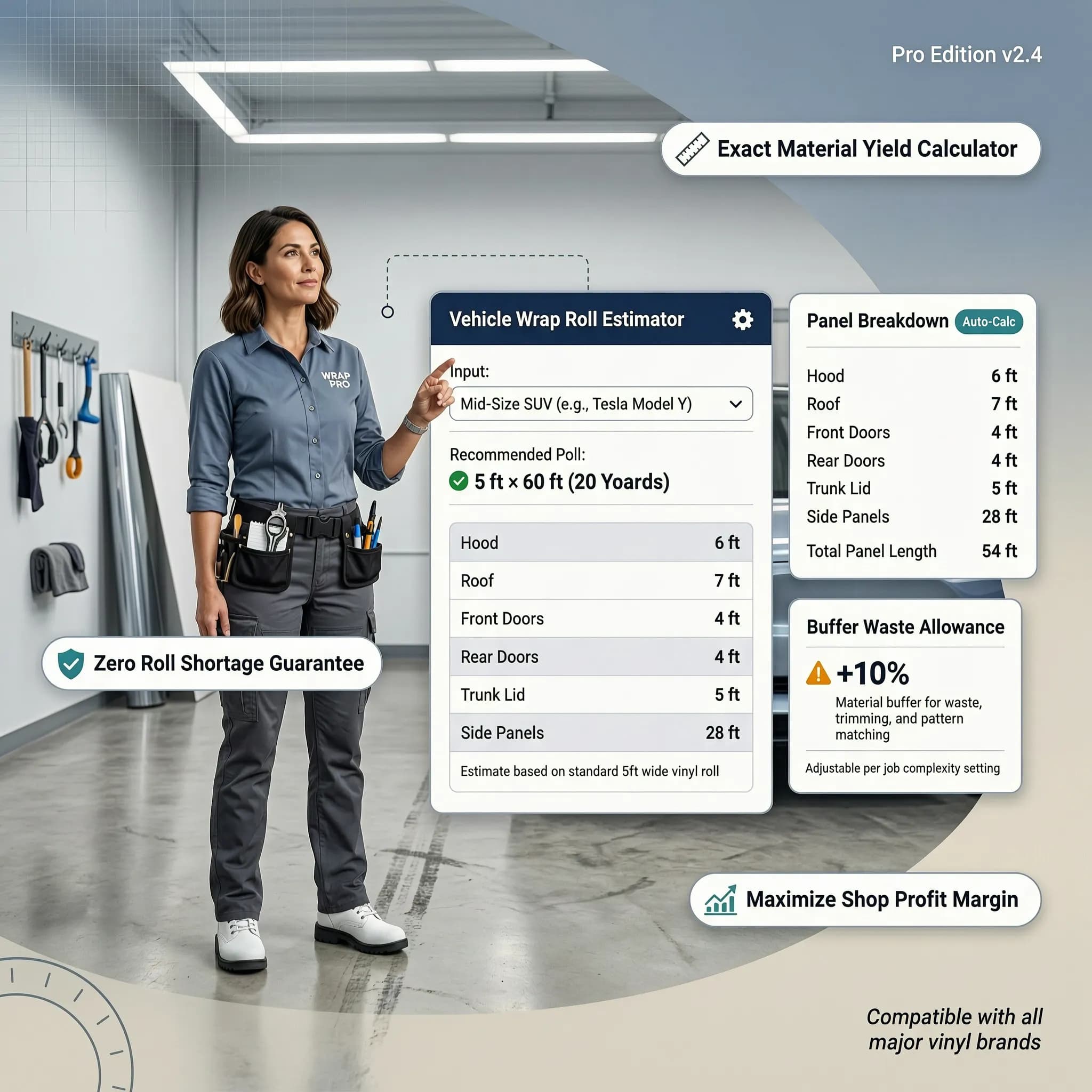

You are finally ready to give your ride a complete color change. The color swatch looks perfect, the installer tools are in your cart, and you are ready to hit order. Then the big question hits you: how much vinyl to order for a car so you do not run short mid-job or waste hundreds of dollars on extra material?
Ordering vinyl can feel like a high-stakes guessing game. Buy too little, and your project grinds to a halt while you wait for a fresh roll that might come from a different color batch. Buy too much, and you burn cash on material sitting on your garage floor.
Here is the exact framework to figure out how much vinyl for a car wrap project, covering every vehicle body style, panel allowance, and beginner safety buffer.

1. How Much Vinyl to Order for a Car?
For most standard passenger cars, a 50-foot to 60-foot roll of 5-foot-wide (60-inch) vinyl wrap is the magic number.
Vinyl rolls are sold in standardized industry widths—almost always 60 inches (5 feet / 1.52 meters) wide. This specific width allows you to cover large areas like hoods, roofs, and side panels in a single seamless sheet without ugly middle seams.
When asking yourself how much car wrap vinyl do I need, use this quick baseline rule:
(Total Vehicle Length x 3) + Extra Material Buffer (5 to 10 feet) = Total Roll Length
Multiplying your car's total bumper-to-bumper length by 3 gives you enough material to run three continuous passes along the length of your vehicle: one for the left side panels, one for the right side panels, and one split across the top flat surfaces (hood, roof, and trunk).
2. How Much Vinyl Does a Full Car Wrap Usually Require?
If you are planning a complete color transformation, here is a breakdown of how much vinyl for a full car wrap based on typical roll lengths sold by major manufacturers:
Compact Cars & Small Hatchbacks: 45 feet to 50 feet
Mid-Size Sedans & Sports Coupes: 55 feet to 60 feet
Full-Size Sedans & Crossovers: 60 feet to 65 feet
Full-Size SUVs & Extended Trucks: 70 feet to 85 feet
Getting enough vinyl needed for car wrap projects upfront protects your wallet and guarantees visual consistency across your build.
3. How Car Size Changes the Amount of Vinyl You Need
Chassis geometry alters material demand dramatically. A compact sports car with low roof pillars needs far less roll length than an tall SUV with broad door panels and a long roofline.
| Vehicle Type | Average Vehicle Length | Recommended Roll Size | Coverage Zone Focus |
|---|---|---|---|
| Small Coupe / Hatchback | 13 – 15 Feet | 50 Feet (5ft x 50ft) | Low profile, tight fenders |
| Mid-Size Sedan | 15 – 17 Feet | 60 Feet (5ft x 60ft) | Long side doors, trunk lid |
| Full-Size SUV | 16 – 18 Feet | 75 Feet (5ft x 75ft) | Broad side panels, tall roof |
| Pickup Truck (Crew Cab) | 18 – 20 Feet | 75 to 85 Feet | Deep truck bed exterior, wide cab |
Knowing where your vehicle fits on this scale prevents you from underestimating side door square footage or overbuying for a lightweight coupe.

4. How to Calculate Vinyl for Your Specific Car
Instead of relying solely on general estimates, you can calculate your exact material needs using simple measurements. Grab a tape measure and run down this panel checklist:
Measure Panel Length + Add 6 Inches Margin = Individual Panel Sheet Requirement
Measure Side Panels: Measure from the front headlight corner to the rear taillight tip. Multiply by 2 for both sides.
Measure Top Surfaces: Measure the hood from windshield base to front grille. Measure the roof from top windshield edge to rear glass. Measure the trunk lid top to bottom.
Add Border Overhang: Add 3 inches of extra material overhang to every side of every measured section (6 inches total per panel length). This extra length gives your hands a clean section to pull during glassing and leaves enough wrap to tuck cleanly behind panel edges.
Using a vinyl wrap calculator approach ensures every bumper, door, and pillar is accounted for before checkout.
5. Don't Forget the Roof, Bumpers, Mirrors and Other Difficult Areas
When people run short on material, it is rarely because they mismeasured the hood or doors. It happens because they forgot smaller, complex components that consume surprising amounts of vinyl.
Make sure your car wrap material calculator includes these easy-to-forget areas:
Front and Rear Bumpers: Bumpers feature deep recesses and curved air intakes. They require a sheet as wide as the car plus 12 inches of overflow working room.
Side Mirrors: Mirror caps require square cutouts (roughly 2ft x 2ft per mirror) with extra working room for deep stretches.
Side Skirts and Rocker Panels: These long, narrow strips run beneath your doors and need dedicated horizontal strips.
Roof Pillars and Rear Spoilers: A-pillars and rear wing components require long, slender cuts that often demand their own dedicated section of the roll.
Accounting for complete full car wrap coverage stops you from running out of material right when you reach the last mirror cap.

6. How Much Extra Vinyl Should You Order for Waste?
Every wrapping project generates scrap material, trim edges, and cutoffs. Trying to order the exact square footage of your car's sheet metal guarantees failure.
Rule of Thumb: Always add a 10% to 15% material safety buffer to your final measurement.
Ordering extra material protects your project from common installation mistakes:
Creasing or Overstretching: If you accidentally creased a hood sheet or overstretched a fender corner, you can peel it off and cut a fresh sheet without stress.
Color Batch Matching: Vinyl manufacturers produce rolls in specific color dye lots. If you buy a 10-foot patch roll later, the shade might slightly mismatch your main body panels under direct sunlight.
Future Repairs: Saving a 5-foot leftover scrap gives you seamless material for future fender benders or rock chip repairs down the road.
Building a vinyl wrap waste margin into your order gives you peace of mind throughout the wrap process.
7. How Roll Width Changes How Much Vinyl You Need
Understanding vinyl wrap roll size dynamics keeps you from making costly dimension mistakes.
Standard color-change cast vinyl comes in 60-inch (5-foot) wide rolls. This width is specifically chosen by manufacturers because:
A 60-inch width cleanly covers 99% of passenger car hoods in a single pass without needing a seam.
It spans from the top roof channel across to the lower door sill on standard sedans.
It lets you cut two side mirror sheets or spoiler strips side-by-side out of a single width section.
If you purchase specialty carbon fiber or accent rolls that come in narrower 12-inch, 24-inch, or 30-inch widths, your linear foot requirements will triple or quadruple. Stick to standard 60-inch rolls for full body wraps.

8. Full Wrap vs Partial Wrap: How Much Vinyl Does Each Need?
If you are not wrapping your entire vehicle, you can buy smaller individual rolls tailored specifically to your project scope.
| Partial Wrap Project | Recommended Material Size | Application Notes |
|---|---|---|
| Hood Wrap Only | 5 Feet x 6 Feet (30 Sq Ft) | Leaves room for deep front nose curves |
| Roof Wrap Only | 5 Feet x 6 Feet to 8 Feet | Varies depending on sunroof presence |
| Trunk Lid / Spoiler | 5 Feet x 5 Feet | Account for rear license plate recesses |
| Chrome Delete Trim Set | 1 Foot x 25 Feet (or pre-cut roll) | Used for window surrounds and grilles |
Knowing how much partial car wrap vinyl you need lets you upgrade your car's look without buying a full 50-foot roll.
9. How Much Vinyl Do You Need for a Sedan, SUV, Truck or Coupe?
To make your decision effortless, match your vehicle style to these practical roll estimates:
Vinyl for Coupe (e.g., Ford Mustang, BMW 4 Series)
Required Roll: 5ft x 50ft (250 Sq Ft)
Focus: Long side quarter panels, low rooflines.
Vinyl for Sedan (e.g., Honda Civic, Tesla Model 3)
Required Roll: 5ft x 60ft (300 Sq Ft)
Focus: Four full side doors, trunk lid, front bumper intake curves.
Vinyl for SUV (e.g., Porsche Cayenne, Jeep Grand Cherokee)
Required Roll: 5ft x 65ft to 75ft (325 – 375 Sq Ft)
Focus: Taller side panels, broad tailgate surfaces, large roof area.
Vinyl for Truck (e.g., Ford F-150, Chevrolet Silverado)
Required Roll: 5ft x 75ft to 85ft (375 – 425 Sq Ft)
Focus: Deep truck bed walls, cab pillars, wide front hood.
Finding your vehicle category gives you an instant, reliable answer for how much vinyl to buy for car wrap success.
10. Should You Order Extra Vinyl for Your First DIY Wrap?
If this is your first time tackling a DIY car wrap, order an extra 10 feet of roll length beyond the standard recommendation.
Beginners often make simple mistakes like over-heating corners, dropping film sticky-side-down onto dusty garage floors, or cutting a bumper sheet too short before tucking edges. Having that extra 10 feet transforms a frustrating installation mistake into a minor 5-minute reset.
Pro Tip: Use your extra material to practice glassing techniques and corner tucks on a loose trunk lid or side mirror before touching your car's main panels.
11. How to Avoid Buying Too Much or Too Little Vinyl
Run down this 4-step checklist before hitting order to ensure your calculation is spot-on:
Confirm Body Type ➔ Measure Length x 3 ➔ Add 15% Waste Buffer ➔ Check Roll Width (60")
Double Check Vehicle Length: Look up your car's exact bumper-to-bumper length in your owner's manual or online specs.
Account for Aero Body Kits: Does your car have aggressive aftermarket front splitters, widebody flares, or large rear wings? Add 5 to 10 extra feet for custom body lines.
Check Roll Dimensions: Ensure the listing specifies 60 inches wide by 50/60 feet long.
Order a Sample Swatch First: Always verify the color, texture, and finish in person under natural sunlight before purchasing a full 60-foot roll.
12. Preview Your Car's Wrap Before Ordering the Vinyl
Before you spend hundreds of dollars on a full roll of material and commit hours to installation, make sure you love how the color, texture, and finish look on your car's exact lines.
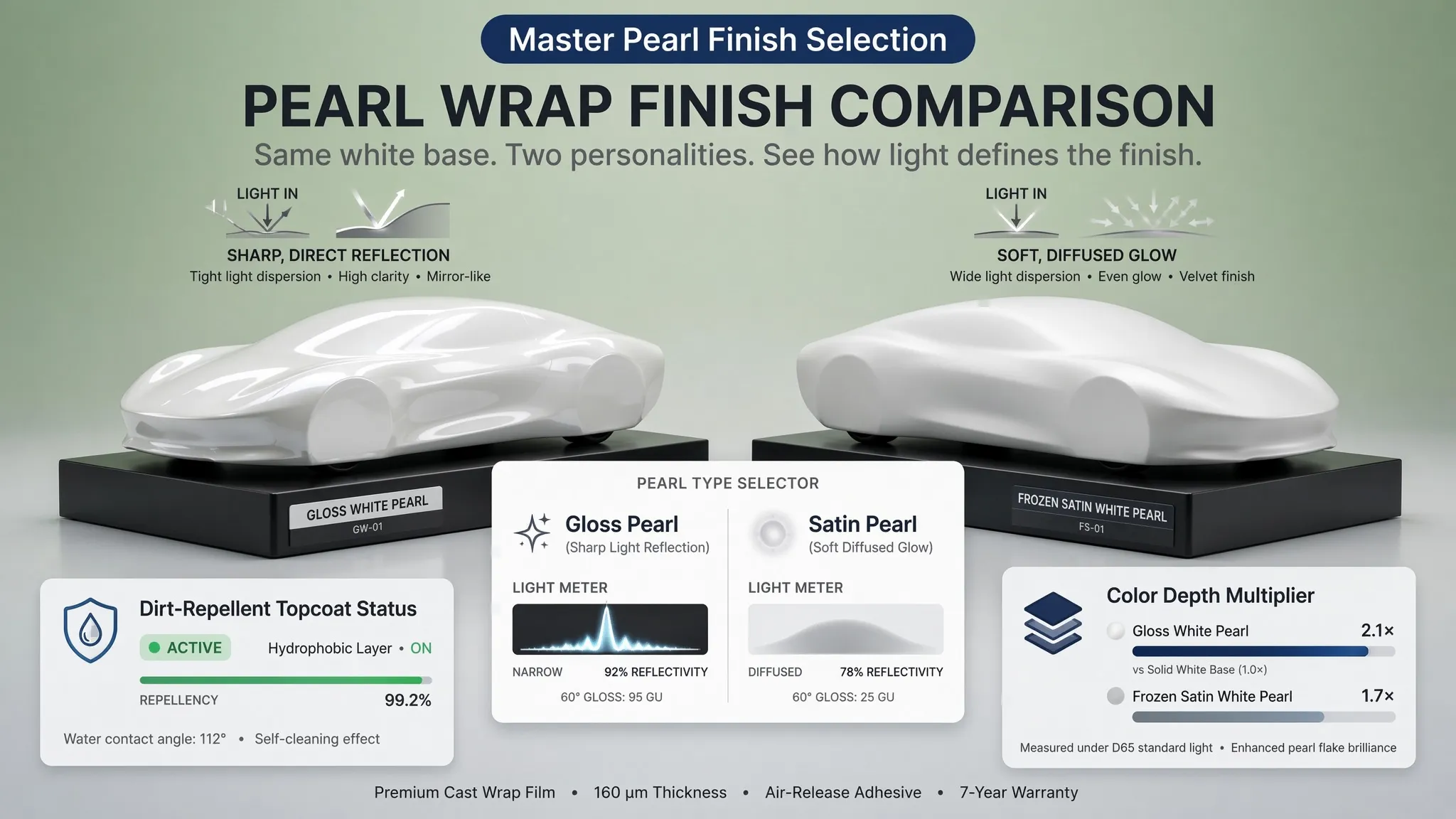
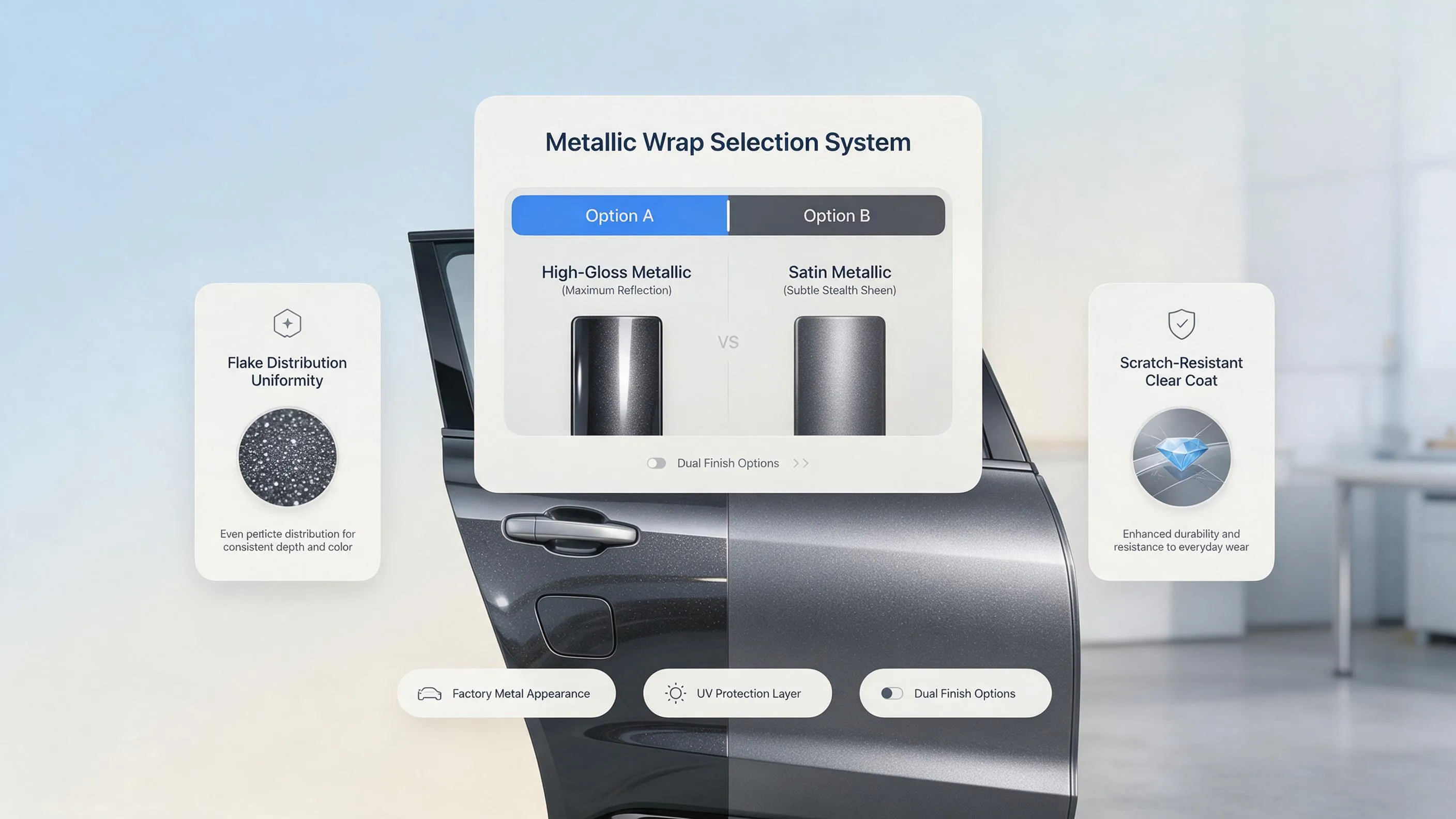
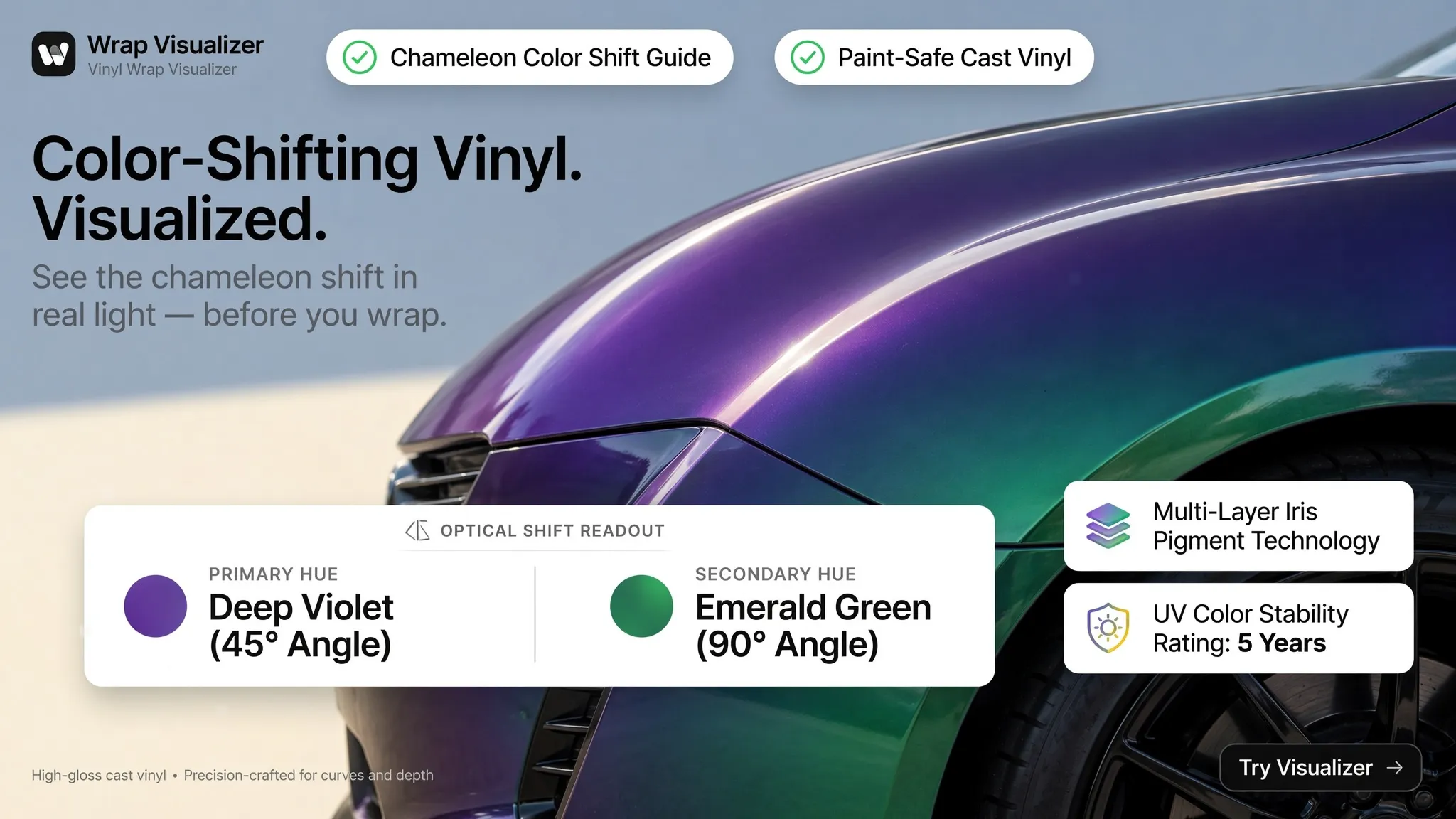
Staring at tiny 2-inch swatches makes it nearly impossible to predict how a rich satin finish, metallic emerald, or gloss Nardo gray will look draped over your vehicle's curves.
Eliminate the stress and visual uncertainty completely.
Using the advanced AI car wrap visualizer at carwrap.style, you can preview colors, finishes, and partial wrap combinations directly on photorealistic 3D models of your exact make, model, and year. Compare options side-by-side, find your ideal design, and order your material roll with total confidence.

Preview Your Next Wrap Design Before Spending a Dollar
Stop guessing how colors will look. Use the Carwrap.style visualizer to test gloss, satin, and matte finishes directly on your exact vehicle model.
Faq: How Much Vinyl to Order for a Car
1. How much vinyl wrap material do I need for a standard sedan or coupe?
For a standard compact-to-midsize sedan or coupe (like a Honda Civic, BMW 3 Series, or Ford Mustang), you will typically need 50 to 55 linear feet of a standard 5-foot (60-inch) wide vinyl roll. This gives you roughly 250 to 275 square feet of material, providing enough coverage for all body panels plus extra margin for wrapping around door edges, light tucking, and minor panel recuts.
2. How much vinyl wrap is required for a full-size SUV or truck?
Full-size trucks and 3-row SUVs (like a Ford F-150, Chevy Tahoe, or Jeep Grand Cherokee) require 65 to 75 linear feet off a 60-inch roll. Because larger trucks and SUVs feature tall rooflines, broad hood surfaces, and deep bed panels, ordering a full 75-foot roll ensures you don't run short mid-install or get stuck trying to patch together short material remnants.
3. What is the standard formula to calculate vinyl wrap roll length for my vehicle?
A reliable rule of thumb used by professional installers is:
$$\text{Vehicle Length (in feet)} \times 3 + 10 \text{ to } 15 \text{ feet (for bumpers, roof, and margin of error)}$$
For example, if your car measures 15 feet from bumper to bumper:
$$15 \times 3 = 45 \text{ feet} + 10 \text{ feet buffer} = 55 \text{ linear feet}$$
Ordering based on overall vehicle length prevents underestimating complex panel curves.
4. How much extra vinyl wrap should a beginner order for mistakes?
If you are wrapping a car for the first time, add an extra 10 to 15 linear feet to your calculated order (roughly 20% to 25% extra material). Beginners frequently burn film with improper torch work, crease large sheets during glassing, or over-stretch material on bumpers. Having extra material from the exact same manufacturing batch ensures seamless color matching when you need to re-wrap a ruined door or fender.
5. Why do vinyl rolls come in 60-inch (5-foot) widths?
Industry-standard cast and calendered vinyl rolls are manufactured at a 60-inch width specifically so installers can cover almost any car hood, roof, or side panel in a single continuous pass without seams. Seams collect dirt and peel over time; using 60-inch rolls allows clean, seamless coverage from fender line to door pillar.
6. How much vinyl material do I need to wrap just a car roof or hood?
For standalone accent wraps:
Car Hood: Requires a 5 ft x 6 ft piece (6 linear feet).
Car Roof: Requires a 5 ft x 6 ft to 5 ft x 7 ft piece (6 to 7 linear feet).
Trunk Lid: Requires a 5 ft x 5 ft piece (5 linear feet).
When wrapping individual panels, ordering slightly over the panel dimensions gives your hands plenty of excess material to pull tension outside the paint edges.
7. Does vehicle size alter which wrap colors look best?
Yes. Massive flat side panels on trucks and SUVs reflect light across broader surface areas than compact coupes. A bright neon shade that looks sporty on a small hatchback can feel aggressive on a full-size SUV, while deep dark shades pull heavy body shapes inward. To see how panel scale changes visual impact, read our breakdown on how vehicle proportions affect wrap color choices.
8. Should I buy an entire 75-foot master roll or buy by the foot?
Buying a full 5 ft x 75 ft master roll is almost always cheaper per square foot than buying individual smaller cuts. Even if your sedan only requires 50 feet, keeping the remaining 25 feet gives you identical batch-matched film for future repairs if a door gets keyed, scratched, or damaged in a parking lot.
9. How do I avoid wasting expensive vinyl film during the install?
Wasting material usually happens when installers overheat sheets, fight stubborn wrinkles, or over-stretch complex corners. You can dramatically reduce film waste by maintaining a controlled workspace and mastering basic handling techniques:
Keep panel surfaces pristine by following a thorough vehicle cleaning and surface prep routine.
Use sweeping hand movements to avoid scorching vinyl film with a heat gun.
Glass panels evenly to prevent unsightly vinyl wrap creases and folds.
10. Can I wrap a car with multiple smaller vinyl pieces instead of one continuous sheet?
While you can seam smaller pieces together, it is strongly discouraged on main body panels. Inseams create visible overlap lines, collect wash wax, and are prone to lifting from wind resistance at high driving speeds. Always use continuous sheets for main panels, reserving seams only for deep fender channels or behind mirror housings.
11. What basic tools do I need on hand before unrolling my vinyl material?
Before cutting into a fresh roll of film, ensure you have the proper installation equipment ready on your workbench: a variable-temp heat gun, felt-edge squeegees, application gloves, precision blades, snitty cutters, and wrap magnets to hold sheets in place. Review our full checklist of essential car wrap install tools to ensure your setup is complete.
12. How can I preview wrap finishes on my vehicle before ordering rolls?
To avoid ordering 50+ feet of a color or finish you end up disliking in person, preview your choices digitally first. Testing high-gloss, satin, or matte shades virtually on your specific body style helps you order with complete confidence. Use our interactive car wrap design preview tool to test colors and accents before placing your material order.