

Want to give your ride a completely new look without dropping $8,000 on a body shop paint job?
You've likely narrowed your choices down to two popular options: solid vinyl car wrapping or rubberized liquid Plasti Dip spraying.
Here’s the raw truth:
A vinyl wrap delivers a flawless paint-like finish that lasts for years, while Plasti Dip gives you an ultra-budget DIY option for quick weekend spray transformations.

The Bottom Line: Wrap vs Plasti Dip
| Feature | Vinyl Car Wrap | Plasti Dip |
|---|---|---|
| Primary Goal | Smooth Paint-Quality Custom | Budget DIY Liquid Spray |
| Finish Realism | Identical to Factory Paint | Matte / Satin / Textured |
| Application Method | Solid Vinyl Sheet Adhesion | Multi-Layer Aerosol Spray |
| Average Installed Cost | $2,000 – $5,000 | $300 – $1,200 |
| Expected Lifespan | 5 to 7 Years | 1 to 3 Years |
Vinyl Wrap vs Plasti Dip at a Glance
Want the biggest differences in under a minute?
Look:
If you want sharp mirror reflections, deep metallic flakes, or real carbon fiber textures, buy vinyl. If you want to black out your chrome window trim or dip your winter rims on a Saturday afternoon for fifty bucks, buy Plasti Dip.
| Evaluation Metric | Vinyl Wrap | Plasti Dip |
|---|---|---|
| Visual Quality | Ultra-smooth, zero orange peel | Rubberized texture, low-to-medium sheen |
| Application Skill | High (Requires professional installer skill) | Beginner-friendly (Spray cans or turbine gun) |
| Durability against Debris | High (Resists highway wind and light scuffs) | Moderate (Prone to edge peeling and tear marks) |
| Clean Removal | Peels off cleanly in large sheets | Peels cleanly only if 6+ thick coats are sprayed |
Weighing heavy-duty protection alongside style? Read our full breakdown on PPF vs vinyl wrap to see how impact films compare.
How Much Does a Car Wrap vs Plasti Dip Cost?
Let’s talk money:
Nobody wants to start a vehicle makeover and run into surprise bills halfway through the project.
DIY Plasti Dip Wheel/Trim
$50 – $150
DIY Full-Car Plasti Dip Kit
$300 – $700
Pro Plasti Dip Spray Job
$800 – $1,500
Full Vehicle Vinyl Wrap
$2,000 – $5,000
Material Grade: Premium cast vinyl sheets cost significantly more per square foot than barrels of liquid rubber paint.
Labor Intensity: Wrapping a car requires disassembling door handles, headlights, and trim, then wrapping every body panel edge by hand. Plasti Dip is masked off and sprayed quickly with an air sprayer.
Budgeting for a specific vehicle layout? Read our complete guides on car wrap cost and SUV wrap cost / truck wrap cost.
Which Looks Better: Vinyl Wrap or Plasti Dip?
Here is what your eyes will notice immediately:
Vinyl Wrap Appearance: Completely indistinguishable from high-end automotive factory paint. You get deep gloss reflections, metallic shimmers, or smooth satin finishes without any surface grain.
Plasti Dip Finish: Features a subtle rubberized texture. While modern "Plastidip glossifiers" improve reflection, a sprayed rubber coat will always look slightly muted compared to a solid cast vinyl sheet.
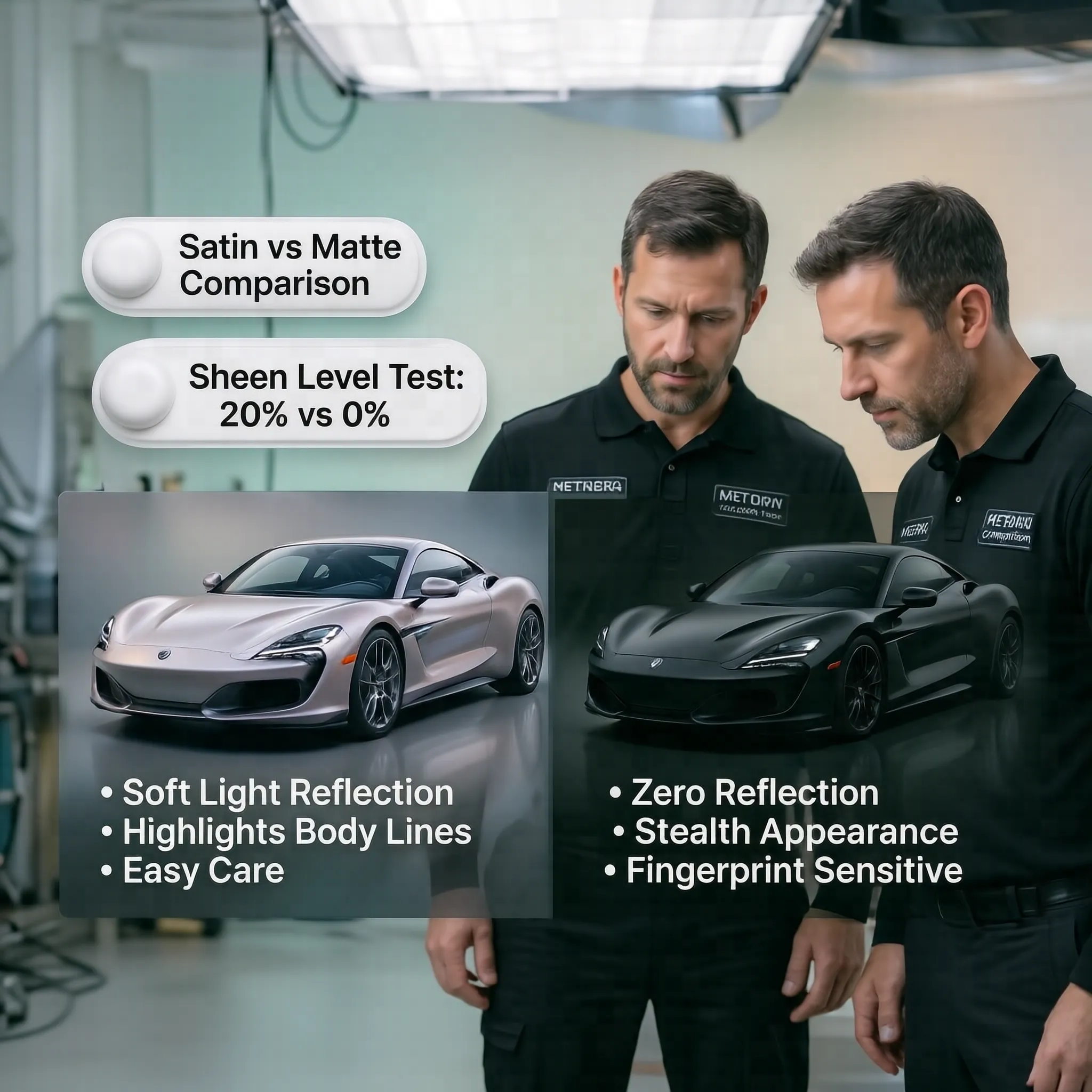
Deciding on the right sheen for your body lines? Compare matte vs gloss wrap finishes before making up your mind.
Which Lasts Longer on a Daily-Driven Car?
Think long-term:
How often do you want to redo your car's exterior?
Vinyl Wrap Lifespan
- 5 to 7 Years (Cast Vinyl)
- Resists highway wind/rain
- Holds up to hand washes
Plasti Dip Durability
- 1 to 3 Years Average
- Gas spills can dissolve it
- High-pressure wash risky
Vinyl handles daily highway driving, hot sun, and weekly car washes with ease. Plasti Dip is softer, meaning fuel drips at the gas station or aggressive pressure washing nozzles can tear the rubber edges.
Want to ensure your installation reaches its maximum lifespan? Check our car wrap lifespan guide.
Paint Protection: Does a Wrap or Plasti Dip Do More?
The truth about your factory paint:
Both options shield your original clear coat from direct sun exposure and tree sap, but their defense against road debris is vastly different:
Vinyl Wrap Paint Protection: The solid ~3.5 to 4.5 mil PVC layer absorbs light scratches, sand swirl marks, and minor gravel strikes.
Plasti Dip Paint Protection: The soft rubber layer cushions against dirt and bug splatter, but sharp stones easily tear through liquid rubber down to your paint.
Curious how removable styling compares to permanent repaints? Read our article on car wrap vs paint.
Can You Remove a Vinyl Wrap or Plasti Dip?
What if you change your mind later?
Both products are designed as temporary exterior modifications, but removal effort depends entirely on how they were applied:
Vinyl Wrap Removal
- Heat with gun & peel back
- Comes off in full panels
- Leaves zero sticky glue on sound OEM paint
Plasti Dip Removal
- Peels off in large sheets (ONLY if 6+ layers used)
- Thin spots flake off in tiny frustrating shreds
If a dipped car was sprayed too thin, peeling it off becomes an exhausting afternoon of scrubbing with dip dissolver chemicals. A proper removable car wrap warm-peels cleanly off in minutes per panel.
DIY vs Professional Installation: Which Makes More Sense?
Here is your practical choice:

The DIY Plasti Dip Path: Perfect if you enjoy weekend garage projects. Spraying dip is forgiving—if you make a run or heavy spot, you can dissolve it, let it dry, and spray right over it.
The Professional Car Wrap Path: Vinyl wrapping requires strict heat control, stretch calculation, glass-smooth panel prep, and knife-less tape cutting. Trying a DIY vinyl wrap on complex bumpers without experience often leads to wasted rolls and wrinkled corners.
Considering covering just your roof or hood to start? Explore the differences between a full wrap vs partial wrap.
Which Option Gives You More Colors and Custom Designs?
Want to turn heads on the street?

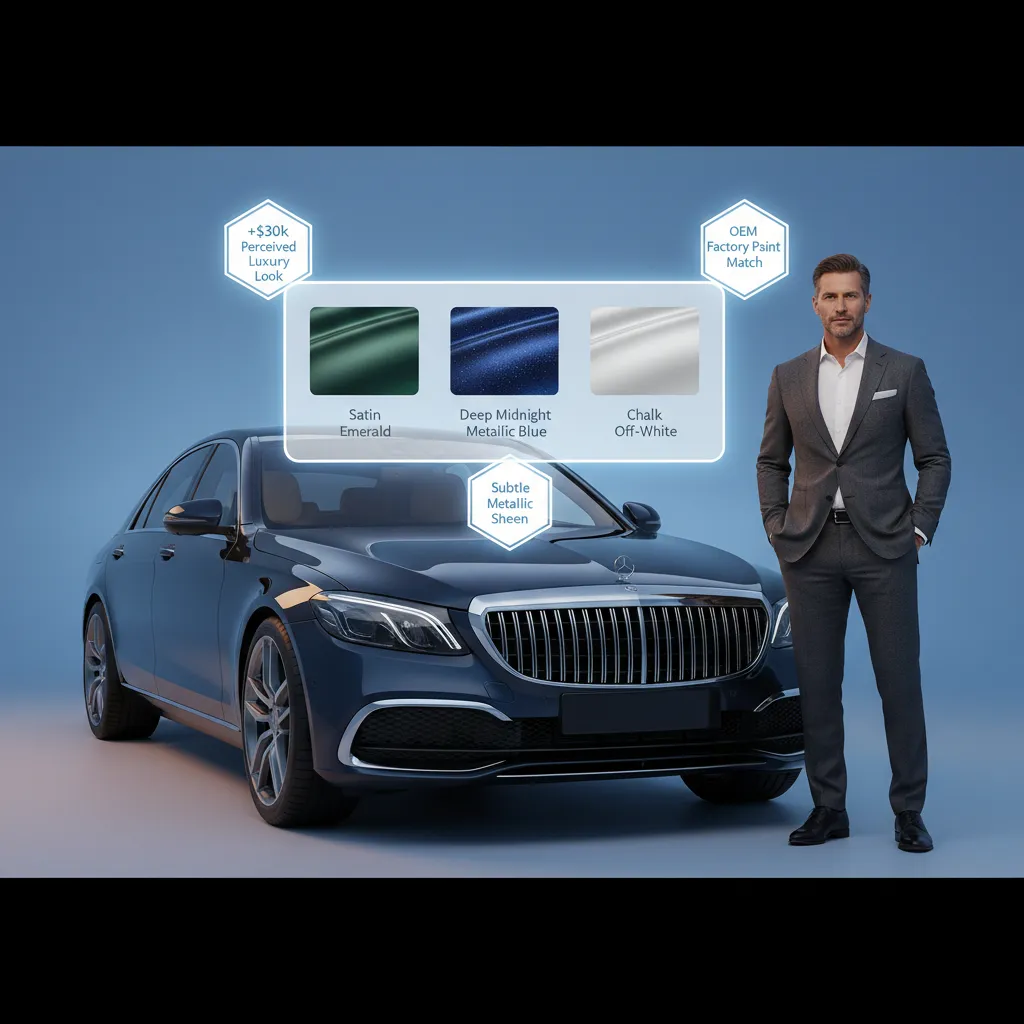
Custom Car Wrap Options: Virtually infinite. Choose from forged carbon fiber, brushed aluminum, color-shifting chameleon, matte metallic, or custom digital graphic prints.
Plasti Dip Colors: Plasti Dip offers great solid tones, matte pigments, and pearl flake additives. However, you cannot achieve printed patterns, sharp multi-color graphics, or genuine metallic textures with liquid spray.
Which Is Better for Your Car? 5 Real-World Scenarios
Match your situation to the right choice:
You want a showroom-finish color change on your daily driver: Choose a Professional Car Wrap. It looks like expensive factory paint and lasts up to 7 years.
You want to black out chrome window trim or factory wheels on a budget: Choose DIY Plasti Dip. It costs under $100 and takes a single afternoon.
You own a sports car, luxury car, or new vehicle: Choose a Custom Car Wrap. The finish matches the premium quality of your car.
You want a temporary color change for a single season or show event: Choose Plasti Dip. It gives you a quick new look at a fraction of the cost.
You plan to sell your car in 3 to 5 years with pristine factory paint: Choose a Vinyl Wrap. It shields your clear coat and peels off cleanly when it's time to list the vehicle.
See Your Car With a New Wrap Before Spending Money
Stop guessing how matte olive green or satin black will look on your ride.
Upload Your Car Photo: Drop a picture of your vehicle into our visualizer.
Test Custom Finishes Live: Toggle between gloss, satin, matte, and carbon fiber looks instantly.
Make Your Move: Preview wrap colors on your own vehicle right now, then connect with a trusted local wrap specialist to bring your build to life.
Frequently Asked Questions: Car Wrap vs Plasti Dip
Is Plasti Dip cheaper than a car wrap?
Yes, significantly. A full-car DIY Plasti Dip kit costs between $300 and $700, while a professional spray job runs $800 to $1,500. In comparison, a full professional vinyl wrap costs $2,000 to $5,000+ due to higher raw material costs and labor-intensive panel disassembly.
How long does Plasti Dip last compared to a vinyl wrap?
A quality cast vinyl wrap lasts 5 to 7 years under daily driving conditions. Plasti Dip typically lasts 1 to 3 years. Over time, sun exposure, road salt, and friction cause rubberized coatings to fade, harden, or lift at panel edges much faster than solid vinyl.
Will Plasti Dip or vinyl wrap damage factory paint?
Neither will harm original OEM factory paint. Both products act as a removable protective barrier against light UV exposure, road dust, and tree sap. However, if your car has flaking clear coat or cheap aftermarket paint repairs, removing either material later may pull up loose paint layers.
What happens if gas spills on Plasti Dip vs a vinyl wrap?
Spilled gasoline will instantly melt or stain rubberized Plasti Dip, creating sticky smears and permanent ruin on the panel. Premium vinyl wraps are chemically resistant—gasoline wipes off clean with zero damage to the film as long as you wipe it away quickly.
Can you wash a dipped or wrapped car in an automatic car wash?
Avoid spinning-brush automatic car washes for both. Abrasive brushes tear the edges of rubberized Plasti Dip and scratch high-gloss vinyl wraps. Hand washing with pH-neutral car shampoo or using touchless pressure-wash bays keeps both finishes looking fresh.
Why is Plasti Dip so hard to peel off sometimes?
Plasti Dip peels off in clean, satisfaction-inducing sheets only if you spray 6 to 8 heavy coats. If applied too thin, the rubberized film lacks tensile strength and tears into hundreds of tiny, frustrating shreds. In contrast, vinyl wrap peels back in large sheets when warmed with a heat gun.
Is DIY vinyl wrapping hard compared to spraying Plasti Dip?
Vinyl wrapping has a much steeper learning curve. Wrapping requires precise glass-smooth squeegee work, stretch calculation, seam-wrapping, and knife-less tape trimming. Plasti Dip is beginner-friendly because liquid runs can be dissolved, dried, and resprayed with simple aerosol cans or standard turbine guns.
Which option offers better protection against highway rock chips?
Vinyl wrap offers superior defense. Solid ~3.5 to 4.5 mil PVC vinyl acts like a tough skin that absorbs light gravel kicks and road debris. Soft rubberized Plasti Dip cushions dust, but sharp flying stones cut right through the thin rubber down to your metal bodywork.
Which option is best for a leased vehicle?
A vinyl wrap is the safer pick for lease returns. It preserves the underlying OEM finish, peels off cleanly without leaving chemical residues or hard-to-reach spray overspray in door jambs, and guarantees you return the car in factory-fresh condition.