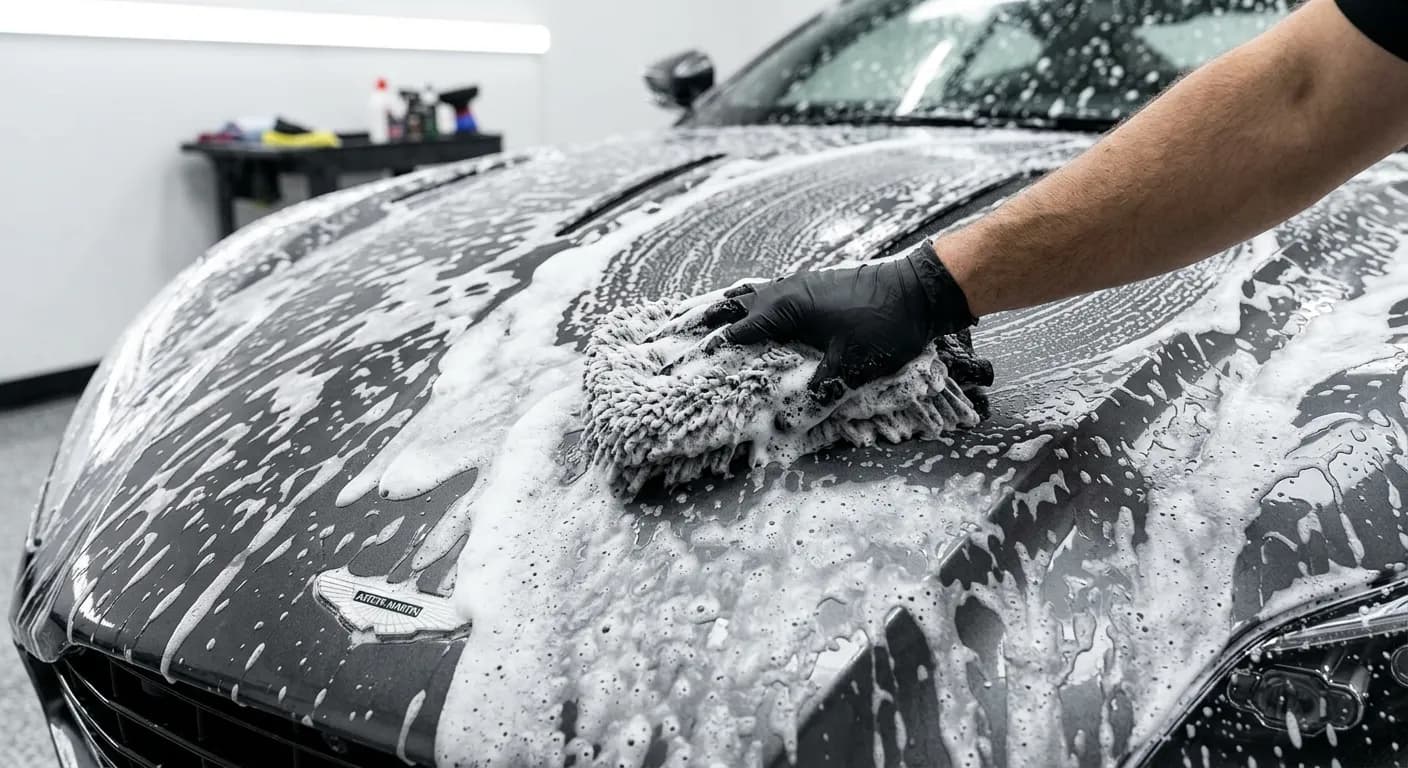

The safest, most reliable method to clean a wrapped vehicle is a gentle hand wash using the two-bucket method. Hand washing gives you full control over pressure, prevents edge lifting, and ensures abrasive road grit doesn't scratch the film.
[Rinse Loose Dirt] ---> [Two-Bucket Hand Wash] ---> [Final Spot-Free Rinse] ---> [Microfiber Dry]
If you stick to hand washing with safe supplies, your wrap will stay smooth, vibrant, and clean for years.

What You Need Before Washing a Wrapped Car
Before touching your panels, gather the right supplies. Using cheap rags or household cleaners will strip the protective layers off your film.pH-Neutral Car Wash Soap: Free from added waxes, petroleum solvents, or harsh acids.Two Clean 5-Gallon Buckets: Equipped with grit guards at the bottom to trap dirt.Plush Microfiber Wash Mitt: Soft microfiber traps dirt particles without dragging them across the film.Waffle-Weave Microfiber Drying Towels: Ultra-absorbent towels prevent water spots without abrasive rubbing.
The Safest Way to Hand Wash a Wrapped Car
Follow this straightforward 4-step routine every time you wash your wrapped vehicle.1.Pre-Rinse the Vehicle:Never touch dry vinyl with a mitt.Rinse the entire car with cool water to knock off loose road dust, sand, and surface debris. This prevents you from dragging dirt across the vinyl and causing micro-scratches.2.Set Up the Two-Bucket System:Bucket 1: Soap | Bucket 2: Clean Water.Fill one bucket with soapy water and the second with clean rinse water. Dip your microfiber mitt into the soap, gently glide it over a panel, then rinse the mitt in the clean water bucket before taking more soap.3.Wash Top to Bottom:Work in straight, overlapping passes.Start from the roof and work your way down. Clean panel by panel using straight lines rather than circular scrubbing. Avoid heavy pressure along vinyl seams, door handles, and panel edges.4.Rinse and Microfiber Dry:Do not let the car air dry.Rinse thoroughly with clean water. Dry the vehicle immediately using a clean waffle-weave microfiber towel. Gently pat or wipe the surface to eliminate standing water and prevent mineral spots.
Can You Use a Pressure Washer on a Car Wrap?
Yes, but only if you follow strict safety distance rules.A pressure washer can save time, but blast too close to a panel edge and you will tear the vinyl or force water under the film, causing instant lifting.
| Pressure Washer Setting | Safe Spec for Car Wraps |
|---|---|
| Max Water Pressure | Under 2,000 PSI |
| Max Water Temperature | Under 140°F (60°C) |
| Nozzle Tip Spray Angle | 40-degree wide spray pattern (Green/White tip) |
| Safe Spray Distance | Minimum 12–18 inches away from panels |
Warning: Never aim a high-pressure spray nozzle directly at vinyl seams, door jamb edges, or deep body lines. Keep the wand moving at a 90-degree angle to the surface.

Which Car Wash Soap Is Safe for Vinyl Wraps?
Not all car soaps are created equal. Using the wrong cleaner will dull matte finishes, haze gloss film, or break down the vinyl's protective UV inhibitors.Safe Choice: pH-neutral, specialty vinyl wrap shampoos or gentle car wash soaps designed for clear bras and wraps.Avoid: Soaps containing heavy petroleum distillates, strong citrus degreasers, or aggressive acidic chemical formulations.Skip "Wash & Wax" Soaps on Matte/Satin: Gloss-enhancing additives in standard wash-and-wax soaps leave streaks and unwanted shine spots on matte or satin finishes.
Why Brushes and Automatic Car Washes Can Be a Problem
Taking a wrapped car through a standard drive-through car wash is the fastest way to destroy your wrap.
[Abrasive Spinning Brushes] ---> Drag Dirt & Fine Grit ---> Deep Vinyl Scratches [High-pH Detergents] ---> Strip Film Polymers ---> Fading & Edge Peeling
Nylon bristles and coarse spinning curtains hold dirt from previous vehicles, acting like sandpaper against your wrap. Even touchless automatic washes can be dangerous—they rely on ultra-high pressure jets and harsh industrial degreasers that degrade vinyl adhesives and cause edge lifting over time. Stick strictly to hand washing.
How to Wash Matte, Satin, and Gloss Wraps
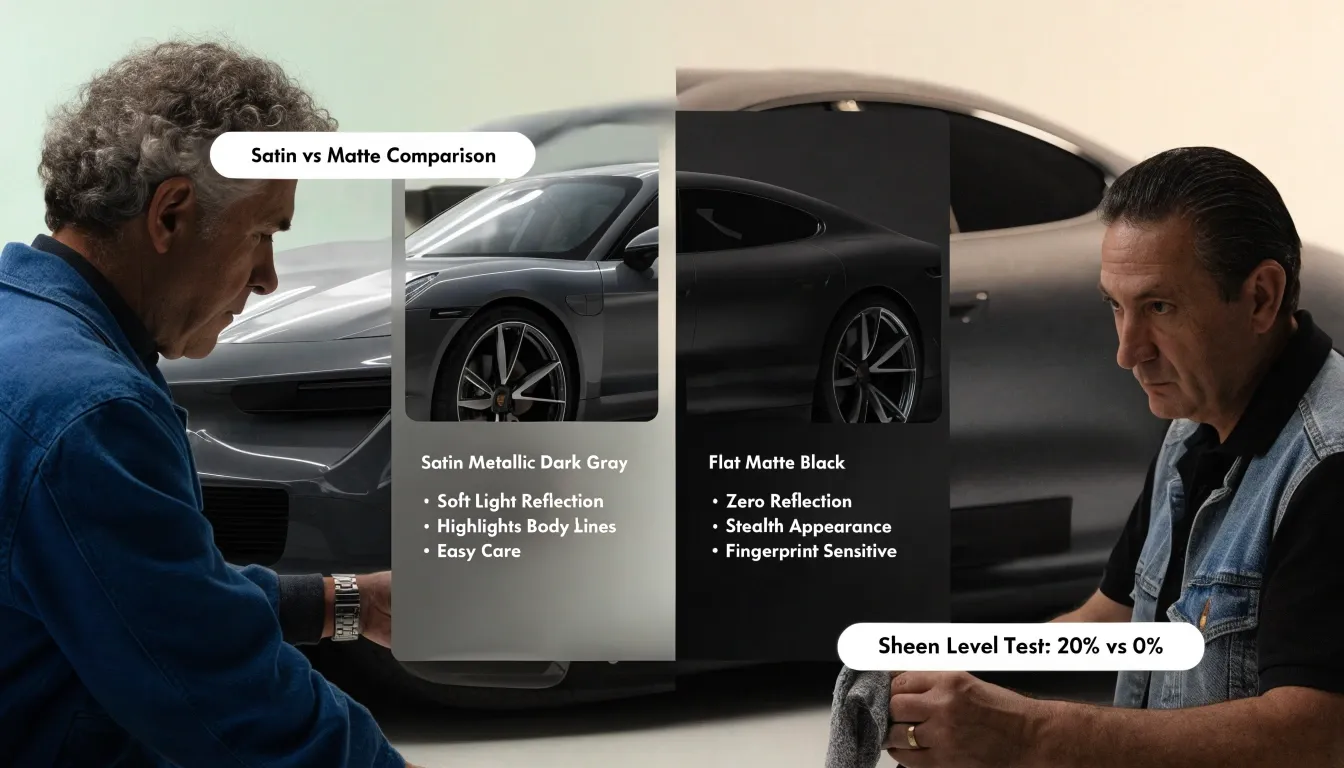
Different wrap finishes require specific maintenance techniques to keep their original look.Gloss Wrap Care: Gloss finishes handle standard detail sprays and synthetic spray sealants well. Buff gently to maintain a deep sheen.Matte Wrap Care: Never rub matte vinyl vigorously, and never apply standard automotive waxes or polishes. Use specialized matte detailers to remove fingerprints without adding unwanted shine.Satin Wrap Care: Satin sits right between matte and gloss. Treat it like a matte finish—use pH-neutral soaps and avoid aggressive buffing pads or gloss-enhancing waxes.

How to Remove Bird Droppings, Bugs, and Road Grime
Insect guts, tree sap, and bird droppings contain acids that eat into vinyl film quickly—especially when baked by outdoor sunlight.Act Fast: Clean isolated spots as soon as you see them.Soak the Spot: Soften dried contaminants by placing a warm, damp microfiber cloth over the spot for 2–3 minutes.Use a Wrap Cleaner: Spray a dedicated waterless wrap cleaner or bug remover onto the area.Wipe Gently: Gently wipe the softened spot away with a plush microfiber towel. Never scrape or scrub with abrasive sponges or fingernails.
What Not to Use on a Wrapped Car
Keep these destructive tools and chemical products far away from your wrapped vehicle:Solvents & Chemicals: Acetone, paint thinner, gasoline, kerosene, or brake cleaner.Abrasive Tools: Scouring pads, steel wool, stiff bristle brushes, or rubbing compounds.Polishing Buffers: High-speed rotary buffers generate excessive friction heat that melts or deforms vinyl film.Household Cleaners: Dish soap, glass cleaners with ammonia, or kitchen degreasers.
How Often Should You Wash a Wrapped Car?
A solid maintenance routine prevents road grime and pollution from embedding into the film.
[Weekly] ---> Spot-clean bird droppings, tree sap, and bug splatter daily [Bi-Weekly] ---> Complete two-bucket hand wash for daily drivers [Monthly] ---> Apply a wrap sealant or ceramic coating spray for UV protection
If your vehicle is exposed to heavy highway driving, salt air, or dusty environments, wash it every week to protect the film's lifespan.
How to Keep a Car Wrap Looking New for Longer
Beyond regular washing, smart parking habits and surface protection make a massive difference.Park in the Shade or Garage: Direct UV sunlight is the number one cause of vinyl drying, cracking, and premature fading.Apply a Dedicated Wrap Sealant: Use a wrap-safe ceramic spray or synthetic coating every few months to build a hydrophobic barrier that repels water stains and grime.Wipe Up Fuel Spills Instantly: If gasoline drips onto your wrap while fueling, wipe it away immediately and rinse the panel with water to prevent chemical staining.

When washing a wrapped car, use a mild car wash soap, a soft microfiber mitt, and plenty of clean water to avoid damaging the vinyl. Wash from top to bottom, rinse thoroughly, and gently dry the surface with a clean microfiber towel. Be particularly careful around seams and edges, and avoid directing high-pressure water directly at the wrap. If you're looking for more tools and resources for car care, design, and other practical projects, ToolPilot is a useful place to discover and explore a wide range of helpful tools.
See Your Wrap From Every Angle Before You Choose Your Next Design
Thinking about refreshing your vehicle's look, swapping to a sleek satin finish, or testing a bold color transformation?Instead of guessing from a small physical material sample, preview your next custom wrap style digitally first.Using an AI car wrap visualizer at Carwrap.style lets you instantly test high-resolution gloss, matte, satin, or custom graphic wraps on your exact vehicle make and model under real-world lighting conditions. It's the ultimate way to visualize your dream build, compare color shifts, and share exact visual renders with your wrap installer before spending a single dollar on film.Washing a vinyl-wrapped vehicle isn't complicated, but taking a harsh dish soap or an abrasive sponge to it is the fastest way to ruin your finish. Cast vinyl is a durable protective layer—not hard paint clear coat. Treating it right keeps the colors vibrant and prevents edges from lifting.Below are answers to the 12 most critical questions about washing and maintaining your wrapped car safely.
Preview Your Next Wrap Design Before Spending a Dollar
Stop guessing how colors will look. Use the Carwrap.style visualizer to test gloss, satin, and matte finishes directly on your exact vehicle model.
How to Wash a Wrapped Car Without Damaging the Vinyl
What is the single safest way to wash a wrapped car?
The safest, most reliable method is a gentle hand wash using the two-bucket method and a plush microfiber wash mitt. One bucket holds your soapy water, while the second contains clean rinse water to wash dirt off your mitt. This prevents road grit from being dragged across the vinyl, protecting the film from micro-scratches and edge lifting.
What supplies do I need before washing my wrapped vehicle?
Avoid household detergents and cheap shop rags. Gather these safe materials before you start:pH-Neutral Car Wash Soap: Formulated without harsh acids, heavy solvents, or petroleum.Two 5-Gallon Buckets: Fitted with grit guards at the bottom to trap dirt.Plush Microfiber Wash Mitt: Gently traps surface dust without scratching film.Waffle-Weave Microfiber Towels: Soft, ultra-absorbent towels for spot-free drying.
What is the step-by-step process for hand washing wrapped vinyl?
Follow this reliable 4-step routine:Pre-Rinse: Spray cool water over the entire car to knock off loose dirt and sand.Lather: Dip your mitt in pH-neutral soap and wash panels working top-to-bottom in straight lines.Rinse Mitt: Dunk your mitt in the clean water bucket before taking more soap.Rinse & Dry: Rinse thoroughly with fresh water and pat dry immediately using a clean waffle-weave towel.
Can I use a pressure washer on a vinyl wrap?
Yes, but only if you follow strict safety guidelines. High pressure used incorrectly can tear vinyl or force water under panel edges:Keep maximum pressure under 2,000 PSI.Keep water temperature under 140°F (60°C).Use a 40-degree wide spray nozzle (white tip).Maintain a distance of at least 12–18 inches from all panels, and never spray directly at vinyl seams or door jambs.
Which car wash soaps are safe for vinyl wraps?
Always choose pH-neutral car shampoos designed specifically for wraps or delicate clear coats. Avoid aggressive citrus degreasers, heavy petroleum distillates, or acidic wash products. If your vehicle has a matte or satin wrap, skip "Wash & Wax" soaps containing gloss enhancers, as they create uneven sheen spots on non-gloss finishes.
Why are automatic car washes and bristle brushes dangerous for wraps?
Automatic car washes with spinning nylon bristles or cloth curtains hold coarse dirt from previous vehicles, acting like heavy sandpaper against your wrap. Even touchless automatic washes present hazards: they rely on ultra-high-pressure water jets and aggressive industrial degreasers that strip protective polymers and degrade vinyl adhesives along panel edges.
Do matte, satin, and gloss wraps require different cleaning methods?
Gloss Wraps: Can be washed normally and treated with vinyl-safe detail sprays or synthetic sealants for extra sheen.Matte Wraps: Require specialized matte detailers. Never scrub vigorously, and never apply standard car waxes or polishes, as they permanently ruin the flat finish by adding unwanted shine.Satin Wraps: Treat like matte finishes—use pH-neutral soaps, avoid aggressive buffing, and stick to matte/satin-safe detailers.
How do I safely remove dried bird droppings, bug splatter, and road grime?
Bird droppings and insect guts contain strong acids that bake into vinyl quickly under sunlight.Act Fast: Spot-clean contaminants as soon as you spot them.Soak the Area: Place a warm, damp microfiber cloth over the stubborn spot for 2–3 minutes to soften the residue.Spray Cleaner: Apply a wrap-safe cleaner or bug remover.Wipe Gently: Gently lift the residue away with a soft microfiber towel. Never scrape with fingernails, scrub pads, or harsh tools.
What products should I NEVER use on a wrapped car?
Keep these destructive tools and chemical formulations away from your wrap:Harsh Solvents: Acetone, paint thinner, gasoline, kerosene, or brake cleaner.Abrasives: Scouring sponges, steel wool, stiff bristle brushes, or rubbing compounds.Power Tools: High-speed rotary buffers generate heat that melts or deforms vinyl.Household Products: Dish soap, ammonia glass cleaners, or heavy kitchen degreasers.
How often should I wash a wrapped car?
For daily drivers, perform a complete hand wash every 1 to 2 weeks. Spot-clean bird droppings, tree sap, and road tar immediately as they appear. If you live in dusty environments, coastal salt air, or areas with heavy winter road salt, washing weekly helps prevent pollutants from embedding into the film.
How can I keep my car wrap looking brand new for longer?
Park Indoors or in the Shade: UV sunlight is the leading cause of vinyl fading, cracking, and drying out over time.Apply a Wrap Sealant: Use a wrap-safe ceramic spray or synthetic sealant every few months to create a hydrophobic barrier against dirt and water spots.Wipe Fuel Spills Immediately: If gasoline drips onto your wrap while filling up, wipe it off right away and rinse the area with water to prevent chemical staining.
How can I preview a new wrap design on my car before swapping styles?
Staring at a small 2-inch material swatch makes it tough to picture how a new color or finish looks across your vehicle's curves and body panels.Using an AI car wrap visualizer allows you to test high-resolution gloss, satin, matte, or custom graphic wraps directly on your exact vehicle make and model under realistic lighting—helping you choose your next look before spending money on new film.