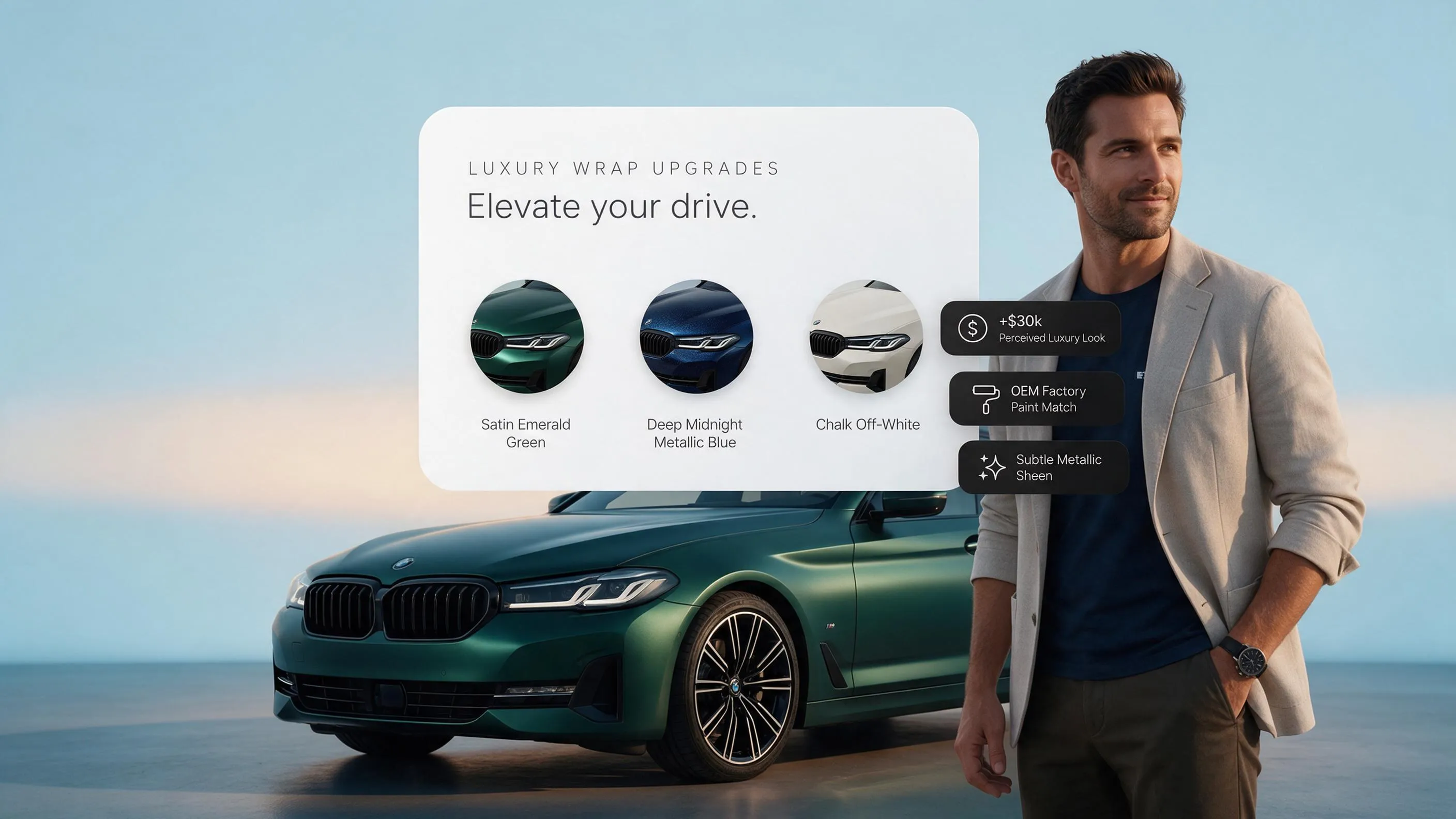

You step into your garage, glance at your vehicle, and feel a wave of sheer disappointment.
The head-turning satin neon or intense satin metallic wrap you picked out two years ago just doesn't hit the same anymore. Your personal style has evolved, but your car is stuck in a loud, dated time capsule.
As you stare at the panels, a frustrating question starts looping in your mind: Am I trapped with this shade forever unless I drop $8,000 to strip and permanently repaint the entire car?
It’s one of the most common dilemmas car owners face when their taste shifts.
The short answer? Yes, you can change a car wrap color completely without touching a single drop of factory paint.
However, executing a flawless color transformation isn't as simple as slapping a fresh sheet of vinyl over the old one. Achieving a factory-grade finish requires clean film removal, thorough surface decontamination, strategic edge coverage, and selecting the right film series.
Here is your complete guide to changing your car wrap color, managing removal costs, avoiding coverage gaps, and picking your next finish with absolute confidence.

1. Do You Have to Remove the Old Wrap Before Installing a New Color?
When you decide it's time for a new aesthetic, you might wonder if your installer can save time and money by simply laying the new vinyl directly over the existing film.
┌────────────────────────────────────────────────────────────────────────┐ │ DOUBLE-LAYERING VINYL RISKS │ ├────────────────────────────────────────────────────────────────────────┤ │ [ Adhesion Failure ] --> Vinyl-on-vinyl glue bonds are weak & temporary│ │ [ Surface Mapping ] --> Scratches & seams on bottom layer show through│ │ [ Extreme Weight ] --> Traps heat; accelerates glue breakdown │ └────────────────────────────────────────────────────────────────────────┘
The answer is an absolute, non-negotiable no. You must remove the old wrap before rewrapping.
Attempting to wrap over an existing wrap creates severe structural issues:
Glue Incompatibility: Automotive pressure-sensitive acrylic adhesives are formulated to cross-link with smooth factory clear coats, not the porous PVC topcoats of older vinyl.
Imperfection Telegraphing: Every swirl mark, stone nick, or lifted edge on the old wrap will map directly through the new film, ruining your fresh finish.
Excess Thickness: Double-layering traps intense solar heat, causing the underlying glue to bake into a petrified mess that severely damages your factory clear coat during eventual removal.
2. What If You Love the New Color but Hate the Idea of Removing Everything?
Stripping an entire vehicle down to bare paint isn't always necessary if you're looking for a fresh look without the price tag of a full teardown.
ACCENT vs. FULL COLOR CHANGE [ Full Re-Wrap ] ---> Strips 100% of old film; complete color overhaul [ Partial Re-Wrap ] ---> Keeps main body wrap; swaps roof, hood & mirrors
If your primary wrap is still in immaculate condition, a partial car wrap color change offers a highly cost-effective alternative.
Swapping out just the hood, roof, and side mirror caps for high-gloss carbon fiber or deep gloss black instantly shifts the vehicle's visual stance. It creates a bold, two-tone theme while preserving your main investment and saving thousands in shop labor.
3. Will the Original Paint Color Show Through the New Wrap?
Switching from a bright white factory paint job to a deep midnight purple wrap presents a specific challenge: preventing the original color from flashing at the panel gaps.
┌────────────────────────────────────────────────────────────────────────┐ │ PAINT COVERAGE REALITY MATRIX │ ├────────────────────────────────────────────────────────────────────────┤ │ • Exterior Panels Only: 100% covered when doors are closed │ │ • Panel Seams & Gaps: Unwrapped factory paint shows when doors open │ │ • Deep Recess Channels: Requires pre-inlays to prevent paint flashes │ └────────────────────────────────────────────────────────────────────────┘
When a car is wrapped externally, the vinyl tucks roughly 1/8 to 1/4 inch behind panel edges.
If you choose a high-contrast shift—like wrapping a white car in ultra-dark satin black—the original white paint may still show inside the narrow gaps between the hood, headlights, and trunk seams when viewed from sharp angles.
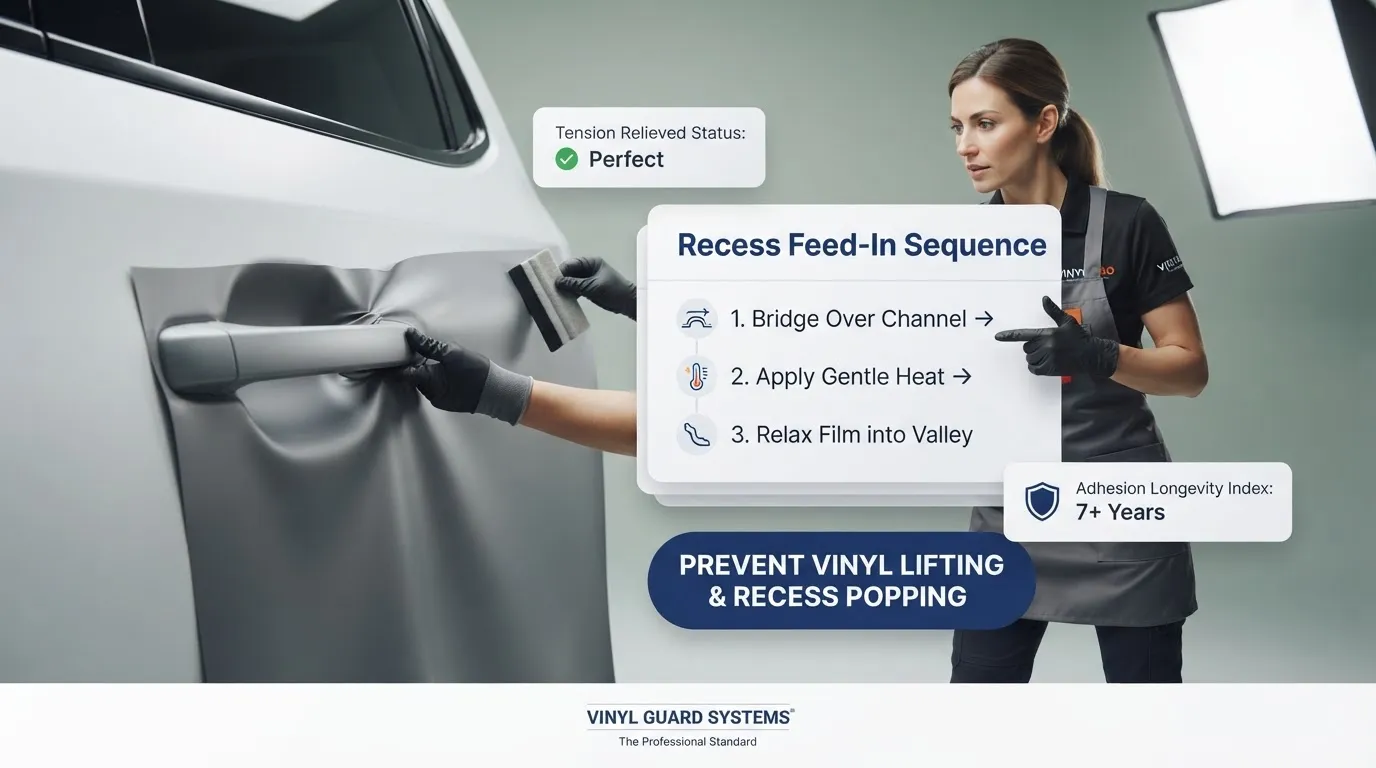
To eliminate these stark contrast lines, certified installers lay dark knifeless tape or thin blind inlays inside deep panel channels before applying the main wrap sheet.
4. What Happens to Door Jambs, Edges, and Other Unseen Areas?
The difference between a standard exterior wrap and a true show-car conversion comes down to door jamb color change wrap execution.
COLOR CONVERSION SCOPE [ Standard Exterior Wrap ] --> Covers outer metal panels (Doors closed = 100% hidden) [ Full Color Change Wrap ] --> Wraps inner door sills, jambs, hinges & door cards
Standard Exterior Wrap: Ideal for daily drivers. When the doors are closed, the car looks completely transformed. However, opening the door reveals the original factory paint along the inner sills and door jams.
Full Door Jamb Conversion: Requires unbolting door cards, weatherstripping, and hardware hinges. The installer wraps deep into the inner door frames so that even when you step inside, zero factory paint is visible.
5. Can You Change From Matte Black to Gloss Red—or Switch Finishes Entirely?
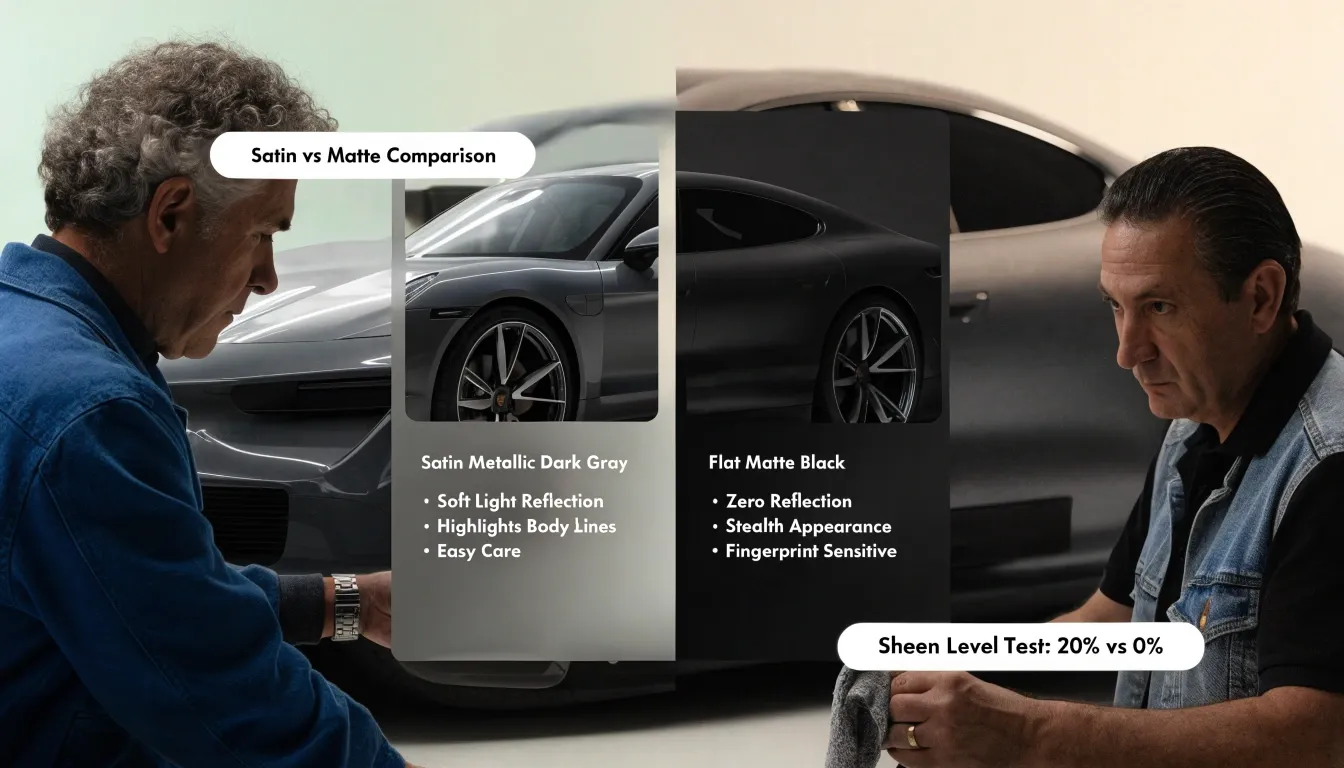
Switching from a stealthy matte or satin finish to a high-gloss, liquid metallic color requires a completely different approach to surface prep.
┌────────────────────────────────────────────────────────────────────────┐ │ FINISH CONVERSION REQUIREMENTS │ ├────────────────────────────────────────────────────────────────────────┤ │ • Matte-to-Gloss Conversion: Requires 100% alcohol surface strip │ │ • Satin-to-Chrome Conversion: Requires ultra-smooth, flawless paint │ │ • Gloss-to-Matte Conversion: Forgiving; hides minor clear coat flaws │ └────────────────────────────────────────────────────────────────────────┘
Changing your finish is seamless once the old film is removed.
However, high-gloss and metallic films are far less forgiving of underlying surface debris than matte wraps.
When transitioning to a high-gloss color, your installer must clay-bar and polish the underlying factory paint to a glass-smooth state before laying down the new film to prevent tiny specks of dust from showing through the gloss cap.
6. Will a New Wrap Look Different on Curves, Recesses, and Difficult Panels?
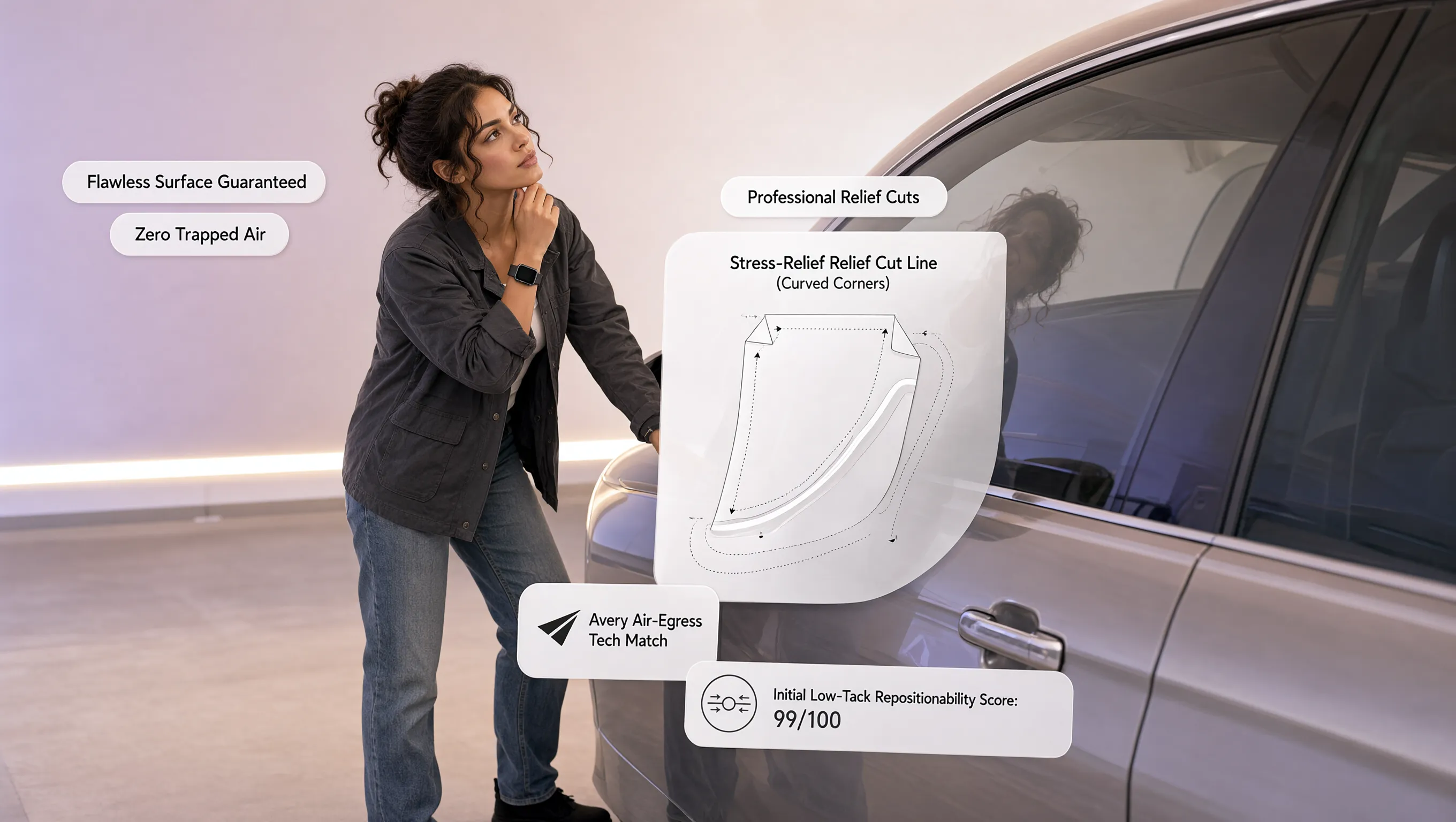
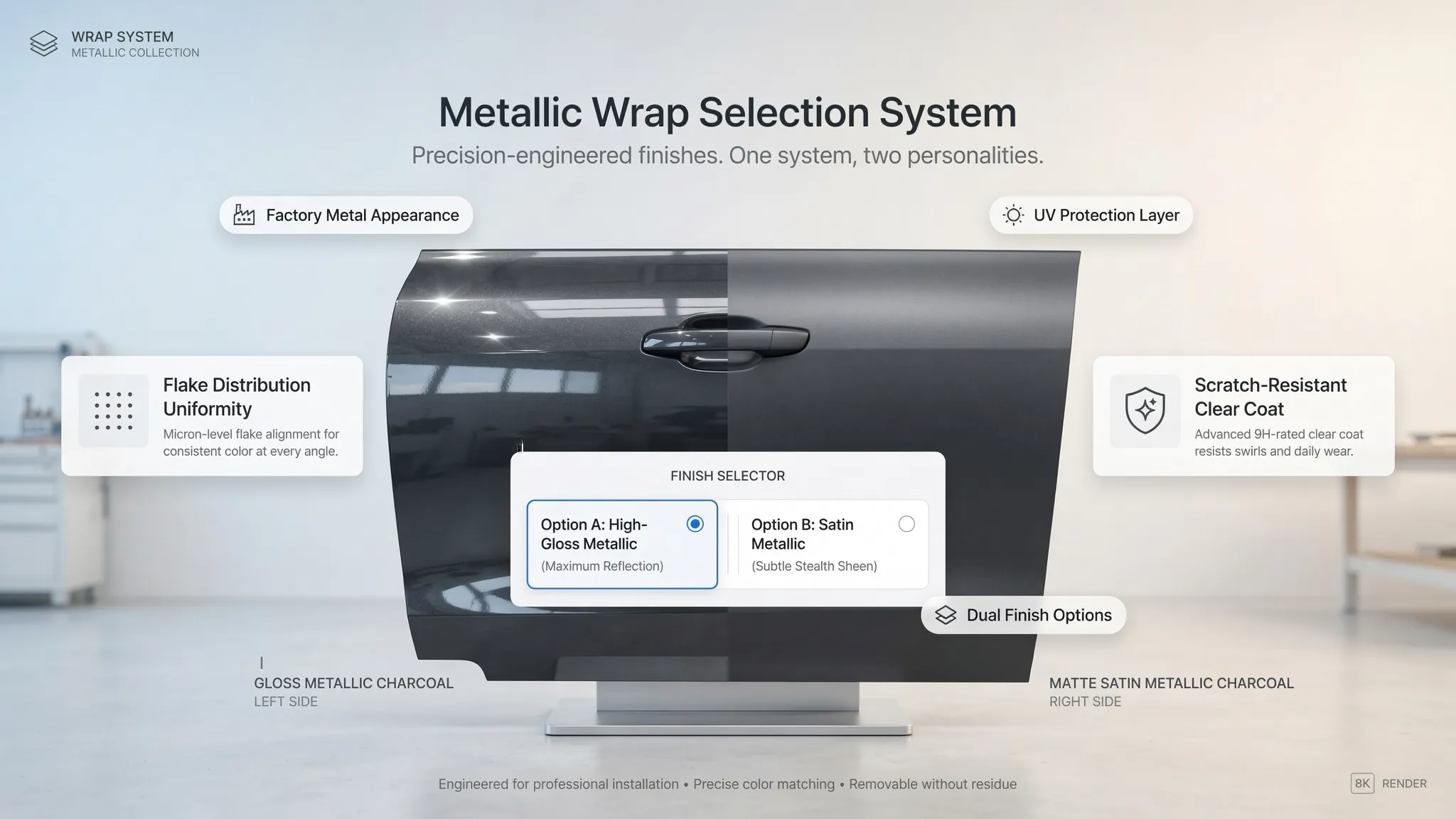
When you switch to a high-contrast or metallic color, complex body panels like aggressive front bumpers, deep side skirts, and sharp mirror caps demand expert installation techniques.
METALLIC & SATIN TENSION RISKS [ Excessive Heat Pull ] --> Stretches metallic flakes; causes ugly color banding [ Over-Stretching ] --> Thins dark pigments; causes white hazing on edges
Metallic and satin pearl films contain microscopic aluminum flakes that reflect light directionally.
If an installer over-stretches the film around a bumper intake, those flakes spread apart unevenly, causing permanent, unsightly color banding and tiger-striping. Professional master shops utilize directional layout mapping to ensure the metallic flake flows consistently across every single panel.
To learn how master installers handle complex panel geometries without stretching, read our guide on inspecting car wrap quality and installation standards.
7. Can You Change the Wrap Color if the Existing Film Is Peeling or Damaged?
Attempting to change your car wrap color when your current film is already cracking, peeling, or sun-baked requires immediate surface remediation.
┌────────────────────────────────────────────────────────────────────────┐ │ DAMAGED FILM REMEDIATION │ ├────────────────────────────────────────────────────────────────────────┤ │ [ Stage 1: Thermal Peel ] --> Steam-lift old cracked film in patches │ │ [ Stage 2: Glue Strip ] --> Dissolve petrified adhesive with solvents │ │ [ Stage 3: Paint Repair ] --> Sand & feather-edge flaking clear coat │ └────────────────────────────────────────────────────────────────────────┘
If your existing vinyl has baked under the sun for 5+ years and turned brittle, removing it becomes a painstaking labor process.
Cracked film tears into tiny thumb-sized pieces, often leaving chunks of hardened glue baked into your clear coat.
That petrified residue must be chemically dissolved and the paint polished smooth before a new wrap can be applied. Ignoring surface prep will cause your new wrap to bubble and lift prematurely.
8. How Much Does It Cost to Change a Car Wrap Color?
Calculating a car wrap color change cost involves factoring in two separate labor phases: stripping the old film and installing the new material.
TOTAL COLOR CHANGE COST BREAKDOWN [ Old Wrap Removal ] --> $500 – $1,200 (Varies based on age & glue state) [ Surface Prep & Polish ] --> $300 – $600 (Decontamination & alcohol prep) [ New Wrap Installation ] --> $2,500 – $4,500 (Varies by film series & coverage) ------------------------------------------------------------------------ [ Total Investment ] --> $3,300 – $6,300
While stripping a fresh 2-year-old wrap takes under three hours, removing a 6-year-old sun-baked wrap can require 10+ hours of tedious wheel-buffing labor, significantly adding to your total quote.
To review detailed regional labor rates and breakdown quotes, check out our guide on evaluating professional car wrap installation quotes.
9. How Long Will Your Car Be Off the Road During the Color Change?
Planning your weekly commute around a color transformation requires a realistic timeline.
┌────────────────────────────────────────────────────────────────────────┐ │ WORKSHOP TIMELINE SCHEDULE │ ├────────────────────────────────────────────────────────────────────────┤ │ • Day 1: Thermal teardown & stripping of old vinyl film │ │ • Day 2: Chemical glue dissolution, clay-bar prep & panel wiping │ │ • Day 3–4: Precision installation of new color-change cast vinyl │ │ • Day 5: Post-heating, edge inspection & 24-hour adhesive curing │ └────────────────────────────────────────────────────────────────────────┘
A complete color change generally requires 3 to 5 business days.
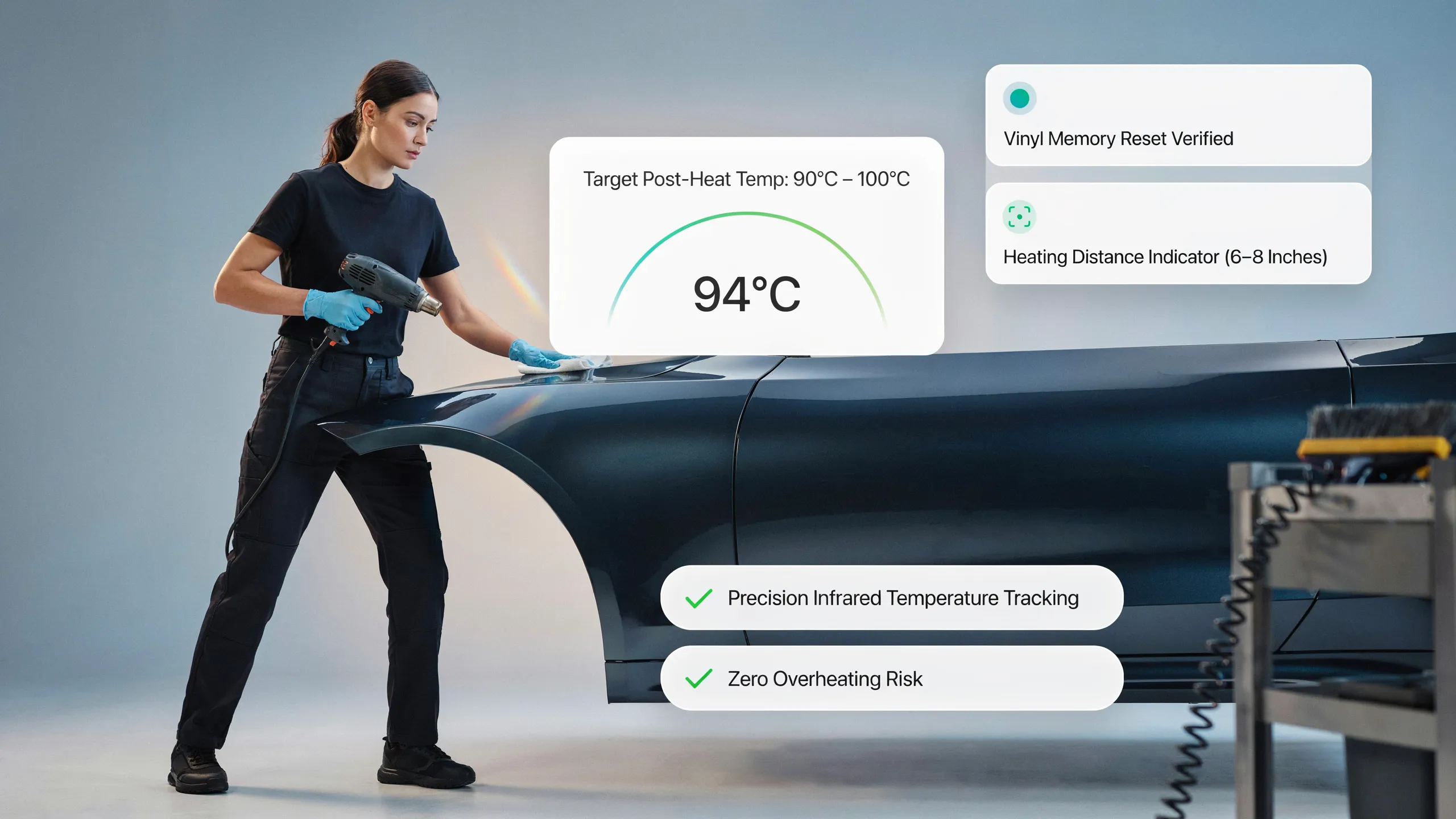
Rushing the timeline risks premature edge lifting; the newly applied pressure-sensitive acrylic adhesive needs a 24-hour resting window inside a temperature-controlled shop to cross-link cleanly before encountering highway winds.
10. Will the New Color Last as Long as the Original Wrap?
Investing in a fresh color setup raises an obvious question: Will this new film maintain its vibrant depth as long as my first wrap?
REAL-WORLD FILM LIFESPAN [ Premium Cast Vinyl ] ---> 3 to 5 Years (3M 2080, Avery SW900, KPMF) [ Cheap Calendered ] ---> 6 to 12 Months (Prone to shrinking & fading)
The service life of your new color depends entirely on film quality and ongoing maintenance.
Premium cast films feature UV inhibitors built directly into the PVC matrix, delivering 3 to 5 years of vibrant durability.
Applying a hydrophobic ceramic sealant over your new wrap every few months protects the topcoat from bug acid etching, road salt oxidation, and solar fading.
11. Before You Book a Color Change, Set Your Scope
Before requesting a professional quote, clarify your exact project requirements:
┌────────────────────────────────────────────────────────────────────────┐ │ PRE-BOOKING PROJECT SCOPE │ ├────────────────────────────────────────────────────────────────────────┤ │ [ Step 1: Removal ] --> Confirm current wrap age & removal scope │ │ [ Step 2: Coverage ] --> Decide between exterior-only vs. door jambs │ │ [ Step 3: Finish ] --> Select cast film series (Gloss, Satin, Matte)│ └────────────────────────────────────────────────────────────────────────┘
Defining these three details upfront ensures your installer provides an accurate quote without unexpected add-ons halfway through the project.
12. Skip the Guesswork: Test Your Next Color Live First
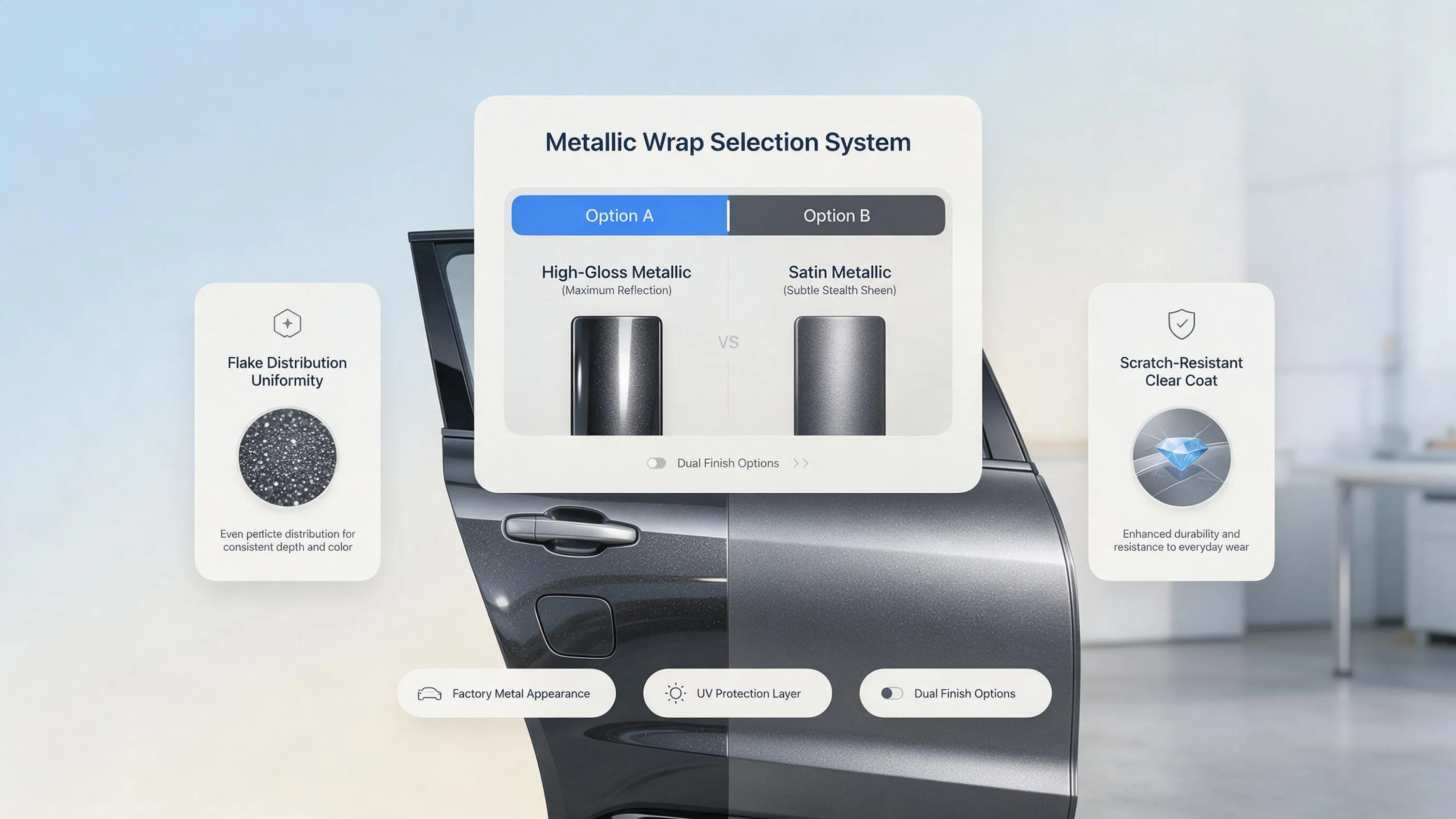
Staring at 2x2-inch physical vinyl swatch samples in a dimly lit shop makes it almost impossible to predict how a dramatic color shift will actually look across your car's complex body lines.
Testing colors on a small swatch often leads to regret once the film is applied across the entire vehicle.
By utilizing our interactive AI car wrap visualizer tool, you can eliminate all uncertainty and save time and money.
Upload a photo of your vehicle, test gloss, satin, and matte colors in real time, compare contrasting roof accents, and discover your perfect finish before spending a single dollar on installation.

FAQs About Changing Your Car Wrap Color
1. "Can you change a car wrap color without having to repaint the entire vehicle?"
Yes, you can completely change a car wrap color without touching a single drop of factory paint. Vinyl wrap is designed to be fully removable, allowing you to transition from an existing color to a brand-new shade, finish, or texture whenever your personal style evolves. A professional shop simply strips the old film, decontaminates the underlying panels, and applies a fresh sheet of cast vinyl across your bodywork.
2. "Do you have to remove the old wrap before installing a new color over it?"
Yes, you must always remove the old wrap before rewrapping. Attempting to install new vinyl directly over older film severely weakens adhesive bonding, causes existing surface scratches to map straight through the top coat, and traps solar heat that can permanently damage your factory clear coat during eventual removal. Stripping down to bare, clean paint is mandatory for a reliable finish.
3. "Will my car's original paint color show through the new wrap at panel gaps?"
If you execute an exterior-only color conversion—such as wrapping a bright white car in deep satin black—the original factory paint can flash through narrow gaps between the hood, doors, and headlights if viewed from sharp angles. To eliminate these contrast lines, professional installers lay dark knifeless tape or thin blind inlays inside deep panel channels before applying the main wrap sheets.
4. "What happens to the door jambs when you change a car wrap color?"
In a standard exterior car wrap color change, the vinyl tucks roughly a quarter-inch around outer panel edges. When your doors are closed, coverage is 100% seamless. However, opening the doors reveals the original factory paint along the inner door sills and jambs. If you want a complete color transformation where no original paint is visible even when stepping inside, you can opt for a full door jamb color change wrap.
5. "Can you change from a matte wrap to a high-gloss color or specialty finish?"
Yes, you can freely switch between matte, satin, high-gloss, brushed metal, or metallic finishes once the old film is removed. However, transitioning to a high-gloss finish requires stricter surface preparation. Gloss films magnify minor surface debris underneath, meaning your installer must clay-bar and polish the bare factory paint to a glass-smooth state before laying down the new film.
6. "How much does a full car wrap color change cost compared to a quick touch-up?"
Calculating a full color change wrap cost requires factoring in two separate labor phases: stripping the old vinyl and prepping/installing the new cast film. Old wrap removal typically costs between $400 and $1,000 depending on the age and condition of the old glue, while a new full-vehicle installation ranges from $2,500 to $4,500+ based on vehicle size, panel complexity, and film series.
7. "How long will my car be at the shop when changing the wrap color?"
A complete car wrap color change generally takes 3 to 5 business days. This timeline accounts for thermal teardown and adhesive stripping on day one, chemical decontamination and clay-bar prep on day two, precision application of the new color on days three and four, and a mandatory 24-hour resting window to allow the acrylic adhesive to cross-link cleanly in a temperature-controlled booth.
8. "Can you change the wrap color if your current film is already peeling or sun-baked?"
Yes, but heavily damaged or sun-baked vinyl requires additional surface remediation before a new wrap can be applied. If your current film has cracked and baked under the sun for 5+ years, it will tear into small thumb-sized pieces during removal and leave hardened glue behind. That petrified residue must be chemically dissolved and the paint polished smooth to prevent the new wrap from lifting prematurely.
9. "Will a new car wrap color last as long as my original wrap did?"
Yes. When installed using premium automotive cast vinyl (such as 3M 2080, Avery SW900, or KPMF) and properly maintained, your new color change wrap will deliver a real-world service life of 3 to 5 years. Applying a hydrophobic ceramic detailer every few weeks protects the topcoat from UV fading, bug acid etching, and road grime oxidation.
10. "Can you change the color of just a few panels instead of the whole car?"
Yes. If your primary wrap is still in immaculate condition, a partial car wrap color change is a highly cost-effective way to refresh your vehicle's look. Swapping out just the hood, roof, and side mirror caps for high-gloss carbon fiber or gloss black creates an aggressive two-tone aesthetic while preserving your main body wrap and saving thousands in shop labor.
11. "Does a color change wrap affect your vehicle's resale value or registration?"
Unlike permanent paint, a professional vinyl wrap preserves your original factory clear coat beneath a sacrificial shield, protecting your vehicle's underlying resale value from rock chips and UV fading. Depending on your local DMV regulations, changing your vehicle's primary color via a full wrap may require a quick administrative update to your vehicle registration details to reflect the new primary shade.
12. "How can you test different custom wrap colors on your car before committing?"
Staring at small 2x2-inch physical swatches makes it nearly impossible to predict how a dramatic color shift will look across complex body lines. You can eliminate all uncertainty by using an interactive AI car wrap visualizer tool online. Uploading a photo of your vehicle allows you to test gloss, satin, and matte finishes in real time, compare contrasting roof accents, and dial in your ideal design before spending a dollar on installation.