
You open your door, slide into the driver's seat, and immediately wince at the center console.
The factory fake-wood trim or high-gloss piano black plastic is covered in hairline scratches, dull finger smudges, and sun-faded patches. It completely undermines the feel of an otherwise modern cockpit.
As you run your fingers across the worn surface, a frustrating dilemma takes hold: Am I forced to spend $1,200 buying replacement OEM factory trim assemblies, or can I transform this cabin myself with custom interior vinyl?
It’s one of the most common cabin upgrades car enthusiasts consider.
The short answer? Yes, you can wrap interior car panels without replacing the trim.
However, executing a show-worthy interior refresh that withstands summer cabin heat, constant physical contact, and complex button cutouts requires interior-rated cast film, dedicated surface primers, and precise edge-tucking techniques.

1. Which Interior Parts Can You Wrap—and Which Should You Leave Alone?
Before unrolling material, you must distinguish which cabin surfaces provide a reliable foundation for long-term adhesion.
┌────────────────────────────────────────────────────────────────────────┐ │ CABIN SUITABILITY MATRIX │ ├────────────────────────────────────────────────────────────────────────┤ │ [ Smooth Hard Plastics ] --> IDEAL: Center consoles, dash strips, doors│ │ [ Brushed Aluminum Trim] --> IDEAL: Glovebox accents, air vent surrounds│ │ [ Textured/Soft Rubber ] --> UNFIT: Off-gasses oils; glue cannot bond │ └────────────────────────────────────────────────────────────────────────┘
Ideal Candidates for Interior WrappingCenter Console Trim: Shields heavily abused piano black plastic from ongoing key and phone scratches.Dashboard Accent Strips: Replaces dated faux-wood grain or plain silver trim with modern textures.Door Handle Bezels & Power Window Switches: Delivers a custom two-tone contrast across door cards.Surfaces to Leave AloneAirbag Deployment Covers: Never lay vinyl over steering wheel horn caps or passenger airbag seams.Textured Soft-Touch Dashboards: Porous, flexible vinyl and rubber materials outgas silicone oils, causing adhesives to lift within days.
2. Why Does Some Interior Vinyl Look Factory-Made While Other Wraps Look Cheap?
The difference between a luxury OEM-plus transformation and a cheap-looking sticker job comes down to automotive interior vinyl quality and edge-tucking discipline.
OEM vs. CHEAP STICKER FINISH [ Cast Architectural/Auto Film ] --> 3.5 mil thick; 3D conformability; zero edge-curl [ Cheap Calendered Vinyl ] --> 6+ mil thick; rigid; shrinks under summer sun
Cheap, thick calendered sticker film cannot conform to tight $90^\circ$ console corners or recessed button bezels. Within a week of solar heat exposure, calendered vinyl shrinks, pulling back to expose raw original plastic at the margins.Professional installers use specialized interior cast films (such as 3M DI-NOC or Avery SW900) that conform effortlessly around tight contours, locking down flat without bubbling.
3. Gloss Black, Matte, Brushed Metal, or Carbon Fiber: What Fits Your Interior?
Choosing the right finish bridges the gap between your dashboard, upholstery stitching, and door cards.
┌────────────────────────────────────────────────────────────────────────┐ │ POPULAR INTERIOR STYLES │ ├────────────────────────────────────────────────────────────────────────┤ │ [ Carbon Fiber Interior Wrap ] --> Sporty, high-contrast; hides scratches│ │ [ Matte Black Interior Wrap ] --> Stealthy; eliminates blinding glare │ │ [ Brushed Metal Wrap ] --> Refined, modern industrial aesthetic │ └────────────────────────────────────────────────────────────────────────┘
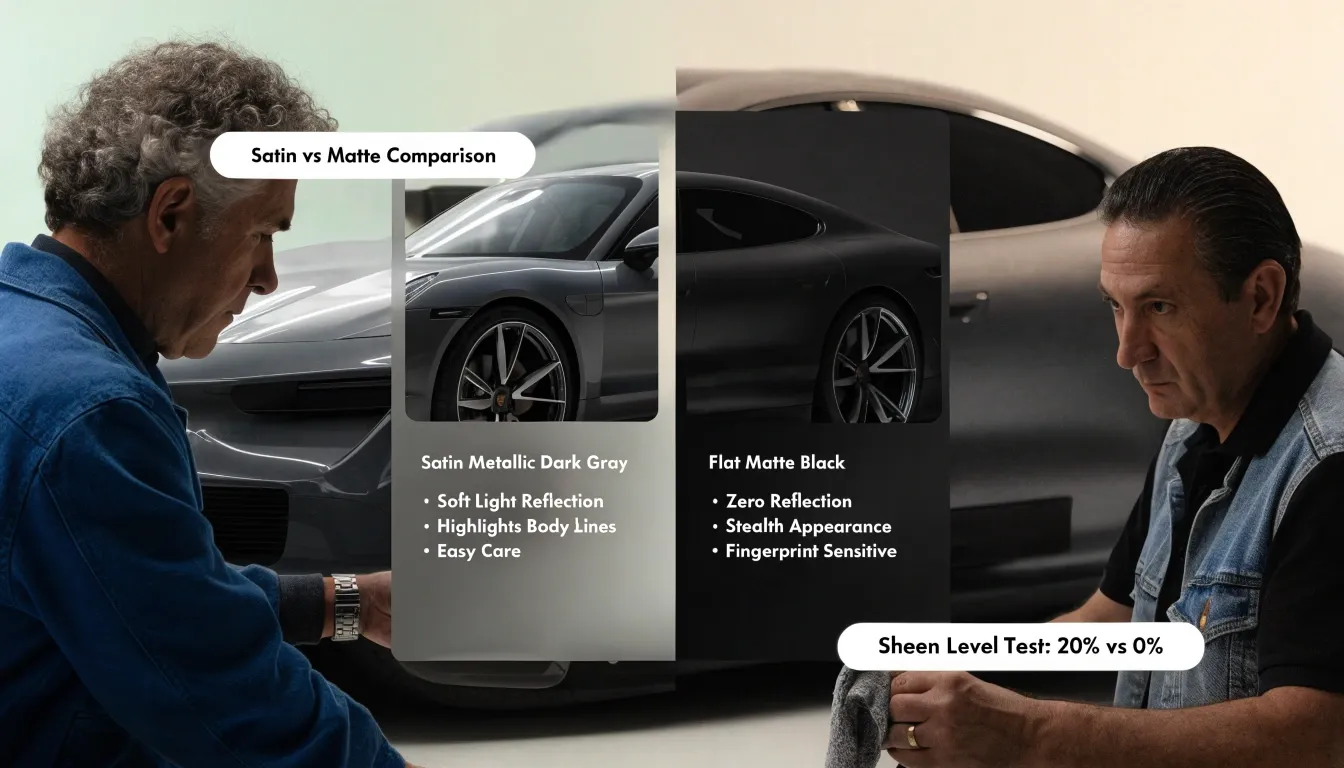
Gloss Black Interior Trim Wrap: Recreates a glass-smooth piano finish, but requires frequent wiping to manage fingerprints.Carbon Fiber Interior Wrap: Textured $3\text{D}$ or $4\text{D}$ carbon films reflect ambient cabin light, effectively hiding existing scuffs while adding a high-performance feel.Matte Black Interior Wrap: Eliminates dangerous windshield sun glare caused by shiny factory dashboard plastics.
4. Can Vinyl Wrap Cover Scratched or Faded Interior Trim?
If your center console is covered in key scuffs or faded by UV rays, wrapping it provides an instant cosmetic restoration.
SURFACE CONDITION PREPARATION [ Light Hairline Scratches ] -> SAFE: Film bridges scuffs cleanly [ Deep Gouges & Peeling ] -> REQUIRES PREP: Sand smooth with 800-grit sandpaper [ Flaking Chrome Trim ] -> REQUIRES REMOVAL: Flaking metal peels off under vinyl
Vinyl acts as a flexible skin, but it will telegraph severe underlying gouges.If your console has deep scratches, sand the plastic smooth using 800-grit sandpaper and wipe it down with a 70/30 isopropyl alcohol mix. Smooth foundations ensure your new wrap lays completely flat without raised lines.
To review proper surface maintenance and installation standards, check out our guide on inspecting car wrap quality and installation standards.

5. The Curves, Buttons, and Tight Corners Are Where Interior Wraps Get Tricky
Wrapping tiny interior trim pieces requires vastly different techniques than laying large exterior body sheets.
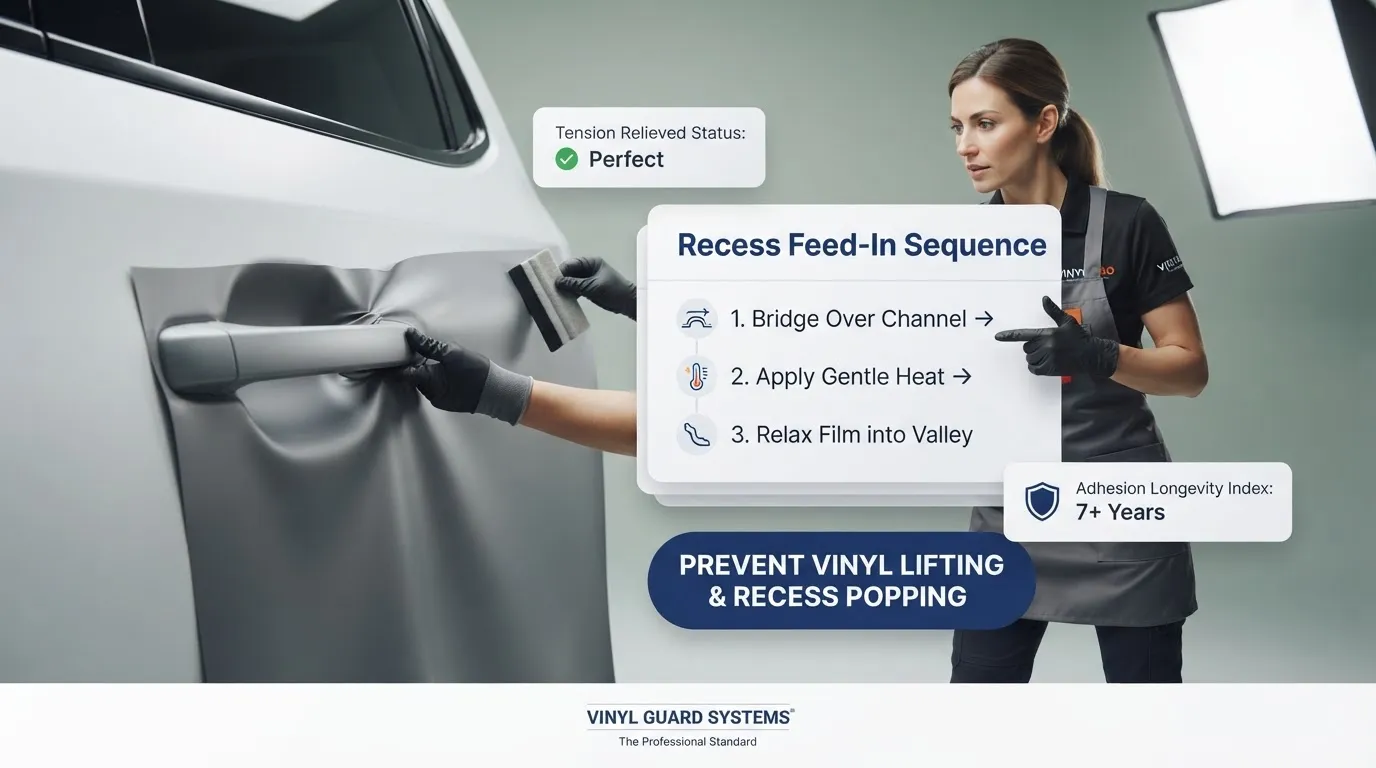
┌────────────────────────────────────────────────────────────────────────┐ │ PRECISION EXECUTION STEPS │ ├────────────────────────────────────────────────────────────────────────┤ │ Step 1: Unbolt trim pieces from dash using plastic pry tools │ │ Step 2: Heat vinyl gently to conform inside button recesses │ │ Step 3: Slice button cutouts using filament knifeless tape or scalpels│ └────────────────────────────────────────────────────────────────────────┘
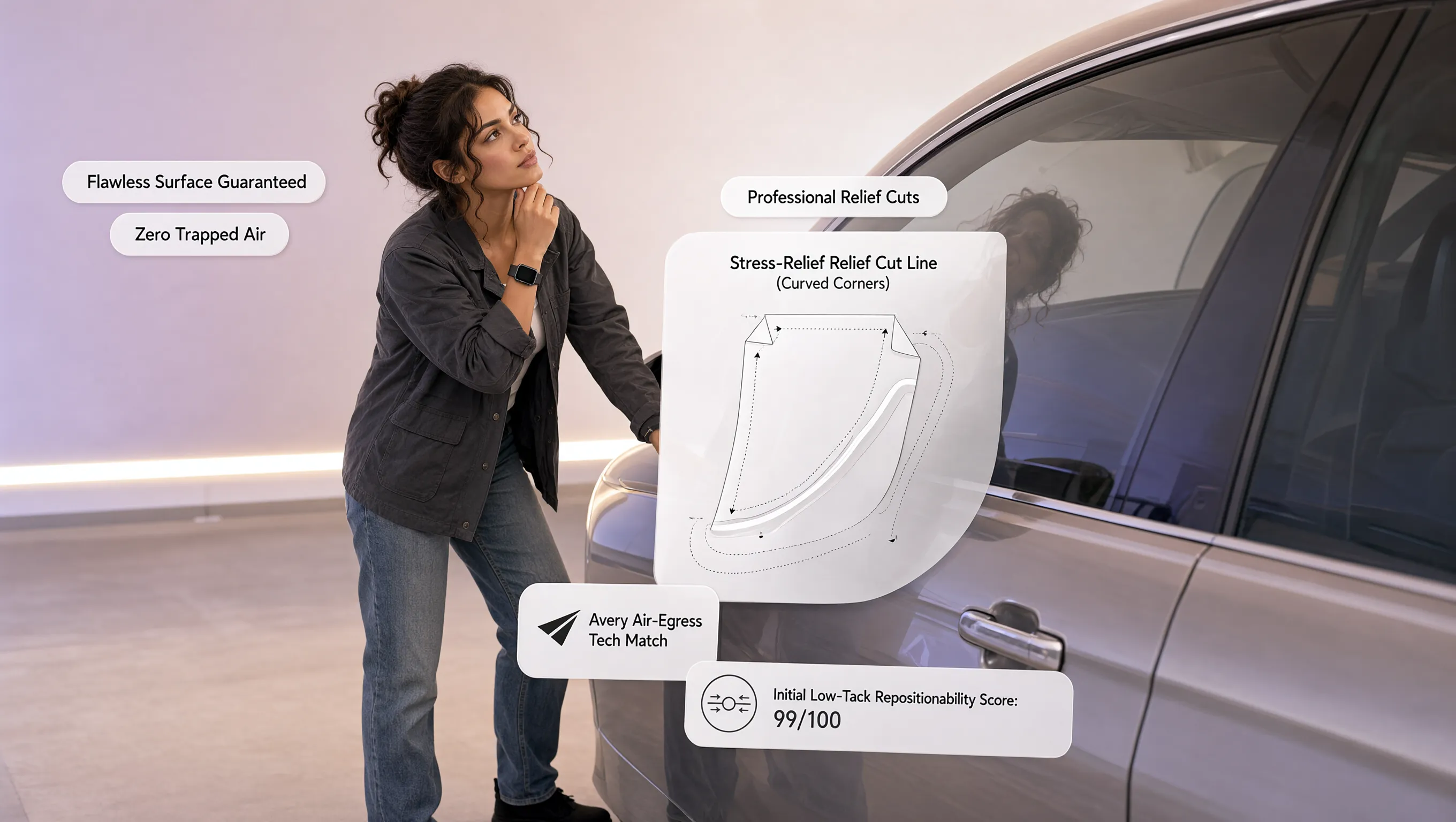
Executing a flawless wrap center console trim project requires surgical edge wrapping.Popping the trim piece off the dashboard gives you 360-degree access to wrap the film around to the back edge.This prevents fingers from catching an exposed edge when operating cupholders, climate dials, or gear shifters.
6. Will Interior Vinyl Peel or Bubble in a Hot Parked Car?
A common fear among owners is whether summer heat will melt the wrap adhesive, turning the dashboard into a sticky, bubbling mess.
THERMAL EXPOSURE REALITY [ Unshaded Summer Cabin ] ---> Internal air temperatures reach 140°F to 180°F [ Interior Cast Film Spec ] ---> Heat-rated up to 215°F (101°C) after post-heating
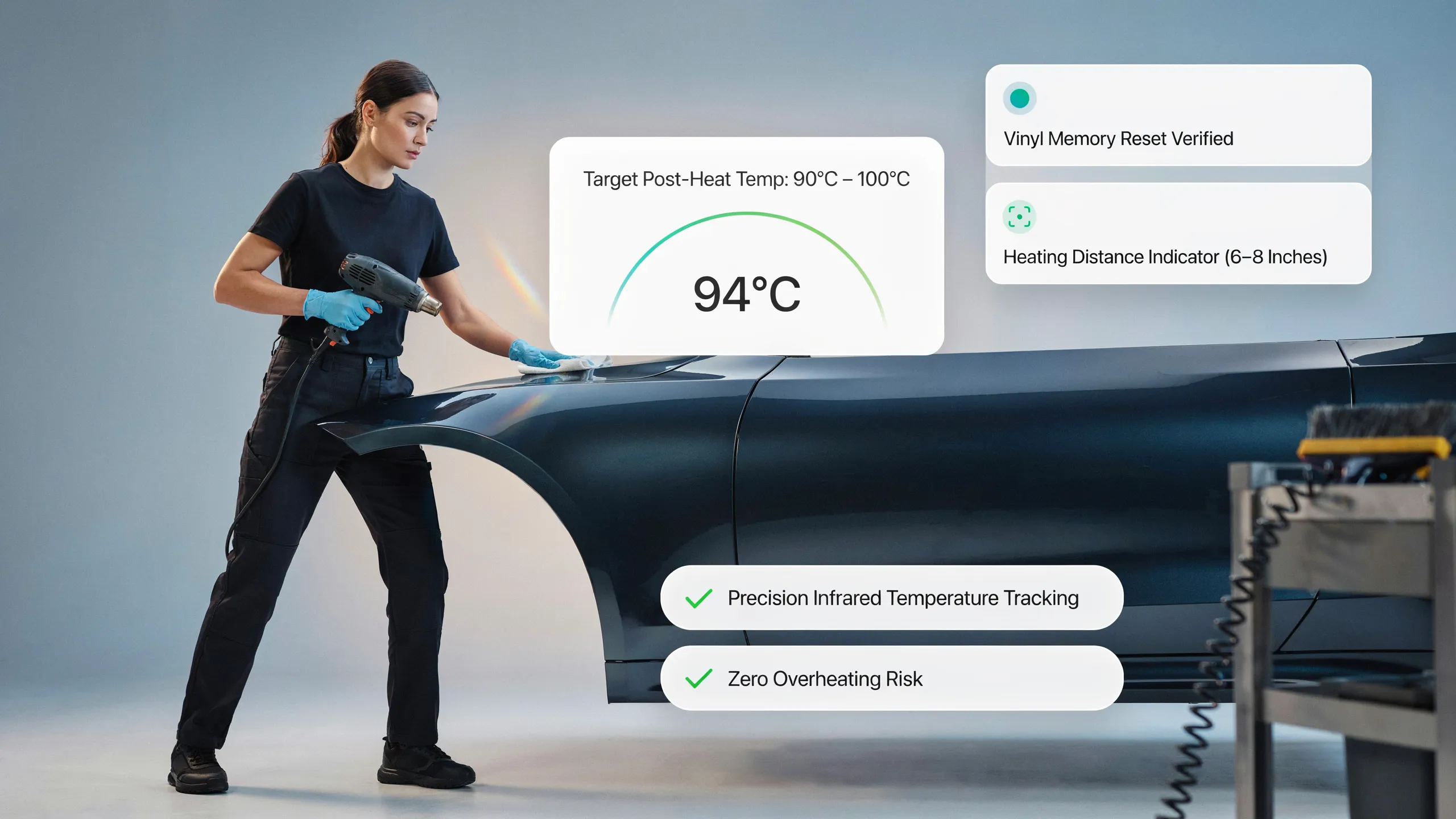
When a car sits under direct summer sun with windows closed, cabin temperatures easily top 140°F (60°C), with dashboard surface temperatures climbing even higher.Standard sign vinyl will fail under these conditions.However, high-grade automotive interior wrap films are rated to withstand continuous temperatures up to 215°F (101°C).To prevent car interior wrap heat resistance failures, installers post-heat all stretched edges to 200°F (93°C) using a heat gun, resetting the material's thermal memory so it never shrinks back.
7. Can You Wrap Soft-Touch Plastic, Leather, or Textured Trim?
Not every material inside a vehicle cabin can be wrapped using standard pressure-sensitive films.
┌────────────────────────────────────────────────────────────────────────┐ │ MATERIAL ADHESION FEASIBILITY │ ├────────────────────────────────────────────────────────────────────────┤ │ • Smooth Hard Plastic: 100% Adhesive Bond Strength │ │ • Textured Grain Plastic: Requires 3M Primer 94 adhesion promoter │ │ • Genuine Leather / Vinyl: 0% Bond Strength (Adhesive ruins material) │ └────────────────────────────────────────────────────────────────────────┘
Attempting a vinyl wrap on textured plastic (like pebbled door cards) requires applying an adhesion promoter (such as 3M Primer 94) to fill microscopic grain gaps.Leather, alcantara, and soft-touch rubberized coatings should never be wrapped; the adhesive will destroy the organic material upon removal.
8. What Happens Around Airbags, Sensors, and Moving Controls?
Safety must always take priority over cosmetics when modifying a vehicle's cabin interior.
SAFETY EXCLUSION ZONES [ Steering Wheel Airbag Hub ] -> STRICTLY PROHIBITED (Blocks deployment) [ Passenger Dash Airbag Seam ]-> STRICTLY PROHIBITED (Impairs inflation) [ HVAC / Radio Buttons ] -> SAFE: Trim 1/16" clear of moving switches
Never lay vinyl over stamped deployment seams on passenger dashboards or steering wheel centers. During a crash, an airbag deploys in milliseconds at speeds over 100 mph.Vinyl applied over deployment seams can alter the factory tear pattern, turning the wrap into dangerous flying debris or preventing the airbag from deploying correctly.
9. Can You Remove Interior Vinyl Later Without Ruining the Original Finish?
If you decide to sell your vehicle or return it at the end of a lease, interior vinyl is 100% reversible.
┌────────────────────────────────────────────────────────────────────────┐ │ REMOVAL & RESTORATION STEPS │ ├────────────────────────────────────────────────────────────────────────┤ │ 1. Warm film with a hair dryer to soften acrylic adhesive │ │ 2. Peel vinyl back slowly at a tight 180-degree angle │ │ 3. Wipe residual tack away using interior-safe citrus adhesive remover│ └────────────────────────────────────────────────────────────────────────┘
Warming the film with a hair dryer softens the acrylic glue, allowing the vinyl to lift off cleanly without scratching or stripping the underlying factory plastic or chrome trim underneath.
10. Is DIY Interior Wrapping Worth It for Small Trim Pieces?
Weighing a DIY car interior wrap against paying a professional installer comes down to patience, tools, and hardware complexity.
DIY vs. PROFESSIONAL COMPARISON [ DIY Project ] --> $40 Material + $15 Tools + Requires steady hands [ Pro Installation ] --> $250 – $600 Total (Includes hardware disassembly)
Tackling small, flat dashboard strips yourself is an inexpensive weekend project.However, if your build involves complex center consoles with intricate cupholder curves, climate vents, and dozens of button cutouts, hiring a professional installer ensures a clean finish without breaking fragile plastic dashboard clips during disassembly.
To evaluate professional interior labor rates and quotes, review our guide on evaluating professional car wrap installation quotes.

11. Before You Buy Interior Vinyl, Check These Three Details
Ensure your interior transformation goes smoothly by completing these three checks:
┌────────────────────────────────────────────────────────────────────────┐ │ PRE-PURCHASE CHECKLIST │ ├────────────────────────────────────────────────────────────────────────┤ │ [ Check 1: Rating ] --> Confirm film is interior-rated cast vinyl │ │ [ Check 2: Surface ] --> Ensure trim is smooth, non-porous plastic │ │ [ Check 3: Cleansers] --> Strip all silicon armor-all sprays with IPA │ └────────────────────────────────────────────────────────────────────────┘
Following these three prep rules guarantees your interior wrap stays securely bonded without peeling or bubbling over time.
12. Skip the Guesswork: Preview Your Cabin Aesthetics Live First
Trying to picture how carbon fiber, brushed aluminum, or gloss black accents will look alongside your seats and dashboard controls using a 2x2-inch physical swatch is virtually impossible.Guessing based on a tiny swatch often leads to regret once the material is applied throughout the cockpit.
By using our interactive AI car wrap visualizer tool, you can eliminate all uncertainty and save time and money.Upload a photo of your car's interior, experiment with gloss black, matte, and carbon-fiber textures in real time, compare contrast themes, and discover your ideal cockpit design before spending a single dollar on materials or installation.

FAQs About Wrapping Interior Car Panels
1. Can you wrap interior car panels without replacing the original trim?
Yes, you can wrap interior car panels completely without replacing factory trim assemblies. Automotive interior vinyl is designed to adhere directly to smooth plastic, brushed aluminum, and faux-wood trim. Applying cast vinyl over your dashboard, door cards, or center console allows you to transform your cabin's look while preserving the underlying factory components and keeping the process 100% reversible.
2. Which interior car parts are best for wrapping, and which should you avoid?
Ideal candidates for interior wrapping include smooth hard plastic surfaces like center console surrounds, dashboard accent strips, door handle bezels, and power window switch plates. Surfaces you should strictly avoid wrapping include soft-touch rubberized coatings, genuine leather or fabric upholstery, and airbag deployment covers on steering wheel hubs or passenger dashboards.
3. Why does some interior vinyl look factory-made while other wraps look cheap?
The difference comes down to material selection and edge execution. Cheap, thick calendered vinyl rigidifies under solar heat, shrinks, and pulls away at tight corners to expose raw plastic underneath. Professional installers use interior-rated cast automotive vinyl that conforms smoothly to 3D curves and $90^\circ$ button bezels, resulting in a seamless, factory-finish look that never buckles or lifts.
4. What interior wrap finish is best: gloss black, matte, or carbon fiber?
The best finish depends on your aesthetic goals and maintenance preferences. Gloss black creates a sleek, high-end "piano black" OEM look, though it requires frequent wiping to keep fingerprints away. Textured 3D or 4D carbon fiber wraps reflect ambient light to effectively mask existing scratches while adding a sporty feel. Matte finishes eliminate blinding windshield sun glare caused by shiny factory plastic dashboard trim.
5. Can interior vinyl wrap cover up scratched, faded, or worn trim?
Yes. Wrapping provides an immediate cosmetic restoration for sun-faded or scratched interior panels. Light hairline scuffs and fading are easily bridged and hidden beneath opaque cast vinyl. However, if the trim has deep gouges or flaking clear coat, the surface must be sanded smooth with fine-grit sandpaper and wiped clean before wrapping to ensure the vinyl lays completely flat.
6. How do installers wrap tight interior corners and button cutouts without wrinkles?
Executing a professional interior wrap requires removing trim pieces from the dashboard or console whenever possible using plastic pry tools. Unbolting the trim gives $360^\circ$ access to wrap the film around to the back edge, locking down seams where fingers won't catch them. Fine precision scalpels or filament knifeless tape are then used to make clean, surgical cutouts around HVAC dials and window switches.
7. Will interior vinyl peel, bubble, or melt in a hot parked car during summer?
High-grade interior cast vinyl will not melt or bubble when properly installed. Unshaded vehicle cabins can easily reach internal air temperatures of 140°F (60°C) or higher under direct summer sunlight, but automotive-grade cast films are rated to withstand continuous temperatures up to 215°F (101°C). Post-heating stretched edges to 200°F (93°C) resets the film's thermal memory, preventing summer shrinkage.
8. Can you wrap soft-touch plastic, textured grain trim, or leather?
Smooth, non-porous hard plastics provide the strongest adhesive bond. Wrapping textured, grained plastic requires applying a thin coat of adhesion promoter (such as 3M Primer 94) to fill microscopic surface valleys and prevent lifting. Organic materials like genuine leather, alcantara, and soft rubberized dashboard pads should never be wrapped, as adhesives cannot form a permanent bond and will ruin the material during removal.
9. Is it safe to wrap interior panels near airbags and steering wheel controls?
Safety must take priority over appearance inside the cabin. You must never lay vinyl wrap over stamped airbag deployment seams on passenger dashboards or steering wheel horn covers. During an emergency deployment, vinyl applied over break-lines can alter factory tear patterns, potentially causing airbag failure or creating flying debris. Always keep airbag deployment zones 100% clear.
10. Can you remove interior vinyl later without damaging the factory trim?
Yes. Interior vinyl wrap is 100% reversible. Warming the film gently with a hair dryer or heat gun softens the acrylic adhesive, allowing the vinyl to peel back smoothly at a steep angle without scratching, stripping, or dulling the underlying factory plastic or chrome trim. Any light residual tack wipes away cleanly with an interior-safe citrus adhesive cleaner.
11. Is a DIY interior wrap worth doing, or should you hire a professional shop?
Tackling simple, flat dashboard accent strips yourself is an inexpensive weekend project using basic tools like a heat gun, felt squeegee, and hobby knife. However, if your project involves complex center consoles with intricate cupholder curves, climate vents, and dozens of button cutouts, hiring a professional installer ensures a clean result without breaking fragile plastic dashboard mounting clips during disassembly.
12. How can you preview different interior wrap finishes before buying film?
Predicting how carbon fiber, brushed aluminum, or gloss black accents will complement your seats and dashboard using small swatch samples can be tough. You can eliminate the guesswork by using an interactive AI car wrap visualizer tool online. Uploading a photo of your cabin allows you to experiment with different finishes in real time, helping you pick your ideal look before spending a dollar on materials or shop labor.