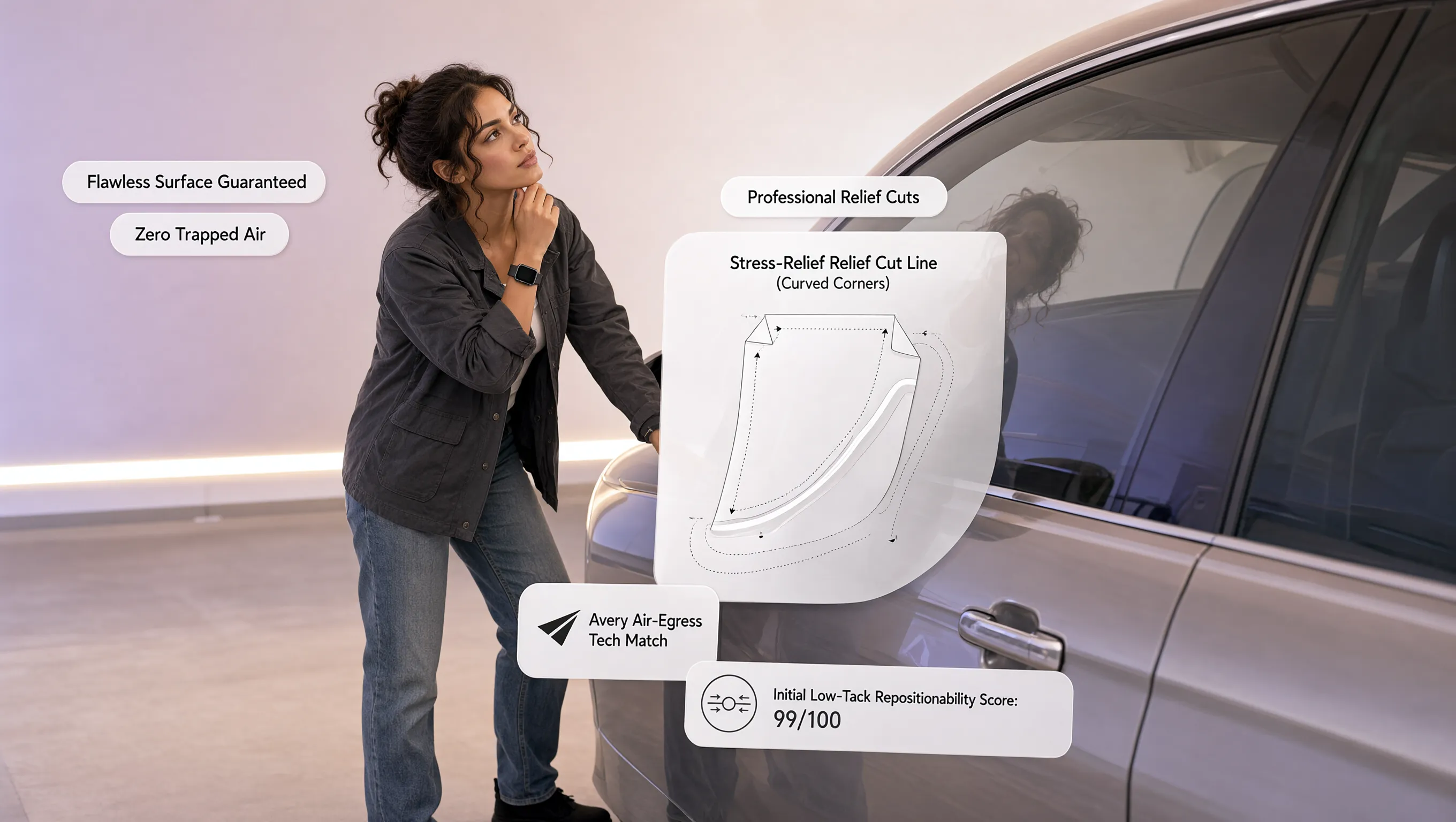

You step back to admire your car's sleek lines, but your eyes immediately stop at the factory alloy rims.
The dull silver finish or faded silver spokes completely undermine your vehicle's aggressive stance. You want that stealthy, liquid gloss black look or a high-contrast custom accent. But as you look closely at the complex spoke geometries, lug nut wells, and tight barrel recesses, a frustrating dilemma takes hold: Can you actually wrap wheels with vinyl, or will brake heat and road debris destroy the film in a matter of miles?
It’s one of the most heavily debated questions in automotive customization.
The short answer? Yes, you can wrap wheels.
However, because wheels endure extreme friction, intense brake heat, and relentless road grit, wrapping them is vastly more technical than wrapping smooth body panels. In many cases, specialized powder coating or liquid painting yields a far more durable, long-lasting result.
Here is your complete guide to evaluating wheel wrap feasibility, assessing heat tolerance, avoiding edge peeling, comparing powder coating costs, and picking the best customization method for your build.
1. Do You Mean the Wheel Faces, the Spokes, or the Entire Wheel?
Before ordering material or booking shop time, you must clarify exactly which sections of the wheel you intend to cover.
┌────────────────────────────────────────────────────────────────────────┐ │ WHEEL CUSTOMIZATION COVERAGE ZONES │ ├────────────────────────────────────────────────────────────────────────┤ │ [ Visible Outer Face ] --> HIGH FEASIBILITY: Flat spoke faces & lips │ │ [ Complex Spoke Windows]--> MODERATE: Requires multi-piece inlays │ │ [ Inner Barrel & Lugs ] --> LOW FEASIBILITY: Exposed to severe heat & oil│ └────────────────────────────────────────────────────────────────────────┘
When enthusiasts talk about vinyl wrap wheels setups, they rarely mean wrapping the entire 3D rim in a single continuous sheet.
Wheel Spoke Wraps: Applying pre-cut vinyl accents or color overlays directly onto the flat, outer visible face of the spokes.
Full Alloy Rim Wraps: Stretching vinyl deep into the tight inner spoke windows, lug nut recesses, and center cap bezels—a process requiring hours of surgical inlay work per wheel.
2. Why Wrapping a Wheel Is Harder Than Wrapping a Flat Body Panel
Don't let the smaller dimensions fool you. Wrapping an alloy rim requires significantly more technical precision than laying film across a flat hood or door panel.
WHEEL GEOMETRY REALITY [ Flat Car Door Panel ] ---> Smooth, expansive 2D surface; easy heat relaxation [ Complex Alloy Rim ] ---> Compound 3D curves, sharp $90^\circ$ angles & tight wells
Why is wheel vinyl wrapping difficulty so exceptionally high?
Alloy wheels feature intricate multi-spoke geometries, deep lug nut pockets, and tight valve stem cutouts.
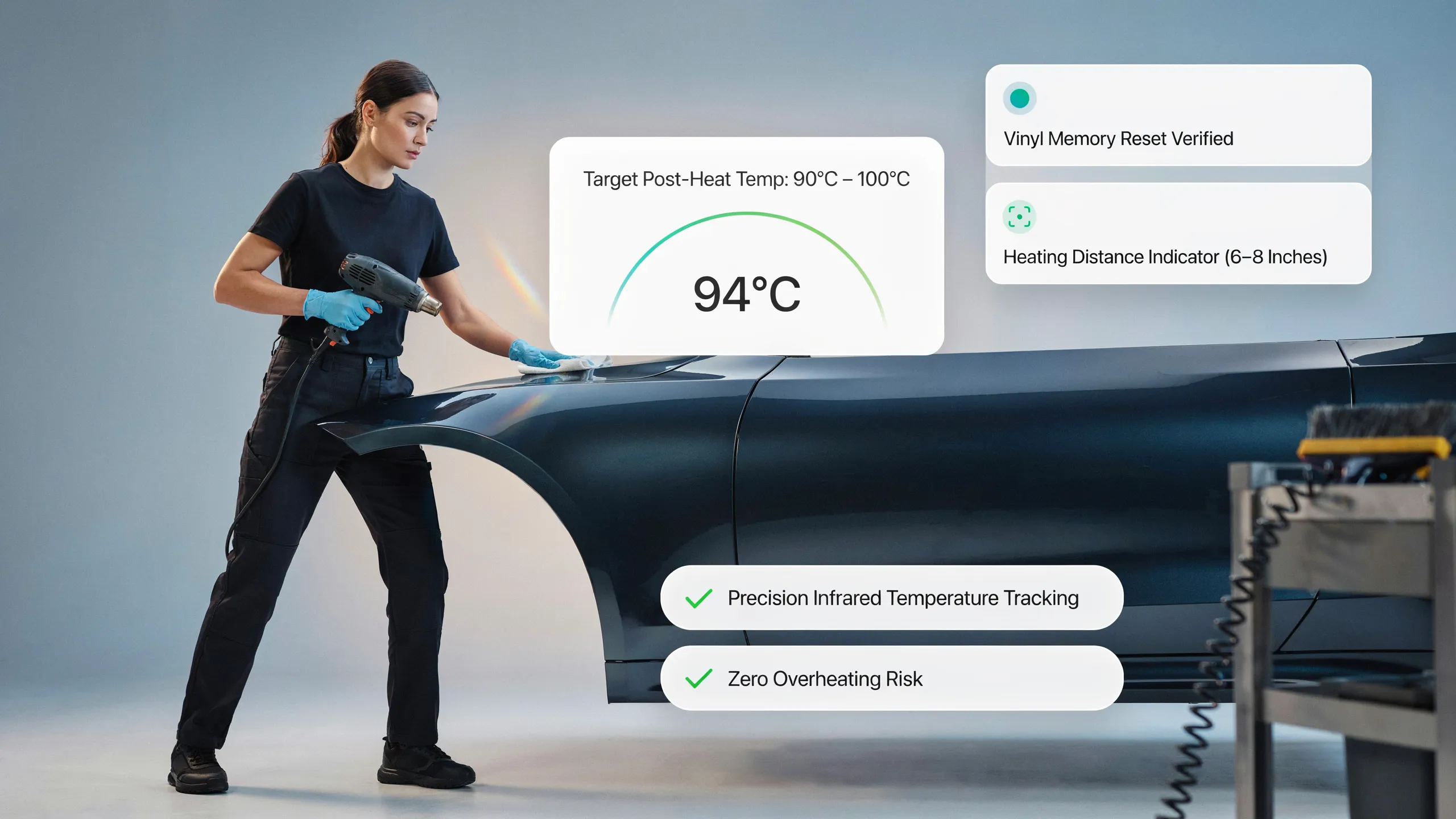
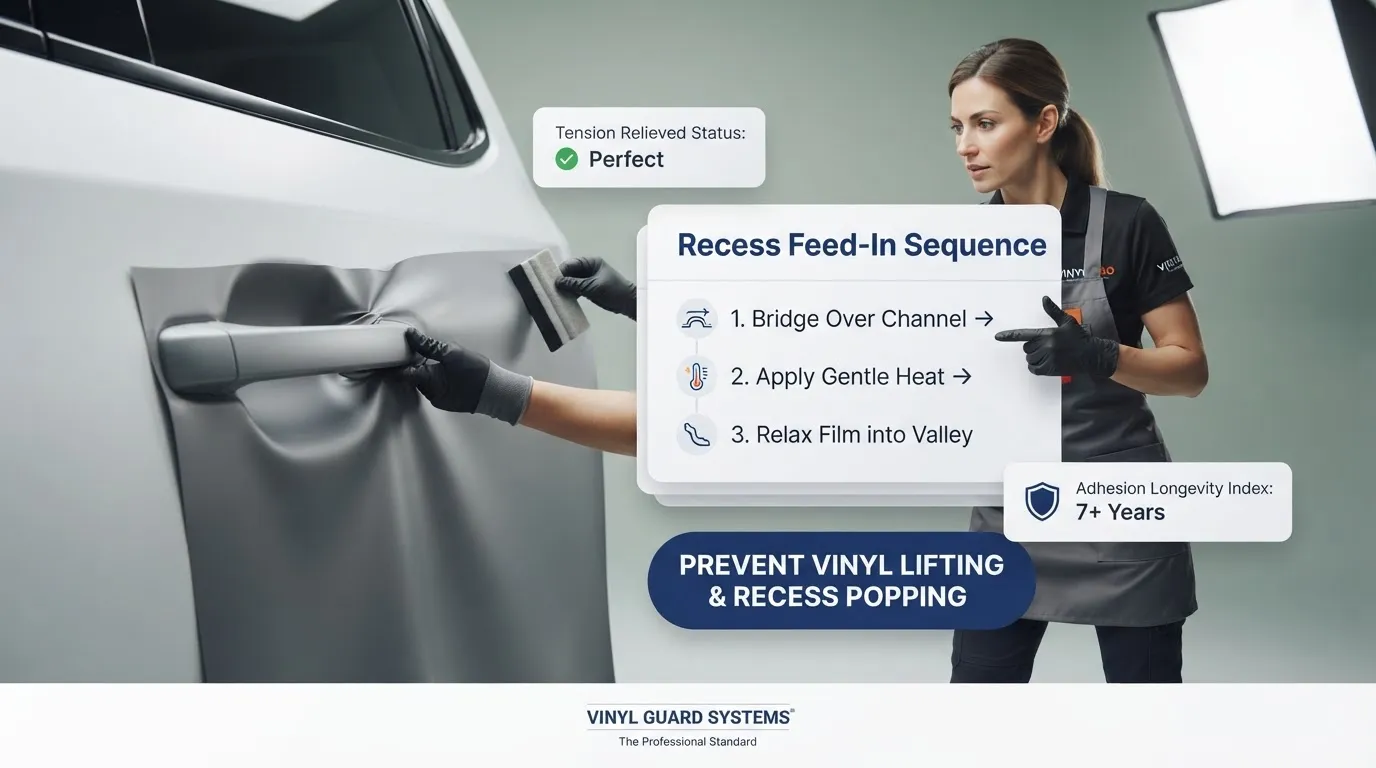
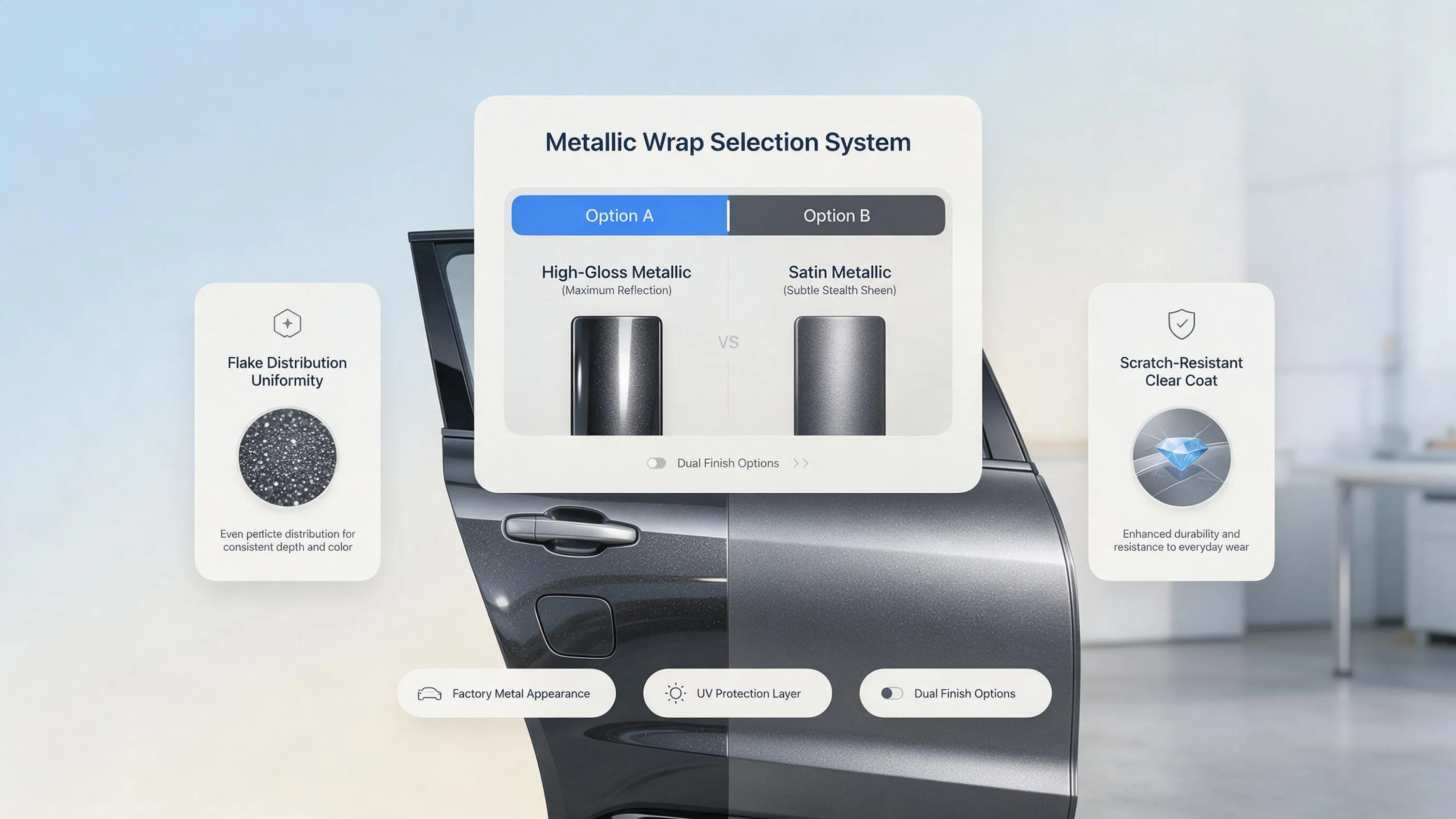
When you lay flat cast vinyl over a 3D spoke window, excess material gathers instantly into deep wrinkles. Forcing the film down without proper heat relaxation creates extreme tension that causes the vinyl to pop back up within days of normal driving.
3. Will Vinyl Wrap Stay on a Wheel Exposed to Brake Heat?
A primary concern for performance drivers is whether glowing brake rotors will melt or loosen the wrap's adhesive.
┌────────────────────────────────────────────────────────────────────────┐ │ THERMAL EXPOSURE BREAKDOWN │ ├────────────────────────────────────────────────────────────────────────┤ │ • Daily Commuting Temp: 110°F to 140°F (3M/Avery Cast Film handles easily)│ │ • Hard Performance Braking: 200°F to 350°F+ (Triggers adhesive breakdown) │ │ • Track / Canyon Driving: 500°F+ (Braking heat will destroy vinyl wrap) │ └────────────────────────────────────────────────────────────────────────┘
High-grade automotive cast vinyl (such as 3M 2080 or Avery SW900) features heat-resistant acrylic adhesives rated up to 215°F (101°C).
During normal daily commuting, wheel face temperatures stay well within safe limits.
However, aggressive canyon carving or track driving causes brake rotors to radiate heat past 300°F (148°C) directly into the wheel spokes, causing vinyl adhesives to break down, bubble, and turn brown.
4. Can You Wrap Alloy Wheels Without Covering Important Surfaces?
Customizing your wheels must never come at the expense of vehicle safety or mechanical fitment.
SAFETY EXCLUSION ZONES [ Lug Nut Seat Cones ] -> STRICTLY PROHIBITED (Prevents proper lug torque) [ Mounting Hub Back-Face]-> STRICTLY PROHIBITED (Causes wheel wobble/vibration) [ Valve Stem Threads ] -> STRICTLY PROHIBITED (Impairs tire inflation)
Never allow vinyl wrap to extend onto the flat mounting hub surface that mates with your wheel rotor, or into the conical lug nut seat wells.
Applying film between the lug nut and the wheel face creates an unstable buffer layer. As the vinyl compresses under driving friction, lug nuts can loosen, creating a catastrophic hazard.
Always keep lug nut seats completely bare and torqued directly to metal.
5. Would Gloss Black, Satin, or Carbon-Fiber Suit Your Wheels?
Selecting the right finish bridges the visual gap between your tires, brake calipers, and body paint.
┌────────────────────────────────────────────────────────────────────────┐ │ POPULAR WHEEL FINISH STYLES │ ├────────────────────────────────────────────────────────────────────────┐ │ [ Gloss Black Wheel Wrap ] --> Sleek "OEM+" look; visually enlarges rims │ │ [ Satin Black Finish ] --> Aggressive, stealthy industrial look │ │ [ Carbon Fiber Wheel Wrap ] --> Motorsport accent; best reserved for spokes│ └────────────────────────────────────────────────────────────────────────┘
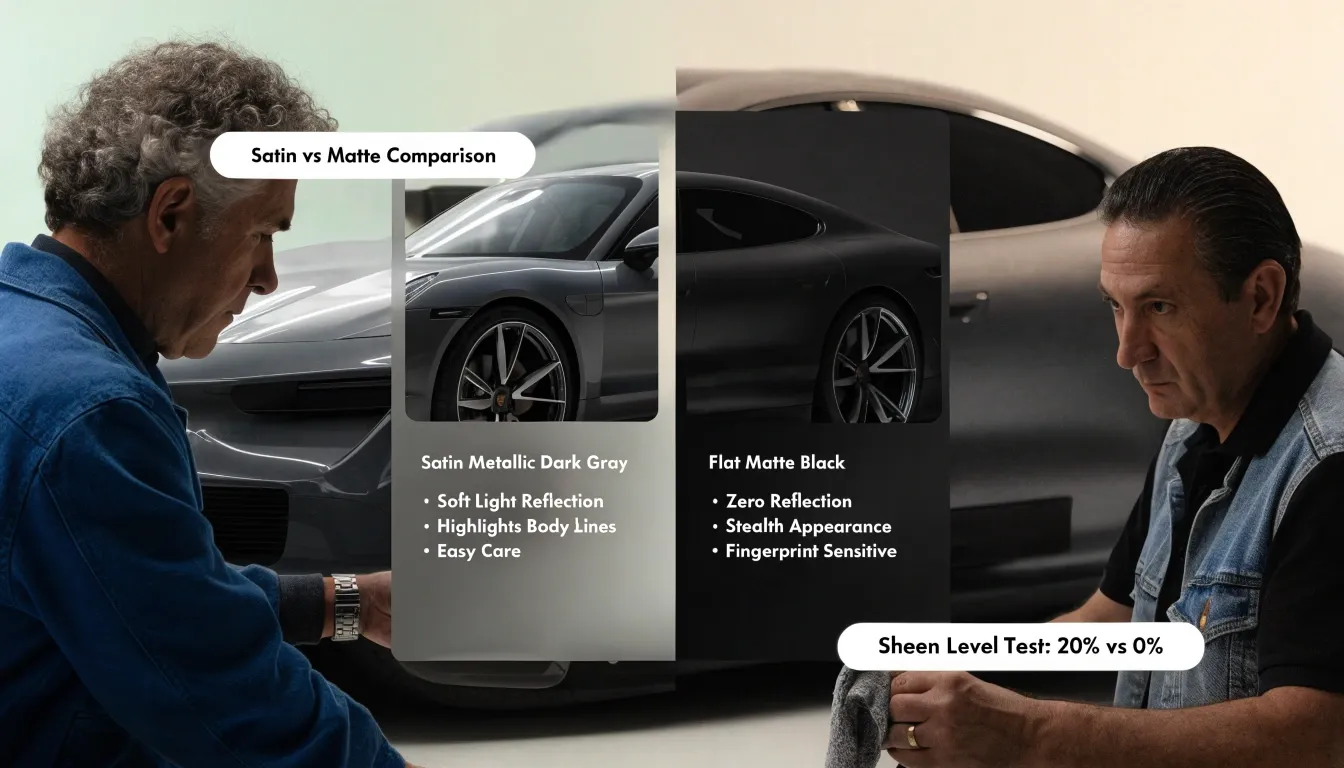
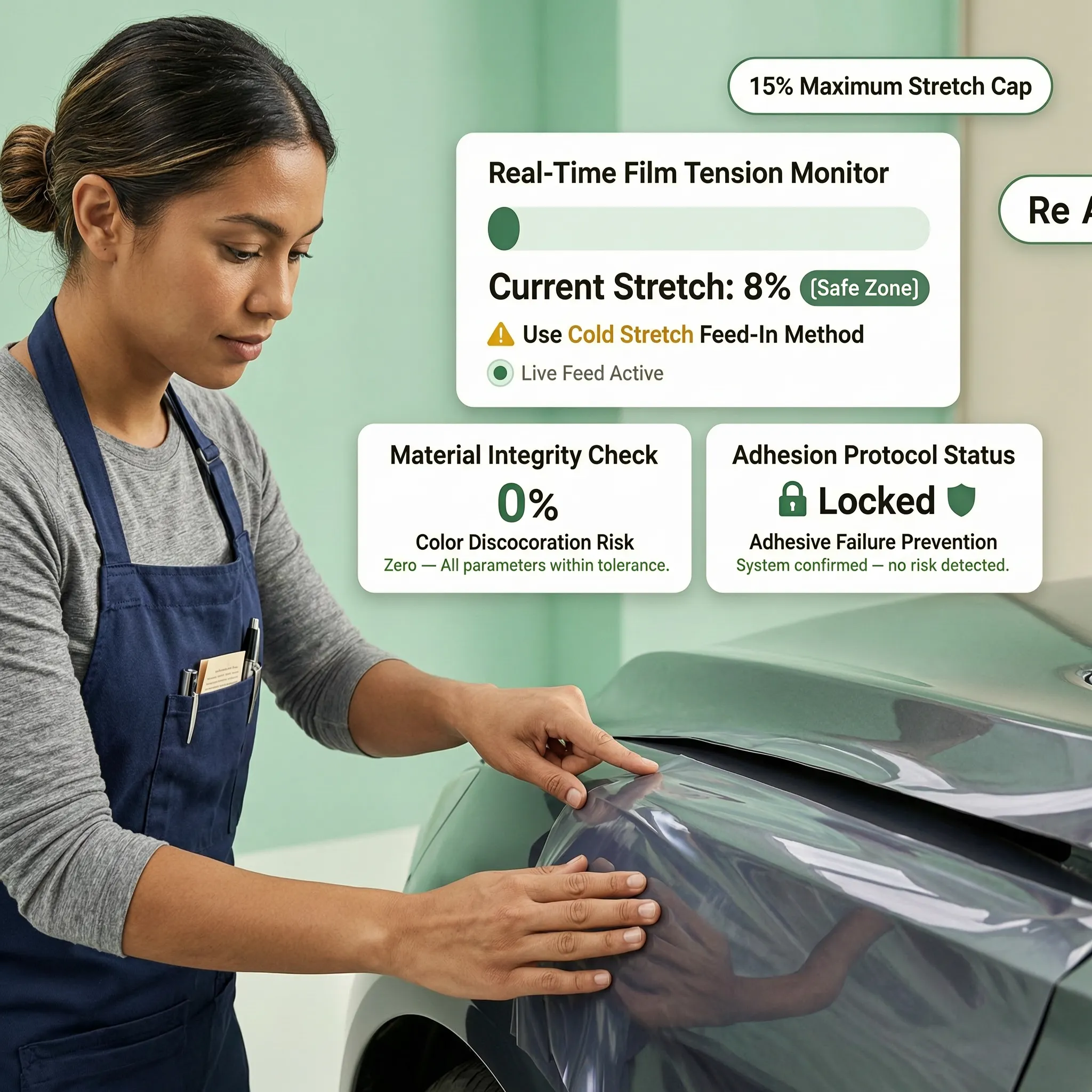
Gloss Black Wheel Wrap: The ultimate choice for a high-contrast can you wrap alloy wheels black conversion. Gloss black hides brake dust scuffs while giving your rims a deep, liquid finish.
Satin Black Finish: Delivers a stealthy, tactical aesthetic that matches matte body wraps and dark window trim.
Carbon Fiber Accent: Adding $3\text{D}$ or $4\text{D}$ carbon overlays to individual spoke faces creates a distinct, two-tone race-inspired look.
6. What Happens When Vinyl Has to Stretch Around Spokes and Tight Curves?
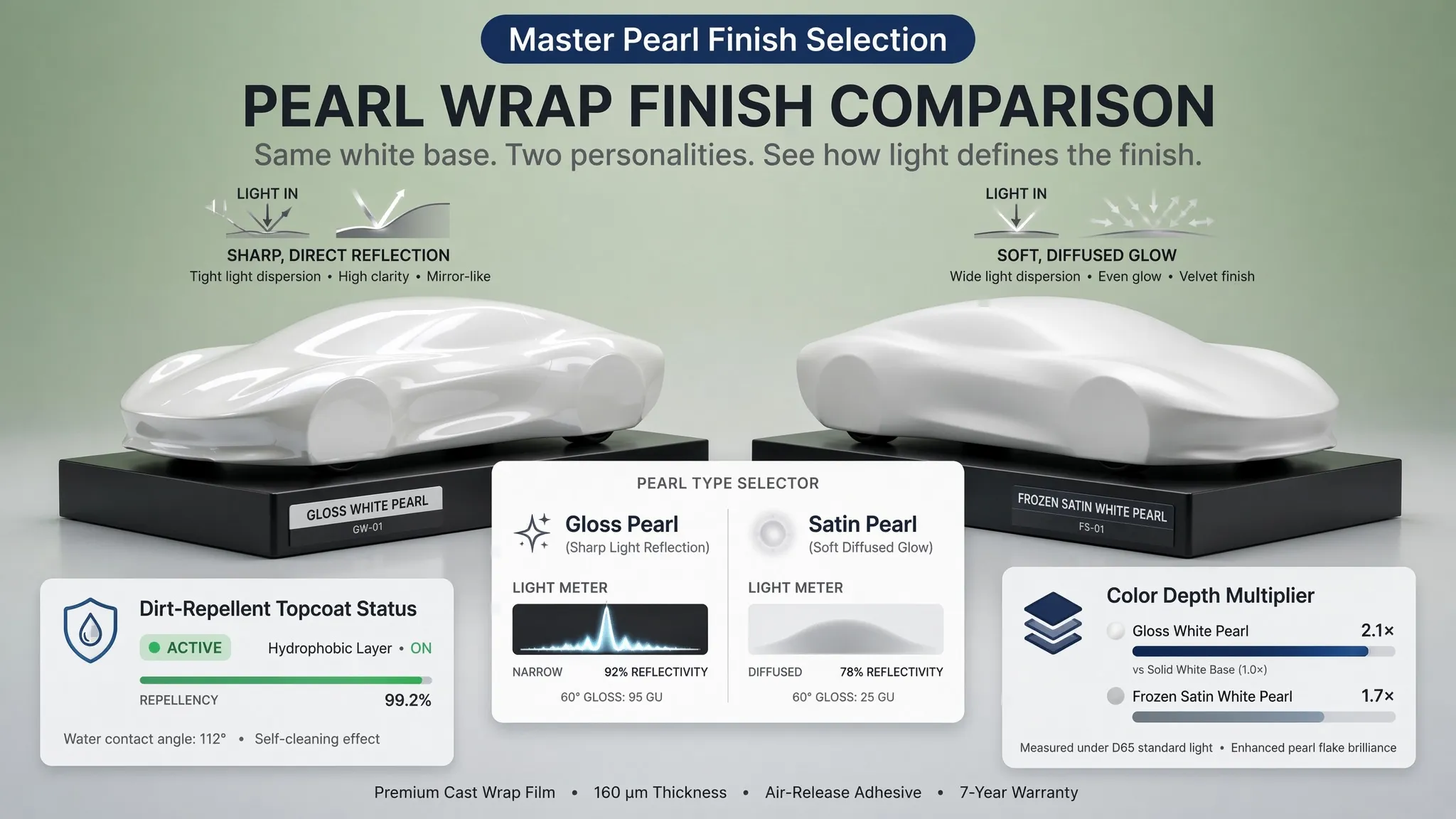
Over-stretching vinyl into tight spoke recesses is the leading cause of premature wheel wrap failure.
OVERSTRETCHING FAILURE SEQUENCE [ Deep Pocket Push ] --> Vinyl thins out past its 15% elasticity limit [ Color Bleaching ] --> Dark pigments thin out; gloss black turns milky gray [ Thermal Snapback ] --> Sun & brake heat trigger material memory; edge lifts
When vinyl is stretched past its elasticity threshold, three problems occur:
Adhesive Thinning: The pressure-sensitive glue gets pulled too thin to form a lasting bond.
Color Distortions: Dark finishes turn milky gray along sharp spoke contours.
Edge Lifting: As soon as highway heat warming occurs, the material snaps back to its flat memory shape, peeling out of the spoke windows.
Master installers prevent this by placing invisible multi-piece inlays inside deep spoke valleys before laying the main outer face sheet.
7. Can You Wrap Wheels Without Removing Them From the Car?
Attempting a DIY wheel wrapping project while the wheels are still bolted to your vehicle is extremely difficult and rarely lasts.
┌────────────────────────────────────────────────────────────────────────┐ │ INSTALLATION ACCESSIBILITY COMPARISON │ ├────────────────────────────────────────────────────────────────────────┤ │ [ Off-Car Installation ] --> MAXIMUM QUALITY: 360° deep tuck; 100% clean │ │ [ On-Car Installation ] --> HIGH RISK: Brake dust ruins glue; bad tucks │ └────────────────────────────────────────────────────────────────────────┘
To achieve a lasting bond, you must deep-clean every millimeter of the wheel using grease-stripping solvents.
Attempting to clean brake oil, road tar, and metallic dust from spoke backs while crouching beside the car is virtually impossible. Removing the wheels allows you to lay them flat on a workbench, thoroughly decontaminate the surface, and heat-seal all back edges cleanly.
To review proper surface maintenance and installation standards, check out our guide on inspecting car wrap quality and installation standards.
8. How Will Washing, Road Debris, and Brake Dust Affect the Finish?
Maintaining wrapped wheels demands a far more gentle touch than cleaning factory painted rims.
MAINTENANCE WARNING RULES [ Abrasive Acid Cleaners ] -> PROHIBITED: Dissolves vinyl topcoats instantly [ High-Pressure Wands ] -> DANGEROUS: Blasts close-up edges open [ Soft Microfiber Wash ] -> RECOMMENDED: Use pH-neutral wrap soap & warm water
Corrosive, acid-based wheel cleaners designed to dissolve heavy brake dust will ruin PVC vinyl topcoats, turning gloss finishes dull and spotty.
Additionally, automatic drive-thru car washes with heavy nylon wheel brushes will catch vulnerable spoke edges, ripping the wrap off instantly.
Stick strictly to pH-neutral car soaps, soft microfiber wash mitts, and touchless pressure washing from at least 18 inches away.
9. What Does Wheel Wrapping Cost Compared With Painting or Replacement?
Evaluating your total wheel wrapping cost against powder coating or buying new rims comes down to labor complexity versus long-term durability.
WHEEL CUSTOMIZATION COST MATRIX [ DIY Vinyl Wrap Kit ] --> $40 – $80 (High labor & frustration risk) [ Professional Wheel Wrap ]--> $300 – $600 (Varies by spoke complexity) [ Professional Powder Coat]--> $400 – $800 (100% permanent; baked durability) [ New Aftermarket Wheels ] --> $800 – $2,500+ (Complete hardware upgrade)
While wrapping wheels appears cheaper upfront, the intense shop labor required to wrap complex multi-spoke rims can bring quotes close to the cost of professional powder coating.
To review detailed regional labor rates and breakdown quotes, check out our guide on evaluating professional car wrap installation quotes.
10. When Is Powder Coating or Refinishing the More Sensible Choice?
While wrapping offers temporary flexibility, refinishing or powder coating is often the superior choice for daily driven wheels.
┌────────────────────────────────────────────────────────────────────────┐ │ WRAP vs. POWDER COATING DECISION │ ├────────────────────────────────────────────────────────────────────────┤ │ • Choose Vinyl Wrapping: Temporary color; leased car; simple flat spokes│ │ • Choose Powder Coating: Permanent durability; heavy brake heat; daily ║ └────────────────────────────────────────────────────────────────────────┘
Powder coating involves sandblasting the alloy rim down to bare metal, electrostatically spraying color polymer powder, and baking the entire wheel in an industrial oven at 400°F (204°C).
The result is an armor-like, chip-resistant finish that handles extreme brake heat, harsh winter road salt, and aggressive wheel cleaners effortlessly for the life of the vehicle.
11. Before You Change Your Wheel Finish, Check These Details
Run through this essential checklist before buying material or booking a shop service:
┌────────────────────────────────────────────────────────────────────────┐ │ PRE-CUSTOMIZATION CHECKLIST │ ├────────────────────────────────────────────────────────────────────────┤ │ [ Check 1: Geometry ] --> Verify spokes are flat (avoid deep mesh webs)│ │ [ Check 2: Driving ] --> Confirm no track use or extreme heat driving│ │ [ Check 3: Cleansers] --> Switch to pH-neutral, wrap-safe wheel soaps │ └────────────────────────────────────────────────────────────────────────┘
Following these three checks ensures your wheel styling upgrade stays looking clean without premature edge peeling or heat failure.
12. Skip the Guesswork: Preview Your Custom Wheels Live First
Trying to guess whether gloss black, satin bronze, or carbon fiber accents will match your body color and brake calipers using small swatch samples is nearly impossible.
Guessing often leads to regret once the wheels are finished.
By using our interactive AI car wrap visualizer tool, you can eliminate all uncertainty and save time and money.
Upload a photo of your vehicle, test gloss black, satin, and custom metallic wheel finishes in real time, compare body-contrast themes, and discover your ideal wheel look before spending a single dollar on materials or shop labor.

FAQs About Wrapping Wheels with Vinyl
1. "Can you wrap car wheels with vinyl, or is painting a better option?"
Yes, you can vinyl wrap car wheels, but it depends heavily on the wheel's design and your long-term goals. While wrapping is great for temporary color changes or simple spoke faces, wheels endure severe road friction, heavy brake dust, and intense heat. For intricate multi-spoke rims or daily drivers seeking a permanent, low-maintenance finish, professional powder coating or custom painting is often the more durable choice.
2. "Will brake heat cause vinyl wrap on wheels to peel or melt?"
High-grade automotive cast vinyl (like 3M 2080 or Avery SW900) features heat-resistant acrylic adhesives rated to withstand temperatures up to 215°F (101°C). Under normal daily driving conditions, wheel faces stay well within safe limits. However, aggressive canyon driving or track use can push brake rotor temperatures past 300°F (148°C), radiating enough heat to break down vinyl adhesives, cause bubbling, and discolor the film.
3. "Do you mean wrapping the wheel faces, spokes, or the entire rim?"
Most wheel wrapping projects focus specifically on the visible outer faces and spokes. Wrapping an entire wheel—including deep inner barrels, lug nut wells, and tight spoke windows—in a single sheet is nearly impossible due to extreme 3D compound curves. Installers typically use multi-piece, hidden inlays on complex wheel designs to cover visible areas without over-stretching the material.
4. "Why is wrapping a wheel harder than wrapping a flat body panel?"
Don't let their small size fool you. Wheels feature complex 3D geometry, tight spoke windows, $90^\circ$ angle drops, and deep lug nut recesses. Laying flat vinyl over these deep contours creates material tension that instantly forms wrinkles called "fingers." Without precise heat relaxation, seamless edge tucking, and surgical tension control, the vinyl will inevitably lift and curl back over time.
5. "Is it safe to wrap lug nut seats or the wheel mounting hub?"
No. You must never apply vinyl wrap to the conical lug nut seats or the back mounting hub where the wheel meets the brake rotor. Applying vinyl between the wheel and lug nuts creates an unstable buffer layer; as driving friction compresses the soft vinyl, lug nuts can loosen, posing a severe safety hazard. Always leave mounting surfaces and lug nut seats completely bare metal.
6. "Can you wrap wheels without removing them from the vehicle?"
While you can technically apply vinyl accents while wheels are mounted, removing them yields a vastly superior result. Deeply cleaning years of baked-on brake dust, road oil, and tar from spoke edges is virtually impossible while crouching beside the car. Taking the wheels off allows you to lay them flat, thoroughly decontaminate every corner, and post-heat tuck edges securely behind the spokes.
7. "How do you wash and maintain vinyl-wrapped wheels?"
Wrapped wheels require a gentle touch to prevent premature failure. Avoid harsh, acid-based wheel cleaners or iron decontaminators, as corrosive chemicals dissolve PVC topcoats and turn gloss finishes dull. Never use automatic car washes with stiff nylon wheel brushes. Stick strictly to pH-neutral car soaps, warm water, and soft microfiber towels, keeping high-pressure spray wands at least 18 inches away from wrapped edges.
8. "How long does a vinyl wrap on wheels typically last?"
When installed using premium cast film, properly post-heated, and maintained with pH-neutral soaps, a wheel wrap can last 1 to 3 years on a daily driver. However, because wheels sit directly in the path of flying road debris, rock chips, and hot metallic brake dust, they naturally experience more surface wear than standard exterior body panels.
9. "What visual finish looks best on wrapped wheels: gloss black, satin, or carbon fiber?"
Gloss black is the most popular choice for a sleek "OEM+" look, visually enlarging your rims while hiding brake dust scuffs. Satin black offers an aggressive, stealthy industrial finish that matches matte body accents. Applying 3D or 4D textured carbon fiber overlays to individual spoke faces creates a high-contrast, motorsport-inspired look without over-complicating the installation.
10. "What happens if you over-stretch vinyl when wrapping around intricate spokes?"
Stretching vinyl past its $15\%$ elasticity limit causes three major problems:Color Bleaching: Dark colors thin out, turning gloss black or metallic finishes milky gray along sharp contours.Adhesive Dead-Zones: Over-stretching pulls the pressure-sensitive glue thin, severely weakening its gripping power.Thermal Snapback: Exposure to summer sun and brake heat triggers the vinyl's material memory, causing it to pop out of deep spoke valleys.
11. "How much does it cost to wrap wheels compared to powder coating?"
Professional wheel wrapping typically ranges from $300 to $600 for a set, depending on spoke complexity and labor time. While a DIY vinyl kit costs under $100, the intense labor involved often makes the price of professional wrapping close to powder coating ($400 to $800 per set). Powder coating offers a permanent, baked-on, chip-resistant finish that handles extreme brake heat effortlessly.
12. "How can you preview custom wheel finishes on your vehicle before spending money?"
Trying to picture how gloss black, satin bronze, or carbon fiber accents will pair with your body color and brake calipers using small physical swatches is nearly impossible. You can eliminate all uncertainty by using an interactive AI car wrap visualizer tool online. Uploading a photo of your vehicle lets you experiment with custom wheel finishes in real time, helping you pick the perfect design before spending a dollar on materials or shop labor.