
You step outside on a freezing January morning, and your driveway is buried under six inches of heavy, wet snow.
As you stare at your wrapped vehicle, a sudden surge of anxiety hits you: Is driving through highway slush, spraying road salt, and scraping ice off my panels going to ruin a $4,000 custom vinyl wrap?
It’s a valid fear. Winter is brutal on any vehicle's exterior finish.
The good news? Premium automotive cast vinyl is engineered to withstand freezing temperatures, sub-zero winds, and heavy snow without cracking or losing its adhesive grip.
However, winter driving introduces aggressive environmental threats—abrasive road salt, chemical de-icing brine, frozen ice sheets, and sharp plastic snow scrapers—that can dull, scratch, or peel your wrap if you handle them incorrectly.
Here is your complete tactical guide to navigating winter driving safely, protecting your film against chemical road salt, and preserving your finish until spring.

1. The Snow Isn't the Only Thing Sticking to Your Car After a Winter Drive
When you drive down a snow-covered highway, your vehicle is pelted by a toxic cocktail of magnesium chloride, liquid de-icing brine, coarse sand, and oily road grime.
┌────────────────────────────────────────────────────────────────────────┐ │ WINTER CONTAMINANT IMPACT MATRIX │ ├────────────────────────────────────────────────────────────────────────┤ │ [ De-Icing Brine ] --> Chemical film bakes into clear caps; causes haze│ │ [ Coarse Road Sand ]--> Gritty particles act like sandpaper when wiped │ │ [ Slush & Road Oil ]--> Traps moisture against lower rocker seams │ └────────────────────────────────────────────────────────────────────────┘
Freshly fallen snow itself is harmless to PVC vinyl. The true danger is road salt on car wrap surfaces.
As liquid brine dries on your vehicle's body panels, it leaves behind a chalky, alkaline residue that eats into clear topcoats, degrades protective sealants, and dries out vinyl plasticizers.
Left unwashed, road salt bakes into high-heat zones like the hood and lower side skirts, causing permanent finish discoloration and hazing.

2. Your Windshield Is Iced Over—but What About the Wrapped Hood and Roof?
Here is the single fastest way to destroy a vinyl wrap in winter: grabbing a hard plastic ice scraper and hacking away at frozen snow on your hood or roof.
ICE REMOVAL TOOL DANGER LEVEL [ Hard Plastic Scrapers ] -> EXTREME DANGER (Gouges vinyl & tears seams) [ Rigid Stiff-Brim Brushes]-> HIGH RISK (Scratches clear topcoats) [ Soft Foam Snow Brooms ] -> SAFE (Sweeps snow cleanly without scratching)
Hard plastic scrapers are designed exclusively for glass windows.
If you drag a sharp scraper blade across frozen vinyl, you will gouge deep, irreversible cuts into the film topcoat. Worse, if the blade catches an edge seam along the hood edge or window trim, it can rip the vinyl straight off the metal.
The Safe Snow Removal Method
Use a soft foam snow broom or plush microfiber snow rake to push fluffy snow off body panels.
Never scrape or force frozen ice crusts off wrapped panels. Let your car's engine heat melt the ice layer naturally from underneath.
3. When Snow Turns to Ice, Why Is It Better to Wait Than to Force It Off?
When a heavy ice storm coats your car in a quarter-inch shell of solid ice, patience is your best defense against catastrophic panel damage.
Attempting to pry, chip, or forcefully peel a sheet of ice off a wrapped roof creates immense tension on the vinyl.
Because PVC film stiffens in sub-zero cold, forcing frozen ice chunks off the body can pull the vinyl up with the ice, causing severe panel tearing.
┌────────────────────────────────────────────────────────────────────────┐ │ SAFE ICE DE-THAWING PROTOCOL │ ├────────────────────────────────────────────────────────────────────────┤ │ Step 1: Start the engine & turn defrosters to maximum temperature │ │ Step 2: Allow cabin heat & engine warmth to melt the ice bond │ │ Step 3: Gently slide thawed ice sheets off panels once a water layer forms│ └────────────────────────────────────────────────────────────────────────┘
Patience saves thousands of dollars in wrap repair costs.
4. Road Salt Collects Where You May Not Think to Look
While the center of your door panels might look clean, winter slush concentrates in hidden pockets where it aggressively attacks vinyl adhesive edges.
HIGH-RISK SALT ACCUMULATION ZONES [ Wheel Arch Hem Edges ] -> Slush packs tightly against wrapped inner lips [ Lower Rocker Panels ] -> High-velocity salt spray blast zone [ Door Jamb Recesses ] -> Liquid brine seeps into unsealed inner seams
When liquid salt brine sits inside wheel arches and door gaps, it slowly seeps under exposed vinyl edges. Over weeks of thermal cycling, salt crystals expand as they dry, physically forcing the adhesive away from the paint.
When inspecting your vehicle after a storm, make sure to flush out the lower rocker skirts, wheel arch lips, and behind the front bumper intakes using low-pressure warm water.
5. Can Freezing Temperatures Make a Wrap Start Lifting at the Edges?
Sub-zero cold makes PVC vinyl less elastic.
If your wrap was installed properly with premium cast film and correct post-heating, freezing weather alone will not cause car wrap peeling in cold weather.
┌────────────────────────────────────────────────────────────────────────┐ │ COLD-WEATHER LIFTING CAUSES │ ├────────────────────────────────────────────────────────────────────────┤ │ • Improper Post-Heating: Film tries to snap back in freezing temps │ │ • Moisture Intrusion: Water freezes under seams, expanding into ice │ │ • Mechanical Impact: Snow shovels or ice scrapers catching edges │ └────────────────────────────────────────────────────────────────────────┘
However, if an edge was already lifted or stretched past its elastic limit during installation, trapped water can collect under the seam.
When that water freezes, it expands into ice crystals, acting like a miniature wedge that forces the vinyl away from the panel.
To learn how to spot installation flaws that expose your vehicle to winter edge lifting, review our guide on checking car wrap quality and installation standards.
6. Is It Safe to Wash a Wrapped Car When Temperatures Are Below Freezing?
Washing road salt off your vehicle is essential, but doing it in sub-zero weather requires strict precaution.
If you spray cold water onto a freezing car in 20°F (-6°C) weather, the water will instantly flash-freeze on the surface, locking moisture around door seals and panel seams.
WINTER WASHING RULES [ Recommended ] -> Touchless pressure washer bays with warm water [ Avoid ] -> Automated brush car washes (Brittle bristles scratch film) [ Critical ] -> Thoroughly dry door jambs & edge seams before parking
Use Touchless Wash Bays: Opt for touchless pressure washer bays that use warm water. Keep the spray nozzle at least 12 to 18 inches away from wrapped edges to prevent high-pressure lifting.
Dry Doors Immediately: After washing, use a soft microfiber drying towel to completely dry door jambs, handle cups, and trunk seals to prevent doors from freezing shut.
7. The Winter Cleaning Mistake That Can Scratch a Wrap Before You Notice
Here is a costly mistake many drivers make: grabbing a quick detailer spray and wiping away a layer of dried road salt with a towel.
Dried road salt isn't soft dust—it consists of sharp, jagged mineral crystals and mineral sand.
┌────────────────────────────────────────────────────────────────────────┐ │ DRY WIPING RISK MECHANISM │ ├────────────────────────────────────────────────────────────────────────┤ │ Dried Salt / Sand + Microfiber Towel = Abrasive Sanding Block │ │ Result: Severe micro-scratches & permanent clear coat dulling │ └────────────────────────────────────────────────────────────────────────┘
Wiping dried salt across vinyl without a thorough pre-rinse acts like dragging low-grit sandpaper across your clear topcoat.
Always flood the panel with warm water or a high-foaming pre-wash shampoo to dissolve and lift abrasive salt particles before touching the surface with a microfiber wash mitt.
8. Does Matte, Satin, or Gloss Vinyl Need Different Winter Care?
Different vinyl finishes react differently to winter environmental stress, requiring tailored maintenance routines.
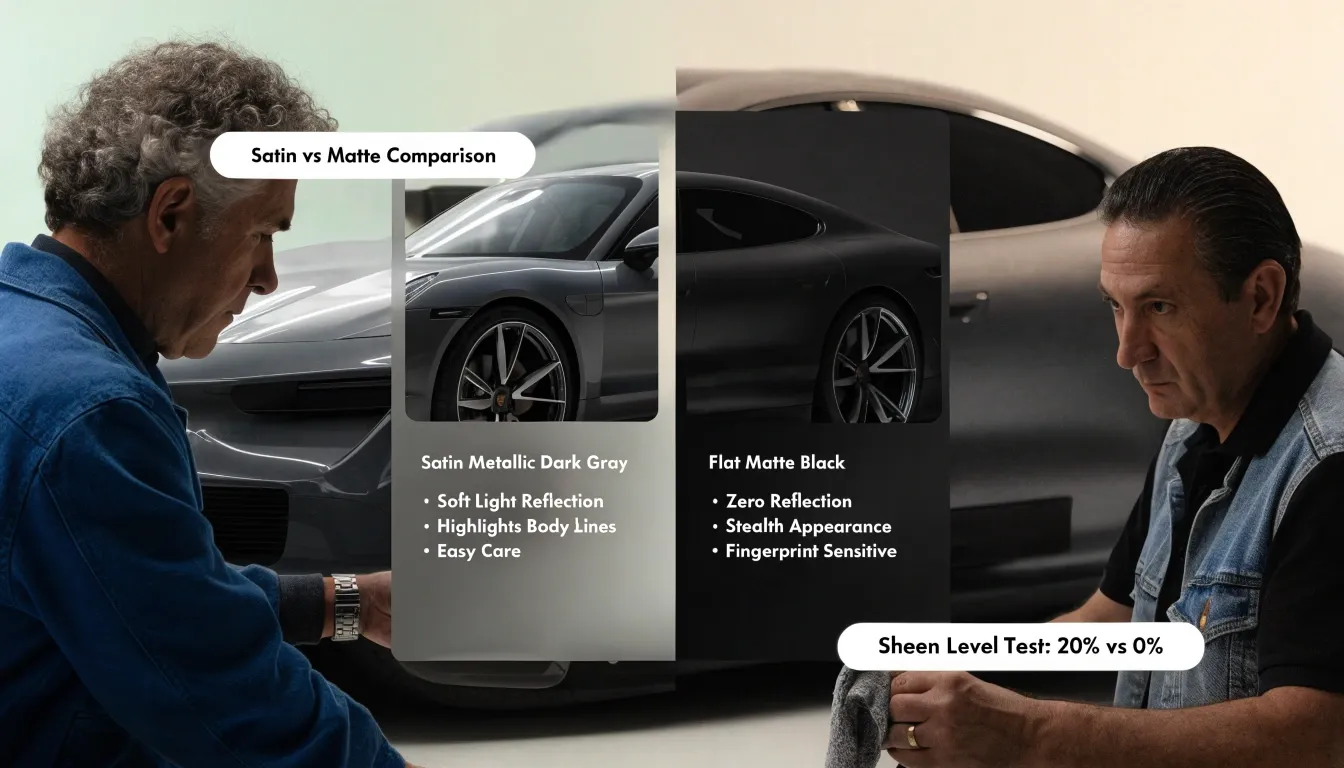
FINISH-SPECIFIC WINTER RISKS [ Gloss Vinyl ] -> Shows fine salt scratches easily; simple to rinse [ Satin Finish ] -> Highly durable; hides light salt spots; easy upkeep [ Matte Film ] -> Absorbs road oils; requires strict wax-free salt removers
Gloss Wraps
Gloss wraps are easy to rinse clean, but they show micro-swirls if dry salt is wiped across the surface.
Satin Wraps
Satin sheens are exceptionally resilient in winter, diffusing water spots and hiding road film between washes.
Matte Wraps
Matte films lack a smooth clear cap, meaning magnesium chloride brine and road oils can soak into unsealed pores. You must use dedicated, wax-free matte shampoos to prevent salt staining on matte black panels.
9. What Should You Do if a Frozen Door or Trunk Seal Is Stuck?
On a freezing winter morning, weather stripping around doors can freeze solid against wrapped door jambs.
Yanking hard on a frozen door handle creates severe stress along wrapped door margins, risking tearing the vinyl right off the edge lip.
┌────────────────────────────────────────────────────────────────────────┐ │ SAFE FROZEN DOOR PROCEDURE │ ├────────────────────────────────────────────────────────────────────────┤ │ 1. Gently press INWARD along the door frame to break the ice seal │ │ 2. Pour lukewarm (NEVER boiling) water over the door seam to thaw ice │ │ 3. Apply silicone lubricant spray to rubber weatherstripping in fall │ └────────────────────────────────────────────────────────────────────────┘
Never pour boiling hot water over a frozen door, as extreme thermal shock can crack windows and damage vinyl adhesives.
10. After the Thaw: What to Check Before Small Winter Problems Spread
Once spring arrives and the ice thaws, perform a detailed inspection to identify and address any winter weathering.
SPRING POST-WINTER INSPECTION CHECKLIST [ Check 1: Wheel Arches ] -> Inspect inner lip edges for salt lift [ Check 2: Lower Skirts ] -> Check for road tar & salt staining [ Check 3: Hood & Roof ] -> Look for micro-scratches from snow brushes
If you spot a minor lifted edge around a wheel arch or rocker panel, bring the car to a professional installer immediately. Trimming a tiny lifted corner before dirt gets under the adhesive prevents the flaw from spreading across the entire panel.
To understand installer repair policies and warranty terms, review our guide on evaluating professional car wrap installation quotes.
11. How to Get Your Wrapped Car Through Winter Without Unnecessary Repairs
Protecting your wrapped vehicle through harsh winter weather requires an easy-to-follow, proactive routine:
┌────────────────────────────────────────────────────────────────────────┐ │ PROACTIVE WINTER MAINTENANCE PLAN │ ├────────────────────────────────────────────────────────────────────────┤ │ • Pre-Winter Prep: Apply a hydrophobic ceramic sealant in October │ │ • Bi-Weekly Rinse: Flush road salt off lower skirts at touchless bays │ │ • Safe Tools Only: Use soft foam snow brooms; keep scrapers on glass │ └────────────────────────────────────────────────────────────────────────┘
Applying a hydrophobic ceramic coating before the first snowfall establishes a slick barrier that prevents de-icing brine and slush from bonding to the film, making winter washing effortless.
12. Planning a Build for All-Weather Driving? Preview Your Setup First
If you live in a region with heavy winter snow and want to see how different wrap finishes, partial coverage, or protective accent schemes look on your vehicle before booking shop time, testing concepts online removes all uncertainty.
Visualizing your custom wrap layout helps you pick a color and finish combination built for year-round durability.
You can upload a photo of your vehicle or select a matching body model, test gloss vs. satin weather-tolerant finishes, experiment with two-tone accents, and preview high-impact styling live.
Try our interactive AI car wrap visualizer tool to test custom finishes and plan your build before scheduling your professional installation.
FAQs About Car Wraps in Snow and Ice
1.Can you drive a wrapped car in snow and ice without ruining the vinyl?
Yes, a properly installed, high-quality cast vinyl wrap easily withstands sub-zero weather, heavy snowfall, and freezing winds without peeling, cracking, or losing its adhesive grip. However, while snow itself is harmless to PVC film, winter road hazards—such as chemical de-icing brine, road salt, coarse sand, and hard plastic ice scrapers—can dull or scratch the finish if you do not follow correct winter maintenance habits.
2. Why is road salt on a car wrap more dangerous than actual snow?
Fresh snow is just frozen water, but road treatments consist of magnesium chloride, liquid de-icing brine, and coarse sand. As salt brine dries across your vehicle's body panels, it leaves behind an aggressive, highly alkaline film. Over time, road salt bakes into high-heat zones like the hood and side skirts, drying out essential vinyl plasticizers and leading to premature hazing and discoloration.
3. Can I use a standard ice scraper on a vinyl wrap?
Never use a hard plastic ice scraper or a stiff-bristled brush on wrapped body panels. Scraper blades are engineered solely for glass. Dragging sharp plastic across frozen vinyl gouges the clear topcoat and can catch vulnerable edge seams along the hood, doors, or windows, tearing the film straight off the metal. Use a soft foam snow broom to push snow off, and let cabin heat thaw bonded ice naturally.
4. How do freezing temperatures affect car wrap edge lifting?
Sub-zero temperatures reduce PVC film elasticity, making it stiff. Freezing weather alone won't trigger car wrap peeling in cold weather if the wrap was properly post-heated during installation. However, if an edge was already slightly lifted or over-stretched, trapped water can collect under the seam. As that water freezes and expands into ice crystals, it acts like a wedge, physically forcing the vinyl away from the paint.
5. What is the safest way to wash a wrapped car in winter?
To keep road salt off your finish during winter:
Use Touchless Wash Bays: Stick to touchless pressure washer bays using warm water, avoiding mechanical brush washes whose frozen, grit-laden bristles scratch topcoats.
Maintain Spray Distance: Keep the pressure wand nozzle at least 12 to 18 inches away from wrapped edges and seams.
Dry Door Jambs Immediately: Wipe down door seals, handle cups, and trunk margins with a soft microfiber towel after washing so doors don't freeze shut.
6. Why shouldn't I wipe off dried road salt with a microfiber towel and detail spray?
Wiping dried salt off a wrap without a thorough pre-rinse acts like dragging low-grit sandpaper across your panels. Dried road salt consists of sharp, jagged mineral crystals mixed with highway grit. Always flood the panels with warm water or a high-foaming pre-wash shampoo first to dissolve and float away abrasive particles before touching the surface with a cloth.
7. Does a matte, satin, or gloss vinyl wrap require different winter maintenance?
Each finish handles winter exposure differently:
Gloss Vinyl: Rinses clean easily, but reveals micro-swirls if abrasive dry salt is wiped across it.
Satin Finish: Highly durable and forgiving, diffusing light water spots and disguising road film well between washes.
Matte Film: Lacks a smooth clear cap, allowing road oils and chemical de-icing brine to soak into unsealed pores. Matte wraps require dedicated, wax-free matte shampoos to prevent salt staining.
8. How do I safely free a frozen door on a wrapped car?
If your door weatherstripping freezes solid against a wrapped door frame, pulling hard on the exterior door handle creates severe tension along wrapped door lips, risking edge tearing. Instead, gently press inward along the metal door frame to crack the ice bond, or pour lukewarm (never boiling) water over the door seam to thaw the ice safely before opening.
9. Can you remove ice from a wrapped car without waiting for it to thaw?
Attempting to chip, pry, or force solid ice sheets off cold vinyl is a leading cause of winter film damage. Because PVC film becomes brittle in freezing temperatures, forcing bonded ice off the panel places intense vertical pull on the adhesive, which can tear the film. Always turn your defroster to max and allow the engine's internal heat to melt the ice-to-vinyl bond from underneath.
10. What spring inspection steps should I take after the winter thaw?
Once winter ends, perform a thorough post-winter checkup:
Flush Hidden Traps: Wash out accumulated salt and sand from lower rocker skirts, wheel arch lips, and behind front bumper grilles.
Inspect Edge Seams: Look along doors, hood hems, and fender wells for minor lifted corners.
Address Early Lifting: If you catch a tiny lifted edge early, bring the car to a professional installer to cleanly trim and re-seal the margin before dirt ruins the adhesive under the rest of the panel.