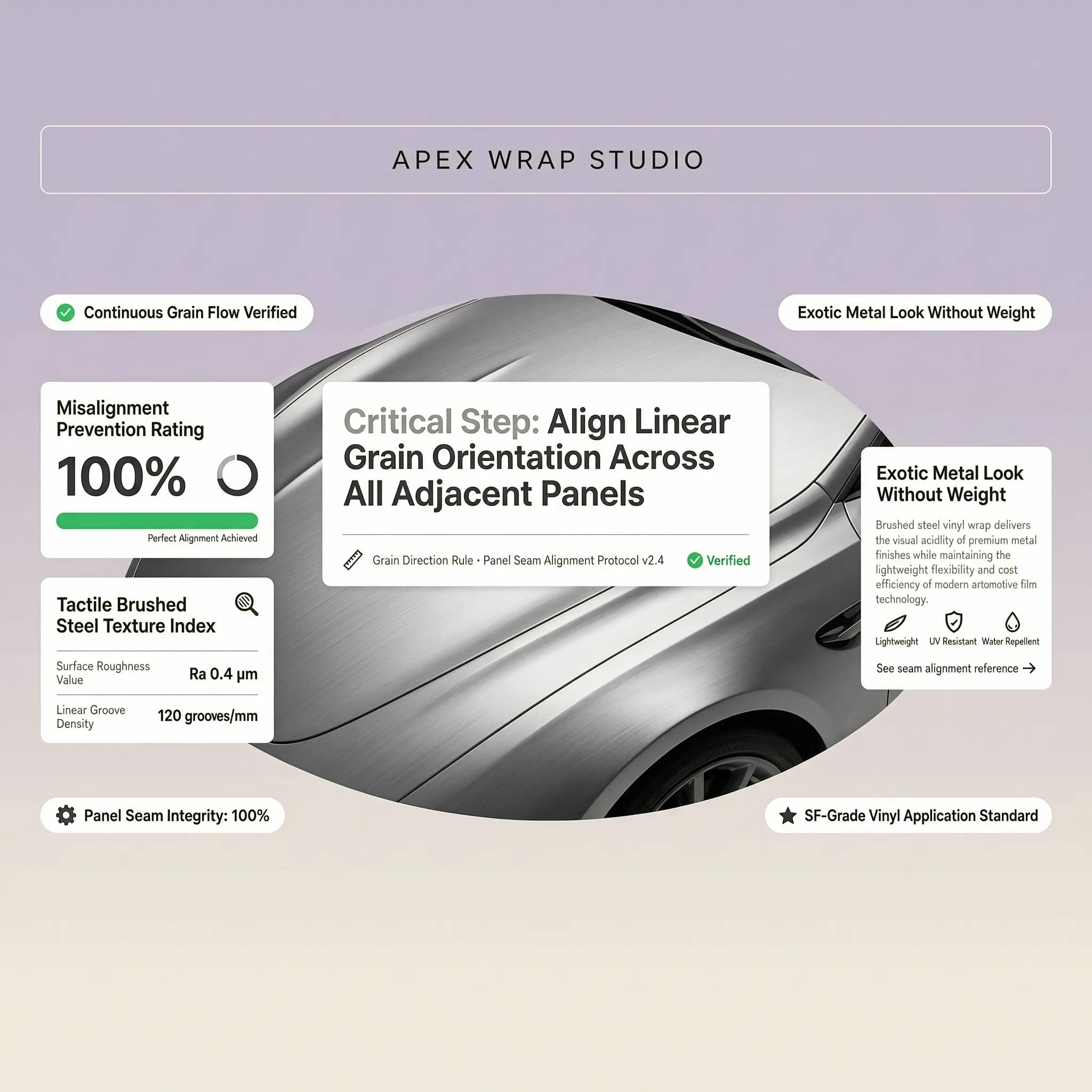

You’re standing at an enthusiast meet when an aggressive coupe catches your eye under the midday sun.
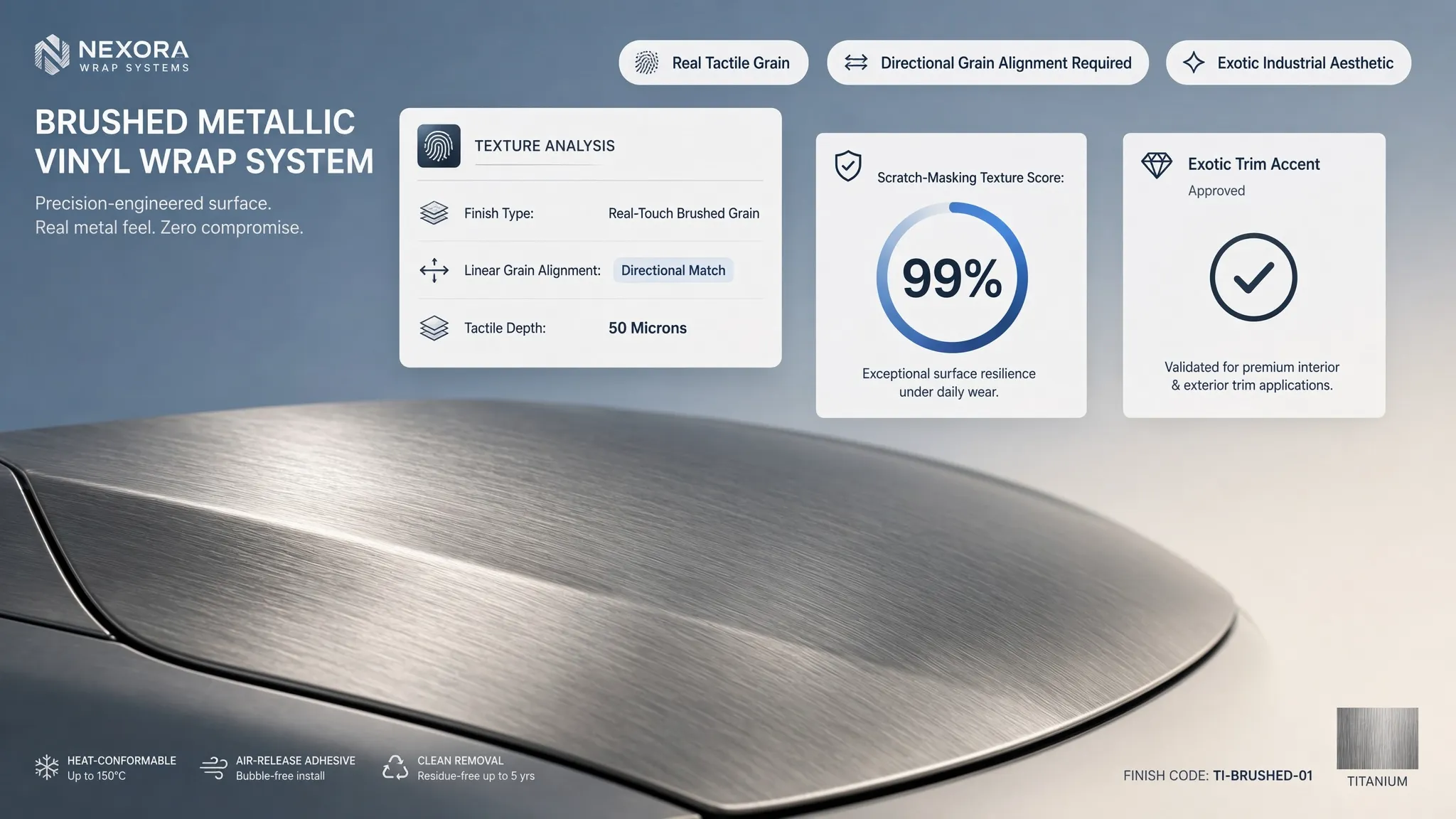
It doesn’t glisten with standard high-gloss paint, nor does it absorb light like a flat matte finish. Instead, the entire body looks like a single block of hand-milled aircraft aluminum, complete with micro-directional grain lines running parallel along its shoulders.
As light glides across the doors, the highlight line breaks into a sharp, satin-sheen band—giving the sheet metal an industrial, tactile, precision-machined appearance.
That tactile visual appeal is the hallmark of a brushed car wrap.
Made possible by advanced multi-layer cast vinyl manufacturing, a brushed finish embeds actual micro-textured directional grain right into the surface of high-grade PVC.
If you want a bold, architectural aesthetic that sets your vehicle apart from the endless sea of gloss and satin wraps without adding the massive weight or expense of real metal panels, here is how brushed vinyl works, how it handles real-world light, and how to execute a flawless build.
1. Why Does Brushed Vinyl Look Like Real Brushed Metal?
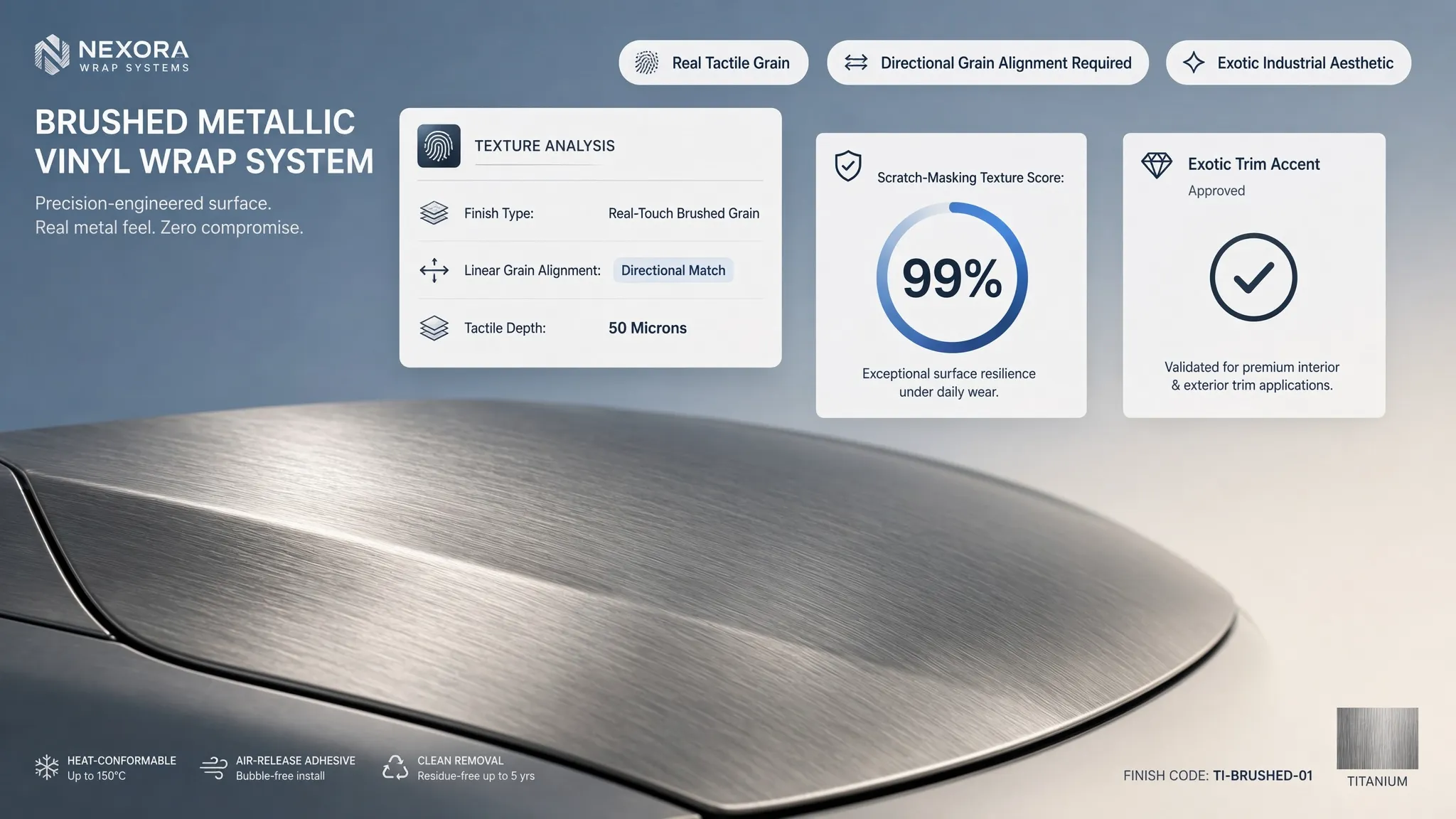
To understand why a brushed metal car wrap looks so strikingly realistic, you have to look past simple color pigments and analyze its tactile surface geometry.
Standard vinyl wraps rely on flat, smooth PVC layers that reflect light uniformly across two dimensions.
┌────────────────────────────────────────────────────────────────────────┐ │ SMOOTH GLOSS vs. BRUSHED TEXTURED FILM │ ├────────────────────────────────────────────────────────────────────────┤ │ [ Smooth Vinyl ] --> Smooth surface --> Uniform 2D glare reflection │ │ [ Brushed Vinyl ] --> Micro-embossed grain --> Directional light │ │ dispersion creates authentic machined depth │ └────────────────────────────────────────────────────────────────────────┘
A brushed vinyl wrap features a physical, micro-embossed texture engineered into the top clear cast layer. Thousands of ultra-fine, parallel grain ridges run continuously down the roll.
When ambient light strikes these raised micro-ridges:
Light doesn't bounce off in a harsh, specular glare.
Instead, light disperses sideways along the direction of the grain lines.
This linear light refraction creates the signature "machined highlight band" that gives brushed aluminum vinyl wrap its raw, industrial depth.
2. Brushed vs. Metallic vs. Chrome Wrap: What's the Difference?
Because brushed, metallic, and chrome finishes all draw inspiration from raw metals, buyers frequently confuse them when reviewing product swatches online.
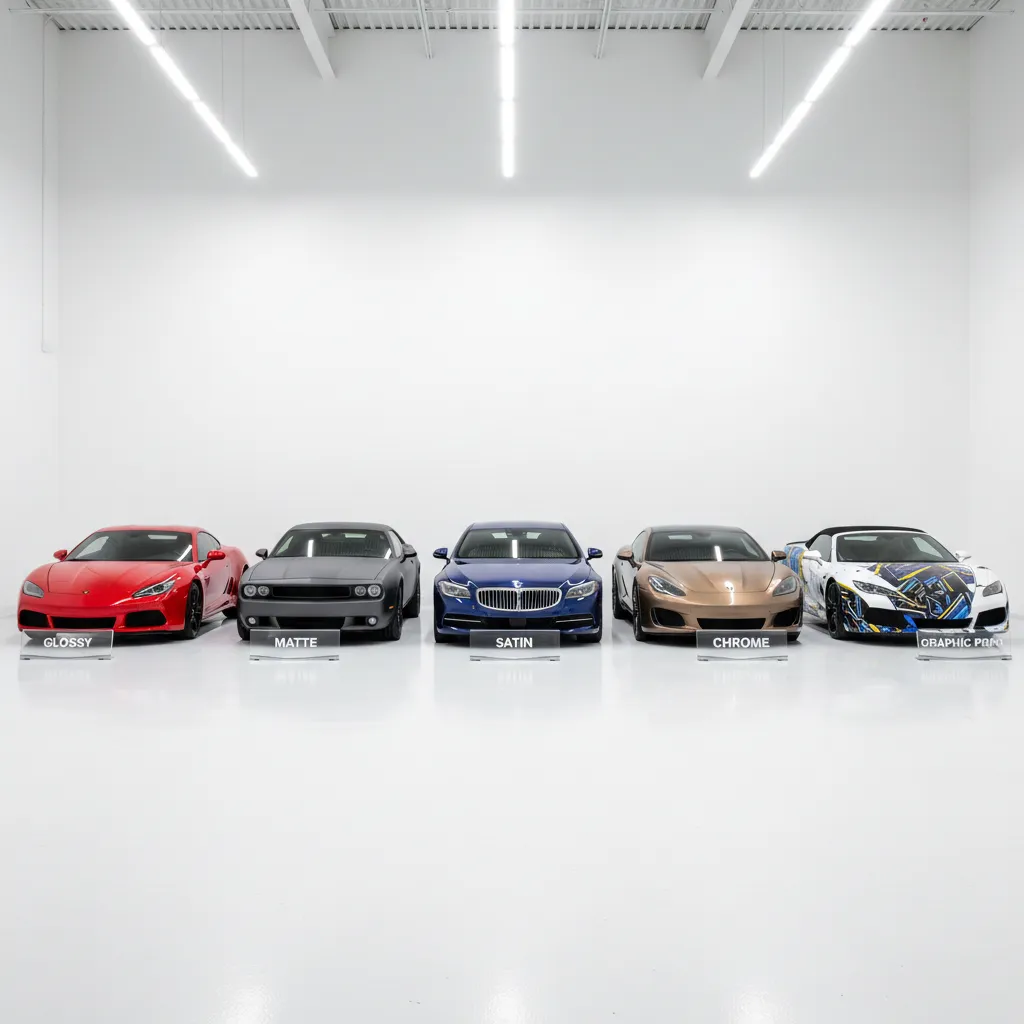
However, placing them side-by-side under direct sun exposes three completely distinct aesthetic characters.
FINISH COMPARISON MATRIX [ Brushed Vinyl ] ---> Physical linear texture; soft directional highlight band [ Metallic Film ] ---> Smooth, flat surface; embedded micro-flakes sparkle [ Mirror Chrome ] ---> Ultra-smooth mirror surface; 100% direct glare reflection
Brushed Finish
A brushed finish car wrap features a physical, tactile surface grain. It diffuses light into a soft linear highlight band, creating a subtle, high-end architectural metal appearance without excessive glare.
Metallic Finish
A metallic car wrap features a completely smooth surface. Suspended beneath a clear topcoat are tiny aluminum or synthetic silicate flakes that sparkle in direct sunlight, mimicking traditional automotive metal-flake paint.
Mirror Chrome Finish
Chrome film utilizes a vacuum-metallized aluminum layer to deliver a 100% mirror reflection. While visually intense, full chrome is notoriously rigid to install, prone to scratching, and significantly more expensive than textured cast films.
3. What Colors Can You Get in a Brushed Vinyl Wrap?
While classic brushed silver car wrap options remain the go-to standard for an authentic bare-metal look, leading manufacturers like 3M Commercial Solutions and Avery Dennison Graphics produce brushed cast films across a rich spectrum of tones.
┌────────────────────────────────────────────────────────────────────────┐ │ POPULAR BRUSHED COLOR PALETTES │ ├────────────────────────────────────────────────────────────────────────┤ │ • Brushed Aluminum --> Classic raw aircraft-metal finish │ │ • Brushed Titanium --> Deep, gunmetal tone with warm industrial depth│ │ • Brushed Black --> Stealthy obsidian finish with tactile grain │ │ • Brushed Bronze/Gold--> Luxurious warm tone with rich, antiqued luster │ └────────────────────────────────────────────────────────────────────────┘
When choosing brushed automotive vinyl shades, consider the visual mood you want to set:
Brushed Silver & Titanium: Delivers an authentic, high-tech engineering look that pairs exceptionally well with carbon fiber accents and dark forged wheels.
Brushed Black: Creates a subtle, stealthy appearance. From twenty feet away, it looks like a sleek satin black; up close, the physical grain reveals a sophisticated, tactile surprise.
Brushed Gold & Bronze: Offers an opulent, custom-machined feel that highlights side skirts, roof panels, and interior trim accents.
4. How Does a Brushed Car Wrap Look in Sunlight and Shade?
One of the most engaging aspects of owning a brushed metal vinyl wrap is watching how its physical texture reacts to changing ambient lighting conditions throughout the day.
LIGHTING RESPONSE BEHAVIOR [ Direct Sunlight ] --> High contrast; razor-sharp linear highlight bands [ Overcast / Shade ] --> Soft, satin-like metallic depth with subtle texture [ Night / Streetlights] --> Dynamic point-source streaks glide across panel hips
Direct Bright Sunlight
High solar glare catches the micro-embossed grain ridges directly. The highlight line becomes sharp and brilliant, casting distinct contrast along panel shoulders and wheel arches.
Overcast Shade
In diffused lighting, the intense directional highlight softens. The wrap settles into a heavy, satin-like metallic finish that accentuates your vehicle's physical body contours without harsh glare.
Nighttime Under Streetlights
At night, point-source light from overhead LED lamps and streetlights creates sweeping, linear reflections that skate along your car's hip lines as you drive through city streets.
5. Which Cars Look Best With a Brushed Metal Wrap?
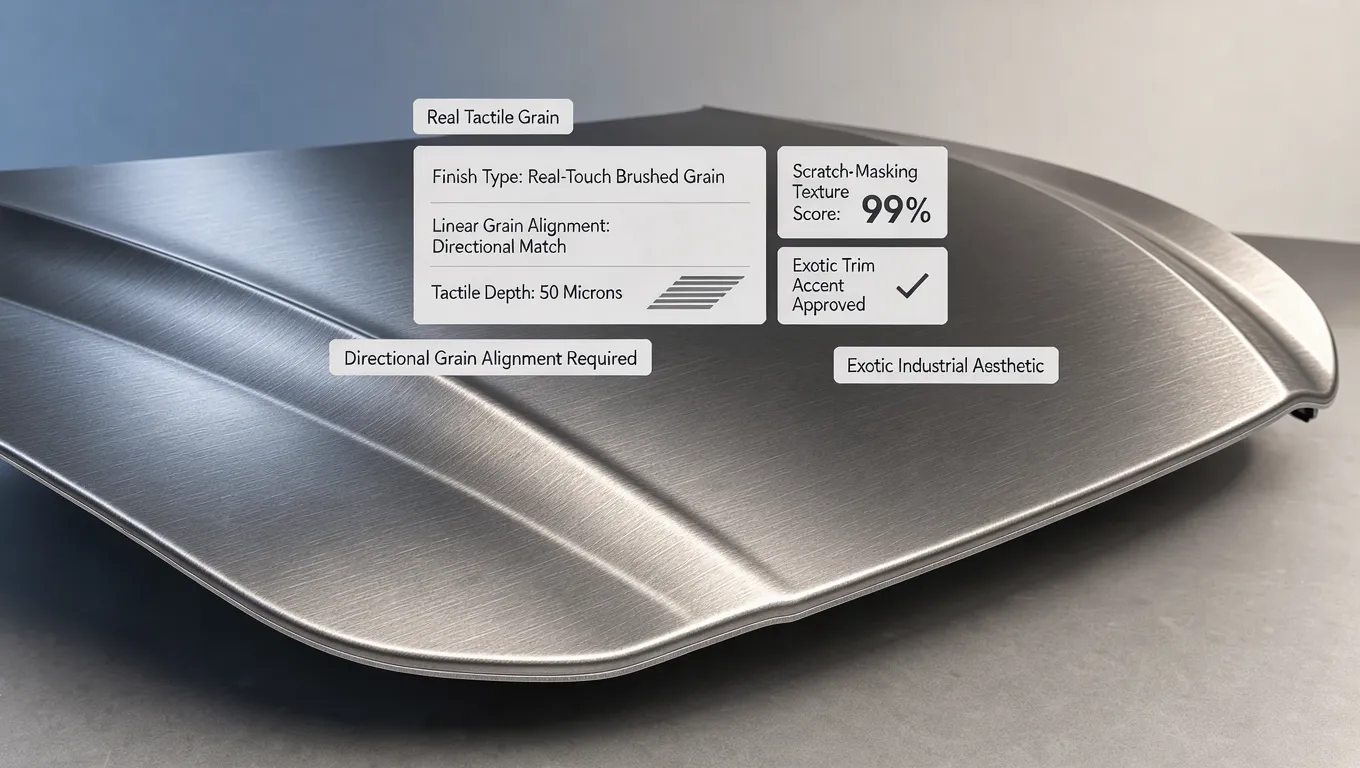
Vehicle geometry plays an essential role in how effectively textured film performs. Because brushed vinyl relies on physical grain direction to disperse light, body designs with defined, continuous character lines show off the material best.
┌────────────────────────────────────────────────────────────────────────┐ │ VEHICLE BODY STYLE SUITABILITY │ ├────────────────────────────────────────────────────────────────────────┤ │ [ Sports Cars & Coupes ] --> Sharp character lines highlight linear grain│ │ [ Modern Trucks & SUVs ] --> Large flat door faces showcase raw metal scale│ │ [ Full-Body vs. Accents ]--> Excellent for full wraps, roofs & hood stripes│ └────────────────────────────────────────────────────────────────────────┘
Sports Cars & Muscle Cars: Defined body creases, vented hoods, and muscular rear fenders break up light, creating dramatic contrast between highlighted ridges and shadowed recesses.
Trucks & Full-Size SUVs: Sweeping door faces and massive flat hoods provide an expansive canvas that showcases the unbroken scale of the brushed aluminum pattern.
Accent Application: If you aren't ready for a full-body transformation, brushed vinyl makes a stunning accent material for hoods, roofs, side mirrors, rear diffusers, and interior dash panels.
6. Does a Brushed Wrap Look Better on Large Panels or Detailed Bodywork?
Executing a clean brushed vinyl wrap installation requires matching the material's linear flow with your vehicle's structural layout.
┌────────────────────────────────────────────────────────────────────────┐ │ PANEL GEOMETRY CONSIDERATIONS │ ├────────────────────────────────────────────────────────────────────────┤ │ [ Large Flat Panels ] --> Showcases seamless, continuous grain flow │ │ [ Complex Curves ] --> Requires skilled glassing to avoid grain distortion│ └────────────────────────────────────────────────────────────────────────┘
Large, sweeping panels—like doors, quarter panels, and hoods—allow the physical grain pattern to run uninterrupted from front to back.
On complex front bumpers with tight intake pockets, experienced technicians carefully feed the material into channels without over-heating, ensuring the linear pattern doesn't bend into wavy, distorted arcs.
7. Brushed Vinyl Wrap vs. Real Brushed Metal: Which Makes More Sense?
Fabricating a custom vehicle body out of real brushed aluminum or stainless steel is an astronomical endeavor reserved for ultra-exotic concepts and custom hot rods.
Comparing real metal fabrication to cast vinyl highlights why wrap technology dominates the custom styling market.
┌────────────────────────────────────────────────────────────────────────┐ │ WRAP vs. REAL METAL COMPARISON │ ├────────────────────────────────────────────────────────────────────────┤ │ [ Real Brushed Metal ] --> Tens of thousands; massive weight; rust risk│ │ [ Brushed Vinyl Wrap ] --> $3,500–$5,500; 100% reversible; shields paint│ └────────────────────────────────────────────────────────────────────────┘
Weight and Reversibility
Custom metal panels add significant structural weight and leave your raw metal vulnerable to environmental oxidation and road salt corrosion. A brushed vinyl wrap for cars adds virtually zero weight, is 100% removable, and shields your original factory paint from UV damage and light road debris underneath.
Cost and Installation Time
Custom metal shaping takes months of specialized metalworking labor. A professional brushed vinyl installation takes just 3 to 5 business days, delivering a show-quality raw metal look at a fraction of the cost.
8. How Much Does a Brushed Car Wrap Cost?
Because manufacturing multi-layer cast films with micro-embossed physical texture requires advanced production technology, raw roll costs sit higher than standard solid gloss or satin films.
On average, a professional full-body installation ranges between $3,500 and $5,500, depending on several core project variables:
PRICE BREAKDOWN FACTORS [ Vehicle Size ] --> Compact coupes use ~50ft; large SUVs need ~75ft+ [ Material Class ] --> Premium cast brushed film carries higher roll costs [ Grain Alignment ] --> Strict orientation matching requires additional film waste [ Teardown Scope ] --> Disassembling door handles, trim & lights adds labor hours
Beware of cut-rate shops offering full-body wraps for suspiciously low prices. Lowball quotes typically indicate cheap calendered film imported from overseas that shrinks under summer heat and lacks authentic micro-embossed grain texture.
To understand what goes into a fair pricing quote, review our guide on comparing car wrap installation costs and quotes.
9. Is Brushed Vinyl Harder to Install Than a Regular Wrap?
Yes. Installing brushed vinyl requires significantly higher technical discipline than laying standard non-textured film.
Because brushed vinyl carries a strict physical linear grain, installers must manage orientation alignment, thermal limits, and stretch tolerances with extreme precision.
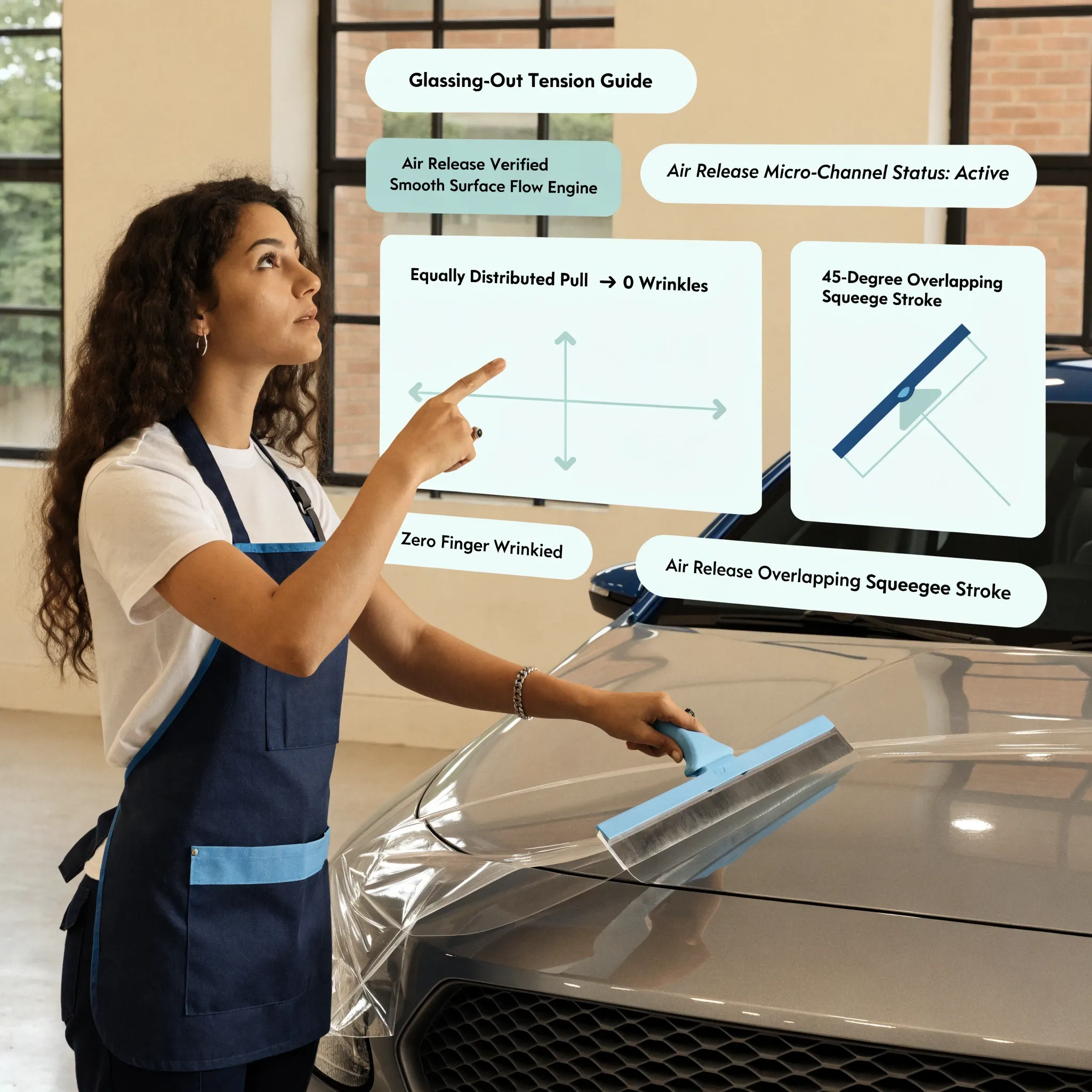
┌────────────────────────────────────────────────────────────────────────┐ │ INSTALLATION CRITICAL DIRECTIVES │ ├────────────────────────────────────────────────────────────────────────┤ │ 1. Grain Continuity: All panel sheets must unroll in the same direction│ │ 2. Heat Management: Excessive heat melts micro-embossed grain texture │ │ 3. Tension Control: Over-stretching curves linear grain into wavy arcs │ └────────────────────────────────────────────────────────────────────────┘
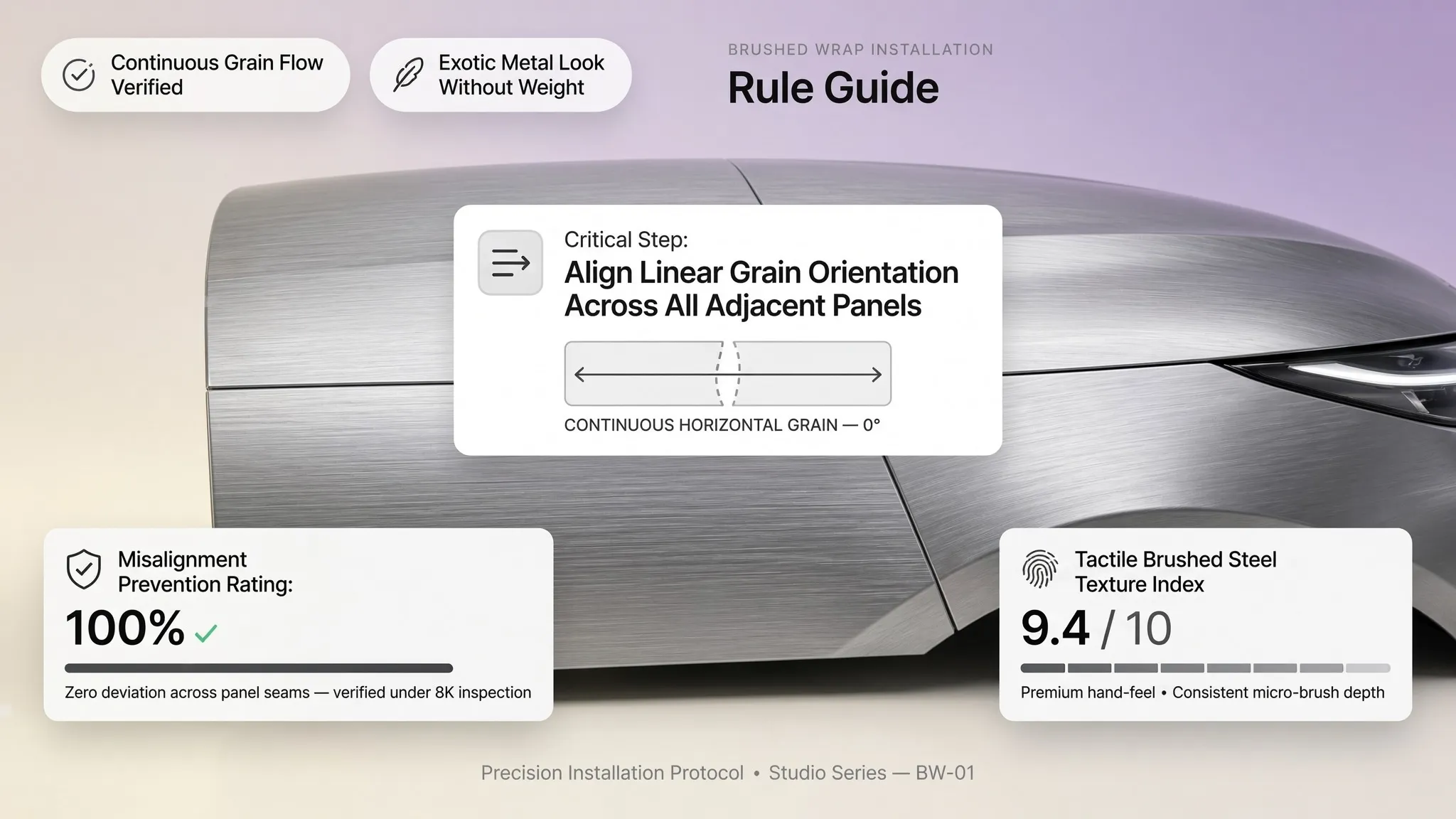
Strict Grain Continuity: The linear grain must run horizontal and level across every adjacent panel from the front fender all the way down the doors to the rear quarter. If a technician accidentally rotates a sheet 90 degrees to save film on a door, the grain will run vertically, completely ruining the visual alignment.
Grain Melting Risks: Applying excessive heat with a torch or heat gun while stretching vinyl around bumper corners can melt the delicate physical micro-ridges, turning a crisp brushed texture into a smooth, glossy, distorted patch.
To verify whether a local installer possesses the experience required for textured cast films, check out our walkthrough on inspecting car wrap quality and installation standards.
10. How Do You Clean and Maintain a Brushed Car Wrap?
Preserving the crisp, tactile texture of a brushed finish requires simple, consistent care habits. Because road grime and wax residue can settle inside the physical micro-grooves, proper maintenance keeps the grain looking sharp and clean.
MAINTENANCE BEST PRACTICES [ Recommended ] --> Hand wash with pH-neutral soap & soft microfiber towels [ Surface Care ] --> Use dedicated wrap cleaners & matte/satin quick detailers [ Strictly Avoid] --> Traditional paste waxes, petroleum solvents & brush washes
Avoid Traditional Paste Waxes: Never apply standard automotive paste wax to a brushed wrap. Traditional wax leaves white, chalky residue trapped inside the micro-grooves that is extremely difficult to scrub out.
Hand Wash Only: Skip automated brush car washes. Heavy mechanical brushes drag dirt across the panel, dulling the micro-ridges and scratching the clear topcoat over time.
Clean Spills Promptly: Fuel spills, bird droppings, and tree sap contain aggressive organic acids. Wash them off immediately using warm water and a wrap-safe detail spray.
11. How to Decide Whether a Brushed Car Wrap Is Right for Your Car
Before ordering rolls of film or booking shop time, evaluating physical swatches in person ensures you pick a texture and tone you'll love for years.
Digital images on smartphone screens can't fully convey how physical micro-grain disperses light across real body lines.
┌────────────────────────────────────────────────────────────────────────┐ │ RECOMMENDED SELECTION STEPS │ ├────────────────────────────────────────────────────────────────────────┤ │ Step 1: Request physical 12x12" film samples from your wrap shop │ │ Step 2: Hold the swatch directly against your car's hood & bodylines │ │ Step 3: Inspect the grain in direct sun, open shade & under LEDs │ └────────────────────────────────────────────────────────────────────────┘
Visit a local installation center and ask to see physical material samples. Take the swatches outside into direct sunlight, hold them against your car's fender, step into the shade, and view them under shop lights. Seeing how the linear grain catches real-world light guarantees total confidence in your style choice.
12. Preview Your Custom Wrap Concept Before Scheduling Shop Time
Want to see how a brushed titanium, aluminum, or black finish transforms your vehicle's specific lines before locking in a deposit or booking an installation bay?
Previewing your aesthetic vision beforehand eliminates all uncertainty.
Upload a photo of your vehicle or select a matching body model, test different brushed color options, compare horizontal grain layouts, and experiment with custom accent schemes live.
Try our interactive AI car wrap visualizer tool to test custom finishes and preview your build before booking your shop appointment.

FAQs About What Is a Brushed Car Wrap
1. Can a brushed car wrap genuinely look like real brushed aluminum, or does it look like fake plastic?
You’ll be amazed at how remarkably authentic it looks in person. Unlike cheap printed wraps that try to fake depth with flat color gradients, a high-grade brushed car wrap features physical, micro-embossed directional grain lines engineered directly into the cast vinyl topcoat. When ambient light sweeps across your vehicle's bodylines, light disperses horizontally along the microscopic ridges—creating that unmistakable, tactile luster of precision-machined aircraft metal.
2. Why does my installer insist that all panels must be unrolled in the exact same direction?
Here’s the deal: brushed vinyl carries a strict directional grain created during manufacturing. If an installer accidentally rotates a sheet 90 degrees to save roll space on a door, that panel will catch light vertically while the surrounding fenders reflect horizontally. Master technicians carefully map out the material flow to align the linear grain continuously from front bumper to rear quarter, preventing mis-matched panel reflections under direct sunlight.
3. What visual traits set a brushed aluminum vinyl wrap apart from metallic and chrome finishes?
It comes down to tactile texture versus surface glare. A metallic vinyl wrap has a completely smooth surface filled with tiny aluminum flakes that sparkle under point-source light. A chrome wrap acts like an intense, 100% mirror reflection. A brushed aluminum vinyl wrap sits in its own league—offering a subtle, low-glare, industrial texture that diffuses light into soft linear highlight bands along every character line.
4. Will a brushed black car wrap or brushed titanium finish hold up against harsh outdoor weather?
Absolutely. Premium cast brushed automotive vinyl is built to handle demanding environmental conditions while safeguarding your original OEM paint underneath. While deep tones like brushed black car wrap or brushed titanium vinyl wrap absorb more solar heat on horizontal surfaces like hoods and roofs, routine maintenance—such as hand washing and applying a wrap-safe ceramic detailer—shields the micro-embossed grain from UV degradation for years.
5. Why does a brushed car wrap cost slightly more than standard gloss or matte vinyl?
Let’s look at the numbers. Manufacturing a multi-layer cast film with a physical, micro-textured surface requires sophisticated production engineering compared to flat PVC rolls. When you factor in higher raw material costs and the strict directional layout required during installation, a professional brushed car wrap cost typically ranges between $3,500 and $5,500. You are paying for engineered depth, extended durability, and artisan labor precision.
6. What happens if an installer applies too much heat while stretching brushed vinyl around bumper corners?
Here is a critical installation trap to avoid: applying excessive torch heat while forcefully pulling brushed vinyl over tight curves can melt the delicate physical micro-grooves. When those micro-ridges dissolve, the sharp brushed texture turns into a smooth, shiny, distorted patch known as texture glazing. Experienced technicians rely on careful glassing techniques and inlay seams to feed the material naturally without compromising its tactile grain structure.
7. How do brushed vinyl wraps react under direct sun, cloudy shade, and nighttime streetlights?
The visual transformation throughout the day is breathtaking:
Direct Sun: High solar glare catches the micro-embossed grain ridges, creating crisp, razor-sharp highlight bands across fender shoulders.
Overcast Shade: The sharp glare softens into a heavy, satin-like metallic depth that accentuates your vehicle's physical body contours.
Nighttime LEDs: Overhead streetlamps create sweeping linear streaks that glide dramatically along your car's hip lines as you drive past.
8. Is it better to wrap my whole vehicle or use brushed vinyl for custom accent panels?
You get complete creative freedom. While a full-body brushed silver vinyl wrap creates a head-turning, show-stopping build, brushed finishes also make exceptional contrast accents. Styling your roof, hood, side mirror caps, rear diffuser, or interior dash trim in brushed black or brushed gold delivers a sharp, high-end, custom-milled aesthetic without overwhelming the rest of your car’s primary paint color.
9. Why should you never use traditional paste wax or automated brush car washes on a brushed wrap?
Think twice before grabbing a tub of traditional automotive paste wax. Standard paste wax leaves white, chalky residue trapped deep inside the physical micro-grooves of the vinyl, creating hazy streaks that are extremely frustrating to scrub out. Automated drive-thru car washes are equally damaging—heavy spinning bristles drag grit across the panel, dulling the micro-ridges and scratching the clear topcoat over time.
10. Can a brushed metal car wrap protect my car's factory paint and preserve resale value?
Without a doubt. Beneath that aggressive industrial finish sits a thick, protective layer of cast PVC that acts as a sacrificial shield against UV fading, swirl marks, bird dropping stains, and light road debris. When removed within its recommended 3 to 5 year service life, the vinyl lifts off cleanly without harming your factory clear coat, keeping your original OEM paint pristine underneath for maximum resale value.
11. How do I properly clean and care for my brushed aluminum car wrap to keep it looking sharp?
Upkeep is surprisingly simple when you stick to the right habits:
Hand Wash Only: Use a pH-neutral car shampoo and a soft microfiber wash mitt to lift away surface dust gently.
Spot Clean Contaminants: Wash off bird droppings, tree sap, and fuel spills within 24 to 48 hours using warm water and a wrap detailer.
Apply Hydrophobic Coatings: Spray a specialized matte/satin quick detailer to create a protective seal that sheds rainwater and prevents road grime from settling into the grain.
12. What is the single best way to choose the right brushed vinyl shade before placing a roll order?
Never rely solely on digital smartphone photos or laptop renders. Screen displays compress color profiles through RGB light pixels, which fail to capture how physical micro-grain disperses natural sunlight across real 3D metal curves. Visit a local professional wrap shop, request physical 12x12" material samples, and hold them directly against your vehicle's hood outdoors in direct sunlight, in open shade, and under shop LEDs before finalizing your decision.