
Handing over your car keys to a custom wrap shop feels high-stakes.
You look at pristine social media photos, imagine your vehicle wrapped in a flawless satin finish, and then reality sets in.
What if an amateur tech hacks up my clear coat with a utility knife? What if the edges start curling backward after the first hot summer rain? What if I waste thousands of dollars on a mediocre shop that ghosts me the moment a bubble appears?
Let’s be honest: A high-end vinyl wrap installed by a novice looks cheap within six months, whereas a true master craftsperson makes premium film look identical to factory paint.
You are not buying rolls of plastic online. You are paying for meticulous surface sterilization, expert panel disassembly, precise thermal control, and accountability.
If you want to protect your investment, dodge local hack operations, and secure a flawless finish, here is how to find a professional car wrap installer who delivers on every promise.

1. Look at Completed Wraps on Cars Similar to Yours
An impressive portfolio full of wide-angle, heavily filtered photos of exotic supercars proves nothing about how a shop handles your specific daily driver.
Anyone can make a flat hood look slick under showroom LED lights.
┌────────────────────────────────────────────────────────────────────────┐ │ VEHICLE RELEVANCE INSPECTION LIST │ ├────────────────────────────────────────────────────────────────────────┤ │ [ ] Sharp body creases & deep door channels │ │ [ ] Compound curve mirror caps & handle recesses │ │ [ ] Tight bumper intake corners & sensor cutouts │ │ [ ] Hemmed inner door edges & tucked fender seams │ └────────────────────────────────────────────────────────────────────────┘
When evaluating a car wrap installer portfolio, demand to see macro close-ups of vehicles matching your body style:
Driving a full-size pickup or heavy SUV? Verify how they handle tall roof seams, complex fender flares, and massive side panels without over-stretching the PVC.
Driving a sharp-edged sports coupe? Check their technique around aggressive bumper grilles, deep quarter panel indents, and tight spoiler bases.
If their public gallery only shows wide shots from ten feet away, ask them directly for unedited, close-up snapshots of panel seams and recessed corners.
2. Check Reviews for Specific Details, Not Just Star Ratings
A sparkling 4.9-star rating can be a trap. Some local businesses artificially inflate scores by offering discounts for immediate five-star feedback before the film has even faced real-world heat.
Instead of looking at raw popularity numbers, scan the narrative text inside 3-star and 4-star reviews to spot genuine operational patterns.
WHAT TO LOOK FOR IN REAL CUSTOMER FEEDBACK [ Red Flag Indicators ] [ Trust Verification Signs ] │ │ • "Edges started lifting in a week" • "Shop replaced a lifted fender free" • "Found razor cuts in clear coat" • "Disassembled trim cleanly" • "Owner refused to honor warranty" • "Detailed surface prep wash performed"
Look for recurring commentary regarding post-install customer support, whether edges stayed down after a highway road trip, and how management reacted when clients brought up minor bubbles. The best rated car wrap shop isn't one that never makes a mistake—it is the shop that owns up to flaws and resolves them immediately.

3. Ask Which Vinyl Brand and Product They Plan to Use
Cutting corners on raw material is the oldest trick in the budget-shop playbook.
Unknown, unbranded mystery rolls imported from discount distributors save a shop hundreds of dollars upfront, but they turn your vehicle into a ticking clock. Cheap films use aggressive, volatile glue formulas that bake permanently into clear coat pores, making future removal a grueling disaster.
┌────────────────────────────────────────────────────────────────────────┐ │ INDUSTRY-STANDARD CAST FILMS │ ├────────────────────────────────────────────────────────────────────────┤ │ • 3M (2080 Series) --> Advanced dual-cast air release │ │ • Avery Dennison (SW900) --> Superior stretch & repositionability│ │ • KPMF (VWS Series) --> Rich metallic depth & gloss finish │ │ • Inozetek / ORAFOL (Oracal) --> Ultra-smooth paint-like appearance │ └────────────────────────────────────────────────────────────────────────┘
When requesting a formal car wrap installation quote, ensure the exact manufacturer, film line, and specific color code are written directly onto your service contract.
If a shop uses vague phrasing like "We only use premium commercial vehicle wrap film" without naming a brand, walk away immediately.
4. Find Out How They Prepare the Car Before Installation
Wrapping over a vehicle that was simply run through a touchless wash guarantees edge failure.
Microscopic road grime, invisible tree sap, ceramic spray coatings, and industrial iron fallout destroy pressure-sensitive acrylic adhesives instantly.
THE 5-STEP SURFACE DECONTAMINATION PROTOCOL [ Step 1 ] --> pH-neutral degreasing hand wash to strip surface oils [ Step 2 ] --> Chemical iron decontamination spray to melt metal dust [ Step 3 ] --> Clay bar physical treatment to pull embedded road grit [ Step 4 ] --> 70% Isopropyl Alcohol wipe-down to clear residue [ Step 5 ] --> Trim unfastening & deep door jamb seam cleaning
Ask the shop lead point-blank: "What is your exact surface prep process before film touches my paint?"
A legitimate car wrap installation service will outline a strict multi-step decontamination routine, including clay bar treatments and alcohol panel wipes. If a shop claims they can wrap your car in an afternoon without stripping road grime, your material will start lifting within weeks.
5. Ask How They Handle Edges, Seams, Curves, and Difficult Panels
This is the ultimate litmus test separating a true professional car wrap installer from a backyard hack.
Broad, flat hoods are simple. Wrapping compound-curve mirror caps, deep bumper air intakes, and recessed door handle cups without visible paint gaps or over-stretched haze requires high-level mechanical skill.
CRITICAL CRAFTSMANSHIP INDICATORS [ Door Handles ] -----> Do they completely remove handles or trim rough rings? [ Mirror Caps ] ------> Wrapped in seamless single sheets or patched pieces? [ Bumper Recesses ] --> Do they feed material into pockets or bridge & stretch? [ Post-Heating ] -----> Are all stretched edges locked down at 190°F+?
Key technical questions to put to your prospective shop:
"Do you use Knifeless Tape for panel trimming?" (Using filament edge-cutting tape prevents steel razor blades from scoring your factory clear coat).
"Do you pull door handles and taillights?" (Removing body hardware allows vinyl to wrap deep behind panels, eliminating exposed paint edges).
"What is your post-heat procedure?" (Verifying that stretched areas reach 190°F to 200°F to kill shape memory and lock the film permanently).
6. Compare Car Wrap Quotes Beyond the Final Price
A cheap $1,800 full-body quote is tempting when standard market pricing sits closer to $3,500.
Here is why that bargain basement price always backfires.
┌────────────────────────────────────────────────────────────────────────┐ │ WHAT YOU GET WITH A CUT-RATE QUOTE │ ├────────────────────────────────────────────────────────────────────────┤ │ [X] Unbranded mystery film (Degrades in sun; ruins clear coat) │ │ [X] Zero trim disassembly (Freehand razor cuts right against paint) │ │ [X] Skipped prep work (No clay bar; film lifts over trapped grit) │ │ [X] Zero post-heating (Edges peel away on the first warm afternoon) │ └────────────────────────────────────────────────────────────────────────┘
A lowball car wrap installation cost reflects rushed labor. The shop is cutting corners everywhere—skipping jamb wraps, slicing directly on your paint with freehand blades, and using substandard film.
When evaluating a car wrap installation quote or comparing car wrap price estimate documents, make sure the paperwork itemizes material brands, trim removal scope, and warranty terms.
7. Understand What the Installer's Warranty Actually Covers
There is a massive distinction between the Manufacturer Material Warranty and the Installer Workmanship Warranty. Shady operations love to blend these two together to avoid accountability.
MANUFACTURER vs. WORKMANSHIP PROTECTION [ Manufacturer Warranty ] [ Workmanship Guarantee ] │ │ • Covers premature UV fading • Covers edge lifting & curling • Covers adhesive backing failure • Covers bubbles & install creases • Backed by 3M, Avery, etc. • Backed directly by the local shop
A factory material warranty protects against the vinyl cracking or fading under normal sun exposure. It does not cover a corner popping up because an installer neglected to post-heat a bumper channel.
Insist on a written vinyl wrap installation warranty covering labor defects and edge lifting for at least 12 months, and get claim instructions clearly outlined before paying a deposit.
8. Ask How Long the Installation Will Take
Wrapping a vehicle properly is slow, deliberate craftwork. If a local shop promises to strip trim, deep-clean paint, lay cast film, post-heat edges, reassemble, and hand over your keys in 24 hours, run away.
┌────────────────────────────────────────────────────────────────────────┐ │ REALISTIC SHOP TURNAROUND SCHEDULE │ ├────────────────────────────────────────────────────────────────────────┤ │ Day 1: Full wash, chemical iron decontamination & body teardown │ │ Day 2: Main panel layout (Hood, roof, doors, and rear quarter panels) │ │ Day 3: Detailed trim work (Bumpers, mirrors, handles, and recess tucks│ │ Day 4: Post-heat validation, 12-hour rest cure & final QC check │ └────────────────────────────────────────────────────────────────────────┘
A dependable car wrap shop will hold your vehicle for 3 to 5 business days.
Why? Because professional shops enforce a mandatory 12-to-24-hour indoor rest cure after installation. This allows the pressure-sensitive adhesive to fully settle so technicians can perform a rigorous final post-heat inspection before you hit the highway.
9. Find Out What Happens If Something Goes Wrong
Even elite installation technicians occasionally encounter a stubborn corner that pops a finger after facing heavy summer heat. What separates a professional operation from an amateur is how they handle corrections.
Ask the shop manager directly: "If I notice a lifted edge or air bubble two weeks after pickup, what is your exact correction policy?"
The Amateur Response: "Our wraps don't lift. If it peeled, you must have pressure-washed too close to the seam."
The Professional Response: "Bring it straight back. We include a mandatory 14-day checkup inspection on every build. If an edge lifts due to tension, we correct it immediately under warranty."
10. Questions to Ask Before Booking a Car Wrap Appointment
Before placing your deposit or searching for a car wrap installer near me, bring this physical questionnaire to your shop consultation:
┌────────────────────────────────────────────────────────────────────────┐ │ PRE-BOOKING INQUIRY CHECKLIST │ ├────────────────────────────────────────────────────────────────────────┤ │ [ ] "Which exact film brand and product series will you install?" │ │ [ ] "Do you use Knifeless Tape for all panel cutting?" │ │ [ ] "Will you be removing door handles, lights, and trim pieces?" │ │ [ ] "Does your quote include full chemical paint decontamination?" │ │ [ ] "What is your written workmanship guarantee against peeling?" │ │ [ ] "Do you include a free post-installation checkup appointment?" │ └────────────────────────────────────────────────────────────────────────┘
Clear, uncompromising answers to these six questions will instantly filter out substandard shops.
11. How to Make Your Final Choice Between Two Car Wrap Shops
If you are down to two local providers offering competitive quotes, use this structured evaluation model to make your final decision:
┌────────────────────────────────────────────────────────────────────────┐ │ FINAL SHOP DECISION MATRIX │ ├────────────────────────────────────────────────────────────────────────┤ │ 1. Shop Bay Cleanliness (30%): Dust-free floor, bright LED lighting? │ │ 2. Communication Clarity (25%): Transparent answers about prep work? │ │ 3. Portfolio Relevance (20%): Proven experience with your car model? │ │ 4. Warranty Documentation (15%): Clear written labor protection? │ │ 5. Quote Value Balance (10%): Pricing matched to verified labor scope?│ └────────────────────────────────────────────────────────────────────────┘
Step inside their physical workspace. A premier car wrap installation service maintains an immaculate, climate-controlled facility with sealed floors and high-output lighting. Airborne dust in a messy garage settles straight underneath your film during layout.
12. Simulate Your Custom Wrap Concept Before Finalizing Booking
Before signing a shop contract and committing your vehicle to an installation bay, make sure your color and finish choices match your vision.
Handing a shop vague descriptions leads to mismatched roll orders and costly changes mid-project. Testing your ideas digitally beforehand removes all guesswork.
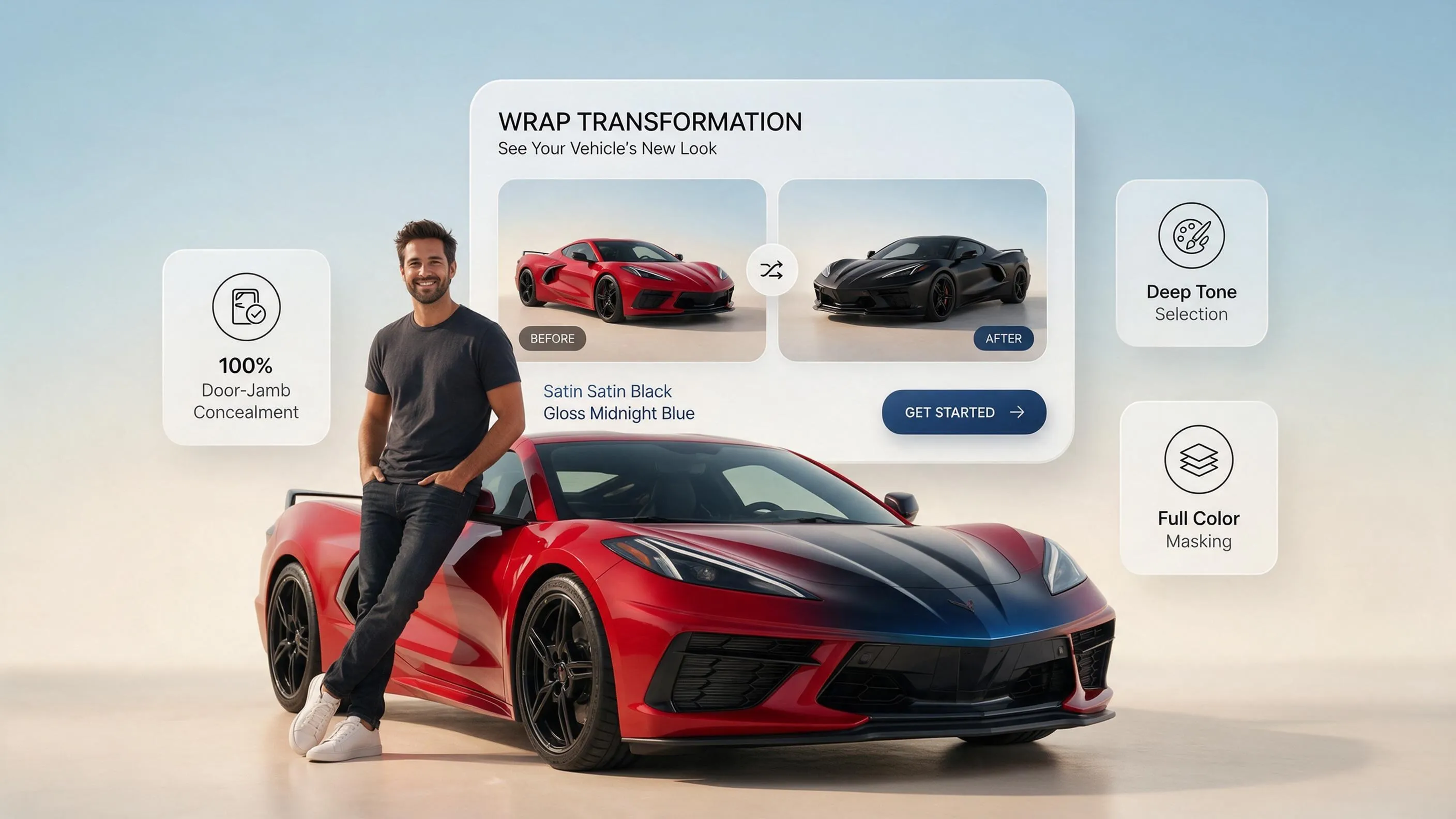
Experiment with satin metallics, ultra-gloss shades, and custom roof accents across your exact vehicle make and model. Check out our car wrap design visualizer tool to map your aesthetic details before locking in your shop appointment. FAQs: How to Choose a Car Wrap Installer

FAQs: How to Choose a Car Wrap Installer
1. How do I know if a local wrap shop is actually good or just good at marketing?
Look past the polished social media feed and ask to inspect a car currently sitting in their work bay. Stand two feet from the front bumper and look at the deep recess channels, door handles, and mirror bases. High-end installers hide their seams inside natural body lines, wrap edges around panel hems, and leave zero razor marks or trapped dust nibs under the film.
2. Why are quotes for a full car wrap so wildly different between shops?
A $1,800 quote and a $3,800 quote reflect two completely different service levels. Lowball quotes cut costs by using cheap calendered film that bakes into your paint, skipping body teardown (trimming film freehand directly against your clear coat), and ignoring surface decontamination. Higher quotes cover premium cast vinyl (like 3M 2080 or Avery SW900), full hardware disassembly, Knifeless Tape trimming, and multi-year labor warranties.
3. Should I choose a shop that takes apart my car or one that wraps over everything?
Choose a shop that performs clean, controlled hardware disassembly. Removing door handles, taillights, side emblems, and mirror caps allows the technician to wrap the vinyl deep behind panel edges. Shops that wrap around hardware without removing it must trim the film freehand with razor blades right against your factory paint, leaving visible paint gaps that lift after a few car washes.
4. How can I verify which brand of vinyl a wrap shop is actually putting on my car?
Insist that the exact manufacturer brand name, product line series, and specific color code (e.g., Avery Dennison SW900-190-O Satin Black) are explicitly written on your invoice before paying a deposit. When you drop off your car, ask to see the physical box or the branded backing paper of the roll allocated for your vehicle before technicians start cutting panels.
5. What are the biggest red flags to watch out for when touring a wrap facility?
Watch out for dusty, cluttered shop floors, poor bay lighting, and technicians cutting film directly on car panels with bare utility blades. A professional installation requires an immaculate, climate-controlled, dust-free bay with high-output LED lighting strips. Airborne dust in a messy garage ends up trapped straight underneath your vinyl, creating permanent grit bumps across your hood and roof.
6. How long should a professional car wrap installation actually take?
A legitimate, full-vehicle wrap takes 3 to 5 business days. Any shop promising to wash, strip trim, decontaminate paint, lay film, post-heat seams, reassemble, and deliver your car in 24 hours is rushing critical steps. Quality shops enforce a mandatory 12-to-24-hour indoor rest period after installation so adhesive can settle before technicians perform a final post-heating inspection.
7. Do wrap installers use razor blades directly on my car paint?
Master installers use Knifeless Tape—a specialized filament line laid down on the paint before the vinyl goes on—to snap clean, perfect edges without a metal blade ever touching your clear coat. Ask prospective shops point-blank if they use Knifeless Tape for all panel trimming. If they rely entirely on freehand utility knives, you risk permanent razor scores in your factory finish.
8. What kind of warranty should a trustworthy car wrap installer offer?
A reputable installer provides two separate layers of protection in writing:
Manufacturer Warranty: 3 to 7 years covering material defects like premature cracking or adhesive breakdown.
Shop Workmanship Warranty: At least 12 to 24 months covering installation errors like edge curling, lifting, or channel fingers.
If a shop blurs these terms together or refuses to document labor coverage in writing, do not give them your keys.
9. What happens if I spot a lifted edge or bubble two weeks after picking up my car?
A trustworthy installer will invite you back for a complimentary 14-day post-installation checkup. Because vinyl goes through an initial thermal cycle under real-world sun heat, minor edge tension can occasionally pop up. Professional shops expect to inspect these areas, trim or post-heat small fingers, and re-wrap any panel that failed due to installation stress without charging you a penny.
10. Can a wrap shop install vinyl over pre-existing rock chips, scratches, or rust?
Vinyl wrap is not a replacement for bodywork. Film is ultra-thin and acts like a mirror to underlying surface flaws—meaning every deep rock chip, scratch, or clear coat flake will show straight through the wrap. Furthermore, wrapping over active rust or peeling clear coat prevents proper glue adhesion and will tear away loose paint during future removal.
11. What questions should I ask a wrap installer before paying a deposit?
Ask these four non-negotiable questions:
"Will you be disassembling door handles, emblems, and lights for this job?"
"Do you use Knifeless Tape for all panel trimming?"
"What is your exact multi-stage surface decontamination process?"
"Does your quote include a written labor warranty for edge lifting?"
12. How do I know if an installer has experience with my specific vehicle model?
Ask to see unedited, close-up photos of completed projects on your exact body style or platform. Wrapping a flat, boxy pickup truck requires totally different stretching mechanics than wrapping a curved sports car with deep bumper air intakes. An installer who understands your vehicle's specific body lines knows where to place hidden seams and how to feed material without over-stretching.