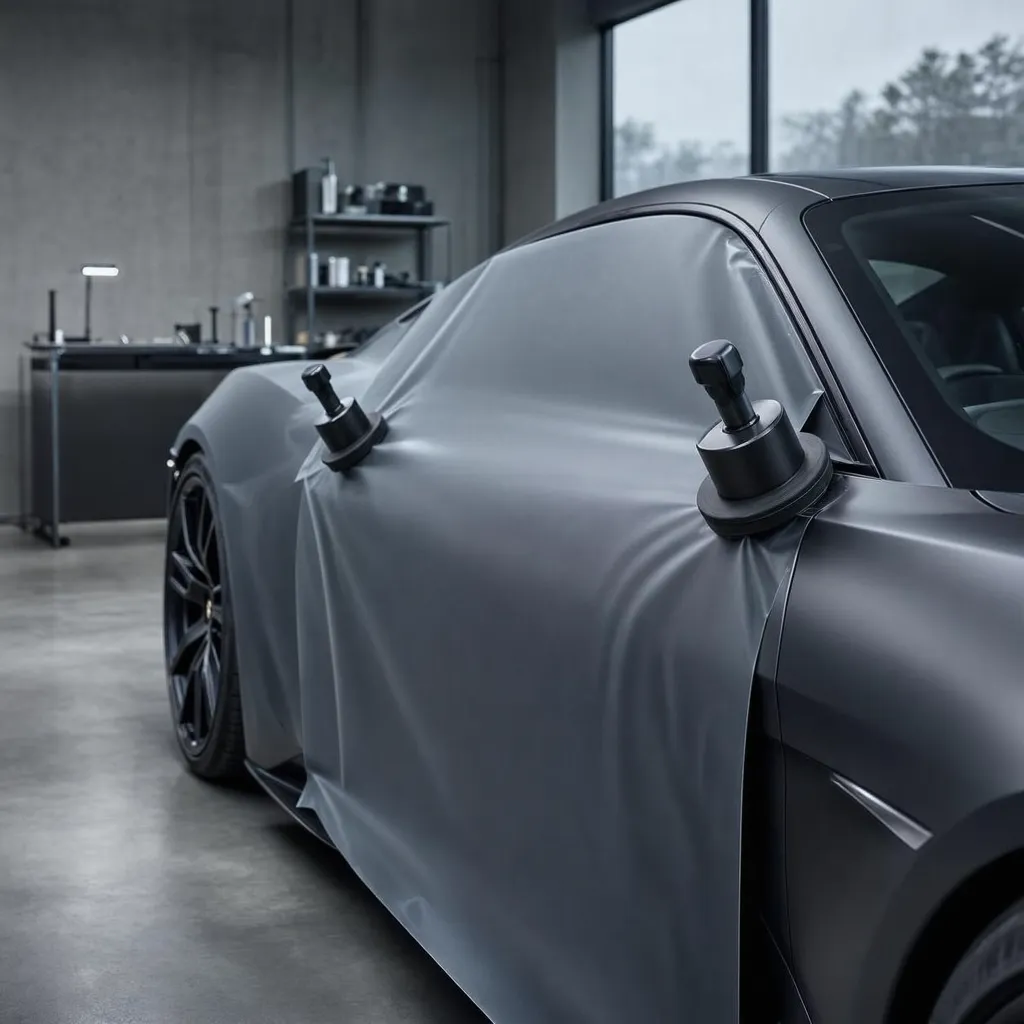

You stand next to your car, corner of the vinyl lifted between your thumb and index finger.
Then the anxiety hits.
What if I pull this back and the clear coat strips right off with it? What if my factory paint is completely ruined underneath?
Here is the straight answer: Removing a car wrap does not damage healthy, factory-baked OEM paint when done correctly.
In fact, high-quality vinyl acts like a sacrificial armor, preserving your original finish beneath it. But—and this is a massive but—if your wrap is years past its lifespan, or if it was applied over cheap aftermarket repaints, taking that film off without the right technique can pull clear coat, leave rock-hard adhesive behind, or strip paint down to the primer.

1. Does Removing a Car Wrap Damage Paint?
The physical bond between quality vinyl adhesive and factory paint is designed to be temporary.
Factory paint goes through high-heat bake ovens at the assembly plant, creating a cross-linked chemical bond that is incredibly tough. When you apply steady heat and pull vinyl at a low angle, the pressure-sensitive adhesive releases its grip on the clear coat clean and easy.
+------------------------------------------------------------------------+ | THE PAINT REMOVAL SAFETY SCALE | | | | [ OEM Factory Paint ] --> Hard cross-linked clear coat; low risk | | [ Cured Quality Repaint]--> Properly prepped panels; moderate risk | | [ Cheap / Fresh Repaint]--> Soft bond to primer; HIGH RISK of peeling | +------------------------------------------------------------------------+
Where do people run into real trouble?
Cheap maaco-style repaints: If a body shop sprayed clear coat without scuffing the primer underneath, the vinyl adhesive can easily pull that loose paint layer right off the panel.
Rusted or chipped panels: If road debris cracked your paint before the wrap went on, peeling the film will pull the loose edges of that paint crack straight up.
2. When Should Car Wrap Removal Be Safe for the Paint?
You can expect a smooth, damage-free peeling process if your vehicle meets three core conditions:
The underlying finish is original OEM factory paint: Factory clear coats have the structural strength to handle adhesive tension without lifting.
The wrap is within its lifespan: Premium cast vinyl is rated for 3 to 5 years. Removing it within this window means the film peels away in large, clean sheets.
The surface was cleaned thoroughly before installation: Proper surface prep prevents contaminants from bonding permanently with the glue layer over time.
If your vehicle was prepped correctly from day one, peeling the film is straightforward. You can review how proper setup protects your finish in our guide on how to prepare a car for a wrap.

3. Can a Car Wrap Actually Protect the Paint Underneath?
Yes—and the visual difference when you peel it off can be stunning.
While the exposed paint on your car’s un-wrapped roof or mirrors suffers from daily sun fade, acid rain, and bird droppings, the sheet metal wrapped in vinyl stays preserved in a dark, sealed environment.
EXPOSED PAINT vs. WRAP-PROTECTED PAINT [ Exposed Clear Coat ] [ Vinyl-Wrapped Paint ] || || * UV oxidation rays * Zero direct UV contact * Acid rain mineral etching * Sealed against rain etching * Swirl marks from car washes * Factory gloss preserved
When you peel off a 3-year-old wrap, you often find paint that looks as fresh, deep, and glossy as the day it rolled off the assembly line.
To keep your exposed or wrapped panels safe from atmospheric degradation down the road, read through our walkthrough on protecting car wraps from rain and water spots.

4. What Can Cause Paint Damage During Car Wrap Removal?
When paint damage actually happens during stripping, it usually boils down to three avoidable mistakes:
Ripping the film cold: Trying to peel vinyl at room temperature (or worse, in a cold garage) forces the adhesive to pull aggressively on the clear coat instead of softening.
Pulling the film straight up at a 90-degree angle: Yaking the vinyl upward away from the panel creates extreme leverage that can lift weak clear coat layers.
Using metal razor blades: Scraping stubborn vinyl off body panels with metal blades or screwdrivers will gouge right through clear coat and primer down to raw metal.
5. Does Old or Brittle Vinyl Increase the Risk of Paint Damage?
This is where vinyl wrap removal turns from a quick afternoon job into an absolute nightmare.
THE VINYL DEGRADATION TIMELINE [ Year 1 - 4 ] --> Soft, elastic PVC; peels cleanly in full sheets [ Year 5 - 6 ] --> Hardened topcoat; tears into small 2-inch strips [ Year 7+ ] --> Baked, brittle film; flakes off like baked eggshells
When vinyl is left out under baking sunlight past its intended lifecycle, the UV rays destroy the plasticizers that keep the PVC film soft. The film turns rock-hard, cracks into millions of tiny pieces, and bakes the glue directly into your clear coat pores.
If you are fighting sun-baked, cracked material, expect to spend significant time applying steam and specialized adhesive dissolvers. Learn how solar radiation breaks down vinyl over time in our guide on preventing sun damage on vehicle wraps.

6. Can Car Wrap Adhesive Damage Paint?
Adhesive residue looks terrifying. When you peel back a sheet and find a thick, sticky, cloudy layer of yellow glue stuck to your door panel, it is easy to assume your clear coat is ruined.
STUBBORN RESIDUE ACTUAL PAINT DAMAGE [ Sticky Glue Layer ] [ Clear Coat Peeling ] || || * Raised, gummy texture * Flaking, uneven edges * Dissolves with citrus cleaner * Exposes dull bare metal/primer * Surface remains fully intact * Requires panel repainting
Adhesive residue is not paint damage. It is simply the glue layer separating from the PVC backing. While it takes time and citrus-based adhesive removers to dissolve, the factory clear coat underneath remains completely unhurt.
7. Can Removing a Car Wrap Pull Off Clear Coat or Paint?
Yes, under two specific high-risk scenarios:
Scenario A: Bodywork with Poor Primer Adhesion
If a fender was repaired after an accident and the body shop applied filler or topcoat without scuffing the primer base properly, the bond between the paint layers is extremely weak. The vinyl glue can easily be stronger than the paint bond underneath.
Scenario B: Deep Pre-Existing Paint Chips
If road debris chipped your paint down to raw metal before the wrap went on, water and air got underneath the clear coat edges. When you pull the wrap off that area, the loose paint around the chip will flake right up with the film.
8. Does Heat Make Car Wrap Removal Safer or More Dangerous?
Heat is your single best friend during removal—provided you use it with control.
HOW HEAT FREES VINYL ADHESIVE [ Cold Peel ] --> Hard glue grips clear coat --> High tension on paint [ Warm Peel ] --> Soft glue turns gummy --> Low tension; smooth release [ Overheated ] --> Vinyl melts & rips --> Messy glue left on metal
Applying moderate heat with a heat gun or steamer warms the glue layer to roughly 120°F–140°F (50°C–60°C). This softens the adhesive bond, allowing the film to glide off the paint with minimal effort.
However, holding a heat gun on a single spot for too long can burn the vinyl topcoat or soften fresh clear coat on aftermarket bodywork. If you want to master proper heat control, read our guide on how to use a heat gun on car wraps.
9. How to Remove a Car Wrap Without Damaging the Paint
If you are taking on a DIY removal, follow this paint-safe 4-step execution method:
[ Step 1: WARM ] --> Heat panel to 120°F with heat gun or steamer | [ Step 2: LIFT ] --> Use a plastic razor blade to lift an outer corner | [ Step 3: PULL ] --> Pull film BACK flat against itself at a 45° angle | [ Step 4: CLEAN ] --> Dissolve leftover glue with a safe citrus spray
Heat the panel uniformly: Warm a 2-foot working section with broad sweeping motions.
Lift an edge safely: Never use metal scrapers. Use your fingernail or a plastic razor blade to lift a corner along a panel seam.
Pull flat, never out: Pull the vinyl back flat against itself at a sharp 45-degree angle. This shearing motion breaks the adhesive bond cleanly without pulling upward on the clear coat.
Dissolve remaining glue: Spray a dedicated automotive citrus adhesive remover over residual glue, let it sit for 60 seconds, and wipe it away with a clean microfiber towel.

10. How to Tell If Paint Damage Happened During Wrap Removal
Once the film is stripped and the panel is wiped clean, inspect your finish under direct sunlight.
Here is how to identify what you are looking at:
Clear Coat Lifting: Look for jagged, raised edges where the glossy top layer has flaked off, exposing a flat, dull base coat underneath.
Gosting / Shadowing: You see a faint outline of your old wrap design or color contrast. This is not paint damage—it happens because the wrapped paint was shielded from UV fading while unwrapped areas aged naturally.
Adhesive Haze: A cloudy, sticky film that catches dust. This simply requires a second pass with a citrus solvent and a isopropyl alcohol wipe down.

11. What Should You Do If the Paint Looks Different After Removing a Wrap?
If you peel back a 4-year-old wrap and the paint looks slightly darker or richer than un-wrapped accent panels, don't panic.
+------------------------------------------------------------------------+ | WHY PAINT LOOKS DIFFERENT | | | | [ Wrapped Section ] --> Zero UV exposure; 100% factory color depth | | [ Exposed Trim ] --> Years of sun glare; mild UV oxidation fade | | [ The Solution ] --> Machine polish whole car to balance gloss | +------------------------------------------------------------------------+
Your paint isn't ruined—it is just unevenly aged. The covered panels were preserved in a time capsule, while exposed trim took years of sun glare.
To restore a uniform, seamless look across the entire car, hit the whole vehicle with a gentle dual-action machine polish and a fresh coat of wax to blend the clear coat depth together.
12. When Should You Have a Professional Remove the Wrap?
While removing fresh vinyl from a factory-painted hood is an easy weekend DIY project, certain situations carry too much financial risk to tackle in your driveway.
You should hire a professional car wrap removal service or search for expert car wrap removal near me if:
The wrap is baked and cracking: If the film breaks into tiny 1-inch squares when you pull, professional steam extraction saves you 30+ hours of painstaking scraping.
The car has custom bodywork or cheap repaints: Professional installers know how to use chemical steam systems to strip film without lifting delicate clear coats.
The wrap has been on for 6+ years: Long-overdue film requires industrial solvent baths to break down hardened adhesive without etching the underlying finish.
Paying a professional car wrap removal cost upfront is significantly cheaper than taking your vehicle to a body shop to repaint a stripped door panel.
. Preview Your Next Wrap Look Before Your First Install
Whether you are stripping an old wrap to return your car to factory finish or getting ready for a brand-new color change, verifying your look before spending money on material saves time and stress.
Testing colors and finishes digitally lets you preview exactly how a fresh satin, gloss, or metallic finish sits on your exact vehicle dimensions.
Use our interactive car wrap design visualizer to test new colors, compare finishes, and preview your next vehicle build before ordering your next roll of film.
Faq Does Removing a Car Wrap Damage Paint
1. Does removing a car wrap damage factory paint?
No, removing a car wrap does not damage healthy, factory-baked OEM paint when performed correctly using controlled heat and safe peeling angles. Original car paint undergoes high-temperature curing during manufacturing, creating a tough, cross-linked clear coat that easily withstands pressure-sensitive adhesive. In fact, quality vinyl acts as a protective shield against road debris, light scratches, and daily sun exposure while it remains installed.
2. Can peeling a vinyl wrap pull off my car's clear coat?
Vinyl wrap can pull off clear coat under two specific conditions: if the paint is an aftermarket, low-quality repaint with poor primer adhesion, or if the clear coat was already cracked and flaking before the film went on. On original factory paint, peeling vinyl at a low 45-degree angle with light heat will release the adhesive smoothly without lifting any paint layers.
3. What actually causes paint damage during vinyl wrap removal?
Paint damage during removal usually happens when installers rush the job or use improper tools. The three main culprits are:
Pulling cold film: Cold vinyl forces the glue to pull hard against the clear coat instead of releasing cleanly.
Pulling straight upward at 90 degrees: Yanking outward creates high leverage that can lift weak paint spots.
Using metal scrapers: Using razor blades or metal tools to scrape stubborn edges will gouge right through clear coat down to bare metal.
4. Does leaving a car wrap on too long increase the risk of paint damage?
Yes, severely. Leaving vinyl installed past its 3 to 5-year lifespan allows UV rays to break down the film's internal plasticizers. The PVC layer turns brittle, cracks into tiny pieces, and bakes the glue directly into the clear coat pores. Stripping aged, sun-baked film requires much more labor and heavy steam extraction to prevent clear coat stress. You can read more about how solar radiation degrades material in our guide on protecting vehicle wraps from intense sun heat.
5. Will car wrap adhesive ruin my paint if it stays stuck on the panel?
Sticky adhesive residue looks alarming, but it is not paint damage. It simply means the glue layer separated from the PVC backing during the peel. While leftover adhesive feels tacky and catches dust, it can be safely dissolved using d-limonene citrus solvents without scratching, dulling, or etching your factory clear coat. For step-by-step chemical cleanup instructions, review our guide on safely removing sticky wrap glue from car paint.
6. Does heat make wrap removal safer or more dangerous for car paint?
Controlled heat makes wrap removal significantly safer for your paint. Warming the surface to roughly 120°F–140°F (50°C–60°C) softens the acrylic glue, allowing the film to glide off with minimal friction force. However, holding a heat gun stationary on a single spot for too long can overheat fresh clear coat or scorch plastic trim. To master safe temperature limits, check out our walkthrough on using a heat gun on car wraps without damaging paint.
7. Why does my paint look a different color after removing the wrap?
If your wrapped paint looks deeper or slightly darker than un-wrapped panels, your paint isn't damaged—it was preserved. The vinyl acted as a time capsule, shielding that sheet metal from UV fading while exposed trim took years of sun glare. A quick pass with a dual-action polisher and finishing compound easily blends the clear coat depth across the entire vehicle.
8. How can I safely peel a car wrap at home without scratching the finish?
To ensure a paint-safe DIY removal:
Warm a 12-inch panel zone with a heat gun or steamer.
Lift an outer seam along a door or trunk gap using a plastic razor blade.
Grip the tab with both hands and pull flat backward against the panel at a 45-degree angle.
Move slowly and keep your hands close to the vehicle body.
If you want to review complete step-by-step execution methods, read our comprehensive breakdown on removing a vehicle wrap without risking paint damage.
9. Should I hire a professional to remove my wrap if I am worried about the paint?
If your current wrap is under four years old and applied over factory paint, peeling it yourself is straightforward. However, if the film is cracked, sun-baked, or installed over aftermarket bodywork, hiring a professional car wrap removal service or searching for expert car wrap removal near me is the safest choice. Paying a shop for commercial steam extraction is far cheaper than paying a body shop to repaint a stripped fender.
10. How do I protect my paint immediately after taking off a vinyl wrap?
Once every trace of adhesive is wiped away, your clear coat is completely bare, stripped of all protective waxes and sealants. Wipe the entire car down with a 70% Isopropyl Alcohol (IPA) solution to strip solvent oils, wash the vehicle thoroughly with a wax-free auto shampoo, and apply a durable ceramic coating or paste wax. If you are prepping your surface to lay down a new color-change film right away, follow our complete guide on getting vehicle paint ready for a new wrap.