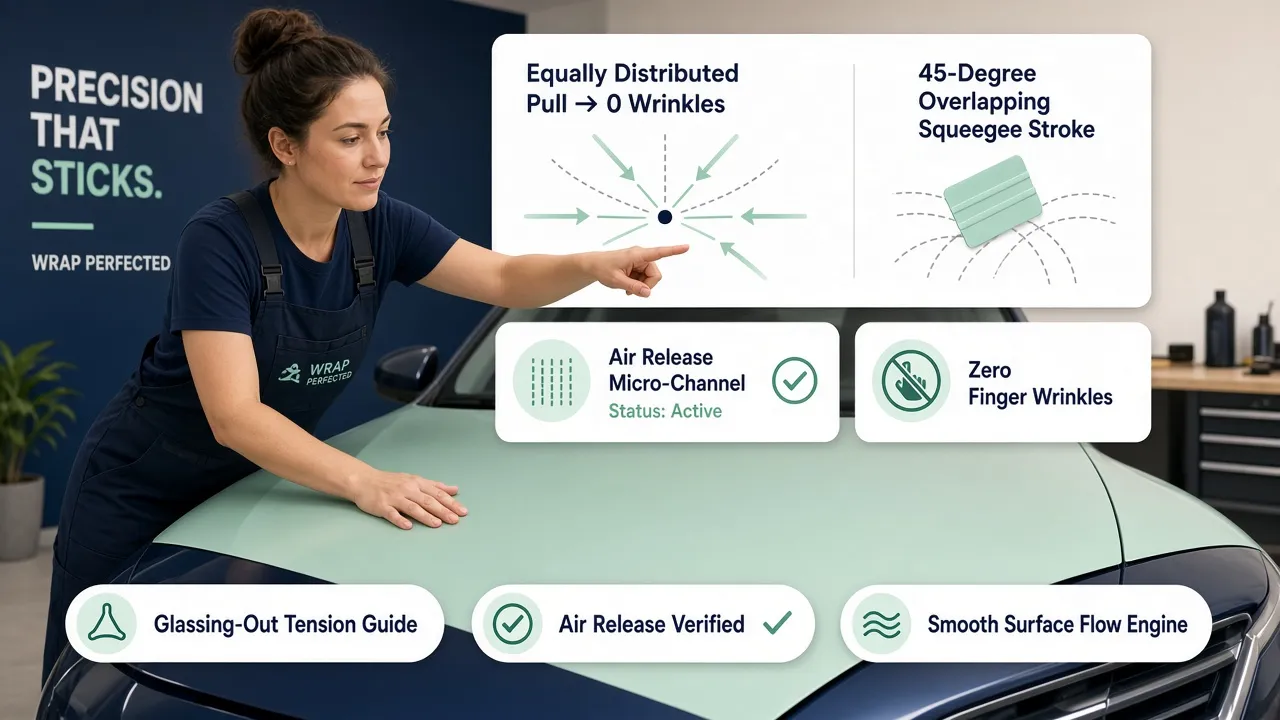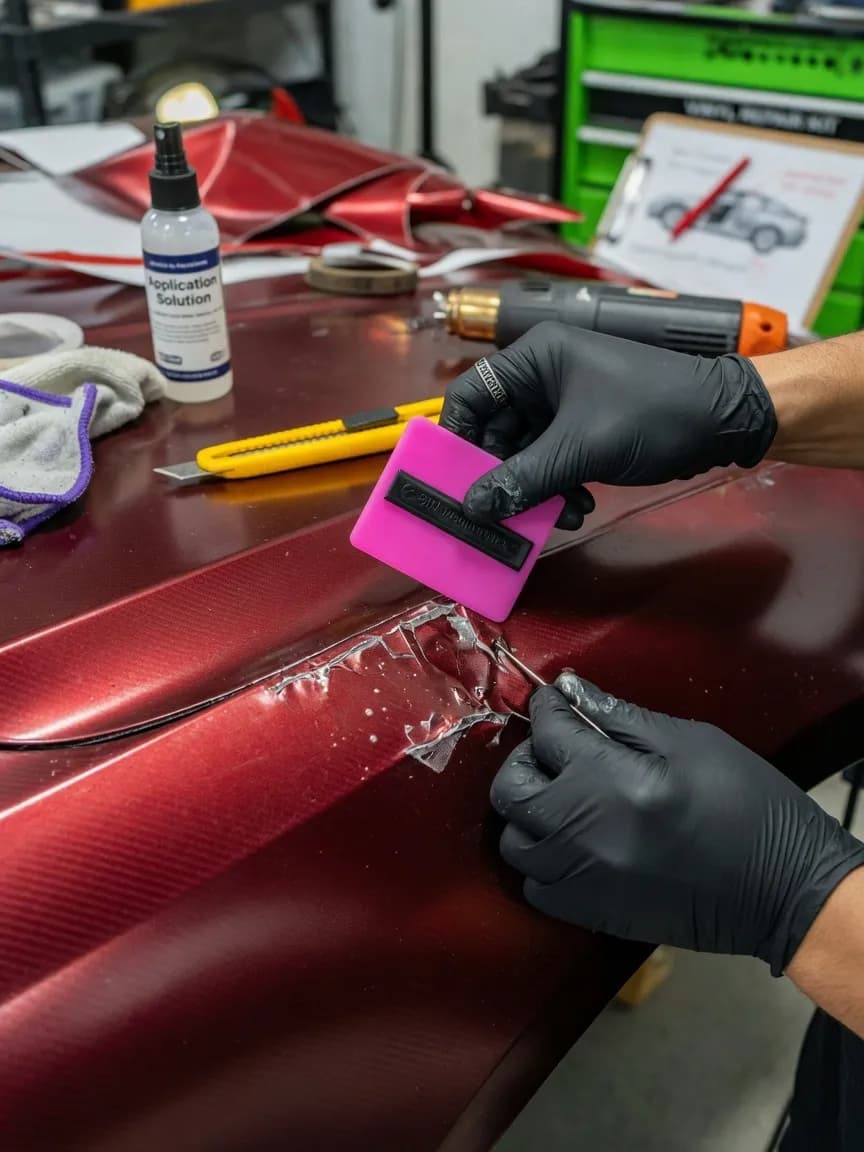


You've spent hundreds on premium cast vinyl, meticulously decontaminated your bodywork, and laid down a fresh sheet over the hood.
Then comes the moment of truth: you glide your application tool across the panel, lift the edge to inspect your work, and feel your heart drop.
Deep, micro-scratches line the pristine high-gloss finish, while stubborn air bubbles remain trapped beneath the adhesive layer.
It’s an agonizing realization that every installer faces at some point.
The culprit isn't the film, and it isn't your patience—it's using the wrong application tool.
The short answer? The best squeegee for vinyl car wraps is a 4-inch, medium-flex squeegee equipped with a premium micro-fiber felt buffer edge.
Here is your complete guide to selecting the right squeegee firmness, matching buffer edges to sensitive film finishes, mastering detail tools for tight recesses, and preventing costly installation scratches.
1. Felt Edge or Bare Plastic: Which One Is Safer for Your Vinyl?
Choosing between a bare plastic edge and a buffered felt edge isn't a matter of personal preference—it's the line between a flawless finish and ruined material.
┌────────────────────────────────────────────────────────────────────────┐ │ TOOL EDGE COMPARISON MATRIX │ ├────────────────────────────────────────────────────────────────────────┐ │ [ Bare Plastic Edge ] --> USE ONLY FOR: Tucking film deep inside gaps │ │ [ Felt Edge Buffer ] --> USE FOR: 100% of exposed surface smoothing │ └────────────────────────────────────────────────────────────────────────┘
A felt edge squeegee creates a soft, cushioned barrier between the hard plastic tool body and the delicate PVC topcoat.
Gliding a bare plastic edge directly across exposed vinyl generates severe friction heat, leaving permanent drag marks and fine scratches across gloss and satin films.
Reserving bare plastic strictly for pushing film behind rubber window seals keeps your main body panels completely scratch-free.
2. Why a Squeegee That Works on a Hood May Struggle on a Mirror
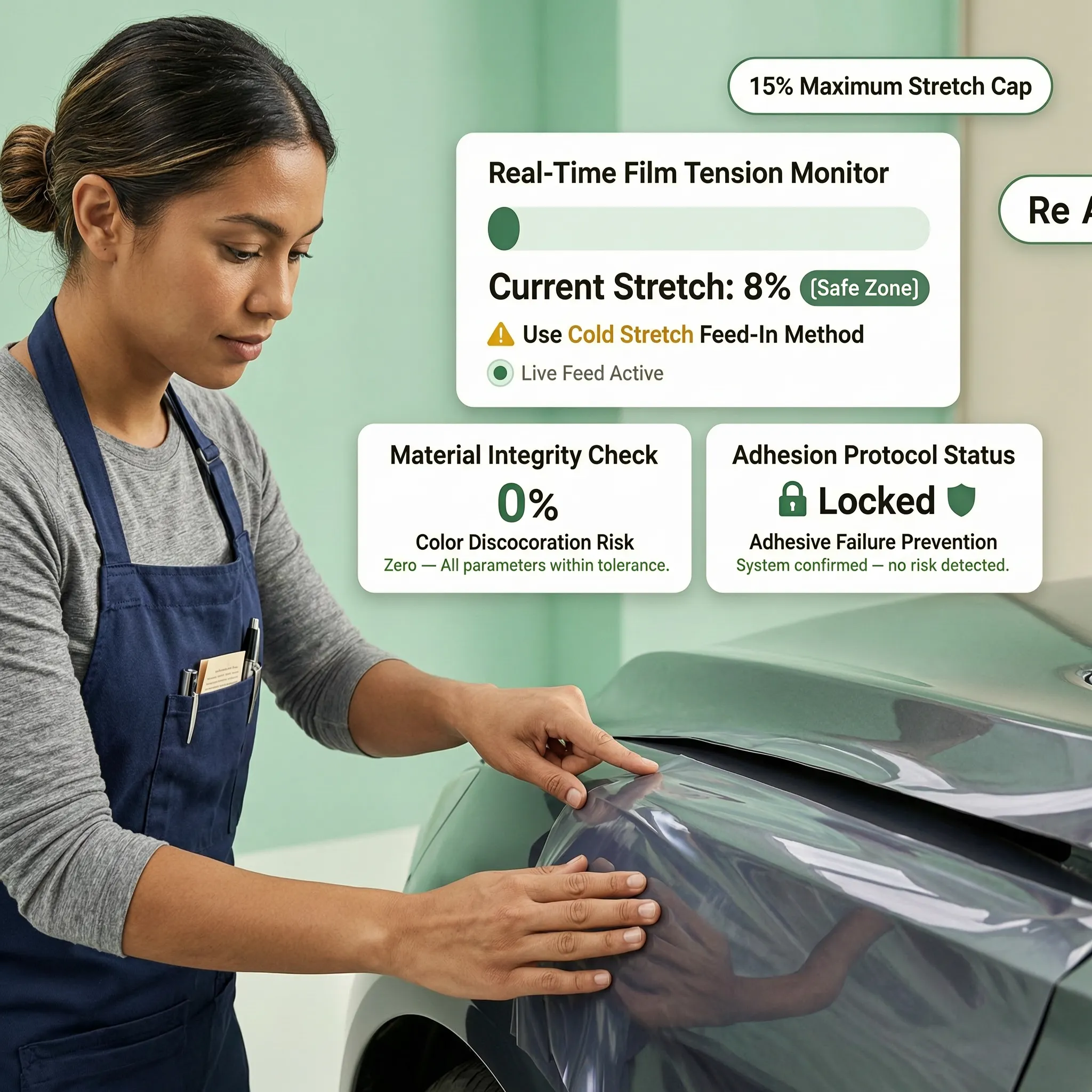
A rigid tool that easily pushes air out from a flat hood will quickly fail when forced over a rounded side mirror cap.
GEOMETRY & TOOL FLEXIBILITY [ Flat Panel (Hood/Roof) ] ---> Rigid Medium/Hard Squeegee (Maximum air expulsion) [ Compound Curve (Mirrors) ] -> Soft, High-Flex Squeegee (Conforms to 3D domes)
Flat body panels demand a firm tool that maintains consistent downward pressure across a wide path, forcing air bubbles out cleanly toward the edges.
Conversely, wrapping compound curves requires a flexible vinyl wrap squeegee.
A soft, flexible tool bends along the rounded dome of a mirror cap or bumper intake, distributing pressure evenly around curves without creasing the vinyl or tearing the film.
3. Soft, Medium, or Hard: How Much Flex Should a Wrap Squeegee Have?
Application squeegees are color-coded by manufacturers (such as 3M, Avery, and YelloTools) based on their flex rating.
┌────────────────────────────────────────────────────────────────────────┐ │ SQUEEGEE FLEXIBILITY RATINGS │ ├────────────────────────────────────────────────────────────────────────�│ │ [ Blue / Soft ] --> Maximum flex; ideal for mirrors, handles & curves│ │ [ Gold / Medium ] --> The All-Rounder; perfect balance for all panels │ │ [ White / Hard ] --> Zero flex; maximum pressure for flat commercial glass│ └────────────────────────────────────────────────────────────────────────┘
If you are building your kit, a medium-flex squeegee (typically gold or orange) is the ultimate workhorse.
It provides enough rigidity to drive out trapped air beneath long door sweeps while maintaining just enough give to roll over subtle body character lines without slipping.

4. Which Squeegee Is Best for Gloss, Matte, Satin, and Chrome Wraps?
Matching your tool's buffer edge to your specific vinyl finish is essential for preserving the film's factory texture.
FINISH-SPECIFIC BUFFER SELECTION [ High-Gloss Film ] --> Requires wet microfiber felt (Prevents micro-marring) [ Matte & Satin ] --> Requires dry alcantara / suede felt (Prevents glossing) [ Mirror Chrome ] --> Requires wet Teflon or ultra-plush suede buffers
Gloss Vinyl Wraps: Gloss topcoats mar easily. Spraying a light mist of soapy water or quick detailer directly onto a wet microfiber felt buffer allows the squeegee to glide across the film with zero friction resistance.
Matte & Satin Wraps: Never use wet buffers on matte films. Rubbing a wet buffer over matte vinyl can leave shiny, burnished streak lines. Stick strictly to dry alcantara or suede buffer pads.
To learn how master installers inspect sensitive finishes after wrapping, read our guide on inspecting car wrap quality and installation standards.
5. Can the Wrong Squeegee Cause Bubbles, Lines, or Scratches?
Unexpected surface flaws are almost always caused by improper tool angle or a damaged squeegee edge.
┌────────────────────────────────────────────────────────────────────────┐ │ COMMON APPLICATION DEFECTS │ ├────────────────────────────────────────────────────────────────────────�│ │ • Micro-Scratches: Caused by grit embedded in a dry, worn felt pad │ │ • Air Bubble Pockets: Caused by holding the squeegee too flat (under 45°)│ │ • Glue Drag Lines: Caused by pushing too hard with an overly rigid tool │ └────────────────────────────────────────────────────────────────────────┘
Holding your squeegee at a shallow angle flattens the working edge, trapping air pockets beneath the film instead of pushing them out through the air-release channels.
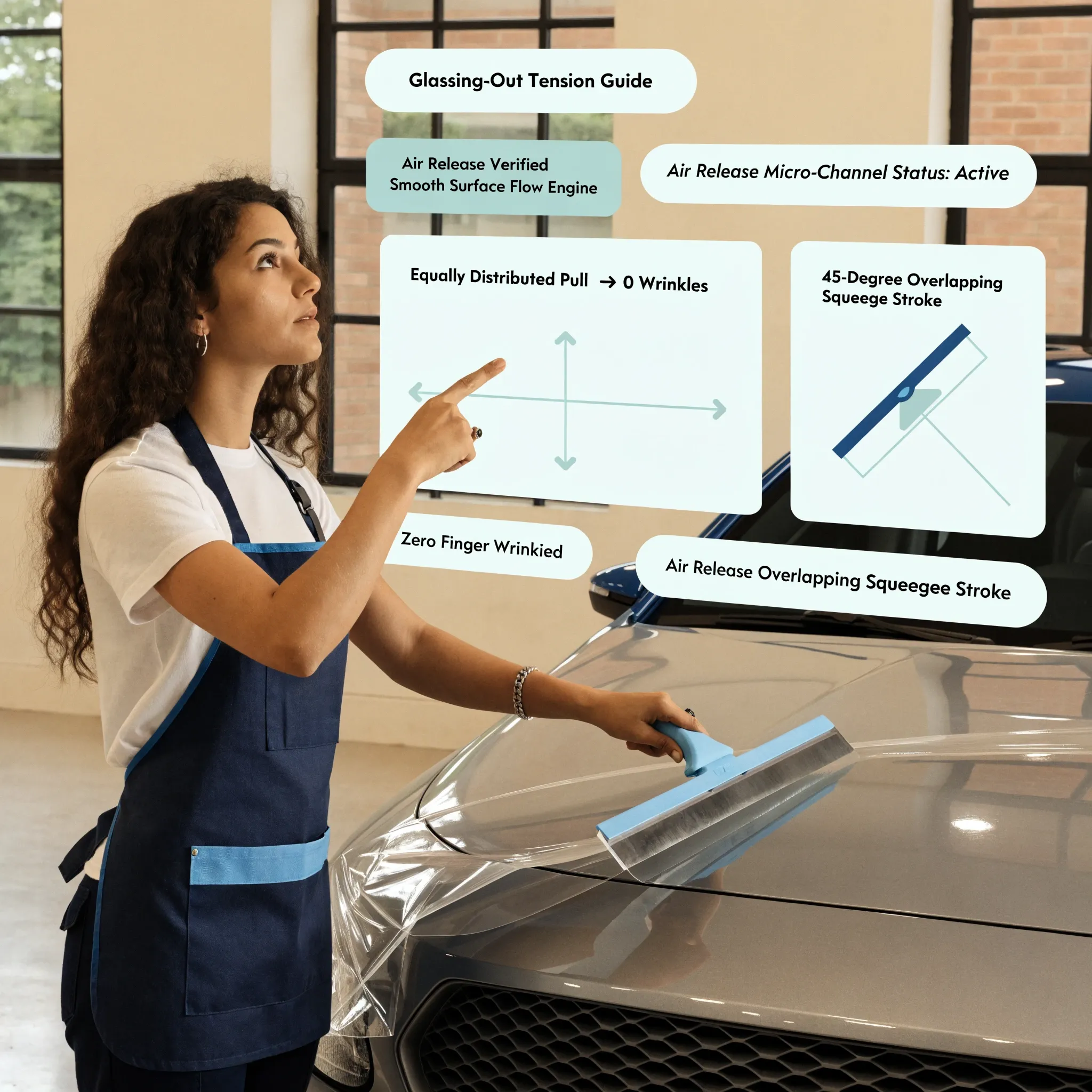
Always maintain a strict 45-degree stroke angle relative to the vehicle panel, overlapping each stroke by 50% to ensure continuous air expulsion.
6. What Squeegee Size Works Best for Doors, Hoods, and Roofs?
While larger 6-inch tools cover more surface area, they aren't always the fastest option for full vehicle builds.
SQUEEGEE SIZE UTILITY [ Standard 4-Inch Squeegee ] ---> Ideal control; fits 90% of vehicle panels [ Large 6-Inch Squeegee ] ---> Rapid air expulsion on massive roofs & hoods
A standard 4-inch vinyl wrap squeegee provides the ideal balance of ergonomic hand leverage and precise directional control.
While a 6-inch squeegee speeds up work on expansive commercial van panels, its wider footprint makes it harder to maintain uniform downward pressure along slightly curved door hips.
7. Do You Need a Separate Squeegee for Edges, Seams, and Tight Recesses?
Standard 4-inch rectangular squeegees are simply too wide to work inside tight headlight channels, door handle cups, and grille surrounds.
┌────────────────────────────────────────────────────────────────────────┐ │ SPECIALIZED DETAIL TOOLS │ ├────────────────────────────────────────────────────────────────────────�│ │ [ Micro-Squeegee Sticks ] --> Tucks film into 1/16" door jamb gaps │ │ [ Contour Pen / Triangle ] --> Conforms inside deep lug nut & finger cups│ └────────────────────────────────────────────────────────────────────────┘
Adding a set of mini detail squeegees (often called micro-sticks) to your toolkit solves these tight-space challenges.
These hard-plastic, spade-tipped mini tools allow you to press vinyl deep into narrow weather-strip channels and trim margins where a standard squeegee cannot reach.

8. How to Tell When a Squeegee Edge Is Too Worn to Use?
Felt buffers don't last forever. Continuing to work with a dirty or frayed buffer will quickly ruin fresh vinyl.
BUFFER WEAR INDICATOR CHECKLIST [ Check 1: Edge Fraying ] -> Replace: Loose threads catch and drag on film [ Check 2: Embedded Grit] -> Replace: Microscopic sand grains act like sandpaper [ Check 3: Adhesive Seep] -> Replace: Hardened glue seeps through worn fabric
Inspect your felt buffer before starting every new panel.
If you notice embedded dust particles or frayed edges, peel off the old strip, clean the plastic squeegee body with isopropyl alcohol, and apply a fresh replacement felt pad.
9. Are Premium Wrap Squeegees Worth the Extra Cost?
Weighing a $3 hardware store squeegee against a $15 professional vinyl wrap squeegee comes down to material safety and ergonomic comfort.
┌────────────────────────────────────────────────────────────────────────┐ │ PREMIUM vs. BUDGET TOOL COMPARISON │ ├────────────────────────────────────────────────────────────────────────�│ │ [ $3 Hardware Squeegee ] --> Rough plastic burrs; low-grade felt; scratches│ │ [ $15 Pro Wrap Squeegee ] --> Laser-smooth edges; high-density felt; durable│ └────────────────────────────────────────────────────────────────────────┘
Budget squeegees often feature sharp plastic molding burrs along their edges that cut straight through cheap felt pads, gouging your wrap.
Investing in a high-density, professional-grade squeegee ensures smooth, uniform pressure distribution while preventing costly material re-orders.
To evaluate total tool setup costs against professional shop quotes, check out our guide on evaluating professional car wrap installation quotes.
10. What Should a Beginner Buy Instead of a Whole Squeegee Kit?
If you're tackling your first installation and want to avoid buying unnecessary tools, stick to a streamlined starter kit:
ESSENTIAL BEGINNER TOOLKIT [ 1x Gold Medium 4" Squeegee ] + [ 5x Microfiber Felt Strips ] + [ 1x Micro-Stick ]
This simple setup covers 95% of all wrapping scenarios, allowing you to handle expansive hoods, curved door hips, and tight door seams without over-complicating your workflow.
11. Run Through This 3-Step Squeegee Check Before Starting
Complete these three essential tool checks before laying your squeegee down on fresh vinyl:
┌────────────────────────────────────────────────────────────────────────┐ │ PRE-APPLICATION TOOL CHECKLIST │ ├────────────────────────────────────────────────────────────────────────�│ │ [ Check 1: Cleanliness ] -> Run a lint roller over felt to lift grit │ │ [ Check 2: Lubrication ] -> Mist buffer with soapy water (for gloss) │ │ [ Check 3: Angle ] -> Lock in your 45-degree wrist stroke position│ └────────────────────────────────────────────────────────────────────────┘
Following these three steps guarantees clean air expulsion without marking, scuffing, or damaging your custom wrap.
12. Skip the Guesswork: Preview Your Full Wrap Design Live First
Unsure how your vehicle's body lines will look once wrapped in high-gloss, satin, or specialty carbon fiber before buying materials or tools?
Previewing your full build online before buying film or application tools eliminates all guesswork and saves you time and money.
By using our interactive AI car wrap visualizer tool, you can test custom colors, experiment with contrasting roof and mirror accents on your exact vehicle model, calculate visual themes, and preview your complete design live before spending a single dollar on materials or shop labor.

FAQs About the Best Squeegee for Vinyl Car Wraps
1. What is the best squeegee for vinyl car wraps if you want a clean finish without bubbles or scratches?
The best squeegee for vinyl car wraps is a 4-inch, medium-flex squeegee equipped with a premium microfiber felt buffer strip. This core setup balances firm pressure for air-release channels with surface protection, preventing micro-marring while laying film flat across hoods, doors, and flat panels.
2. Should you use a felt edge squeegee or a bare plastic squeegee for vinyl wraps?
You should always use a felt edge squeegee for smoothing exposed vinyl surfaces. A plush microfiber or alcantara buffer cushion protects delicate PVC topcoats from friction scratches and drag marks. Bare plastic squeegee edges should be reserved strictly for tucking film deep into rubber window channels, door jamb gaps, and panel seams where the tool doesn't touch the main face of the vinyl.
3. Why does a squeegee that works well on a hood struggle on side mirrors and bumpers?
Flat panels like hoods and roofs require a rigid or medium-hard squeegee to drive air out over long, flat distances. However, complex 3D compound curves—like mirror caps and bumper intakes—demand a flexible vinyl wrap squeegee. A soft, high-flex tool conforms around curved domes, distributing pressure evenly around tight contours without creasing the vinyl or tearing the film.
4. Soft, medium, or hard: how do you choose the right squeegee flex rating?
A medium-flex squeegee (typically gold or orange) is the ideal all-around workhorse for full-vehicle builds. It provides enough rigidity to drive out trapped air beneath large door panels while maintaining just enough flexibility to roll over subtle body character lines without slipping or lifting the film.
5. Which squeegee buffer is best for gloss, matte, satin, and chrome vinyl wraps?
Matching your buffer to the film finish is essential:Gloss Vinyl Wraps: Use a wet microfiber felt buffer misted with soapy water to glide across gloss topcoats without micro-marring.Matte & Satin Wraps: Use a dry suede or alcantara buffer pad to prevent creating shiny, burnished streak lines on textured matte finishes.Chrome Wraps: Use plush, wet Teflon or suede buffers to protect sensitive mirror-chrome layers.
6. Can using the wrong squeegee cause air bubbles, glue lines, or surface scratches?
Yes. Holding a squeegee at a shallow angle (under 45 degrees) flattens the tool, trapping air pockets beneath the film instead of pushing them out through the air-release channels. Additionally, using a dry, worn, or unbuffered plastic edge creates severe friction heat, leaving permanent squeegee marks on vinyl and dragging the pressure-sensitive adhesive into visible glue lines.
7. What squeegee size works best for doors, hoods, and vehicle roofs?
A standard 4-inch vinyl wrap squeegee offers the best balance of leverage, hand comfort, and directional control across 90% of vehicle panels. While larger 6-inch squeegees can speed up work on expansive, flat commercial van roofs, their wide footprint makes maintaining uniform downward pressure along slightly curved door hips more difficult.
8. Do you need a separate mini squeegee for edges, seams, and tight recesses?
Yes. Standard 4-inch rectangular squeegees are too wide to reach inside tight headlight channels, door handle cups, and grille surrounds. Adding spade-tipped mini squeegee detail tools (micro-sticks) lets you feed and press vinyl deep into narrow weather-strip channels and $90^\circ$ panel gaps where a standard squeegee cannot fit.
9. How can you tell when a squeegee felt buffer is too worn to use?
Inspect your felt buffer before starting every new panel. You should replace the buffer immediately if you notice:Loose threads or frayed fabric edges that catch and drag on the film.Embedded dirt, dust, or sand particles that scratch the vinyl surface like sandpaper.Hardened adhesive seeping through from the buffer's back tape layer.
10. Are premium wrap squeegees worth the extra cost over cheap hardware tools?
Yes. Cheap $2 hardware store squeegees often feature sharp plastic molding burrs along their edges that cut straight through felt pads, gouging your wrap. Investing in a high-density professional vinyl wrap squeegee ensures smooth, uniform pressure distribution and clean air expulsion while protecting your multi-thousand-dollar vinyl material.
11. What should a beginner buy instead of an entire professional squeegee kit?
If you're tackling your first installation and want to avoid buying unnecessary tools, stick to a streamlined starter setup: one 4-inch gold medium-flex squeegee, a 5-pack of replacement microfiber felt strips, and a single spade-tipped micro-stick detail tool. This simple combination handles 95% of all panel wrapping scenarios efficiently.
12. How can you test custom wrap colors and finishes on your car before buying tools?
Before purchasing film, squeegees, and application tools, you can eliminate design uncertainty by testing your build virtually. Using an online AI car wrap visualizer tool allows you to upload a photo of your vehicle, test gloss, satin, matte, and carbon fiber finishes in real time, compare contrasting roof accents, and finalize your design before spending a single dollar on tools or materials.