
You step back, run your hand along your car's fender, and admire the custom color that served you well for years.
Then the itch for a new look hits—maybe a shift from satin slate to high-gloss obsidian, or a fresh accent theme. But as you think about the tedious, hours-long process of peeling off the old vinyl, a tempting shortcut crosses your mind: Can I save time and money by simply installing a new layer of vinyl straight over my existing car wrap?
It's a question every vehicle owner asks when contemplating a second restyling project.
The short answer? Technically, vinyl will adhere to vinyl—but professional installers almost universally advise against it.
While laying fresh film over an existing wrap seems like a convenient shortcut, doing so risks severe adhesion failures, telegraphed surface scratches, trapped solar heat, and permanent damage to your underlying factory paint.
Here is your complete guide to evaluating surface stability, understanding the risks of double-layer wraps, avoiding visible seam lines, and deciding whether to layer or peel.
1. The Condition of Your Current Wrap Matters More Than Its Age
If you are considering laying new film over your current wrap, the physical stability of the original layer is the single factor that determines whether the job will fail.
┌────────────────────────────────────────────────────────────────────────┐ │ UNDERLYING WRAP STABILITY MATRIX │ ├────────────────────────────────────────────────────────────────────────┐ │ [ Mint / Factory Smooth ] -> SLIGHT RISK: Adheres initially; double heat trap│ │ [ Minor Surface Scratches]--> HIGH RISK: Flaws map through new top layer │ │ [ Peeling / Edge Lift ] --> CERTAIN FAILURE: Top layer pulls off underneath│ └────────────────────────────────────────────────────────────────────────┘
Vinyl wrap is only as strong as the surface directly beneath it.
If your current wrap is 100% smooth, fully bonded to the factory clear coat, and free of edge lifting, a second layer might take hold initially.
However, if the underlying film has begun to lose its adhesive grip along panel margins, laying a new heavy layer of cast vinyl over top will accelerate the failure, causing both layers to pull off the car together.
2. What Happens If the Old Vinyl Is Peeling, Cracked, or Shrinking?
Attempting a wrap over peeling vinyl to hide existing damage is a guaranteed recipe for a ruined installation.
DOUBLE-LAYER FAILURE MECHANISM [ Shrinking Bottom Layer ] + [ Fresh Top Vinyl ] = Extreme Shear Tension Result: Massive edge curling, severe air pockets, and clear-coat stress
When old vinyl reaches the end of its 3- to 5-year service life, UV exposure causes the PVC matrix to shrink, crack, and pull away from panel recesses.
If you apply fresh film over shrinking vinyl, the tension from the top sheet will pull the failing bottom sheet straight off the car body.
Within weeks, you will see massive edge lifting, trapped air pockets, and unsightly surface bubbles forming across your doors and hood.
3. Can You Apply New Vinyl Over a Faded or Scratched Wrap?
A common misconception is that opaque cast vinyl acts like a thick coat of paint, hiding whatever sits underneath.
SURFACE TELEGRAPHING REALITY [ Light Color Fading ] -> HIDDEN: Opaque vinyl blocks underlying shade shifts [ Deep Rock Chips/Scuffs]-> VISIBLE: Flaws telegraph directly to the top surface [ Raised Seams/Decals ] -> VISIBLE: Edges form raised, permanent outlines
Automotive cast vinyl is remarkably thin—typically just 3.5 to 4 mils thick.
Because of its extreme thinness, vinyl acts like a flexible magnifying glass over surface textures.
While a wrap over faded car wrap will successfully cover visual sun discoloration, every single scratch, rock chip, swirl mark, or gouge on the old film will telegraph straight through the new layer, ruining your smooth finish.
4. Will the Old Wrap's Seams and Edges Show Through the New Layer?
If your existing wrap features multi-panel overlaps, door jamb tucks, or custom cutouts, stacking a second layer creates obvious visual lines.
┌────────────────────────────────────────────────────────────────────────┐ │ DOUBLE-LAYER SEAM TELEGRAPHING │ ├────────────────────────────────────────────────────────────────────────┤ │ • Panel Overlaps: The 1/8" seam of the bottom wrap creates a raised ridge│ │ • Edge Tucks: Thickened double-wrapped margins catch wind and lift │ │ • Recessed Inlays: Double film thickness refuses to bridge deep curves │ └────────────────────────────────────────────────────────────────────────┘
Creating a double-layer car wrap doubles the thickness of the film along every panel edge.
When you wrap over existing seams, the raised ridge of the bottom layer creates a permanent, visible line straight down the middle of your new panel.
Furthermore, trying to tuck two stacked layers of vinyl behind narrow door jambs and rubber window weather-stripping creates excessive bulk, causing edges to catch wind shear on the highway and peel open.
5. Does Wrapping Over Vinyl Affect Adhesion or Durability?
Pressure-sensitive automotive wrap adhesives are engineered to form a cross-linking bond with factory clear coats—not aged PVC vinyl.
ADHESION BOND COMPARISON [ Clear Coat + Acrylic Glue ] --> Optimal 100% cross-linking adhesion [ PVC Vinyl + Acrylic Glue ] --> Weakened 50% surface bond; prone to heat lift
When you apply new wrap over old vinyl, the top layer's glue struggles to form an airtight bond with the smooth, chemical topcoat of the underlying film.
Furthermore, double-layering traps extreme solar heat.
Because two layers of vinyl hold thermal energy longer than a single sheet, summer cabin temperatures will cause the lower layer's adhesive to break down rapidly, drastically shortening the overall service life of both films.
To understand how proper surface decontamination impacts overall durability, read our guide on inspecting car wrap quality and installation standards.
6. Can You Change the Color Without Removing the First Wrap?
Transitioning from a dark gloss black wrap to a bright satin white or ultra-metallic shade requires total opacity and precise edge coverage.
┌────────────────────────────────────────────────────────────────────────┐ │ COLOR CHANGE OVERLAY LIMITATIONS │ ├────────────────────────────────────────────────────────────────────────┤ │ [ Dark over Light ] --> Good color blocking; high risk of edge lifting│ │ [ Light over Dark ] --> Moderate blocking; old color shows at panel gaps│ └────────────────────────────────────────────────────────────────────────┘
While high-grade cast vinyl blocks light, attempting a new color over vinyl wrap setup means any slight lifting along door gaps or hood seams will expose the old wrap color underneath instead of your factory paint.
This creates a messy, mismatched appearance whenever you open your doors or trunk.
7. How Should You Clean and Prepare an Existing Wrap Before Rewrapping?
If you decide to proceed with layering despite the risks, meticulous surface preparation is non-negotiable.
SURFACE PREPARATION PROTOCOL [ Step 1: Wax-Stripping Wash ] -> Wash with dish soap to break down ceramic waxes [ Step 2: Alcohol Wipe Down ] -> Wipe 100% of panels with 70/30 IPA alcohol mix [ Step 3: Edge Inspection ] -> Cut away and feather-sand any lifting margins
Any ceramic coat detailers, spray waxes, or road oils remaining on the surface of the old wrap will act as a bond-breaker.
You must thoroughly strip the surface using grease-dissolving cleansers, perform an isopropyl alcohol wipe-down, and slice away any section of the old wrap that shows even microscopic edge lifting.
8. What Happens When You Eventually Remove Both Layers?
The ultimate nightmare of a double-layer installation occurs years later when you finally decide to strip the vehicle down to bare paint.
┌────────────────────────────────────────────────────────────────────────┐ │ DOUBLE-LAYER REMOVAL NIGHTMARE │ ├────────────────────────────────────────────────────────────────────────┐ │ • Trapped Thermal Energy: Bakes lower adhesive directly into clear coat│ │ • Film Brittle Fracture: Top and bottom layers snap into tiny pieces │ │ • Excessive Labor Costs: Requires 10+ hours of chemical glue stripping │ └────────────────────────────────────────────────────────────────────────┘
Stacking two sheets of vinyl creates an intense heat-trap under the sun.
Over 3 to 5 years, this heat bakes the bottom layer's adhesive directly into your factory clear coat, turning the acrylic glue into a petrified, sticky resin.
When you try to remove double-layer car wrap, the top film will tear the bottom film into thumb-sized fragments, leaving a rock-hard glue mess that can strip original clear coat right off the metal during removal.
9. When Is Removing the Old Wrap the Better Option?
Stripping the old film down to clean, bare paint is always the professional standard.
REMOVAL vs. LAYERING DECISION [ Strip to Bare Paint ] ---> 100% smooth foundation; maximum glue bond; zero risk [ Layer Over Old Wrap ] ---> High failure risk; telegraphed flaws; future removal mess
You should remove old wrap before rewrapping if:
The current wrap is over 3 years old or shows any signs of UV fading.
You see lifting, bubbling, or peeling along panel margins, bumpers, or door handles.
The original wrap has deep rock chips, scratches, or raised seam overlays.
You want a factory-grade finish that lasts 3 to 5 years without surprise edge failures.

10. Is Wrapping Over an Existing Wrap Cheaper Than Removing It First?
Evaluating the upfront savings of skipping removal against potential rework costs reveals the true financial equation.
REWRAP COST COMPARISON MATRIX [ Option A: Complete Removal & Rewrap ] • Old Wrap Removal Labor: $400 – $1,000 • Surface Prep & New Wrap: $2,500 – $4,500 • Total Investment: $2,900 – $5,500 (Guaranteed 3-5 Year Warranty) [ Option B: Double-Layer Wrap Shortcut ] • Upfront Removal Cost: $0 • Surface Prep & New Wrap: $2,500 – $4,500 • Future Premature Failure / Paint Repair: $1,500 – $3,000+ • Total Risk Investment: $4,000 – $7,500+
While skipping removal saves $400 to $1,000 upfront, a single edge failure or paint damage incident during double-layer removal will cost significantly more in paint repairs and corrective shop labor.
To review professional labor rates and removal quotes, check out our guide on evaluating professional car wrap installation quotes.
11. Run Through This 5-Point Checklist Before Deciding
Before committing to a double-layer installation, run through this five-point inspection checklist:
┌────────────────────────────────────────────────────────────────────────┐ │ PRE-REWRAP INSPECTION CHECKLIST │ ├────────────────────────────────────────────────────────────────────────┐ │ [ Check 1: Edge Adhesion ] -> Verify ZERO lifting along all door gaps │ │ [ Check 2: Surface Texture]-> Confirm NO deep rock chips or scratches │ │ [ Check 3: Age ] -> Ensure existing wrap is under 2 years old│ │ [ Check 4: Contours ] -> Check if double thickness blocks window trim│ │ [ Check 5: Reversibility]-> Accept the risk of heavy glue cleanup later│ └────────────────────────────────────────────────────────────────────────┘
If your current installation fails even one of these checks, stripping the old vinyl first is mandatory.
12. Complete Your Project with Essential Installation Tools
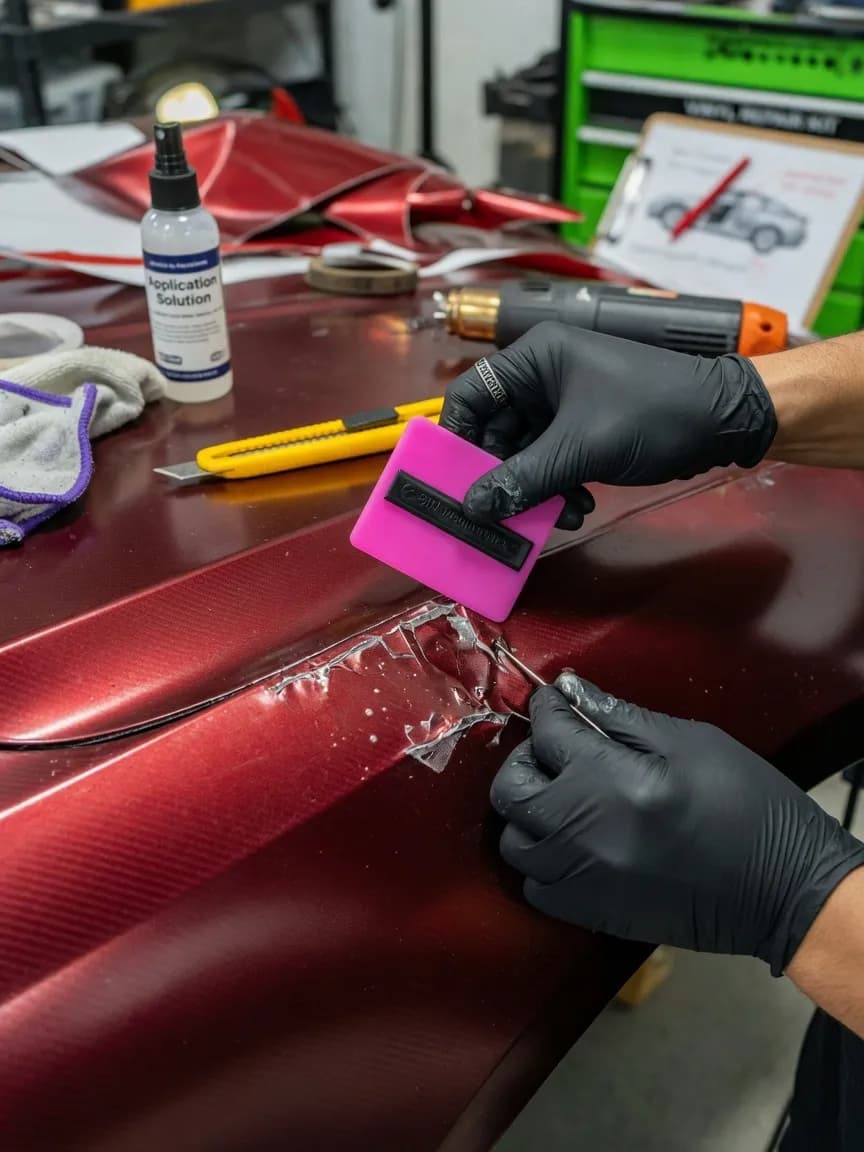
Equipping yourself with professional-grade tools ensures clean edge preparation, precise cutting, and safe thermal management whether you are stripping old film or laying new cast vinyl:
Source precision 30-degree utility blades and knives through OLFA.
Secure industry-standard filament cutting tape from 3M Knifeless Systems.
Upgrade your temperature-controlled heat guns with digital nozzles from Steinel.
Find specialized micro-sticks, felt squeegees, and buffers at Yellotools.
Access professional automotive cast films, magnets, and cleaning supplies via Avery Dennison Graphics.
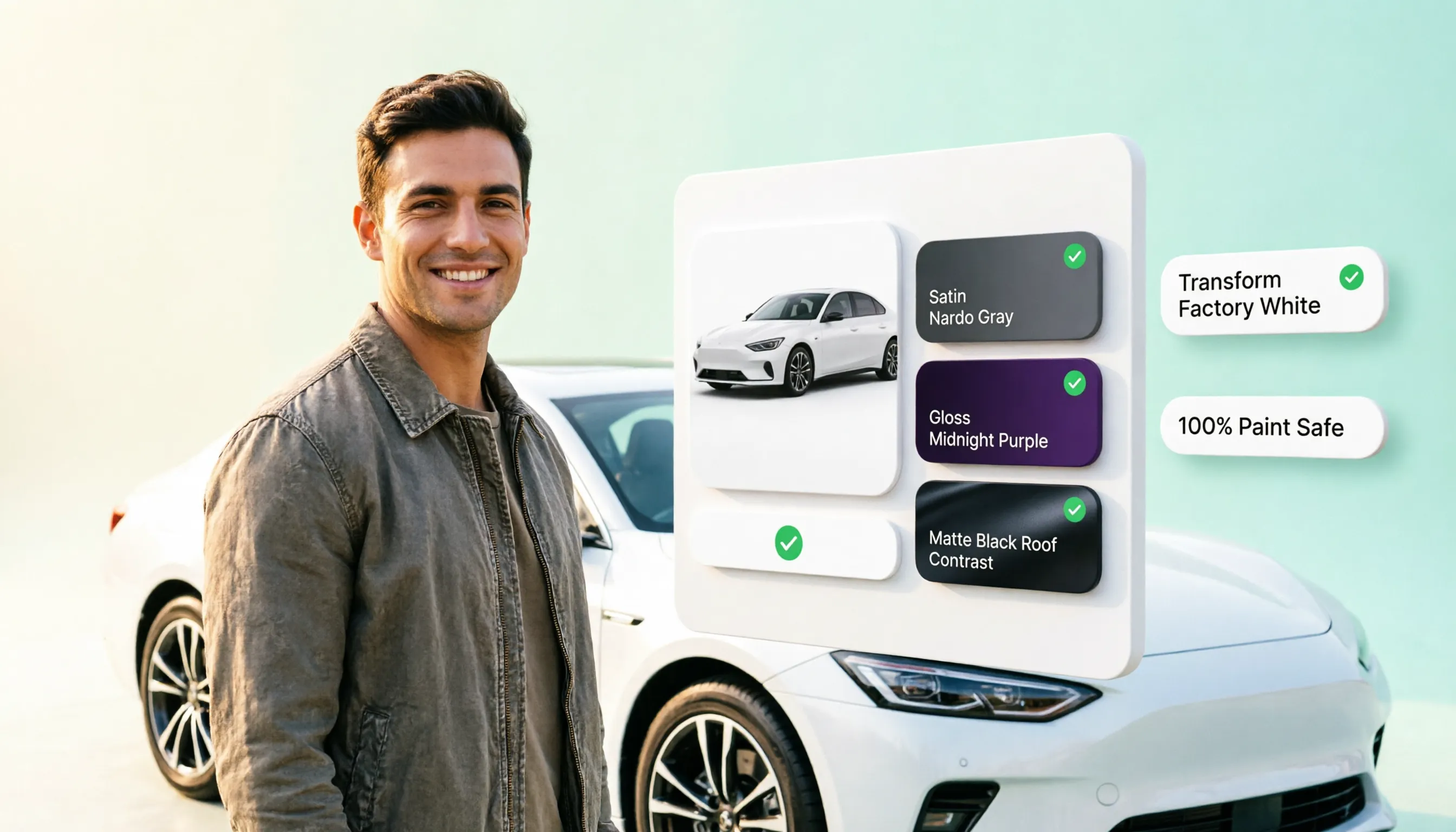
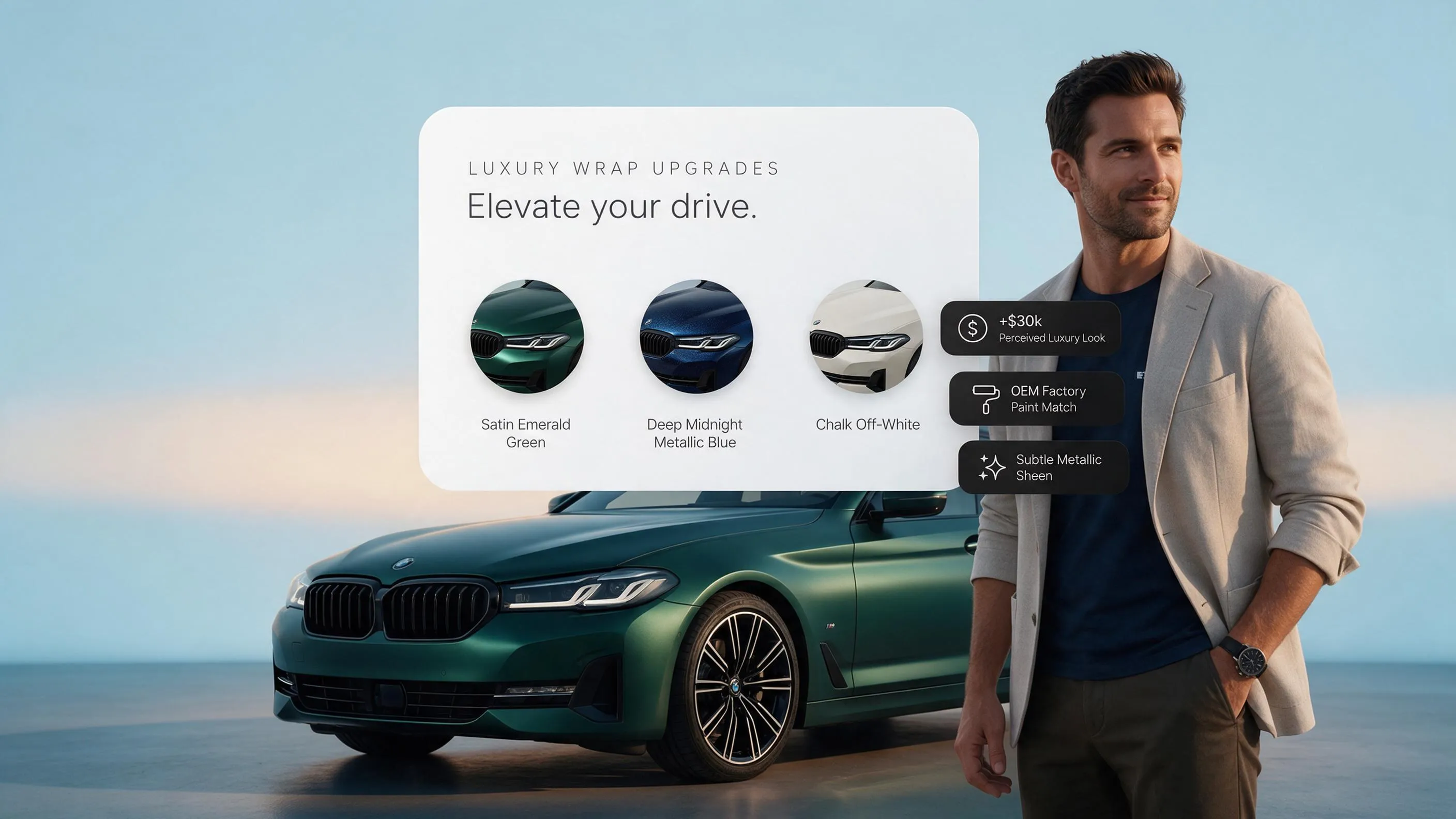
To preview how your vehicle will look in a fresh color or finish before making your final decision, test your design on our interactive visualizer on CarWrap.style.
FAQs About Wrapping Over an Existing Car Wrap
1. Can you wrap over an existing car wrap, or do you have to peel the old one off first?
No, you should never wrap over an existing car wrap. While it might seem like a quick shortcut to change your vehicle's look, double-layering vinyl causes severe adhesion failures, maps underlying scratches through the new layer, and traps solar heat that can permanently damage your factory clear coat during eventual removal. Stripping the old film down to clean, bare paint is mandatory before installing new vinyl.
2. Why won't new vinyl stick properly if you put new vinyl over an old car wrap?
Automotive wrap adhesives are engineered to cross-link with smooth, non-porous factory clear coats—not porous, aged PVC vinyl. Applying new film over an old wrap results in a weak vinyl-on-vinyl bond that quickly fails when exposed to direct sunlight, high humidity, or highway wind shear, leading to premature bubbling, lifting, and edge peeling.
3. Will scratches, seams, or bubbles from the old wrap show through the new vinyl?
Yes. Cast vinyl film is extremely thin (typically 3.5 to 4 mils thick) and acts like a flexible magnifying glass over surface imperfections. Every stone chip, swirl mark, raised seam, or trapped air bubble on the underlying vinyl will map directly through the new top sheet, ruining the smooth, factory-grade finish you paid for.
4. Does putting a second layer of vinyl over an old wrap damage your car's paint?
Yes, double-layering vinyl significantly increases the risk of paint damage. Two layers of vinyl trap intense solar heat, causing the underlying acrylic adhesive to bake, dry out, and petrify against your clear coat. When you eventually attempt to peel both layers off years later, the hardened glue can strip patches of original factory clear coat straight off the metal.
5. Is it ever acceptable to layer vinyl for stripes, logos, or partial accents?
Yes, double-layering is acceptable only for small, spot-applied graphics—such as racing stripes, business logos, or accent decals—applied over a fresh, high-quality primary wrap. However, covering entire 3D body panels or an entire vehicle with a second full sheet of vinyl should never be attempted.
6. How much does it cost to remove an old wrap before installing a new one?
Removing an old wrap typically adds $400 to $1,000 to your overall project cost, depending on the age and condition of the film. If the old vinyl is within its 3- to 5-year service life, it usually peels off cleanly in large sheets. If the film is sun-baked, cracked, or brittle, stripping the petrified glue requires extensive chemical labor, which increases shop time.
7. How do you properly remove old vinyl wrap before installing a fresh color?
Professional wrap removal involves three steps:
Thermal Peeling: Using a heat gun or commercial garment steamer to soften the acrylic adhesive so the film lifts off at a 180° angle.
Adhesive Dissolution: Applying citrus-based adhesive removers to dissolve petrified glue residue left on the clear coat.
Decontamination Wipe: Wiping panels down with a 70/30 isopropyl alcohol mix to strip all chemical solvents before laying new film.
8. Can you wrap over a damaged or peeling car wrap if you sand the lifted edges first?
No. Sanding lifted or peeling vinyl edges does not create a reliable foundation. Once an old wrap begins lifting, its underlying adhesive matrix has failed across that panel. Laying new vinyl over a failing, sanded wrap will cause the entire top layer to pull away as the bottom layer continues to fail underneath.
9. What should you do if your old wrap is peeling, but you only want to fix one panel?
If only a single panel—such as the hood or roof—is damaged, you can perform a partial car wrap replacement. Your installer strips the old vinyl from that specific panel, decontaminates the underlying paint, and installs a fresh sheet of vinyl. This saves you from paying for a complete vehicle rewrap while ensuring the repaired panel has a clean, reliable adhesive bond.
10. How long does it take a shop to strip an old wrap and rewrap a car?
A complete removal and rewrap process takes 3 to 5 business days. Day one is dedicated to thermal removal and glue stripping; day two involves deep clay-bar decontamination and surface prep; days three and four focus on precision installation; and day five allows a 24-hour resting window for the new adhesive to cure cleanly in a climate-controlled environment.
11. Will a fresh wrap last longer if the old wrap was removed professionally?
Yes. Professional wrap removal ensures that every trace of old, petrified glue, dirt, and chemical solvent is removed from your factory clear coat. Applying new premium cast film onto a smooth, fully decontaminated paint surface maximizes adhesive bond strength, delivering a full 3 to 5-year service life.
12. How can you test a new wrap color or finish on your car before removing the old one?
Instead of guessing how a new color will look or attempting risky vinyl layering, you can test different finishes virtually. Using an online AI car wrap visualizer tool allows you to upload a photo of your vehicle, test gloss, satin, matte, and carbon fiber finishes in real time, compare contrasting roof accents, and finalize your design before spending a dollar on removal or installation.