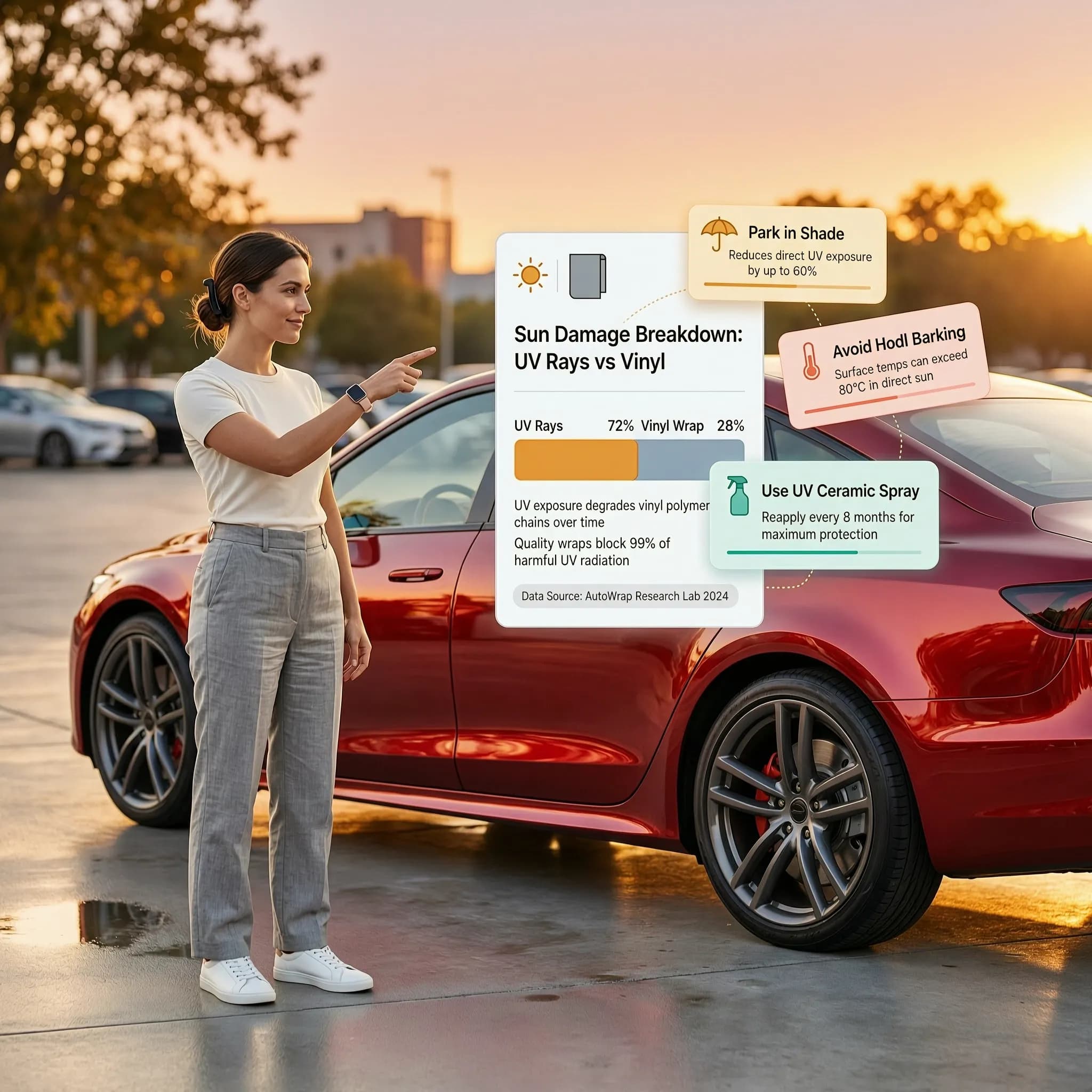

Imagine walking out to your driveway after a hot summer season, only to find your custom vinyl wrap looking dull, chalky, and completely discolored.Here is the direct answer.Yes, prolonged sunlight will severely damage a car wrap if left unprotected. Intense ultraviolet (UV) rays degrade the synthetic polymers inside the vinyl, causing color fading, surface oxidation, loss of elasticity, and eventual cracking.While premium cast vinyl films contain built-in UV inhibitors, continuous, unshielded sun exposure gradually bakes the chemical structure of the film.

What Does Sunlight Do to Vinyl Wrap?
Unshielded exposure to intense sunlight degrades vinyl film in distinct stages:UV Degradation & Color Fading: Ultraviolet radiation breaks down the pigment bonds inside the film, making vibrant hues look washed out and chalky.Plasticizer Evaporation: Solar heat bakes out the essential plasticizers that keep polyvinyl chloride flexible. As these oils evaporate, the wrap becomes rigid and brittle.Adhesive Degradation: High panel temperatures cook the underlying pressure-sensitive adhesive, leading to thermal expansion issues and triggering why does vinyl wrap lose adhesion.Surface Oxidation: A dull, cloudy film forms over gloss and metallic finishes, destroying depth and reflectivity.
Why Does a Car Wrap Fade in the Sun?
Vinyl wraps fade because sunlight operates like a continuous chemical attack.Photons in ultraviolet light penetrate the clear protective overlaminate and disrupt the molecular structure of the color pigments.
Constant UV Exposure ➔ Pigment Bond Disruption ➔ Plasticizer Evaporation ➔ Fading & Surface Oxidation
Horizontal surfaces—such as the hood, roof, and trunk lid—absorb up to 80% more direct solar radiation than vertical side doors, making them the first areas to suffer from vinyl wrap fading.

Which Car Wrap Colors Fade the Fastest?
Not all pigments react to ultraviolet light in the same way.
| Color Category | Fade Risk Level | Why It Happens |
|---|---|---|
| Bright Red & Yellow | High Risk | Red and yellow organic dye pigments absorb high-energy UV wavelengths rapidly |
| Matte Black & Dark Tones | Moderate Risk | Dark shades absorb intense heat, accelerating thermal contraction and what causes vinyl wrap to shrink |
| Pastels & Neons | Extremely High Risk | Light fluorescent dyes lack heavy mineral pigments and bleach quickly in sunlight |
| Silver & Metallic White | Low Risk | Reflective flakes bounce sunlight off the panel, keeping surface temperatures lower |
If you live in sunny southern regions, choosing reflective or lighter finishes will naturally extend your wrap's vibrant look.
Do Matte and Gloss Wraps React Differently to Sun?
Yes, matte and gloss wraps exhibit sun damage in distinctly different visual ways:Gloss FinishesGloss wraps feature a clear protective layer designed to reflect light. Sun damage shows up first as surface haze, oxidation rings, and a loss of high-gloss depth.Matte FinishesMatte wraps lack a reflective clear coat, relying instead on microscopic surface texture to diffuse light. UV exposure polishes down these microscopic peaks, turning a smooth matte finish into a patchy, semi-gloss eyesore that cannot be buffed out.
How Long Does a Car Wrap Last in Direct Sunlight?
In ideal conditions with garage parking, a high-grade cast vinyl wrap lasts 5 to 7 years.However, when parked continuously in direct sunlight:Sunbelt Environments (NV, AZ, FL, TX): Expect a lifespan of 1.5 to 3 years on horizontal panels (hood and roof) if left completely untreated.Moderate Climates: Expect 3 to 4 years of clean performance before color fading and edge lifting set in.Neglecting shade or protective sealants cuts your vinyl wrap lifespan in the sun in half.

Does Parking in the Shade Protect a Car Wrap?
Yes! Parking in the shade is the simplest and most effective way to prevent UV damage to a vinyl wrap.Seeking shade during peak solar hours (10:00 AM to 4:00 PM) provides immediate benefits:Lowers Panel Temperatures: Keeps surface temperatures from spiking above 160°F (71°C), stopping glue breakdown.Blocks Direct UV Waves: Stops photochemical breakdown of the film's color dyes.Prevents Thermal Recoil: Reduces repeated heating and cooling cycles that cause edge pulling and why is my car wrap lifting.Caution: Avoid parking directly beneath sap-dripping trees or bird roosts, as organic acids will etch into sun-warmed vinyl.
Can a Car Cover Protect Vinyl Wrap From UV Damage?
A custom-fit, breathable car cover offers excellent protection against sun damage when parking outdoors for extended periods.However, using the wrong cover causes secondary issues:Good Cover (Safe): Multi-layered synthetic covers with a soft fleece backing reflect UV rays while allowing trapped humidity to escape.Bad Cover (Ruinous): Non-breathable plastic tarps trap heat and moisture beneath the film. When heated by the sun, this moisture boils against the vinyl, causing why is my car wrap bubbling.Review proper outdoor storage routines in How to Store a Wrapped Car Outdoors before covering your vehicle.
How to Protect a Car Wrap From Sun Damage
You don't need a indoor climate-controlled garage to keep your wrap looking vibrant. Simply follow this active maintenance routine:Apply a Dedicated Ceramic Coating: Use a ceramic sealant specifically formulated for vinyl to add a hydrophobic, UV-reflecting barrier over the overlaminate.Wash Away Fallout Weekly: Use pH-neutral car shampoo to wash off dirt, road film, and organic contaminants before solar heat bakes them into the vinyl.Use Spray Detailers After Washing: Top off your finish with a UV-inhibiting quick detailer spray every two weeks.
Can UV Damage Be Repaired on a Vinyl Wrap?
Once UV rays severely damage vinyl wrap, the process cannot be reversed.Light surface haze on gloss wraps can sometimes be revived with an ultra-soft finishing pad and specialized vinyl cleaner. But once the plasticizers have baked out—causing the material to dry, oxidize, or crack—polishing will only burn through the thin overlaminate layer.Severe sun damage, deep discoloration, and surface flaking mean it is time for a professional wrap removal and replacement.
Signs Your Car Wrap Has Too Much Sun Exposure
Inspect your vehicle regularly for these early warning signs of UV damage:Chalky White Residue: Indicates the top clear overlaminate is oxidising under solar radiation.Spiderweb Micro-Cracking: Signals that plasticizers have evaporated, making the material brittle and leading to why is my car wrap cracking.Browning or Discoloration: Common on white or light-colored vinyl hoods exposed to intense engine heat and direct sunlight.Perimeter Seam Recoil: The edges pull back toward panel centers as sun heat causes what causes vinyl wrap to shrink.
Preview a New Wrap Before Replacing a Faded One
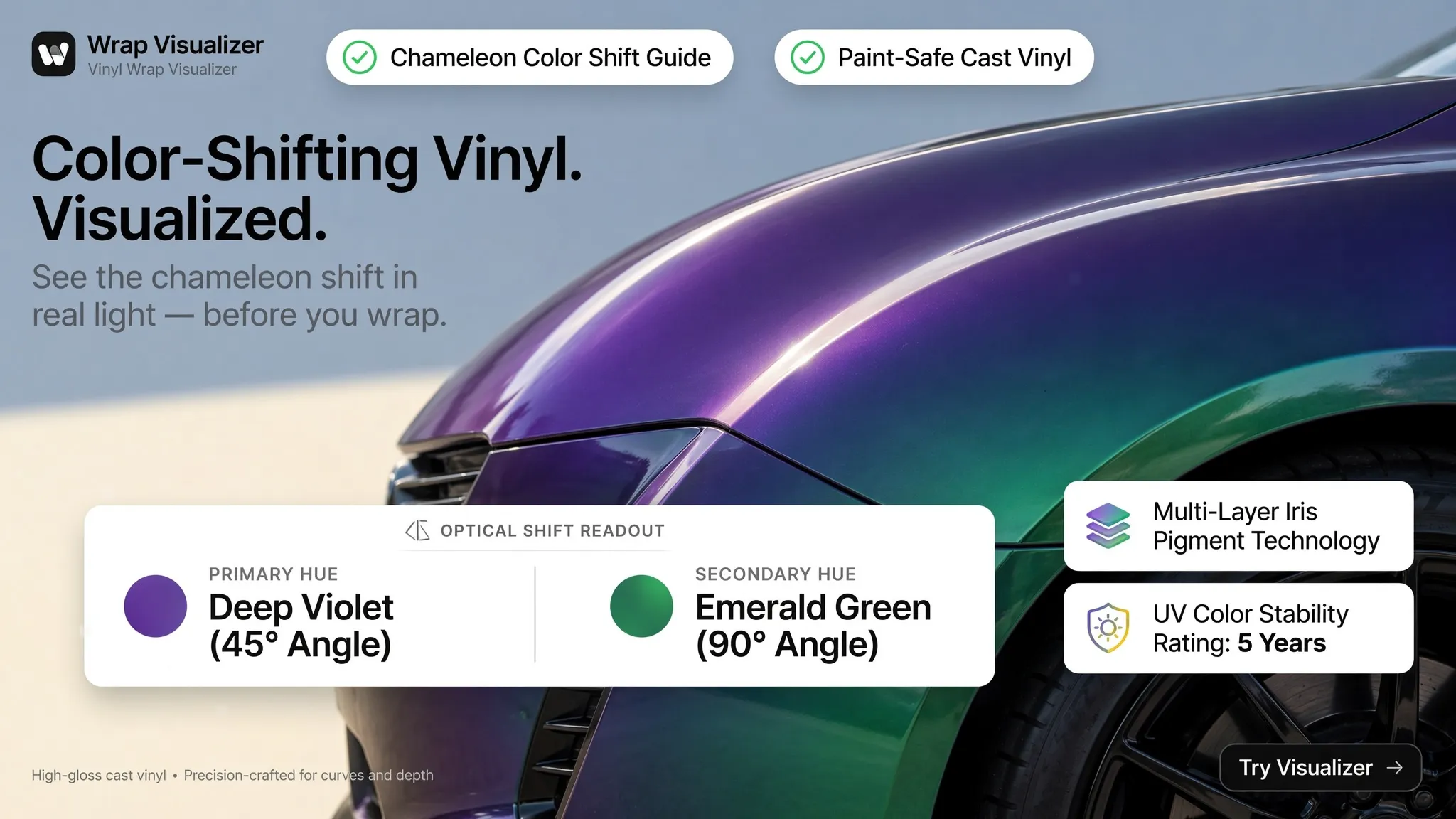
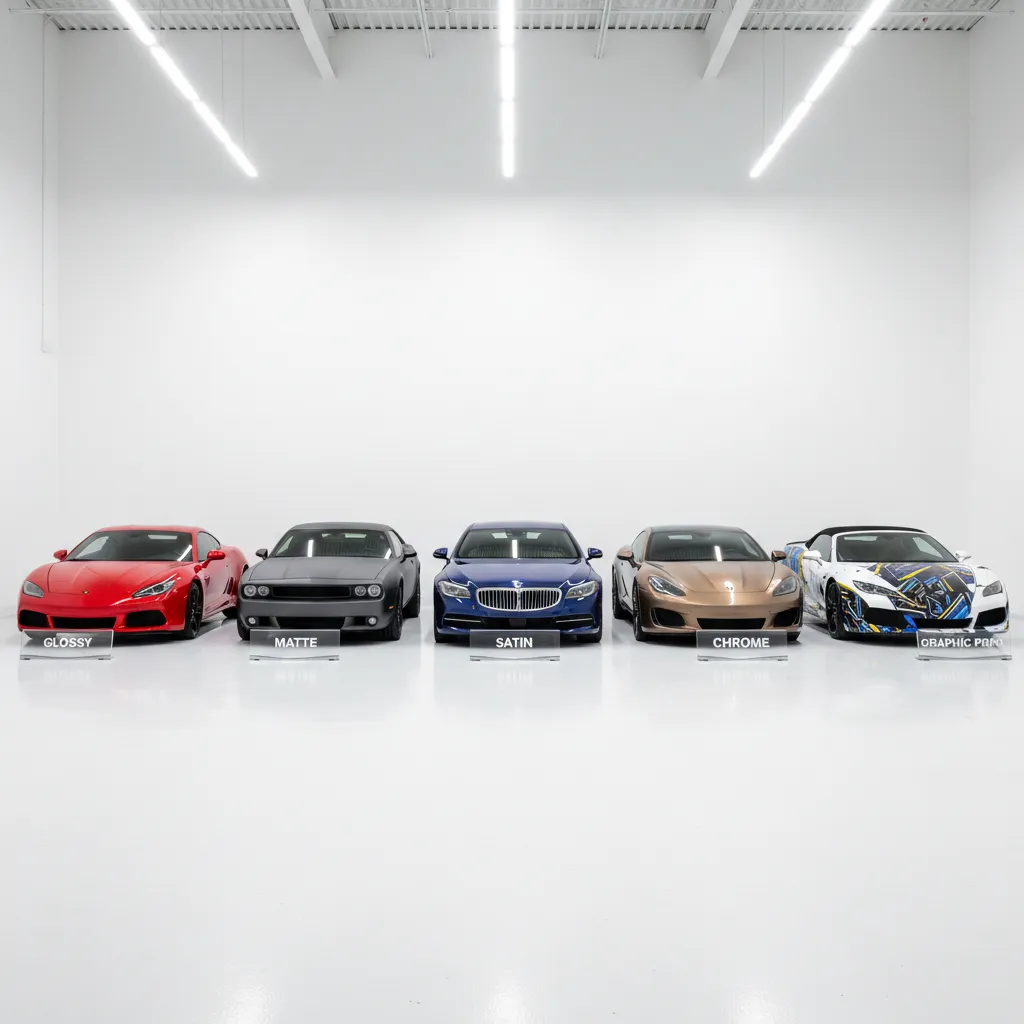
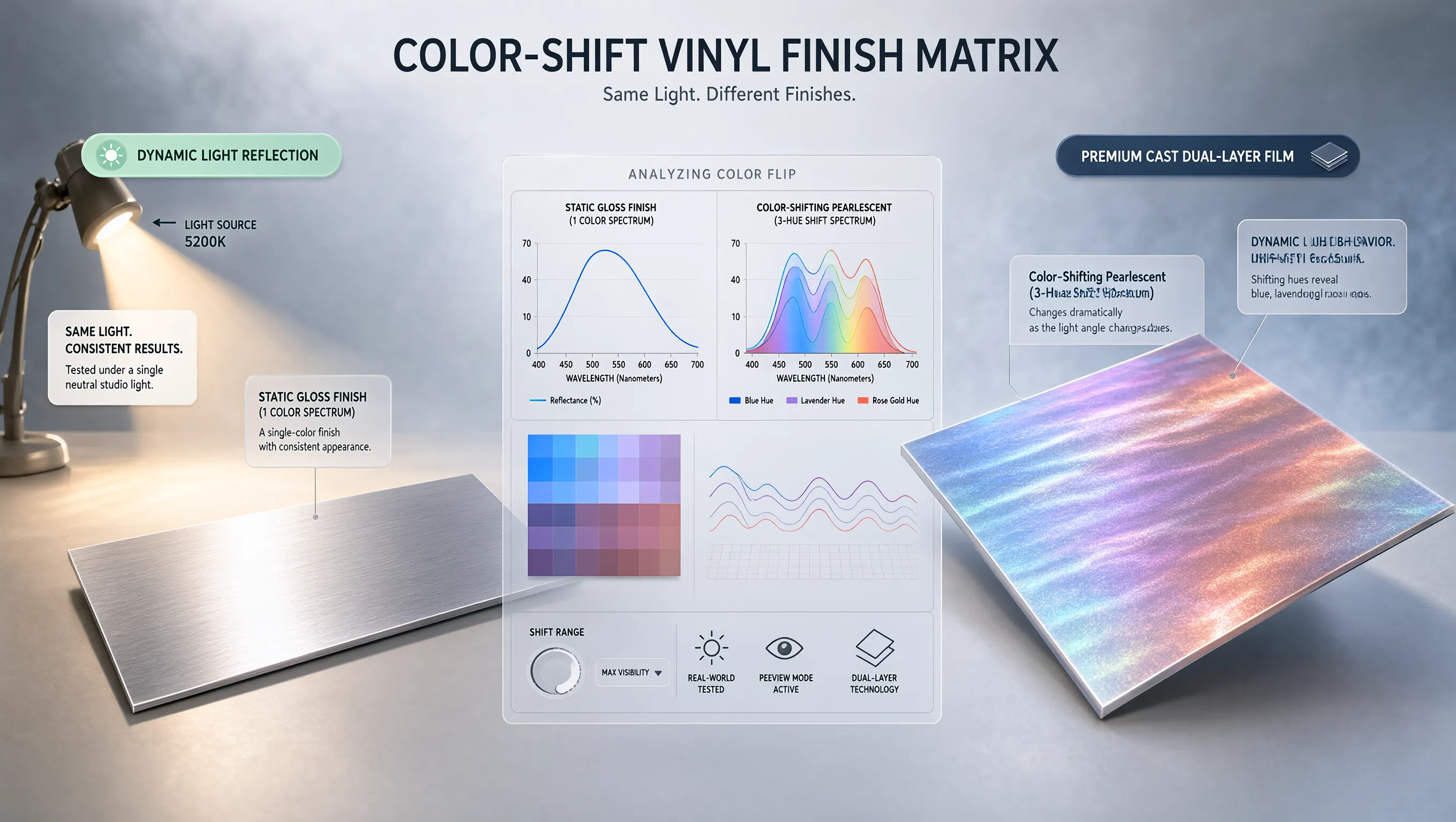
If severe sun damage or fading has compromised your vehicle's appearance, it's time for a fresh look.Before spending money on a new installation, take the guesswork out of your color selection. Visit car wrap visualizer to preview gloss finishes, satin textures, matte wraps, and color-shifting styles directly on high-resolution 3D models of your exact make and model. Finding a sun-resistant color and finish is easy when you preview your design first.

Frequently Asked Questions: Can Sun Damage a Car Wrap?
Can sun damage a car wrap over time?
Yes, continuous sunlight will eventually damage a car wrap. High-energy ultraviolet (UV) radiation breaks down the synthetic polymers and color pigments inside polyvinyl chloride (PVC) film. Over time, unshielded solar radiation causes noticeable color fading, surface oxidation, loss of elasticity, and eventual surface cracking on horizontal vehicle panels like the hood and roof.
What does UV radiation do to vinyl wrap material?
UV radiation attacks vinyl wrap on a molecular level. It causes plasticizer oils—which keep the material soft and pliable—to evaporate. As these plasticizers bleed out under extreme solar heat, the vinyl turns stiff and brittle. Simultaneously, solar radiation breaks down the pigment chains, leading to a dull, washed-out appearance and severe vinyl wrap fading.
Which car wrap colors fade the fastest in direct sunlight?
Vibrant red, yellow, pastel, and neon wraps fade faster than other colors because their organic dye pigments absorb high-energy UV wavelengths rapidly. Dark matte wraps absorb maximum surface heat, accelerating thermal breakdown and what causes vinyl wrap to shrink. In contrast, silver, metallic white, and lighter reflective wraps bounce heat away, resisting sun damage for longer periods.
Do gloss and matte vinyl wraps react differently to sun exposure?
Yes. Gloss vinyl wraps exhibit sun damage as a cloudy white oxidation layer, loss of reflective depth, or surface hazing. Matte wraps lack a reflective clear overlaminate and rely on microscopic surface texture to diffuse light; UV exposure polishes down these microscopic peaks, turning a uniform matte finish into a splotchy, semi-gloss surface that cannot be restored by buffing.
How long does a car wrap last when parked in direct sunlight?
In mild climates with regular garage parking, a premium cast vinyl wrap lasts 5 to 7 years. However, if parked continuously outdoors in direct sun—especially in high-UV regions like Arizona, Texas, or Florida—the lifespan drops to 1.5 to 3 years on horizontal surfaces before color fading, brittleness, and edge lifting set in.
Does parking in the shade actually protect a vinyl wrap from sun damage?
Yes, parking in shaded spots is one of the most effective ways to extend your wrap's lifespan. Keeping your vehicle shaded during peak solar hours (10:00 AM to 4:00 PM) prevents panel surface temperatures from spiking above 160°F (71°C). This stops plasticizer evaporation, reduces thermal expansion stress, and helps prevent why is my car wrap lifting along panel seams.
Can a car cover protect a wrapped car from UV exposure?
A breathable, multi-layered car cover with a soft fleece lining provides excellent UV protection during long-term outdoor parking. However, using cheap plastic tarps or non-breathable covers can ruin a wrap; they trap solar heat and humidity underneath, which boils the adhesive matrix and triggers why is my car wrap bubbling. Review proper storage habits in How to Store a Wrapped Car Outdoors.
How can I protect my car wrap from UV damage and fading?
To protect your vinyl wrap from intense sun:Apply a dedicated hydrophobic ceramic coating or ceramic spray sealant formulated specifically for vinyl wraps.Wash the vehicle weekly using pH-neutral car shampoo to remove acid fallout and dirt before solar heat bakes them in.Apply a UV-inhibiting quick detailer spray every two weeks after washing.Park in garages, carports, or shaded areas whenever possible.
Can sun-damaged or faded vinyl wrap be repaired?
No, severely sun-damaged or oxidized vinyl wrap cannot be repaired. While minor surface haze on gloss wraps can occasionally be cleaned with mild vinyl detailers, once UV radiation evaporates the internal plasticizers and cracks the film, polishing will only burn through the overlaminate. The only solution for heavily baked or faded vinyl is complete removal and rewrapping.
What are the warning signs of sun-damaged vinyl wrap?
Early signs of UV damage include:Chalky surface residue: White oxidation forming on top of gloss films.Spiderweb micro-cracking: Fine fractures indicating plasticizer loss and brittleness, leading to why is my car wrap cracking.Perimeter shrinkage: Edges pulling away from panel borders due to high heat exposure.Discoloration or browning: Dark, burnt patches appearing on light-colored hood or roof panels.
Does solar heat break down vinyl wrap adhesive?
Yes. Continuous high heat from direct sunlight cooks the acrylic pressure-sensitive adhesive layer beneath the vinyl. Extremely high panel temperatures cause the adhesive matrix to soften, flow, and lose its grip on the clear coat. This thermal breakdown often leads to edge curling and explains why does vinyl wrap lose adhesion.
How can I preview a replacement design before replacing a sun-damaged wrap?
If your current wrap shows severe fading, cracking, or UV deterioration, replacing the film is the best option. Before committing to a new color or finish, visit car wrap visualizer to preview gloss, satin, matte, and color-shifting wraps directly on photorealistic 3D models of your exact vehicle make and model.