
Picture this: You step outside after a sudden downpour, and your freshly wrapped car is covered in standing puddles. You start wondering if all that rainwater is silently ruining the finish or seeping into the edges.Here is the direct answer.Normal rain will not damage a quality vinyl wrap because polyvinyl chloride (PVC) is inherently waterproof.However, rain becomes a serious threat when atmospheric pollutants, hard minerals, or compromised panel edges come into play. Dried rainwater leaves behind acidic mineral rings, and water forcing its way under lifted seams gradually destroys the adhesive backing.

Is a Vinyl Wrap Waterproof?
Yes, high-grade cast vinyl wraps are 100% waterproof.The top layer of a premium wrap consists of a non-porous polyvinyl chloride film sealed with a protective clear overlaminate. This synthetic barrier prevents water molecules from soaking into the material itself.Water naturally beads up on a clean wrap surface and rolls off without causing structural harm to the film.
What Rain Actually Does to a Vinyl Wrap
While clean water itself is harmless, ambient rain brings external elements that interact with your wrap:Surface Mineral Deposits: Rain collects airborne dust and minerals. When standing droplets evaporate in direct sunlight, they leave behind hard white rings.Hydrophobic Sheen Loss: Dirt carried by rain creates a thin film over the wrap, temporarily reducing its hydrophobic self-cleaning properties.Chemical Contamination: Industrial precipitation carries sulfur and nitrogen compounds that lower the water's pH, slowly dulling clear overlaminates.
Can Heavy Rain Cause a Car Wrap to Peel?
Normal rainfall will never cause a properly installed wrap to peel. However, driving through heavy rainstorms at highway speeds creates a different problem.
High Highway Speeds + Heavy Rain ➔ Hydrostatic Water Pressure ➔ Catches Compromised Edges ➔ Seam Lifting & Peeling
When driving fast through torrential rain, high-velocity water droplets hit body panels with significant pressure. If your vehicle already has loose seams or unsealed edges around wheel wells, that pressurized water acts like a mild hydro-jet, forcing its way under the film and accelerating why is my car wrap lifting.

Can Water Get Under a Vinyl Wrap?
Water cannot penetrate through the solid face of a quality vinyl sheet. Moisture only gets underneath through structural entry points:Unsealed Edge Seams: Gaps around door handles, trunk hinges, and bumper recesses where film edges weren't post-heated correctly.Impact Punctures & Stone Chips: Micro-tears caused by road gravel that expose the clear coat underneath.Over-Stretched Recesses: Thin spots where the film was stretched beyond its threshold during installation, creating micro-pores.Once water breaches these barriers, it attacks the acrylic pressure-sensitive adhesive, explaining why does vinyl wrap lose adhesion.
Why Damaged Wrap Edges Are More Vulnerable to Rain
Compromised edges act like a siphon during rainstorms.
| Edge Condition | Weather Hazard | Immediate Risk |
|---|---|---|
| Loose Fender Corners | Highway Rain Spray | Water forces edge back, trapping road salt and grit |
| Un-Taped Door Insets | Standing Puddles | Moisture sits in door jambs, softening glue backing |
| Punctured Hood Film | Direct Downpours | Engine heat boils trapped water into expanding steam |
If you notice early lifting, seal the border or visit an installer before driving in heavy rain.
Can Rain Cause Mold or Mildew Under a Car Wrap?
Yes, but only if water becomes trapped between the vinyl and paint where air cannot circulate.If water enters a lifted section or a deep bubble, the sealed environment beneath the film combined with solar warmth creates an ideal breeding ground for mildew. This trapped moisture turns cloudy, ruins the adhesive, and can cause surface stains on the factory clear coat if neglected.To prevent trapped moisture issues, review why is my car wrap bubbling.
Does Rain Leave Water Spots on Vinyl Wrap?
Yes, rainwater drying under direct sunlight is the primary cause of unsightly mineral spotting.As rain evaporates off hot body panels, it leaves behind dissolved calcium, magnesium, and road dust. On gloss wraps, these minerals form cloudy rings. On matte finishes, the minerals settle into the microscopic surface grain, creating patchy spots that are difficult to remove without proper techniques.
Is Acid Rain Bad for Vinyl Wrap?
Acid rain poses a genuine threat to wrapped vehicles parked in industrial or urban regions.Acidic rainfall contains nitric and sulfuric acids. When acid droplets sit on horizontal panels like the hood and roof, solar heat accelerates a chemical reaction that etches into the overlaminate. Over time, repeated acid rain exposure breaks down color pigments, leading to severe vinyl wrap fading.

What to Do After Your Wrapped Car Gets Rained On
Taking immediate action after a rainstorm prevents water spots and acid etching from damaging your wrap:Dry Horizontal Panels Immediately: Wipe down the hood, roof, and trunk lid using a soft microfiber drying towel before the sun bakes standing droplets dry.Spot-Clean Mineral Rings: Spray a 50/50 mixture of Isopropyl Alcohol (IPA) and distilled water onto stubborn water spots, let it sit for 30 seconds, and wipe gently.Clear Out Door Jambs: Open doors and the trunk to dry off pooled rainwater sitting along internal seams.
How to Protect a Vinyl Wrap From Long-Term Weather Exposure
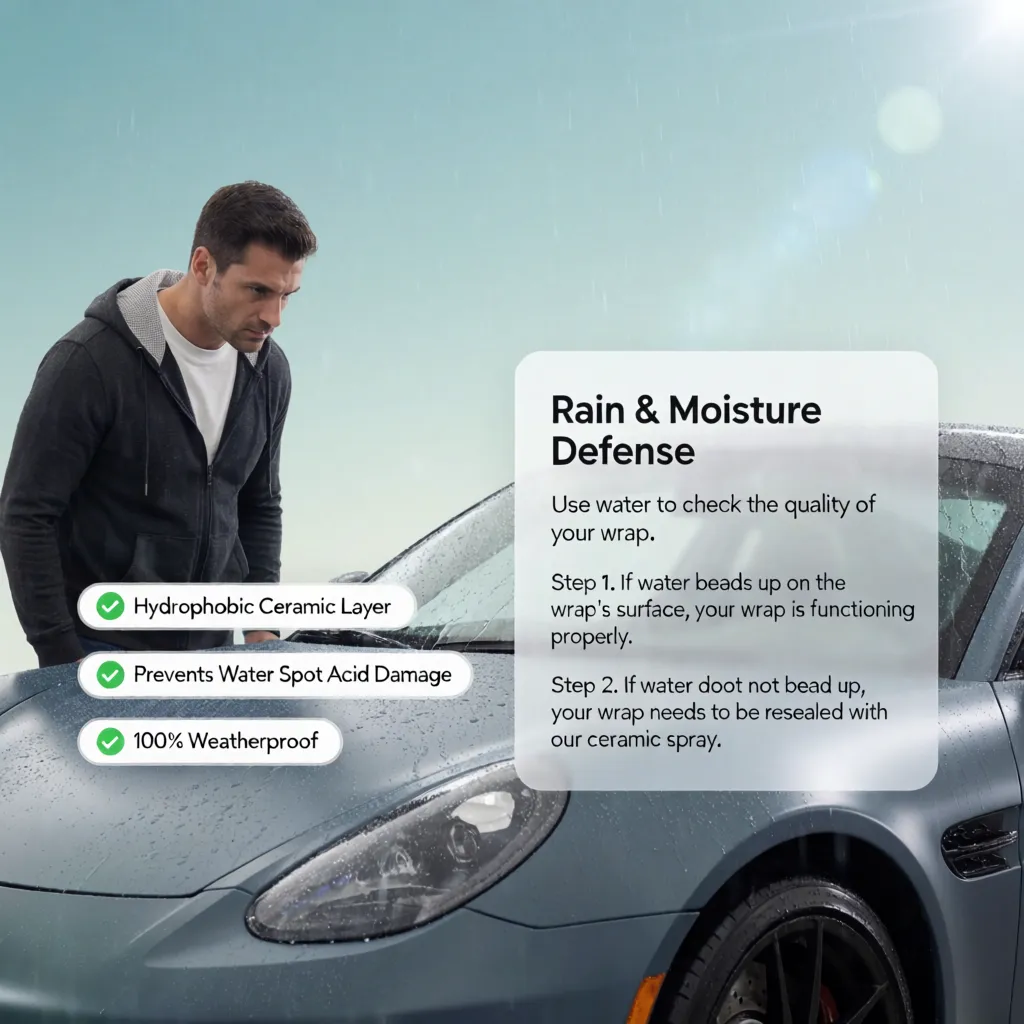
Protecting your vehicle from ongoing weather elements comes down to an active maintenance routine:Apply Hydrophobic Ceramic Coatings: Coat your wrap with a ceramic spray sealant formulated for vinyl to make rainwater bead up and slide off horizontal panels instantly.Park Under Architectural Shade: Avoid parking under trees where rain washes acidic sap onto hot vinyl. Read complete parking strategies in How to Store a Wrapped Car Outdoors.Use Breathable Car Covers: If storing outside long-term, shield the car with a multi-layered cover that lets trapped humidity escape while blocking direct rain.
How Will Your Wrap Look in Different Conditions?
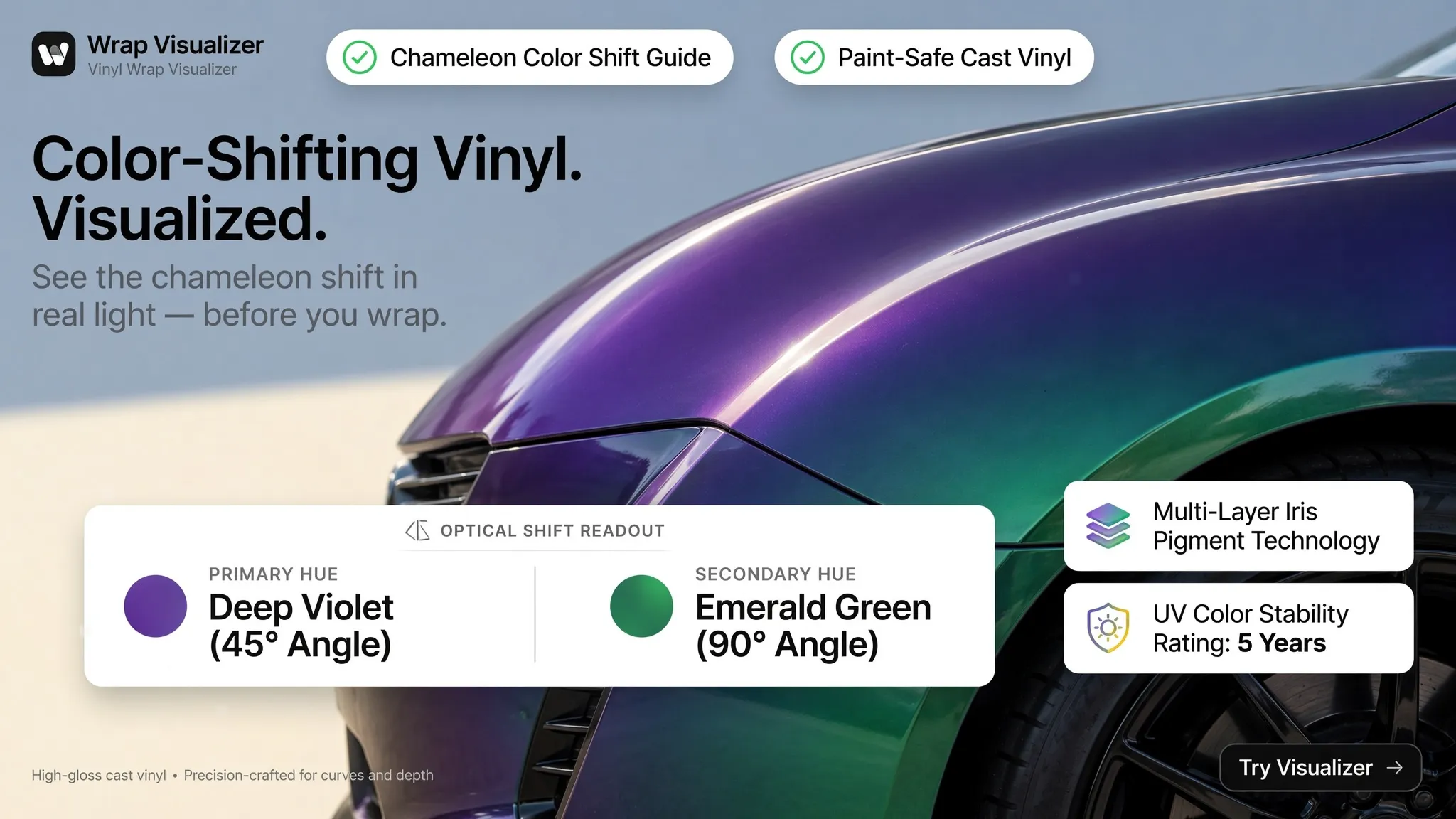
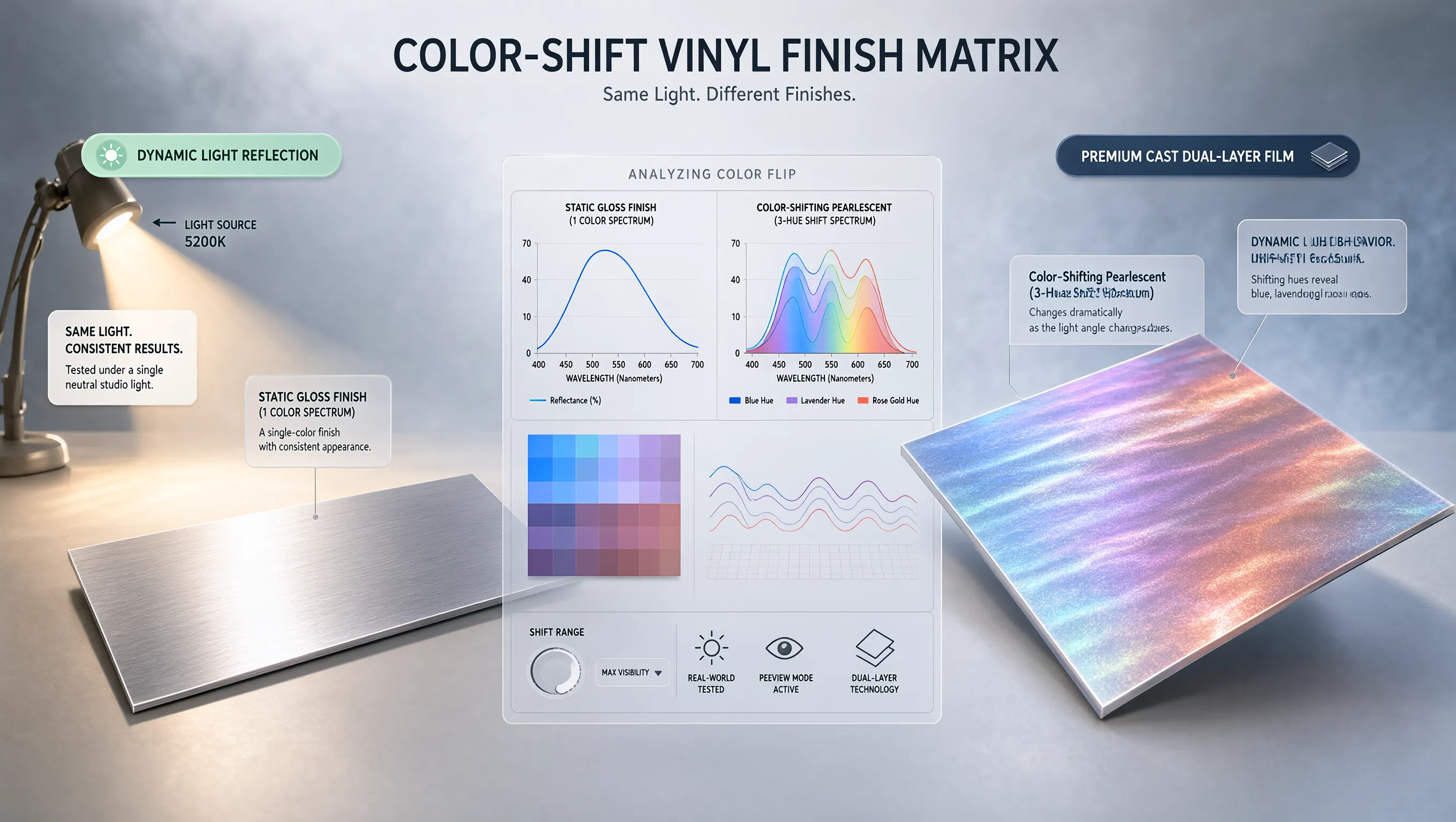
Whether you're dealing with heavy rainstorms, bright sunshine, or winter weather, choosing the right material finish makes a huge difference in long-term durability.Before spending money on a new installation or replacing a weather-damaged wrap, take the guesswork out of your selection. Visit car wrap visualizer to preview gloss finishes, satin textures, matte wraps, and color-shifting styles directly on photorealistic 3D models of your exact make and model. Testing designs visually helps you pick a finish built to withstand your local climate.Frequently Asked Questions: Can Rain Damage a Car Wrap?

Frequently Asked Questions: Can Rain Damage a Car Wrap?
Can rain damage a car wrap over time?
Yes, rain can damage a car wrap if rainwater is allowed to sit and dry on the vehicle surface regularly. Rain is rarely pure water—it carries industrial pollutants, atmospheric acids, dust, and mineral deposits. When rainwater pools on flat vinyl panels and evaporates in direct sunlight, these concentrated contaminants eat into the clear protective overlaminate, leading to etching, spot staining, and loss of surface gloss.
How does acid rain affect vinyl wrap material?
Acid rain contains elevated levels of nitric and sulfuric acids derived from industrial emissions. When these acidic droplets land on a vinyl wrap, solar heat accelerates a chemical reaction that softens the top layer of the polyvinyl chloride (PVC) film. Over time, repeated acid rain exposure creates permanent etched rings, surface oxidation, and noticeable vinyl wrap fading.
What happens if rainwater gets trapped under vinyl wrap edges?
If rainwater seeps beneath unsealed edges, door seams, or lifted corners, it directly attacks the acrylic pressure-sensitive adhesive layer. Trapped moisture dilutes and degrades the glue matrix, destroying its mechanical bond to the vehicle’s clear coat. This water intrusion causes edge curling and accelerates why does vinyl wrap lose adhesion.
Why are hard water spots so hard to remove from vinyl wraps?
Hard water spots form when rainwater or irrigation sprinklers evaporate, leaving behind heavy calcium and magnesium mineral deposits. Unlike painted surfaces that can be aggressively machine-polished, vinyl wrap films have a thin protective overlaminate. Scrubbing hard water spots with harsh abrasive compounds will scuff the surface or burn through the film entirely.
Can rain cause vinyl wrap to lift or bubble?
Rain itself does not cause bubbling on a properly installed wrap. However, if water penetrates an existing pinhole tear or an unsealed seam, ambient heat will turn that trapped moisture into water vapor. As the steam expands under the sun, it pushes the vinyl upward, resulting in why is my car wrap bubbling along panel centers and edges.
Is driving a newly wrapped car in heavy rain safe?
You should avoid driving a newly wrapped vehicle in heavy rain for the first 24 to 48 hours post-installation. The pressure-sensitive adhesive requires time to fully set and cure across all body panels. Exposing fresh, uncured seams to high-pressure rainwater and highway wind forces can drive water under perimeter edges, leading to early why is my car wrap lifting.
How do I remove rain water spots safely from a vinyl wrap?
To remove fresh water spots without scratching the vinyl:Wash the vehicle using a pH-neutral car shampoo and a clean microfiber wash mitt.For stubborn mineral spots, spray a 50/50 mix of Isopropyl Alcohol (IPA) and distilled water or a dedicated vinyl-safe water spot remover.Allow it to sit for 60 seconds, then gently wipe away with a plush microfiber towel.
Does a ceramic coating protect a car wrap from rain damage?
Yes, applying a ceramic coating formulated specifically for vinyl wraps is one of the best defenses against rain damage. Ceramic coatings create a super-hydrophobic surface layer that causes rainwater to bead tightly and slide off horizontal panels before mineral deposits and atmospheric acids can bond to or etch the vinyl film.
Are matte and gloss wraps affected differently by rain?
Gloss wraps show rain damage primarily as cloudy water spots and loss of reflective shine, which can often be treated with quick detailers. Matte wraps are far more vulnerable; because they rely on a porous, microscopic surface texture to diffuse light, acid rain and mineral deposits can become permanently embedded in the matte grain, creating uneven, shiny patches that cannot be buffed out.
Can heavy rain damage wrapped car edges during high-speed driving?
Yes. When driving at highway speeds during heavy rain, high-velocity water droplets act like a mild pressure washer. If your wrap has minor edge lifting or missing seam edge-tape along fender liners, front bumpers, or side skirts, the force of incoming water can catch the edge and tear the vinyl back from the panel.
What should I do after parking a wrapped car in heavy rain?
If your wrapped car is parked outdoors during a rainstorm, perform a quick post-rain maintenance check:Gently dry horizontal panels: Wipe down the hood, roof, and trunk with a soft microfiber drying towel before direct sun bakes the standing droplets dry.Inspect perimeter seams: Ensure water has not pooled inside door jambs or light bezels near open vinyl edges.Review full outdoor weather routines in How to Store a Wrapped Car Outdoors.
How can I preview a replacement design if rain and weather damaged my current wrap?
If years of severe weather, rain etching, and mineral spotting have dulled or ruined your vehicle's vinyl finish, replacing the wrap is the best way to restore a flawless look. Before picking your next color, visit car wrap visualizer to preview gloss, matte, satin, and color-shifting wraps on interactive 3D models of your exact vehicle make and model.