
Look around any car meet or highway commute, and you will spot it immediately: factory paint colors have grown boring.Silver, white, black, gray. That is almost all dealerships hand out today.If you are looking to break away from the crowd, wrapping your ride is the fastest way to pull off a complete personality swap. But with hundreds of physical swatches sitting on a installer's desk, picking one shade feels overwhelming.Which shades actually look sharp on real body panels? Which ones turn into a daily cleaning nightmare?Here is the real breakdown of what car owners are choosing right now, how to pick a finish that fits how you drive, and how to test colors on your ride before spending a dime on film.

Will This Color Be a Nightmare to Keep Clean? The Truth About Scratches and Fading
You pick a deep, moody shade. It looks incredible inside the shop lighting.Then you drive it out into the real world.Within two days, pollen, water spots, and dust cover every panel. Suddenly, you are spending every weekend holding a hose instead of driving.
High Maintenance (Gloss Black / Deep Chrome) └─► Shows Every Water Spot, Swirl Mark, & Dust Layer Immediately └─► Requires Weekly Hand-Washing & Meticulous Wipedowns Low Maintenance (Satin Nardo Gray / Chalk Gray / Matte Military Green) └─► Hides Micro-Scratches, Dust, & Daily Road Grime Effortlessly └─► Stays Looking Fresh Between Routine Washes
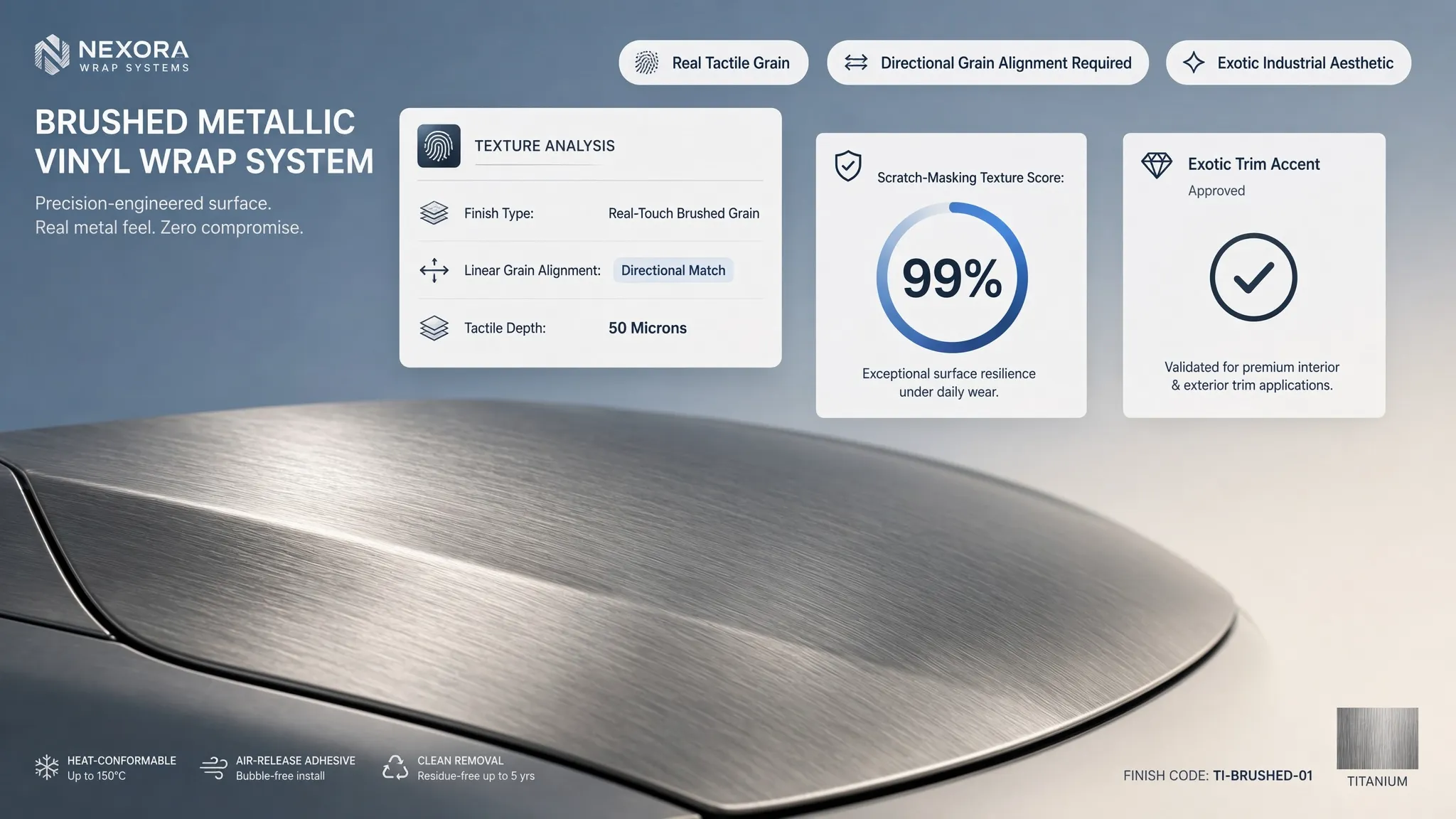
Here is how daily upkeep breaks down by finish:Gloss Black & Mirror Finishes: The hardest to maintain. High-gloss dark films act like mirrors—every fingerprint, rain drop, and swirl mark stands out under direct sunlight.Satin Grays & Silvers: The easiest to live with. Satin finishes diffuse light across body panels. Dust and light road grime simply blend into the surface texture, meaning your car looks clean even when you skip a wash week.
Stealth Daily or Head-Turner? Picking a Color for How You Actually Drive
Before looking at swatches, ask yourself one question:What is the main job this new color needs to do for you?
┌── Stealth Daily Commuter ──► Satin Dark Gray, Chalk, Midnight Navy │ Choose Your Goal For The Build ─────┤ │ └── High-Profile Head-Turner ──► Deep Purple, Emerald, Color-Shift
Path A: The Stealth Daily Driver
The Goal: Subtle, high-end style that looks factory-built without drawing unwanted attention from highway patrol.Top Colors: Satin Dark Gray, Porsche Chalk Gray, Midnight Metallic Navy, Matte Military Green.The Vibe: Sleek, understated, clean.
Path B: The Weekend Head-Turner
The Goal: Maximum visual impact at car meets, weekend meets, and cruising routes.Top Colors: Midnight Purple, Satin Vampire Red, Gloss British Racing Green, Chameleon Color-Shift.The Vibe: Aggressive, custom, impossible to ignore.
"Is Nardo Gray Overdone?" Comparing Real Owner Favorites
Head over to any car forum or Reddit thread, and you will see the exact same debate:"Is Nardo Gray played out?"While Nardo Gray exploded in popularity over the past few years, real owner preferences have shifted into more distinct tones.
┌── Classic Nardo Gray ────► The original flat cement gray look. │ Gray & Dark Tones ────┼── Porsche Chalk Gray ───► Paler, warmer tone with a beige undertone. │ └── Satin Dark Gray ──────► Metallic sheen that pops across body lines.
Here is where the top community favorites stand today:Satin Black vs. Matte Black: Matte black absorbs all light, which can flatten your car's natural body lines and make panels look like raw primer. Satin Black holds a soft 20% sheen that catches sunlight along door creases and hip lines, giving you that dark aesthetic while keeping the vehicle's shape sharp.Nardo Gray vs. Chalk Gray: Classic Nardo is a flat, cool cement gray. If you want something less common, Chalk Gray brings a pale, cream-tinted warmth that looks ultra-luxurious on sports coupes and sedans.Midnight Purple & Deep Metallic Navy: These dark jewel tones are taking over. Under shade, they look almost black. But as soon as direct sunlight hits the paint, deep violet or blue metallic flakes burst through.

Can I See Them Side-by-Side? The Top 10 Wrap Colors Compared
Need a clean look at how the top shades stack up? Here is the cheat sheet:
| Color Shade | Finish Type | Upkeep Difficulty | Best Vehicle Type |
|---|---|---|---|
| Satin Dark Gray | Satin | Low | All-around (Sedans, Trucks, Coupes) |
| Chalk Gray | Gloss / Satin | Low | Luxury Sedans & European Coupes |
| Satin Black | Satin | Medium | Muscle Cars & Off-Road Builds |
| Midnight Purple | Gloss Metallic | Medium | Performance Sports Cars |
| Military Green | Matte / Satin | Ultra-Low | Trucks, SUVs & Aggressive Hatchbacks |
| Gloss Nardo Gray | Gloss | Low | Hatchbacks & Daily Drivers |
| Satin Vampire Red | Satin Metallic | Medium | Sports Coupes & Supercars |
| Deep Navy Blue | Gloss Metallic | Medium | Executive Sedans & Luxury SUVs |
| British Racing Green | Deep Gloss | Medium | Classics & Modern Sports Cars |
| Chameleon Flip | Color-Shift | High | Show Cars & Custom Builds |
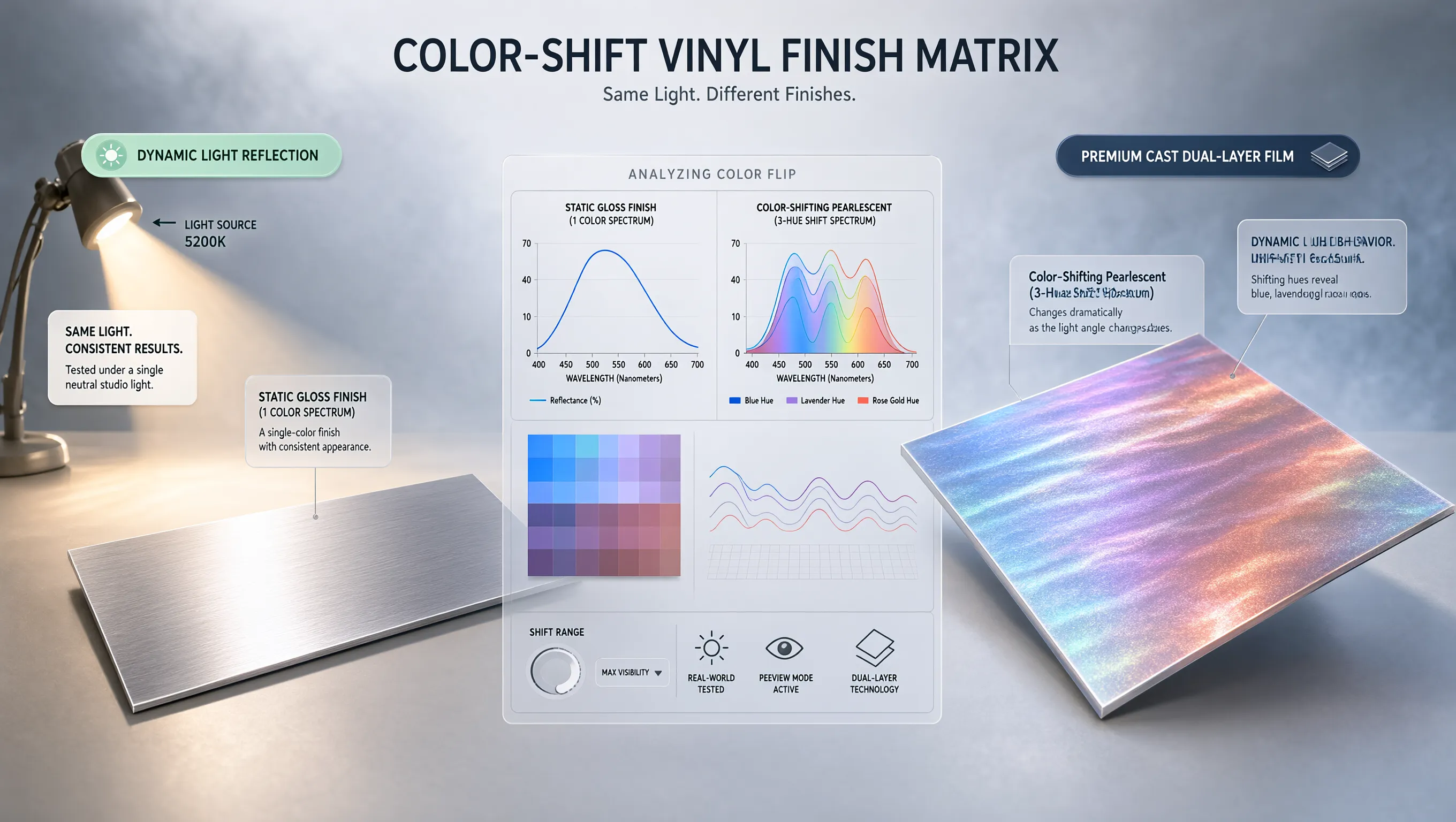
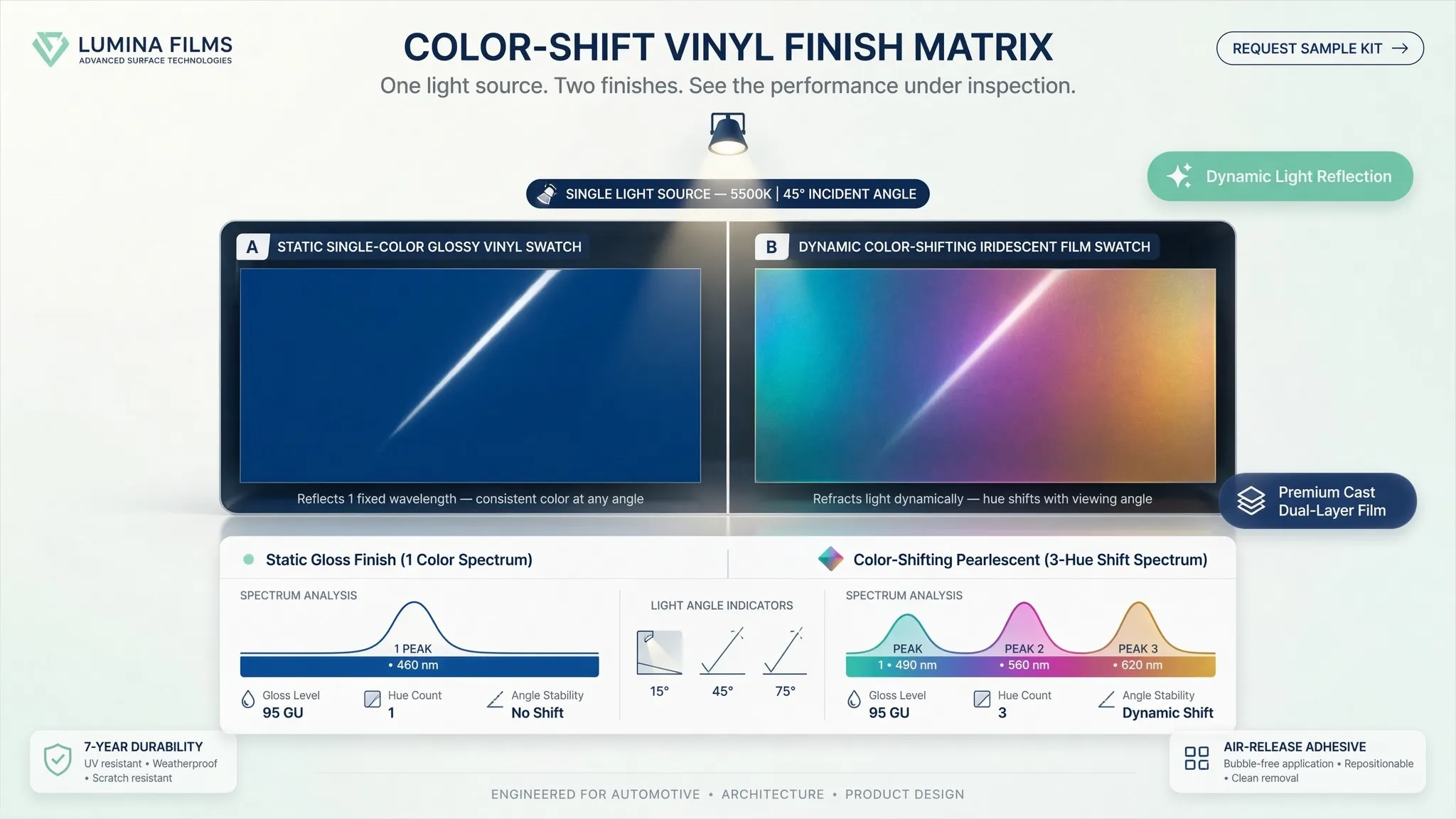
"Why Does Cheap Color-Shift Vinyl Peel?" The Trap Behind Cheap Rainbow Wraps
You see a crazy color-shifting "chameleon" wrap online for $400 a roll and think you found a steal.Hold on.That cheap roll is almost certainly calendered sign vinyl.
Cheap Rainbow Vinyl ($400) └─► Stiff Calendered Material └─► Stretched Around Bumper Corners └─► Shrinks Under Sun Heat └─► Layers Split, Color Fades, & Film Peels
Here is why cheap specialty film turns into a disaster:It has no stretch tolerance. Color-shift films use multiple layered metal flakes to bend light. Cheap manufacturers press these layers into stiff sign vinyl. As soon as an installer stretches it around a curved front bumper, those color layers distort, turn cloudy, or tear.It bakes under the sun. Budget rainbow vinyl degrades quickly under UV rays. Within 8 months, the color shift stops flipping, turns dull gray, and fuses its glue to your clear coat.When picking color-shift or heavy metallic shades, stick strictly to premium dual-cast vinyl lines (like 3M 2080 Flip series or Avery Dennison ColorFlow). Poured liquid cast film stays relaxed over tight curves, keeping the color shift smooth without lifting.
How Will This Look on MY Car? Preview Any Color in Seconds
Trying to guess how a 2-inch plastic swatch translates onto your actual car hood is a gamble.A shade that looks slick on a widebody coupe might look totally out of place on a full-sized truck or luxury sedan.Instead of rolling the dice with your hard-earned money, test your ideas digitally first.Using Carwrap.style, you can preview hundreds of wrap shades, gloss roofs, satin textures, and chrome deletes on a model of your exact vehicle. Try out different colors, compare satin against gloss side by side, and build your setup with total confidence before walking into a shop or ordering film.

7. Want a Completely New Look Without Ruining Your OEM Paint?
Here is the biggest advantage of wrapping your car over repainting it: it is 100% reversible.A custom wrap lets you run an aggressive, head-turning shade for three or four years while keeping your factory paint untouched underneath.Shield your clear coat from everyday highway sandblasting, small stone chips, and sun fading.Change your look whenever you get bored of a color.Protect your trade-in value by peeling the film off when it is time to sell, revealing mint factory paint underneath.
8. "Wait, Is Satin Black the Same as Matte?" How Finish Changes the Whole Color
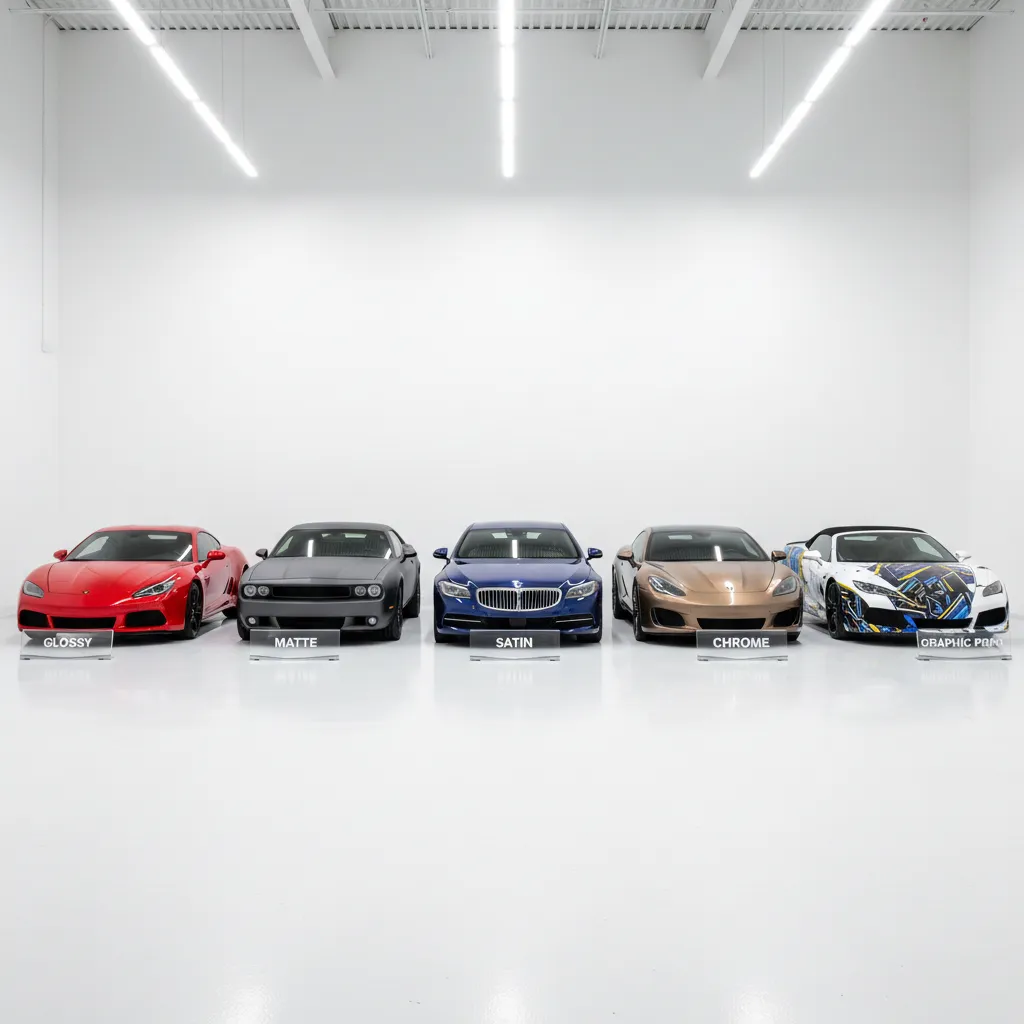
The finish you choose alters the exact pigment beneath it.Take a simple deep blue color pigment as an example:
┌── Gloss Finish ──► Deep reflections, high contrast, wet look. │ Same Blue Color Pigment ────┼── Satin Finish ──► Soft silk sheen, highlights body contour lines. │ └── Matte Finish ──► Zero reflection, flat stealth look, absorbs light.
Gloss: Reflects light like fresh clear coat. It gives your color a wet look with sharp reflections, making deep metallics pop under sunlight.Satin: Scatters light evenly across the panel. It produces a smooth, silky sheen that accentuates body lines without acting like a mirror.Matte: Completely eliminates reflections. It absorbs light, turning colors into flat, aggressive stealth tones.

9. Overwhelmed by Swatches? Here's How to Choose in 3 Steps
If you are staring at a wall of hundreds of color swatches, stop. Cut down decision fatigue by following this simple 3-step decision tree:
Step 1: Pick Your Daily Maintenance Level ├── Low Upkeep ──► Satin or Matte └── High Upkeep ─► Deep Gloss or Mirror Step 2: Choose Your Style Goal ├── Understated ─► Grays, Blacks, Dark Navy └── Aggressive ──► Reds, Greens, Purples, Color-Shifts Step 3: Test It Visually Online └── Map it out digitally on Carwrap.style before buying film.
Select your upkeep tolerance: If you hate washing your car weekly, cross off high-gloss blacks and deep chrome immediately. Stick to satin grays or muted earth tones.Define your stance: Decide whether you want a subtle daily driver look (grays, dark blues, blacks) or a bold weekend statement (purples, bright reds, color-shifts).Preview before you buy: Run your top choices through a visualizer on your exact vehicle model to confirm the look before committing to a roll.
Ready to Discover the Best Car Wrap Color for Your Ride?
Choosing the best car wrap color sounds easy—until you start looking. Matte black, satin silver, deep metallic blue, color-shifting chameleon, or something completely unexpected.
The hardest part is not finding colors. It’s knowing which one will actually look right on your car.
Instead of guessing, uploading reference images, or learning complicated design software, you can see different wrap colors on your own vehicle. Upload a photo, try new looks, and explore colors you may never have considered.
Your Best Wrap Color Might Be One You Haven’t Seen Yet.
See Your Car in a New Color → and Best wrap color faq
How much does a full car wrap cost on average?
A professional full-body wrap for a standard sedan or coupe typically runs between $2,000 and $3,500. For larger trucks, full-size SUVs, or vans with complex body contours, expect pricing between $2,800 and $4,500+. Final costs depend on your vehicle's overall square footage, surface preparation requirements, and the specific finish you choose.
Is it cheaper to wrap my car or get it painted?
Wrapping is significantly cheaper than a high-quality repaint. A factory-standard paint job that matches the finish of a $2,500 vinyl wrap usually costs $5,000 to $8,000+. Beyond lower upfront costs, a vinyl wrap takes only 2 to 4 days to install, preserves your original factory paint underneath, and protects your car’s trade-in resale value.
How long does a vinyl wrap last on a daily driver?
A premium dual-cast vinyl wrap lasts 3 to 5 years under normal driving conditions. Keeping your car clean with routine hand washes and parking in covered or shaded areas prevents early UV degradation and keeps the color crisp.
Will wrapping my car ruin the factory paint underneath?
No. As long as your vehicle’s factory clear coat is intact and undamaged before installation, premium vinyl acts as a protective shield against minor rock chips, UV rays, and road grime. When removed within its recommended 3-to-5-year lifespan using proper heat, the wrap peels off cleanly without harming original factory paint.
What is the difference between Matte and Satin wrap finishes?
Matte vinyl completely absorbs light, creating a flat, non-reflective "stealth" look that hides body creases. Satin vinyl holds a subtle 10% to 20% sheen that scatters light across panel lines. This subtle reflection highlights your car’s natural body curves while maintaining an understated finish that is easier to keep clean than pure matte or high-gloss black.
Which car wrap colors are the easiest to keep clean?
Satin Grays, Chalk Grays, and Muted Earth Tones are the easiest colors to maintain. Their diffuse texture blends in with everyday road dust, pollen, and water spots, keeping your car looking fresh between washes. High-gloss black and mirror chrome are the hardest to maintain, as they show every fingerprint, swirl mark, and water drop under direct sunlight.
Can you wrap a car with rock chips, scratches, or rust?
Vinyl conforms tightly to whatever surface it covers, meaning deep stone chips, scratches, and dents will still show through as visible indentations. Any flaking clear coat or rust spots must be sanded down and primed smooth before installation, or the vinyl adhesive will fail to grip the surface properly.
How do I hand wash and care for a wrapped vehicle?
Hand wash your wrapped car every two weeks using a pH-neutral car shampoo and soft microfiber towels. Avoid automatic car washes with spinning bristles, as they can snag wrapped panel edges and leave heavy swirl marks on the film. If using a pressure washer, keep the nozzle at least 12 to 18 inches away from panel seams and maintain pressure below 2,000 PSI.
Why do cheap wrap quotes end up peeling or lifting early?
ow-cost shops often use cheap calendered sign vinyl, which is thick, stiff, and prone to shrinking back to its flat shape over curved bumpers. Budget installers may also skip surface decontamination, avoid hardware disassembly, and cut film directly on your paint with razor blades—leading to lifted edges, dirt pockets, and clear-coat rust.
How can I test different wrap colors on my car before buying?
Rather than guessing how a small physical swatch translates onto your vehicle, map your design out digitally first. Using Carwrap.style, you can preview hundreds of colors, contrast roofs, and satin finishes on a model of your exact car to build your dream setup with total confidence before ordering film.