
Staring at a blank hood while dreaming of a pit-lane aesthetic can feel intimidating. You want your ride to radiate pure motorsport aggression, but there's a thin line between a professional track livery and a chaotic cluster of mismatched decals.
Slapping random sponsor stickers across your doors will only clutter your build.
If you want your machine to command immediate respect on the street and at the track, every line, angle, and accent must look deliberate. This comprehensive guide walks you through how to concept, balance, and execute a racing-inspired car wrap that delivers raw track-ready presence without losing visual balance.

1. How to Design a Racing-Inspired Car Wrap That Looks Like It Belongs on the Track
Designing an authentic track look requires a clear strategy before cutting into a single yard of film. Most car enthusiasts start with one simple desire: "I want my car to have a racing look, but not look like I randomly added stickers."
The secret lies in treating your vehicle as a single dynamic canvas rather than a collection of separate panels. A true race car livery works seamlessly with aerodynamic airflow, wrapping cleanly around wide fenders and dramatic splitters. By testing your initial ideas in a vehicle wrap customizer, you can instantly map out flowing graphic lines before spending a dollar on installation.
Here is the reality of motorsport styling: iconic liveries aren't built on random placement—they rely on purposeful geometric flow.
2. Choose Your Racing Style Before Picking Colors or Graphics
Before selecting your palette, you need a clear theme. Installers frequently hear owners wonder: "Should I go for a touring car, rally car, drift car, or track-day look?"
Every motorsport discipline features its own iconic visual language:
Time Attack & GT3: Relies on aggressive geometric cuts, wide accent bands, and prominent aerodynamic highlights.
Rally: Features high-impact splashes, bold mud-guard accents, and high-visibility hood panels.
Drift: Employs vibrant multi-angle graphics, extreme color contrasts, and stylized break-away patterns.
Locking down your specific motorsport direction early prevents conflicting styles down the road. If you are leaning toward clean, understated race lines over heavy graphics, explore our guide on how to design a minimalist car wrap.
3. Build Your Color Scheme Around One Dominant Racing Color
Juggling too many bright pigments creates visual chaos on the road. You naturally ask: "How many colors should I use without making the car look too busy?"
The most famous race cars in history stick to a strict three-color rule:
Dominant Base (60%): Sets the primary tone of the machine.
Structural Secondary (30%): Frames major body sections and aerodynamic lines.
High-Impact Accent (10%): Highlights splitters, mirror caps, and tow hook placements.
Limiting your core palette prevents visual fatigue and makes your vehicle instantly recognizable from a distance. To see how foundational shades set the tone for your build, browse our collection of the best wrap color ideas.
4. Use Racing Stripes to Give the Car a Stronger Visual Direction
Stripes are a staple of track culture, but poor placement can ruin your car's natural proportions. You might ask: "Should the stripes run across the hood, roof, or along the sides?"
Traditional center stripes pull the eye directly over the vehicle, emphasizing length and center symmetry. Asymmetrical side-offset stripes or lower rocker-panel stripes, on the other hand, ground the vehicle's stance and make it look visually wider and lower to the tarmac.
5. Add Number Panels, Side Graphics, and Motorsport Details
Nothing signals authentic track heritage faster than a dedicated door number board. You naturally wonder: "What makes a car look like a real race car instead of a street car with stickers?"
A sharp side-door number roundel or square plate instantly anchors your graphics. Adding subtle details like arrow callouts for tow hooks, tire pressure specs near the arches, or kill-switch indicators gives your ride an unmistakable paddock-ready feel.
6. Design the Hood, Roof, Doors, and Rear as One Connected Livery
A design that looks incredible on the side panel can fail completely if it stops abruptly at the front fender. Owners often struggle with this challenge: "The side looks good, but how do I make the front and rear match?"
Your graphics should flow uninterrupted across panel gaps. A side accent swooping up the rear quarter panel should tie directly into the rear wing end-plates or diffuser accents. For multi-panel execution, check out our guide on how to create a two tone car wrap.

7. Use Sponsor-Style Graphics Without Overcrowding the Car
Adding aftermarket logos is a classic way to achieve an authentic track look, but placement is everything. You might worry: "How do I add sponsor-inspired details while keeping the design clean?"
Group your secondary graphics logically. Stack performance brand logos along the front fender edge or arrange them in a clean vertical line down the leading edge of the doors. Keep logo colors uniform—using single-tone white or black decals across all sponsors preserves high-end visual elegance. For targeted trim accent strategies, review our breakdown of chrome delete wraps.
8. Choose Matte, Gloss, Satin, or Metallic Finishes for the Racing Look
Your choice of surface texture completely changes how your track graphics interact with direct sunlight. You will inevitably ask: "Would a matte finish look more aggressive, or would gloss show the graphics better?"
Mixing sheens unlocks immense visual depth:
Satin Body + Gloss Graphics: Gives a stealthy, modern endurance-racer look where decals pop under direct light.
High-Gloss Body + Matte Accents: Replicates classic vintage track cars with bold, glare-free hood centers.
To weigh finish durability under real-world driving conditions, read our side-by-side analysis comparing flat textures against glossy finishes.
9. Adapt Racing Graphics to Your Car's Shape and Body Lines
A livery designed for a long GT coupe will look awkward if slapped onto a compact hot hatch. Installers often hear: "Will the design still work on my sedan, coupe, hatchback, or SUV?"
Always let your vehicle's stamped body lines dictate your graphic angles. Align racing stripes parallel to bonnet creases, and angle side swoops to match the natural rise of your rear wheel arches. To understand how body scale alters color perception, explore our analysis of car wrap color and car size.

10. Preview Your Racing Livery on Your Own Car Before Buying Vinyl
Attempting to cut and place complex multi-layer racing graphics without a digital proof is a high-risk gamble. You naturally ask: "Can I see the complete design before paying for materials?"
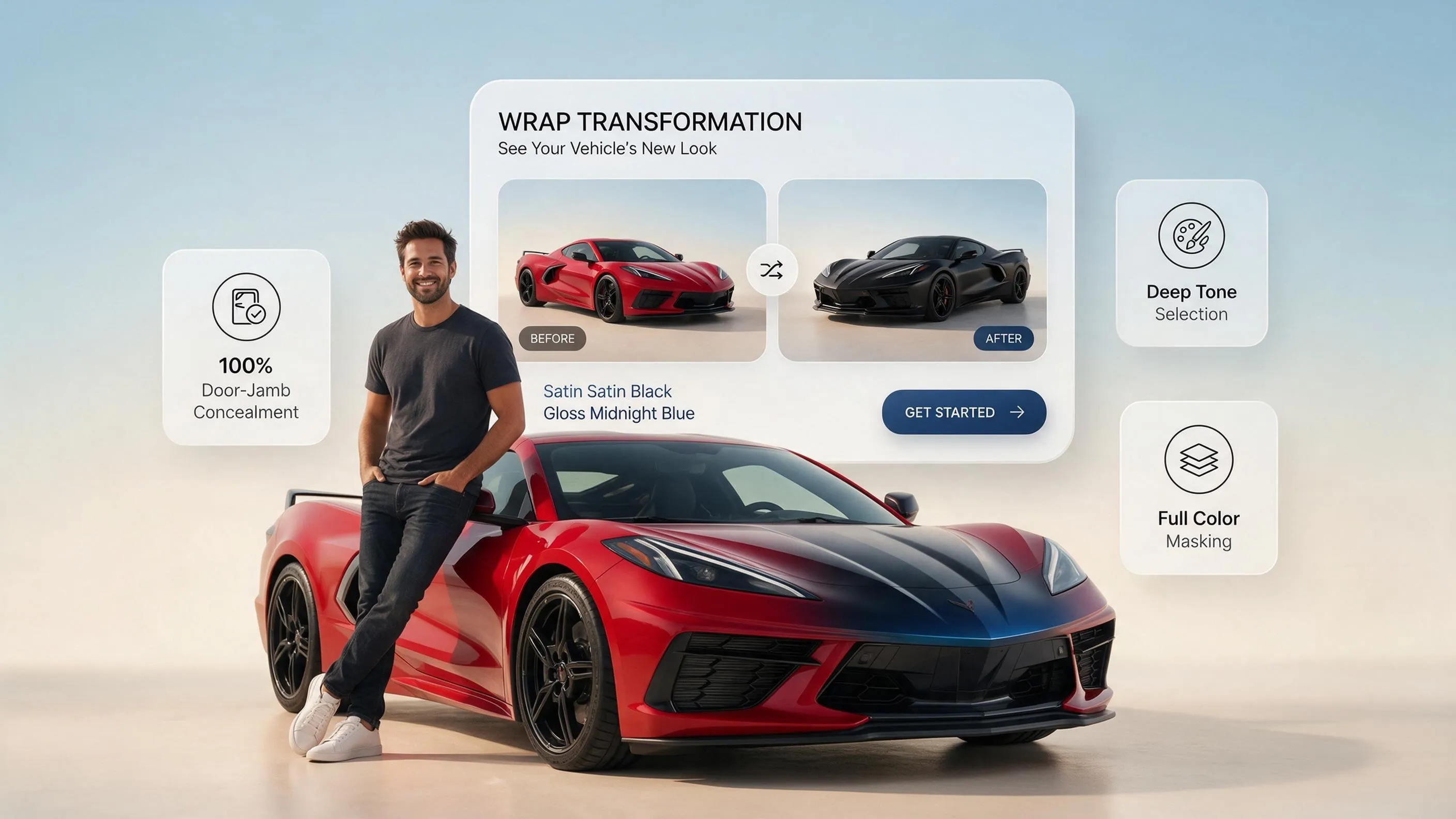
Digital pre-visualization takes the anxiety out of custom livery design. Uploading a high-resolution photo of your machine into a customizer lets you tweak stripe widths, reposition sponsor logos, and test color swaps in real time. Learn more about visual workflows in our tutorial on how to visualize a car wrap before installing.

11. Check the Design From Every Angle Before Finalizing It
A livery that looks aggressive from a side profile might look misaligned when viewed from a 45-degree front angle. It is vital to ask: "Will the stripes and graphics line up across the doors and panels?"
Inspect your digital mockups across front 3/4, rear 3/4, and direct overhead views. Ensure that stripes running over the hood line up perfectly with the roof channels and trunk lid to avoid jarring visual breaks.
12. Prepare Your Final Racing Wrap Design for Vinyl Selection
You have locked in your livery style, perfected your stripe alignment, and harmonized your sponsor decals. Now comes the final pre-order phase: "What should I confirm before ordering the wrap material?"
Follow this final pre-wrap checklist:
Calculate total required yardage for base and accent layers using our vinyl wrap calculator.
Verify that your installer uses high-grade cast vinyl for complex deep-channel stretching.
Jump into the Car Wrap Visualizer one last time to confirm your artwork, order your rolls, and bring your track-inspired dream build to life!

Frequently Asked Questions: How to Design a Racing-Inspired Car Wrap
Here are the top 12 real-world questions drivers, track-day enthusiasts, and customizers ask when conceptualizing, rendering, and applying an authentic track-ready livery.

1. How do I design a racing-inspired car wrap that looks authentic instead of cluttered?
Designing an authentic motorsport livery requires treating your vehicle as a unified dynamic canvas rather than a collection of random panels. Align your graphic lines directly with your car's factory body creases and aerodynamic airflow. Testing your initial concepts in a vehicle wrap customizer allows you to map out flowing stripe angles and graphic placement before cutting into raw film.
2. How do I choose the right motorsport livery style for my vehicle?
Select a clear motorsport category before picking your color palette or decals:
GT3 & Time Attack: Heavy geometric shapes, wide aerodynamic bands, and high-impact splitter highlights.
Rally: High-contrast splashes, bold wheel arch accents, and matte hood centers.
Drift: Aggressive multi-angle graphics, extreme color breaks, and stylized breakaway patterns.
Locking down a dedicated theme prevents conflicting visual elements down the road.
3. How many colors should I use in a race car wrap design?
The most iconic race liveries stick strictly to the three-color rule: a dominant base color covering roughly 60% of the vehicle, a structural secondary shade covering 30% to frame body sections, and a high-impact accent tone covering 10% for splitters and tow hooks. Limiting your core palette prevents visual fatigue and makes your machine instantly recognizable at speed.
4. What is the best way to place racing stripes on a car wrap?
Stripe placement dictates your car's visual stance. Traditional center stripes running over the hood, roof, and trunk accentuate length and symmetrical alignment. Conversely, asymmetrical offset stripes or low-slung rocker panel stripes ground your vehicle's stance, making it look visually wider, lower, and more aggressive on the tarmac.
5. What graphics make a car look like a real race car instead of a street car with decals?
Authentic track presence relies on functional motorsport details. Adding a dedicated door number roundel or square plate instantly anchors your graphics. Incorporating subtle details—such as arrow callouts for tow hooks, tire pressure specs near the wheel arches, or emergency kill-switch badges—gives your ride an unmistakable paddock-ready heritage.
6. How do I make the graphics on the front, sides, and rear of the car match?
Ensure graphic elements flow continuously across panel seams without abrupt stops. A side accent swooping up the rear quarter panel should tie directly into the rear wing end-plates or diffuser accents. For multi-panel execution strategies, explore our step-by-step tutorial on how to create a two tone car wrap.
7. How can I add sponsor-style decals without making the design look messy?
Group your secondary graphics logically and keep decal colors uniform. Stacking brand logos along the front fender edge or running them in a clean vertical line down the leading edge of the doors maintains visual order. Using single-tone white or black decals across all sponsor logos preserves high-end elegance while maintaining a track-tested aesthetic.
8. Which vinyl finish works best for a racing car wrap: matte, gloss, or satin?
Combining surface finishes unlocks incredible visual depth. A popular motorsport setup is pairing a light-absorbing satin body wrap with high-gloss graphics overlay. The satin base diffuses ambient daylight, while the glossy decals and stripes pop with sharp highlight reflections under direct sunlight.
9. How do I adapt racing graphics to fit my specific car model?
Let your vehicle's stamped body lines dictate graphic angles. Align racing stripes parallel to bonnet creases, and angle side swoops to match the natural sweep of your rear wheel arches. Adapt your graphic proportions so they complement your vehicle's stance without distorting factory proportions.
10. Can I preview my racing livery design on my own car before buying vinyl?
Yes. Uploading a clean photo of your vehicle into a digital wrap visualizer takes the risk out of custom livery design. Simulating stripe widths, testing logo placements, and trying out color swaps on screen allows you to fine-tune your visual balance before ordering expensive rolls of material.
11. How do I ensure my racing wrap lines line up across doors and bumpers?
Inspect your digital mockups across front 3/4, rear 3/4, and direct overhead views before cutting vinyl. Professional installers use precision knifeless masking tape laid directly along panel gaps to ensure multi-layer stripes pass seamlessly over door seams, fender joints, and bumper lips without misalignments.
Racing Car Wrap Design: Create Your Own Motorsport Look